

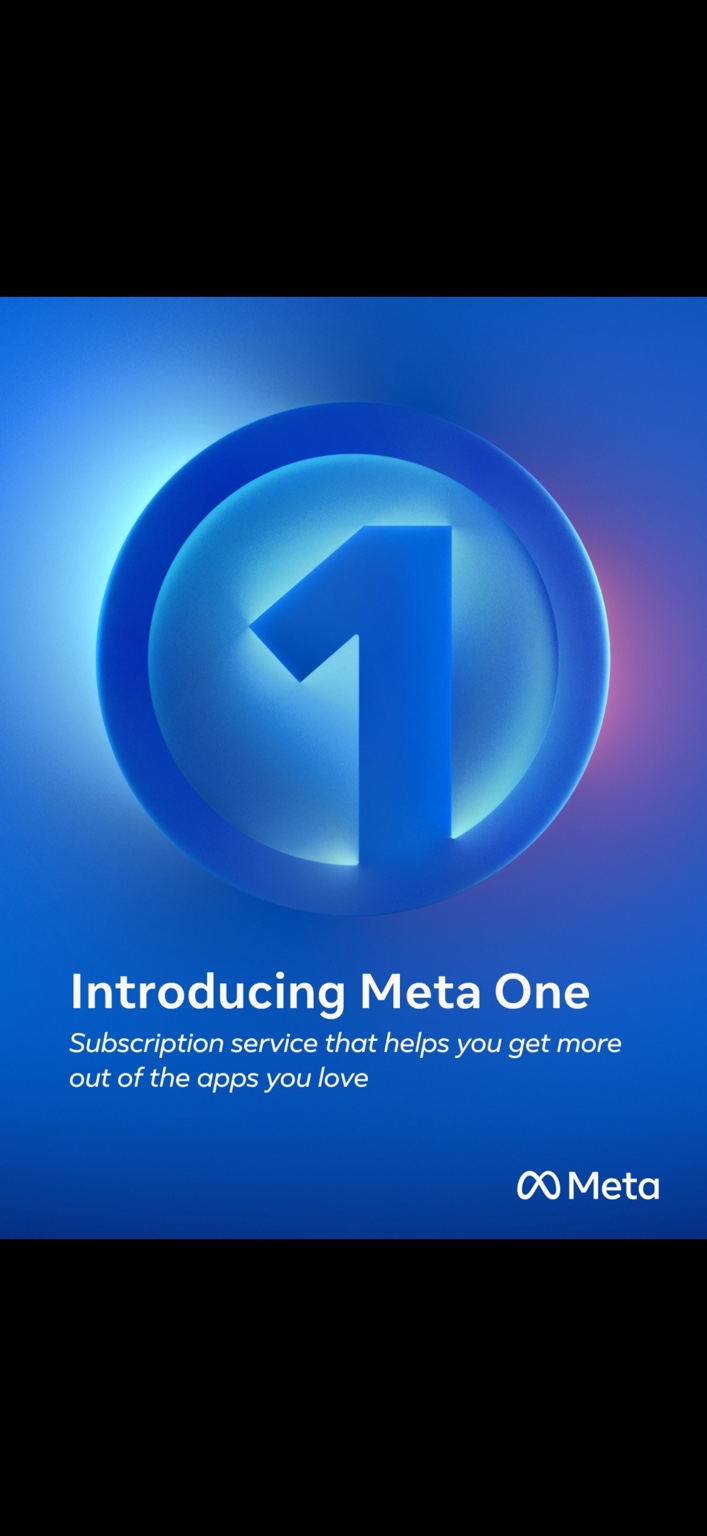
Meta One Shows Meta Wants More of the Business Behind the Creator
By Brian K. Neal
For most of social media’s history, the bargain was relatively simple. Platforms built the room. Creators filled it.
Instagram provided distribution. Facebook provided reach. WhatsApp provided communication. Creators and businesses supplied the photographs, videos, personalities, communities and products that gave people a reason to keep returning. But when those creators became businesses, much of the machinery required to actually operate those businesses lived somewhere else.
They scheduled content through one service. Studied performance through another. Built link pages elsewhere. Used separate tools for customer service, editing, team management and, increasingly, artificial intelligence.
Meta One suggests Meta would like considerably more of that work to happen without creators ever leaving Meta.
Meta introduced Meta One as a subscription system spanning Instagram, Facebook, WhatsApp and Meta AI. The company says the rollout begins with more than 50 paid features while the basic experiences across its apps and Meta AI remain free. Consumer subscriptions start at $7.99 a month for the bundled Core plan, but the more revealing part of Meta One may be what the company has constructed for creators and businesses.
Those professional plans begin at $14.99 a month for Essential, rise to $49.99 for Advanced, and reach starting prices of $149 for Expert and $499 for Max. Meta notes that pricing, features and availability can vary by region, app and account.
The prices tell part of the story. What Meta has decided to put behind them tells us much more.
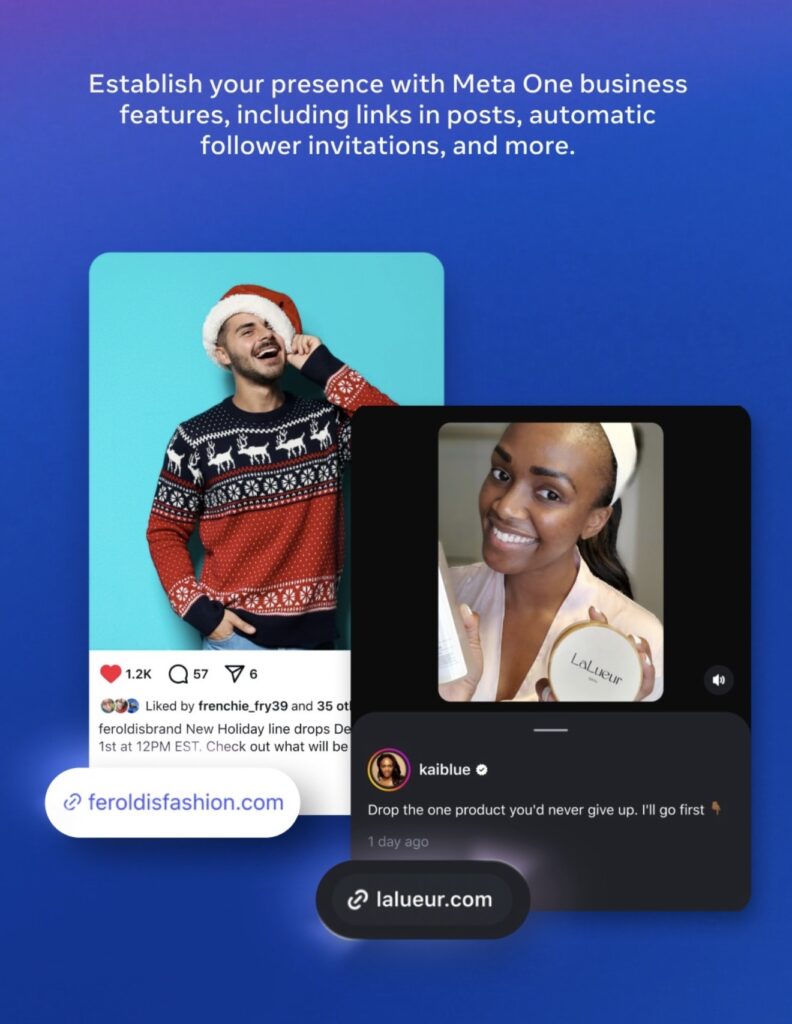
At the Advanced level, creators and businesses can schedule Stories as far as 30 days ahead, place links inside organic posts and Reels, export analytics, access deeper audience information and allow team members into an account without handing over its password. WhatsApp benefits include additional linked devices and business broadcast credits. Subscribers also receive greater capacity for Meta Business Agent.
Read separately, these sound like features.
Read together, they begin to resemble a business workflow.
That distinction is the real Meta One story.
Meta has spent years owning some of the most valuable places on the internet for acquiring attention. Now it is increasingly building paid tools around what happens after someone gets that attention.
A creator can publish content inside Meta’s ecosystem. Meta can help schedule it. Meta can provide links that move an audience toward an action. Meta can measure what happened. Meta can provide deeper information about that audience. Its competitive-insights tools can even help creators examine which content is driving growth and engagement elsewhere.
Then artificial intelligence enters the chain.
Meta Business Agent is considerably more consequential than another chatbot sitting inside a social network. Meta says Business Agent can answer company-specific questions, recommend products, qualify leads, book appointments, determine when a human employee should intervene and help close sales. The company also says more than one billion active conversations between people and businesses take place across WhatsApp, Messenger and Instagram every day.
That means Meta isn’t introducing an AI business tool and waiting for an audience to arrive.
The conversations are already happening there.
Meta is putting more of the business machinery closer to them.
The company makes its direction unusually clear. In announcing Meta One, Meta said it intends to add features and agent capabilities covering “end-to-end marketing, business operations, content creation, and optimization.”
That sentence is the blueprint.
Another piece is already on the way. Meta says Edits Plus will eventually become part of Meta One, bringing additional cloud storage for projects across devices and increased access to an upcoming Edits assistant capable of analyzing Instagram insights and helping creators develop new ideas.
Now the individual products begin connecting.
A creator makes something. Edits can help with production. Instagram or Facebook distributes it. Meta provides publishing tools and analytics. AI can help interpret those results and inform what gets made next. Followers can become customers. WhatsApp, Instagram and Messenger become communication channels. Business Agent can handle some of those conversations and potentially move them toward a sale.
Creation. Distribution. Measurement. Optimization. Communication. Conversion.
That is the architecture.
Meta does not yet own every part of that process, nor does Meta One eliminate the enormous ecosystem of specialized companies serving creators and small businesses. A dedicated analytics platform may still provide capabilities Meta does not. A professional editing system may remain more powerful. Businesses will continue maintaining websites, commerce systems, email lists and customer relationships outside Meta.
But Meta doesn’t necessarily need to replace all of them for the strategy to matter.
It only needs to make leaving Meta less necessary.
That is why Meta One is bigger than a collection of premium Instagram features.
Meta began publicly testing additional premium subscriptions earlier this year. Those experiments included tools intended to improve discovery, send follow invitations to people who engaged with content, provide links from Instagram posts and Reels, offer more sophisticated analytics and give additional people controlled access to accounts. Meta One now provides an umbrella under which much of that strategy can be assembled.
There is a financial play here as well.
Meta says its subscription products have accumulated 15 million subscriptions and trials. That language matters. Meta is combining subscriptions and trials in that figure, so it should not be interpreted as 15 million paying Meta One customers. Meta One also doesn’t replace the free foundation of Instagram, Facebook, WhatsApp or Meta AI.
Instead, Meta appears to be establishing another layer on top of free social media.
Posting remains available.
Professional capability becomes something Meta can increasingly sell.
And that subtly changes the relationship between the platform and the people building businesses on it.
For years, creators primarily paid social platforms when they wanted to purchase additional distribution through advertising. Meta One introduces another transaction: creators and businesses can pay for additional capabilities surrounding the attention they have already built.
That makes Meta simultaneously the place where an audience lives, the distributor through which a creator reaches that audience, and increasingly the seller of professional tools for understanding, managing and monetizing that relationship.
There is obvious convenience in that arrangement. A small company or independent creator may prefer one connected environment over stitching together several services. Scheduling, analytics, AI, communication and customer support working from the same ecosystem could remove genuine friction.
There is also a structural consequence.
The more pieces of a creator’s operation Meta can provide, the more valuable remaining inside Meta’s ecosystem becomes — and the more consequential that ecosystem becomes to the business itself.
That doesn’t mean the independent creator economy is suddenly becoming the Meta economy. The architecture isn’t complete, some announced features are still forthcoming, and Meta says benefits can vary by account and market.
But the direction is becoming visible.
Meta spent the social-media era building places where creators could find audiences.
Meta One shows the company increasingly wants to build the business layer around those audiences too.
And that is the play.
Not another subscription. Not another verification badge. Not another collection of premium features.
Meta already owns much of the room where creators compete for attention. Now it is building more of the machinery they can use to turn that attention into a business.
Related Posts


Toyota Joins IONNA to Boost North American EV Charging Network
Toyota Invests in EV Charging Network IONNA

The Status Pro X and the Engineering of Sound
Built for Listening

WEBTOON Is Using AI to Turn Comics Into Interactive Worlds
From Reading Characters to Interacting With Them
AccuWeather® Unveils Enhanced WeatherShow Enhancer™: Elevating Weather Presentations with Enhanced Motion, Interactivity, Rapid Severe Weather Updates, and Unmatched Hyperlocal Weather Data
AccuWeather® is introducing significant updates to its acclaimed inte

Arcade1 Up Ascends the Ranks Among Major Gaming Hardware Brands
Arcade 1up fourth largest in gaming hardware.
POST COMMENT