
Disney and TikTok Are Building a New Content Pipeline Into Disney+
By DaMarko GianCarlo
For most of Hollywood’s relationship with social media, the transaction has been relatively simple.
Hollywood makes the entertainment. The internet talks about it.
A movie premieres, a television series drops, a trailer arrives or an old scene suddenly finds a second life. Creators react to it, remix it, explain it, rank it and turn pieces of entertainment into cultural moments capable of traveling far beyond the original release.
Studios learned to value that activity because social attention could eventually become something more valuable somewhere else: a movie ticket, a stream, a subscription or renewed interest in a franchise.
But the creator usually remained outside the product.
Disney and TikTok are now testing a different relationship.
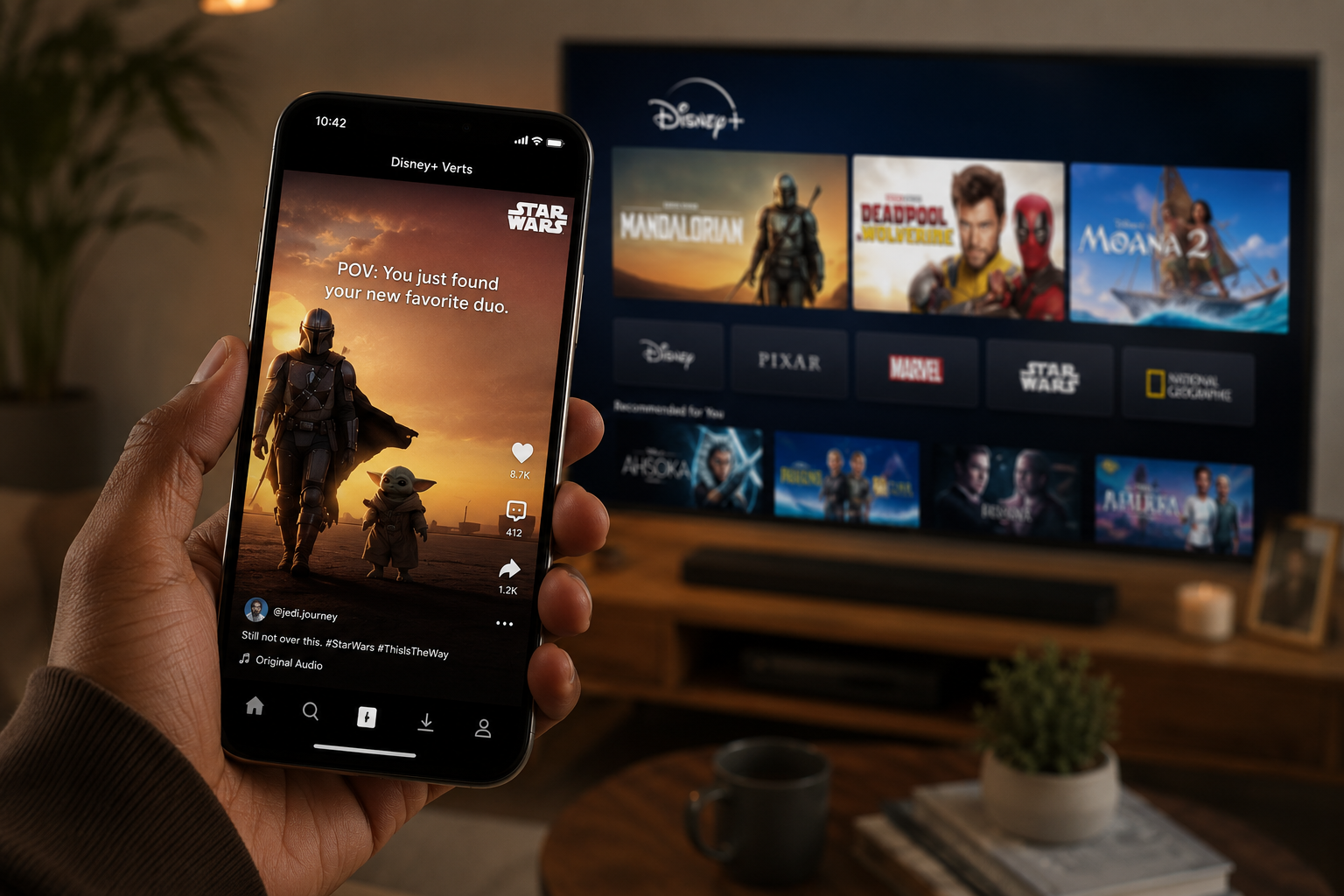
The companies have announced a global short-form content-sharing agreement that will allow participating TikTok creators to make videos using approved assets from hundreds of Disney films and television series across brands including Disney, Pixar, Marvel, Star Wars and FX. Those videos can live on TikTok, while a curated selection can also appear through Verts, the vertical-video experience inside Disney+.
At first glance, this looks like another major entertainment company embracing creators.
The more important development is where the creator’s work is now allowed to go.
Disney isn’t merely giving creators material so they can promote Disney properties to TikTok audiences. It has established a route through which some of the resulting creator content can travel back through the gates and exist inside Disney+.
That changes a relationship Hollywood has spent years building.
Traditionally, the studio sat at the beginning of the distribution chain. The studio created the entertainment, audiences consumed it and social conversation formed around it afterward.
Disney and TikTok are introducing a loop.
Disney owns and produces the underlying entertainment. Participating creators interpret approved pieces of it. TikTok distributes those interpretations. A curated selection can then move into Disney+, where that creator-made material becomes another way for subscribers to encounter Disney’s larger entertainment library.
The creator is no longer positioned exclusively at the end of the entertainment chain.
In this particular system, the creator can sit somewhere in the middle.
That distinction matters because a modern entertainment property increasingly has two lives.
There is the canonical entertainment produced by the studio: the movie, television series, character or larger fictional world.
Then there is the enormous layer of culture continuously produced around it: reactions, edits, explanations, rankings, humor, fashion, fandom, nostalgia and the rediscovery of individual scenes and characters.
For years, that second layer has largely lived outside the studio’s own products.
Disney owned the underlying intellectual property, but audiences and creators helped determine how that intellectual property continued moving through culture between major releases.
The TikTok agreement begins to formalize the relationship between those two layers without pretending they are the same thing.
Marvel Studios still makes Marvel entertainment. Pixar still makes Pixar films. Lucasfilm still makes Star Wars. Nothing about this agreement replaces Disney’s professional production operation.
What changes is the assumption that every piece of media keeping those properties circulating through culture needs to originate inside that traditional production system.
That becomes especially important when considering the scale of what Disney already owns.
Disney’s competitive advantage is not simply its ability to produce another movie or television series. It is sitting on generations of characters, scenes, stories and franchises that can continually be rediscovered.
But owning a massive entertainment library creates its own challenge.
A library only has cultural value when people continue finding reasons to enter it.
Disney cannot produce a new feature film, television season or marketing campaign around every property in its catalog every week. Traditional Hollywood production is too expensive, too slow and too deliberately constructed to operate at the speed of daily internet culture.
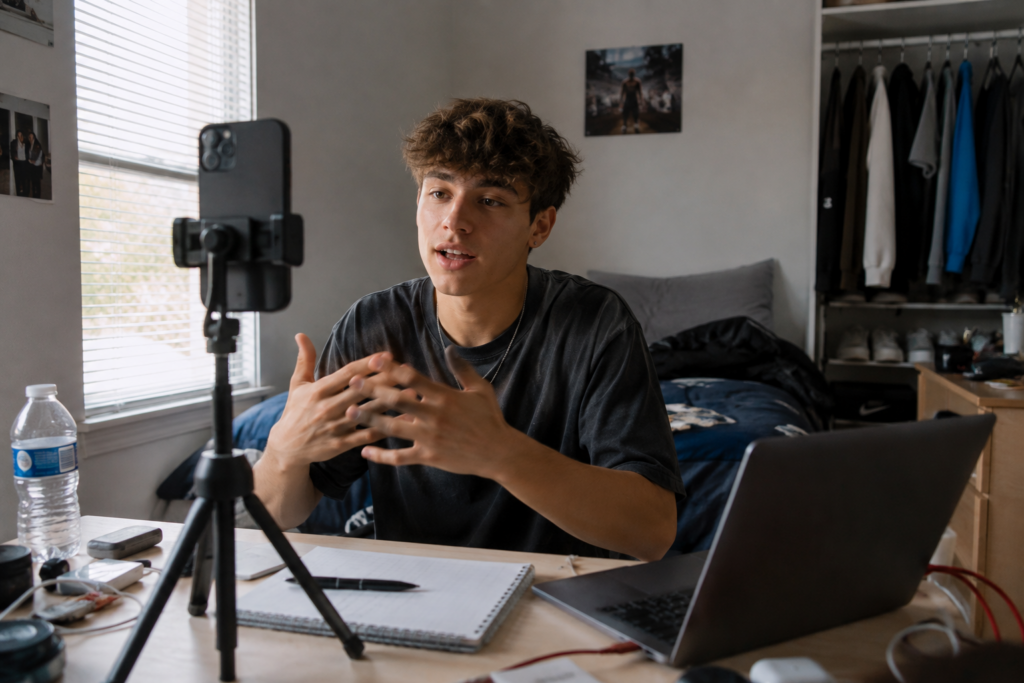
Creator culture does not have that limitation.
A creator can discover a scene from an older Disney movie on Monday, reinterpret it on Tuesday and place it in front of millions of people who may never have encountered the original work. A forgotten character can become relevant again. A line of dialogue can acquire a new meaning. A movie that has been sitting quietly inside a streaming library for years can suddenly have a reason to be discovered.
That activity already happens.
The difference is that Disney is beginning to build a system around it.
Verts gives that system somewhere to go.
Disney introduced the vertical, swipeable experience inside Disney+ around a behavior audiences already understand from TikTok, Reels and Shorts. On the surface, it could have been interpreted as another streaming service borrowing the visual language of social media.
The TikTok agreement makes Verts more consequential.
Disney isn’t only adopting the interface. It is beginning to establish another supply of content capable of flowing through it.
That matters because vertical video operates at a completely different rhythm from traditional entertainment production. A studio can spend years developing a film and months producing a television season. Short-form creators can respond to culture every day.
A scene becomes funny again on Tuesday. A character becomes culturally relevant on Thursday. A decade-old movie finds a new audience over the weekend.
The traditional studio production calendar was never designed to respond to culture at that speed.
Creators are.
Disney now has the potential to connect that velocity to something it already owns: its library.
That is where this becomes more than a short-form experiment.
Disney has intellectual property. It has decades of entertainment sitting inside a streaming service. It has direct distribution through Disney+. What it cannot manufacture internally at the same speed as TikTok is the constant cultural interpretation happening around that entertainment.
Creators provide that layer.
A creator video built around an older Pixar character does not replace the Pixar movie. It can become another discovery surface for it.
A Star Wars reaction doesn’t replace a Star Wars series. It can give someone another reason to enter that world.
A reinterpretation of an older Disney scene doesn’t create new canonical entertainment. It can create new attention around entertainment Disney already paid to produce years ago.
And if selected creator videos can now appear inside Disney+, Disney can potentially place that discovery mechanism closer to the underlying entertainment itself.
The distance between cultural conversation and consumption becomes shorter.
That is an important distinction.
For years, a creator could make a Disney-related video on TikTok, millions of people could watch it, and Disney would hope some portion of that audience eventually traveled elsewhere to find the movie or series.
Now Disney is experimenting with bringing some of that creator activity into the environment where the movie or series already lives.
The discovery layer and the library can begin to occupy the same product.
Disney is still maintaining a gate.
Not every TikTok video automatically enters Disney+. The assets available to participating creators are approved, participation is structured and the material that reaches Disney+ is curated.
That is a critical part of the architecture.
Disney is not building an uncontrolled social network inside Disney+. It is creating a controlled pathway between a social network and its premium streaming environment.
That allows Disney to benefit from some of the velocity and cultural responsiveness of TikTok without turning Disney+ itself into TikTok.
It also addresses a tension that has existed between intellectual-property companies and creator culture for years.
Disney owns some of the most valuable and carefully managed fictional worlds in entertainment. Creator culture thrives on participation. The more culturally important a character or franchise becomes, the more audiences want to interact with it: edit it, parody it, discuss it, recreate it and build their own expressions around it.
Studios want that cultural energy because it keeps properties relevant.
They do not necessarily want to surrender control over the underlying intellectual property.
This agreement creates a middle position.
Disney can authorize certain assets for creator participation while maintaining boundaries around their use. TikTok supplies the creator environment. Creators supply their voices and cultural instincts. Disney retains the ability to determine what ultimately appears within Disney+.
That is not Disney giving away control of its franchises.
It is Disney designing controlled participation around them.
TikTok gains something important from the arrangement as well.
For years, TikTok’s importance to Hollywood has largely been measured through discovery. A television scene resurfaces. An older song explodes again. A creator recommends a movie. A trend introduces millions of people to something they otherwise may never have encountered.
TikTok sits upstream from the eventual transaction.
This agreement gives TikTok another position.
Work originating within its creator ecosystem can potentially cross the boundary between social media and a major premium streaming service.
A creator makes something for TikTok. That creative work can potentially appear inside Disney+.
That doesn’t make TikTok a studio or a streaming service. But it does establish its creator ecosystem as a possible source of content for another entertainment platform.
That is different from simply being a place where Hollywood advertises.
There is a talent component developing alongside the content arrangement as well. Disney and TikTok are establishing a Creator Ambassador Program that can provide selected creators with greater visibility, access to events and career-development opportunities.
That should not be overstated.
Disney has not announced that participating creators are becoming studio employees. It has not announced that TikTok creators are being commissioned to make Disney+ originals. It has not established a direct pipeline from making a successful TikTok video to directing a Disney production.
Those would be predictions rather than observations.
But Disney establishing a formal relationship with creators at the same time that it establishes a distribution pathway for some of their work is still meaningful.
The company isn’t only looking at the creator ecosystem as advertising inventory.
It is beginning to incorporate selected creator work into the way its entertainment can be discovered and circulated.
That brings the larger play into focus.
The entertainment industry has spent years trying to solve a discovery problem.
Streaming services accumulated enormous libraries while audiences gained more things to watch than they could reasonably navigate. The challenge increasingly became not simply owning entertainment, but continuously giving people reasons to discover it.
Creator culture became one of the most effective answers to that problem, but much of that discovery happened outside the streaming product.
A creator generated the curiosity somewhere else.
The streaming service waited for the viewer to arrive.
Disney is now experimenting with collapsing some of that distance.
The entertainment can live inside Disney+.
The creator-made discovery layer can live there too.
And TikTok can sit between them as the environment where that creator culture originates and circulates.
That creates something closer to a continuous entertainment loop.
A viewer encounters Disney entertainment. A creator interprets part of it. TikTok distributes that interpretation. Disney can select some of that work for Verts. Another Disney+ subscriber encounters it there and can potentially discover or rediscover the underlying movie or television series.
Watch. Create. Distribute. Discover. Watch again.
For a company sitting on generations of intellectual property, that loop has obvious strategic value.
Disney does not need every creator video to become a massive cultural phenomenon. The larger opportunity is creating more entry points into entertainment it already owns.
A twenty-year-old movie does not necessarily need a sequel to become culturally active again.
Sometimes it needs a new reason to be noticed.
Creator culture produces those reasons constantly.
We don’t yet know how many creators will ultimately participate, how frequently their videos will appear inside Disney+, what the economics will look like for individual creators, how significant Verts will become to Disney+ usage or whether this model will eventually expand beyond what has currently been announced.
Those are questions worth watching, not conclusions worth writing today.
What Disney and TikTok have already done is significant enough.
Hollywood spent the first era of social media figuring out how to make professionally produced entertainment travel outward into creator culture.
Disney and TikTok are now building a pathway capable of moving some of that creator culture in the opposite direction.
For Disney, that means the enormous library sitting inside Disney+ doesn’t have to rely exclusively on Disney’s own production and marketing machine to continually create new reasons for discovery.
For TikTok, it means creator work originating on its platform can potentially travel beyond the social feed and into a premium entertainment service.
And for creators, it means the cultural layer they have spent years building around Hollywood entertainment now has an authorized route it did not have before.
The social feed no longer has to be the end of the creator-content journey.
Disney has built a door for some of that culture to come back inside.
Related Posts

Gogoro Introduces Pulse, its Latest Cutting-Edge Smart scooter
Gogoro Unveils New Flagship Smartscooter, Pulse.
Apple Upgrade Makes Premium Technology Easier to Access—Not More Affordable
A Lower Payment Doesn’t Mean a Lower Price
Stern Pinball, Inc. Unveils Jaw-Dropping JAWS Pinball Games At CES 2024
Stern Pinball Unveils Jaw-Dropping Pinball Game

Revolutionizing Education with AI: A New Solution to the Teacher Shortage Crisis
EdYOU Adaptable AI Meta-Human Learning Solution has launched

Embark on a Shopping Adventure with Yaysay: The Innovative AI-Powered App Transforming Retail into a Treasure Hunt
Yaysay, a cutting-edge shopping app, is revolutionizing off-price shop
BRINC Unveils First-Ever Drone Designed for 911 Emergency Response
BRINC Unveils Revolutionary Drone as First Responder System