

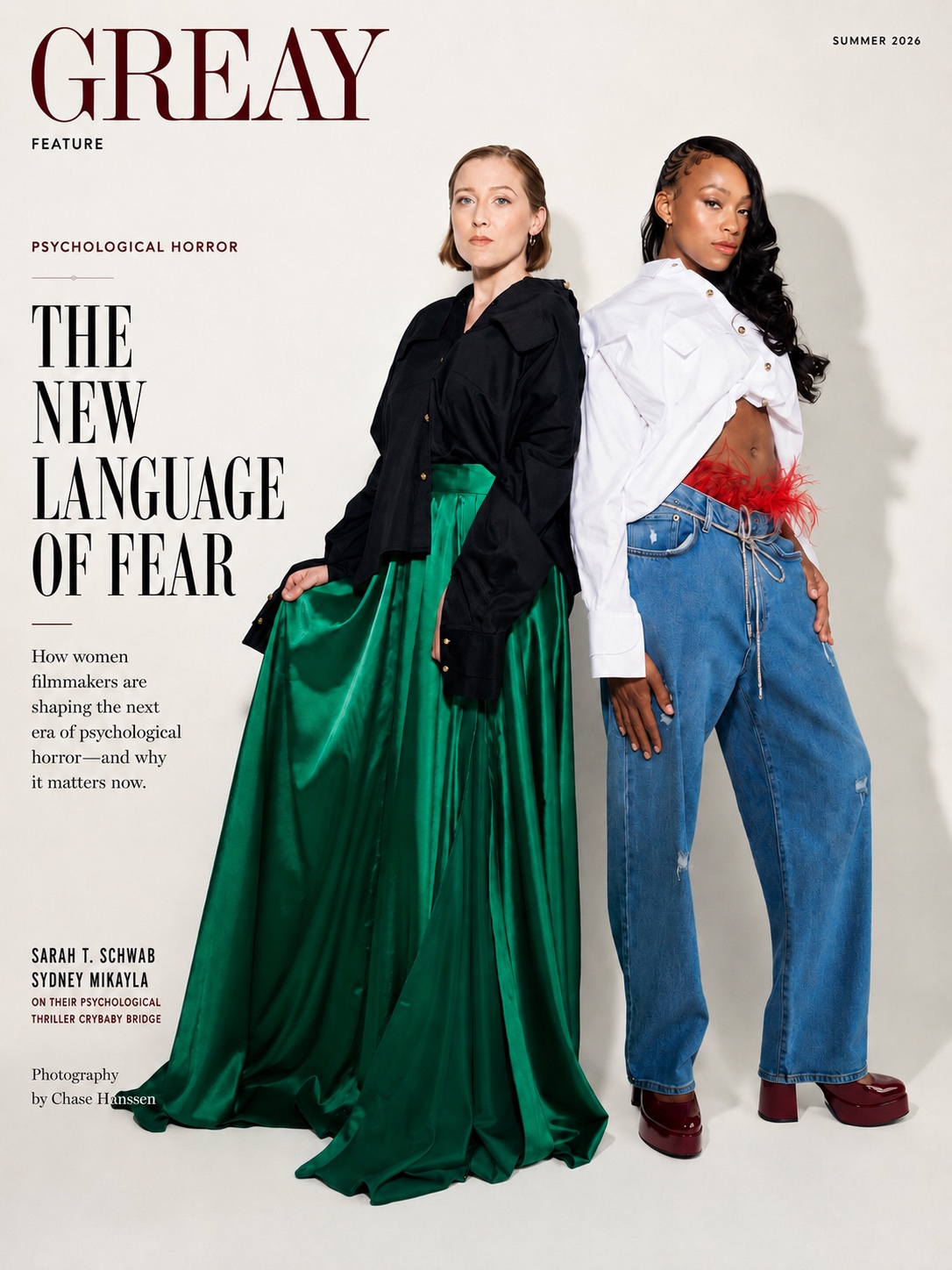
Women in Horror Are Expanding the Emotional Language of Fear
By Kyra Greene
Psychological horror has always been less interested in the monsters we can see than the emotions we struggle to confront. Rather than relying solely on spectacle or violence, the genre has increasingly explored grief, memory, identity, guilt, motherhood, and trauma as the forces that unsettle audiences most deeply. Over the past decade, many of the genre’s most acclaimed films have demonstrated how fear can emerge from emotional truth as much as supernatural mythology. As more women filmmakers contribute to this evolving landscape, psychological horror continues to expand—not by replacing what came before, but by adding new perspectives to one of cinema’s most enduring genres.
The history of horror has always evolved alongside society’s changing anxieties. Earlier generations often reflected fears of monsters, invasion, or the unknown. Contemporary psychological horror frequently turns inward, examining relationships, family dynamics, personal identity, and emotional inheritance. Rather than asking what lurks in the darkness, these films increasingly ask what remains unresolved within ourselves. The result is horror that lingers long after the credits because its questions are rooted in recognizable human experiences.
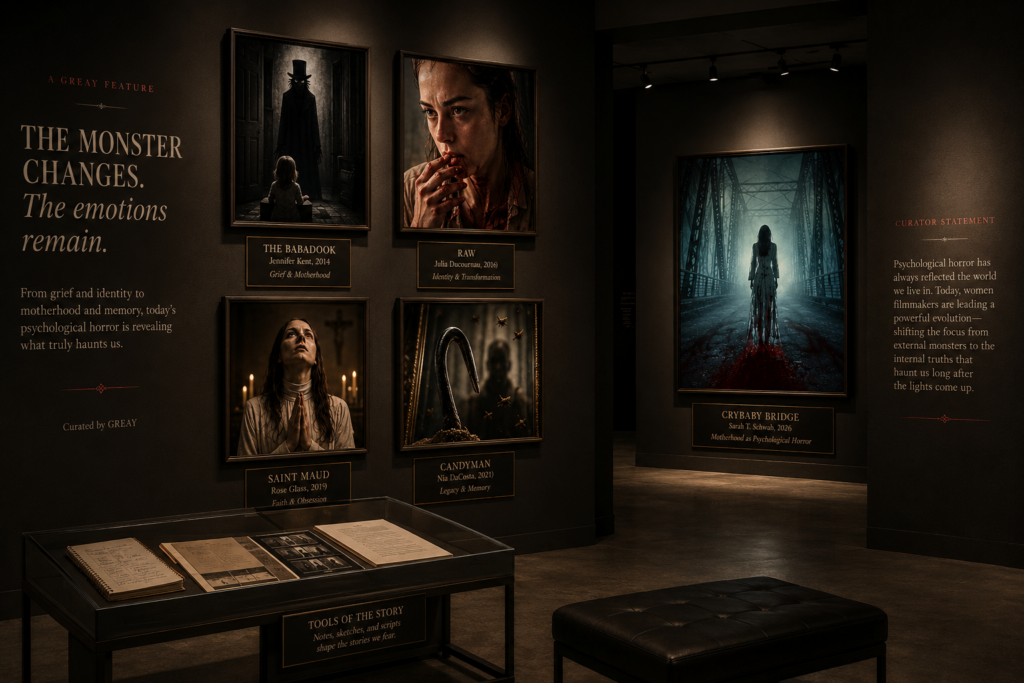
Several filmmakers have helped define this modern evolution. Jennifer Kent’s The Babadook transformed grief into something both literal and symbolic, exploring how loss can become an inescapable presence. Julia Ducournau’s Raw examined identity, transformation, and bodily autonomy through an unsettling coming-of-age narrative. Rose Glass’s Saint Maud blurred the boundaries between religious devotion, isolation, and psychological collapse. Nia DaCosta’s Candyman revisited an established franchise while expanding its conversation around memory, history, and collective trauma. Though each film is stylistically distinct, they share a willingness to place emotional complexity at the center of fear.
It is within this broader artistic conversation that Crybaby Bridge finds its place. Rather than existing as an isolated release, the film contributes to an ongoing movement within psychological horror that favors emotional tension over conventional scares. The title itself draws upon familiar folklore, but its greatest interest lies not in simply retelling a legend, but in exploring the emotional terrain surrounding it. Like many of the strongest contemporary psychological horror films, the unsettling atmosphere emerges through character, relationships, and internal conflict as much as external danger.
Director Sarah T. Schwab approaches that balance with an understanding that psychological horror succeeds only when audiences first believe in the emotional reality of its characters. Fear becomes more powerful when viewers recognize themselves within the people experiencing it. That philosophy reflects one of the defining characteristics of today’s psychological horror: the supernatural often serves as an extension of deeply human emotions rather than as the story’s sole destination.
Sydney Mikayla’s performance further illustrates how modern horror increasingly depends upon emotional authenticity. Psychological horror demands performances capable of sustaining vulnerability alongside suspense, allowing audiences to experience uncertainty through the characters rather than merely observe frightening events. As actors are asked to navigate increasingly layered emotional material, performances have become as essential to the genre’s success as cinematography, sound design, or visual effects.
Importantly, recognizing the contributions of women filmmakers to psychological horror does not suggest that the genre belongs to any single group. Horror has always been shaped by artists with diverse voices and perspectives. What has become increasingly evident, however, is that expanding the range of storytellers has also expanded the emotional vocabulary of the genre itself. New creative voices introduce different questions, different relationships, and different ways of examining fear, enriching horror rather than redefining it in isolation.
That evolution benefits audiences as much as filmmakers. Today’s viewers often seek stories that resonate beyond a single frightening moment, finding lasting impact in films that connect fear with recognizable emotional experiences. Psychological horror has become one of the genre’s most versatile forms precisely because it allows filmmakers to explore universal themes through extraordinary circumstances.
Viewed through that lens, Crybaby Bridge becomes more than a standalone film. It serves as a contemporary example of how psychological horror continues to evolve through thoughtful storytelling, emotional complexity, and new creative perspectives. Its place within this broader conversation reflects the genre’s ongoing willingness to grow while remaining true to horror’s central purpose: confronting the fears that define each generation.
The most enduring horror films rarely ask audiences to fear only what waits in the shadows. They ask them to confront the emotions they carry into the darkness. As psychological horror continues to evolve through a wider range of creative voices, its greatest strength remains unchanged—not the monster itself, but the humanity revealed in the moments before we finally see it.
Related Posts

‘Kraven the Hunter,’ Pushed Back by Sony To December
Sony Pushed Back Kraven to Q4
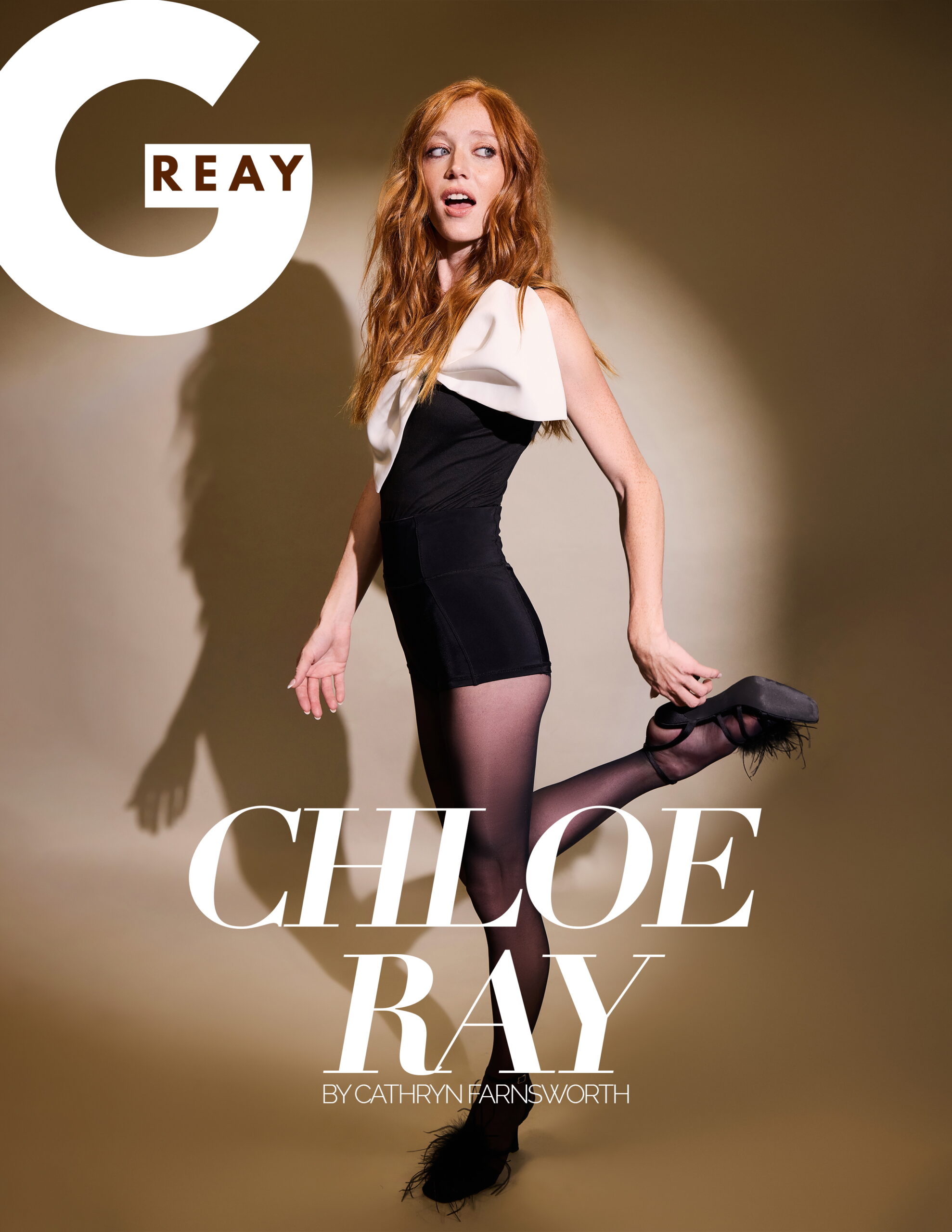
Noble Homes, Noble Vision: The Rise of Filmmaker Chloe Ray
Generations of Grit

Nintendo and Sony Join Forces for Live-Action Adaptation of Legend of Zelda
Nintendo and Sony Join Forces

Analesa Fisher Tells the Truth in Saving Buddy Charles
Crying Through the Laughter

The Significance of the Blaxploitation Film Era: A Revolution in Cinema and Society
By Tyson Graves The Blaxploitation film era, which emerged in the 1970

Steph Curry and Li-Ning Are Betting on a Global Basketball Future
Basketball is no longer moving in one direction