

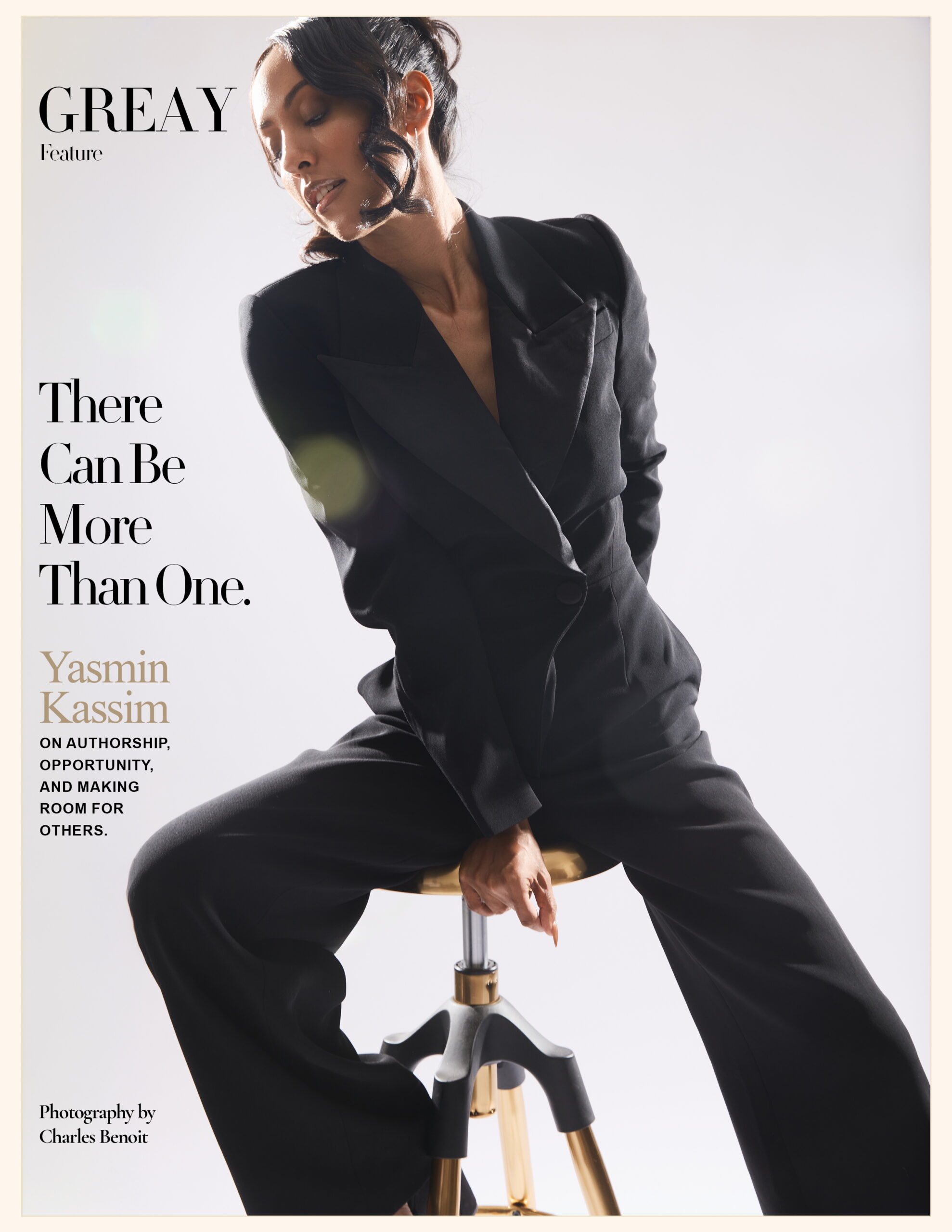
Yasmin Kassim Is Creating the Stories She Once Needed to See

Before audiences see the finished performance, the polished script, or the joke that lands perfectly, there is usually a person learning how to turn their own experiences into something worth sharing. For Yasmin Kassim, that journey has never been about waiting for permission. Across acting, comedy, and writing, she has built a creative life rooted in honesty—finding humor in discomfort, meaning in vulnerability, and possibility in the stories that once felt too personal to tell. Whether she is developing original projects, stepping onto a film set, or creating space for other voices to be heard, Kassim approaches storytelling with the belief that representation is not about being the only one in the room. It is about making sure the door stays open behind you.
GREAY: You’ve described yourself across multiple creative disciplines—writer, comedian, actor—but your career increasingly feels centered around authorship. At what point did you realize you didn’t just want to perform inside stories, but actively shape the worlds being created?
A: I love this question! I always felt like I wanted to be more of a creator, but it was the executives and team behind the CBS Comedy Diversity Showcase that really affirmed that for me. They told me to lean into my story. They said I was a writer and also a stand-up comic. After that job, I signed up for an all-female stand-up class and a pilot writing course, and everything changed from there.
It’s the first thing I tell young actors when they ask for advice. Everyone has a story. Empower yourself by telling it.
GREAY: Prawn Curry Christmas already feels culturally specific just from the title alone. What kinds of family dynamics, memories, or emotional truths were you trying to preserve or explore through that project?
A: The intention behind Prawn Curry Christmas was always to draw from our own familial experiences and the things that have happened to us, then package it into a fun Christmas movie everyone can enjoy. We really believe—and hope—that not just the South Asian community will see themselves in this movie, but everyone will. There is so much heart in this story. I truly can’t wait for people to see it.
GREAY: Being awarded West Coast Visions for Prawn Curry Christmas represents recognition not only for the work itself, but for the kinds of stories emerging from Western Australia. Do you feel the industry is becoming more open to regionally grounded voices that don’t fit traditional industry expectations?
A: I am so proud to be West Australian and to be part of this movement in storytelling. I think the industry is listening, and moments like us winning West Coast Visions are really a testament to those at the top of Australian funding bodies taking the action that’s needed to make change.
I feel an immense responsibility to do my part in supporting other diverse, queer Western Australian filmmakers. Hopefully, now that it’s happened for me, the doors will open for others too.
GREAY: You co-wrote To the Death with Menik Gooneratne, directed by Rose McIver. What did that collaboration teach you about balancing emotional sincerity with comedic rhythm?
A: A lot of that is a testament to Rose McIver. Obviously, she leads a hugely successful comedy with Ghosts, but she’s also such a wonderful person and an incredible director. She knows how to create a safe space for an actor to be vulnerable and follow their instincts.
Ultimately, the best comedy comes out of those two things.

GREAY: You and Menik have also hosted Q&A panels amplifying diverse voices with the support of Screen Australia. Was creating space for other creatives always important to you, or did that grow out of your own experiences navigating the industry?
A: It was incredibly important to elevate other people of color instead of just promoting this film. The whole message around the story is, “There can be more than one.”
I want to walk the walk with that message and always try to use my platform to elevate others as much as I can.
GREAY: Your project Ghostwriter receiving development support from Screenwest and being selected for the WIFT CinefestOZ retreat suggests you’re building long-form creative ambitions beyond acting alone. When you write, what kinds of stories or emotional tensions keep pulling you back repeatedly?
A: My writing—whether it be scripts or stand-up—is always from a very personal place. All of my characters and stories are inspired by my own life, traumas, deep insecurities, and embarrassing moments.
Writing, and comedy in particular, has become a way to embrace all the parts of me I once tried to forget about or hide, and transform them into something that brings people entertainment.
GREAY: You were also selected for Screenwest’s TeleNavigator and FeatureNavigator programs consecutively. Do opportunities like those feel validating creatively, or do they sometimes intensify the pressure to prove yourself at the next level?
A: I love it. Bring it on.
I feel super grateful to Screenwest for the incredible opportunities they have given me. Both initiatives put me in rooms with major producers, working firsthand with them on my stories. They gave me experiences that helped me grow and will help me move my projects to a higher level.
The lessons you learn from these Navigators are priceless. There are a lot of incredibly talented people in Western Australia, so I feel lucky that I’ve been able to dive in more than once.

GREAY: What makes your role in You, Always especially interesting is that you weren’t only acting in the project—you also served as the comedy punch-up writer while playing Adrian Grenier’s love interest. Did moving between the writer’s perspective and the performer’s perspective change the way you approached scenes emotionally?
A: Honestly, no. I hadn’t gotten the role when they first asked me to do the comedy pass. My goal was simply to bring my edge and my voice to the material, and they chose what felt right for their story.
I’m so used to being on an acting gig, doing stand-up shows on the weekend, and hitting writing deadlines in my trailer. I’m the queen of multitasking. I’m literally on a flight right now answering these questions.
Once I was shooting, I was very much focused on the acting side of things. That said, some days our director, Christine, would text me for an on-set punch-up and I’d send over options.
This is truly the life I dreamed of. It feels manic sometimes, but I’m just so grateful.
GREAY: Comedy writing often requires brutal honesty about people, relationships, and cultural behavior. Do you think being a comedian has made you a sharper actor because you’re constantly studying human contradiction?
A: Totally. One thousand percent.
I think it’s made me less precious. Doing stand-up shows teaches you that perfection is the enemy. You win when you’re in the moment—imperfect, vulnerable, warts and all.
I absolutely believe comedy has made me a better actor in every way.
GREAY: You trained in singing, dancing, and acting from a young age and later studied at the Lee Strasberg Theatre and Film Institute. Looking back now, how much of your artistry comes from technical training versus instinct and lived experience?
A: I think it’s a bit of a mixed bag. I can still be pretty method when a role calls for that, but I also feel like I have a toolkit of training and experiences that I draw from depending on what serves the project.
Ultimately, I’ll do all the preparation. But on the day, on camera, in front of another actor—what you’ll get are my instincts. Always.
GREAY: As a South Asian Australian creative working across writing rooms, comedy spaces, and film sets, have you noticed a shift in how the industry responds to culturally specific storytelling compared to when you first entered the space?
A: I think the importance placed on having writers in a room who can authentically represent a character’s experience has started to change for the better.
The more authenticity we have in storytelling, the more we can avoid tropes that reduce diverse characters to stock roles—the best friend, the nerd, the doctor, and so on.
That’s where I’ve really seen change, though there’s still work to do.

GREAY: When people eventually look back at your career, what do you hope feels most recognizable about your creative voice—the humor, the humanity, the cultural specificity, or the fact that you built opportunities instead of waiting for permission?
A: I hope young, brown, queer people see someone doing things their own way and feel inspired to take creative action and tell their own stories.
Everyone’s journey is different, especially if you’re a person of color in this industry. I hope they see my dirty jokes and hot-mess energy and think, “If she can do it, I can do it too.”
What makes Yasmin Kassim’s work resonate is not simply her ability to make people laugh or move between disciplines with ease. It is the generosity at the center of her creative voice. Every project, every performance, and every story seems connected by the same quiet idea: that our most complicated, awkward, painful, and deeply personal experiences can become bridges to one another when we choose to share them. In an industry that often asks artists to fit existing molds, Kassim continues to create her own shape. And in doing so, she is proving that there can be more than one story, more than one path, and more than enough room for the next generation to see themselves reflected in the future she is helping build.
Photography Charles Benoit @cbenoitphoto
Words By Kyra Greene @noteasybingreen
Wardrobe Stylist By Davon Hudson Jenkins @davonhudsonjenkins
Make Up Ivan Castro @ivancastromakeup
Hair by Aeisha Susan @aiesha_susan
Nails By Christina Duong @cqdnails
Wardrobe Asst Xiomara Kaijah @xixi.themermaid
Produced By The Greay Firm @greayfirm & Firstsight International Firstsight.intl
Related Posts
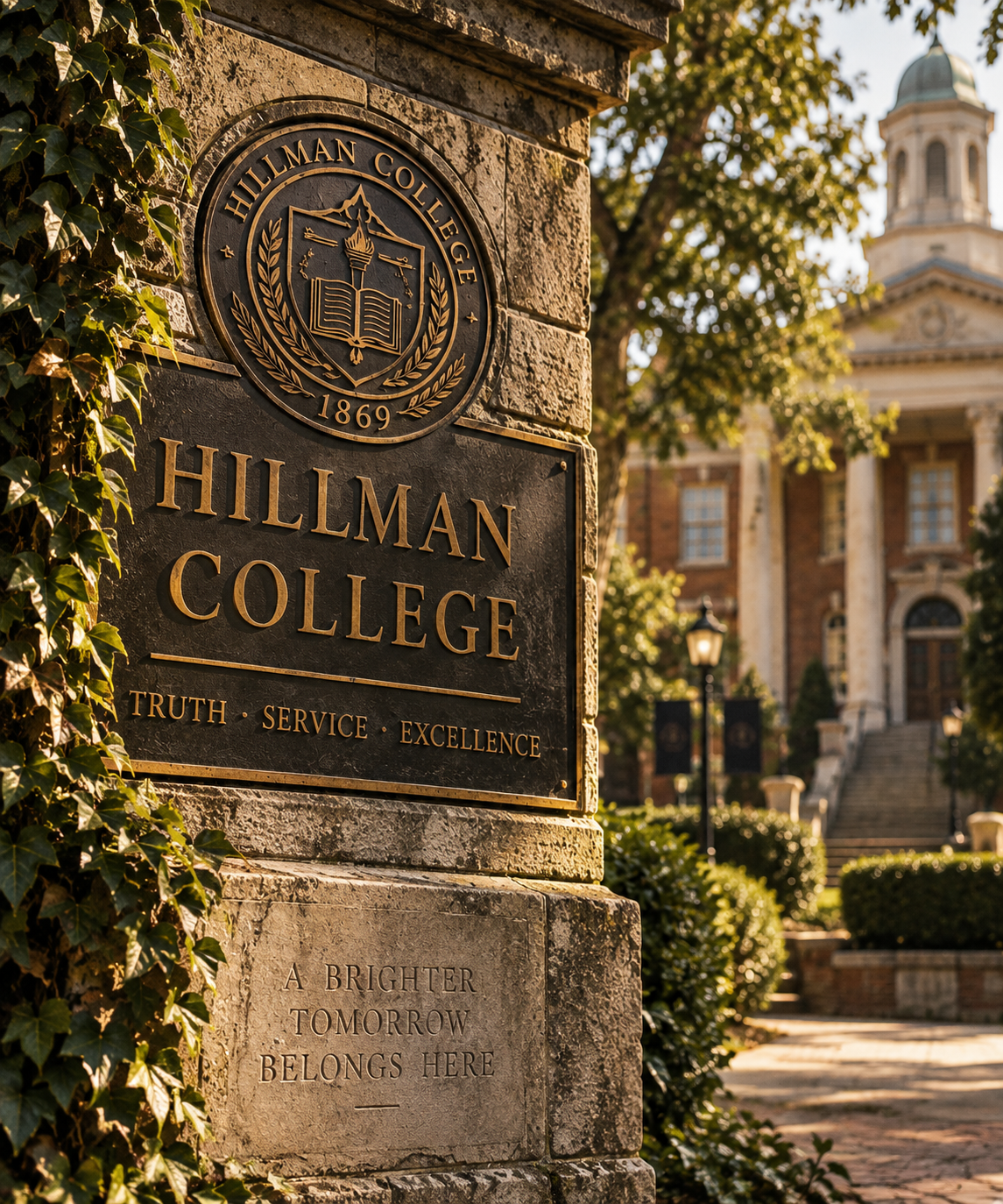
Hollywood Is Rebuilding A Different World — The Bigger Question Is Who Hillman Belongs to Now
More Than a Homecoming
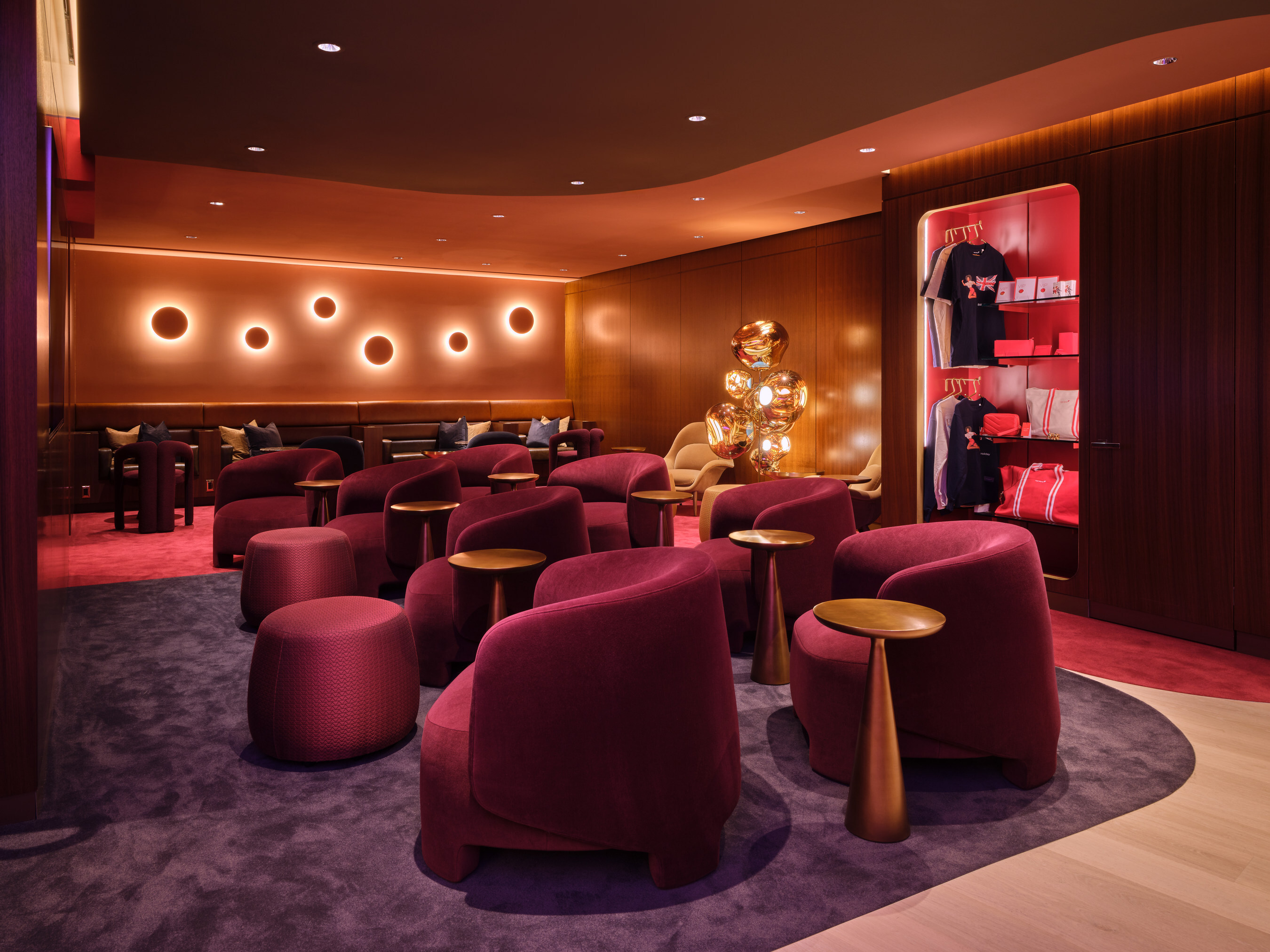
Escape to Luxury: Unwinding in Style at Virgin Atlantic’s LAX Clubhouse
A Haven of Relaxation for Jetsetters Departing Los Angeles.
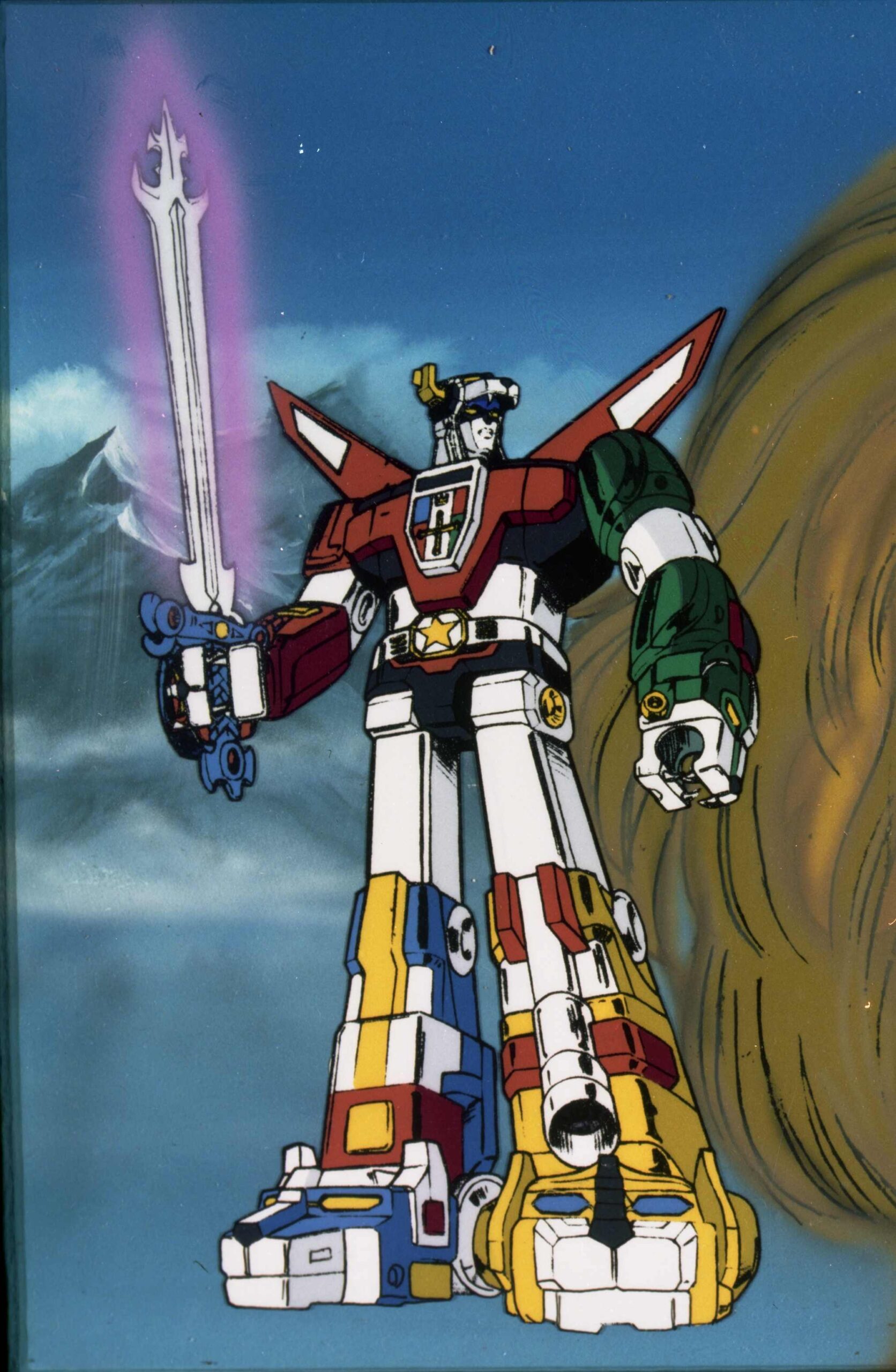
Henry Cavill Joins Live-Action ‘Voltron’: A New Frontier for Mecha Anime on Amazon mgm
Form feet and legs; form arms and body; and I'll form the head.

BOSE INTRODUCES THE SOUNDLINK MAX
Introducing the SoundLink Max by Bose
Coco Gauff Is Becoming a Platform, Not Just an Athlete
Where Sport Meets Luxury

Fruit or Condiment? Heinz Just Made Ketchup Drinkable
Savory Meets Sweet