

Seastreak’s New York to Jersey Shore Ferry Might Change Summer Travel
By Kaiden Holmes
For decades, the trip from New York to the Jersey Shore has carried an unspoken understanding: leave early or suffer.
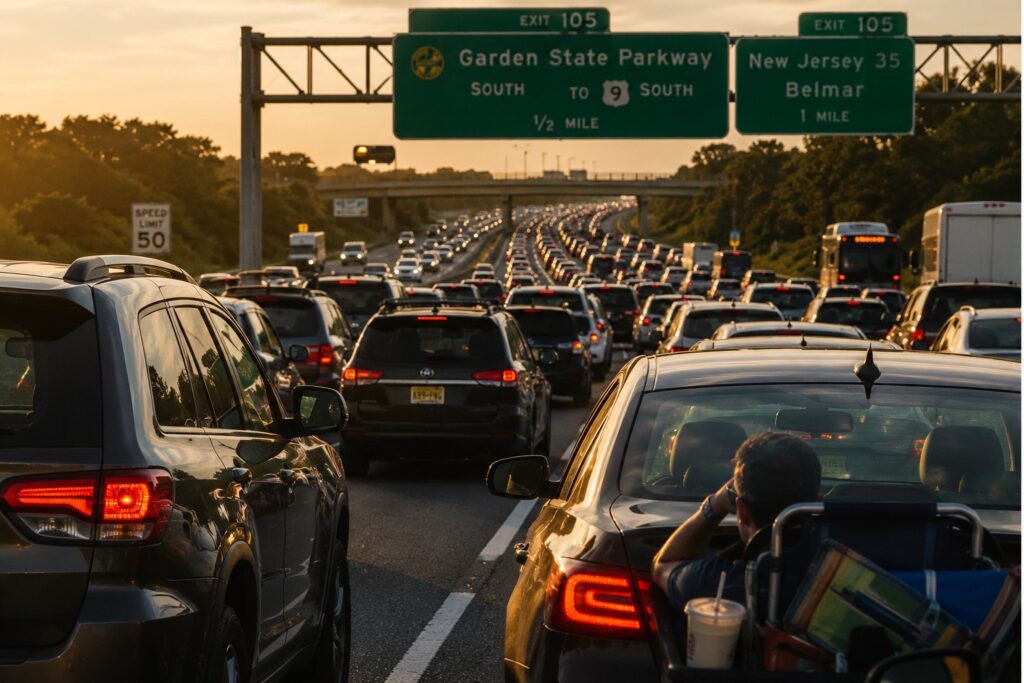
Anyone who has attempted the drive on a Thursday night or Friday afternoon during peak summer knows the ritual. What should feel like the beginning of a relaxing weekend instead becomes a slow-moving endurance test of brake lights, toll booths, overheated highways, crowded rest stops, and the creeping realization that half the evening disappeared somewhere on the Garden State Parkway.
A drive that can technically take under two hours suddenly becomes three, sometimes four, depending on traffic leaving Manhattan and North Jersey during summer weekends. And by the time many travelers finally reach the Shore, they arrive mentally exhausted before even stepping onto the beach.
That is why Seastreak’s new direct ferry route from New York City to Point Pleasant Beach feels bigger than transportation news.
It feels like behavioral change.
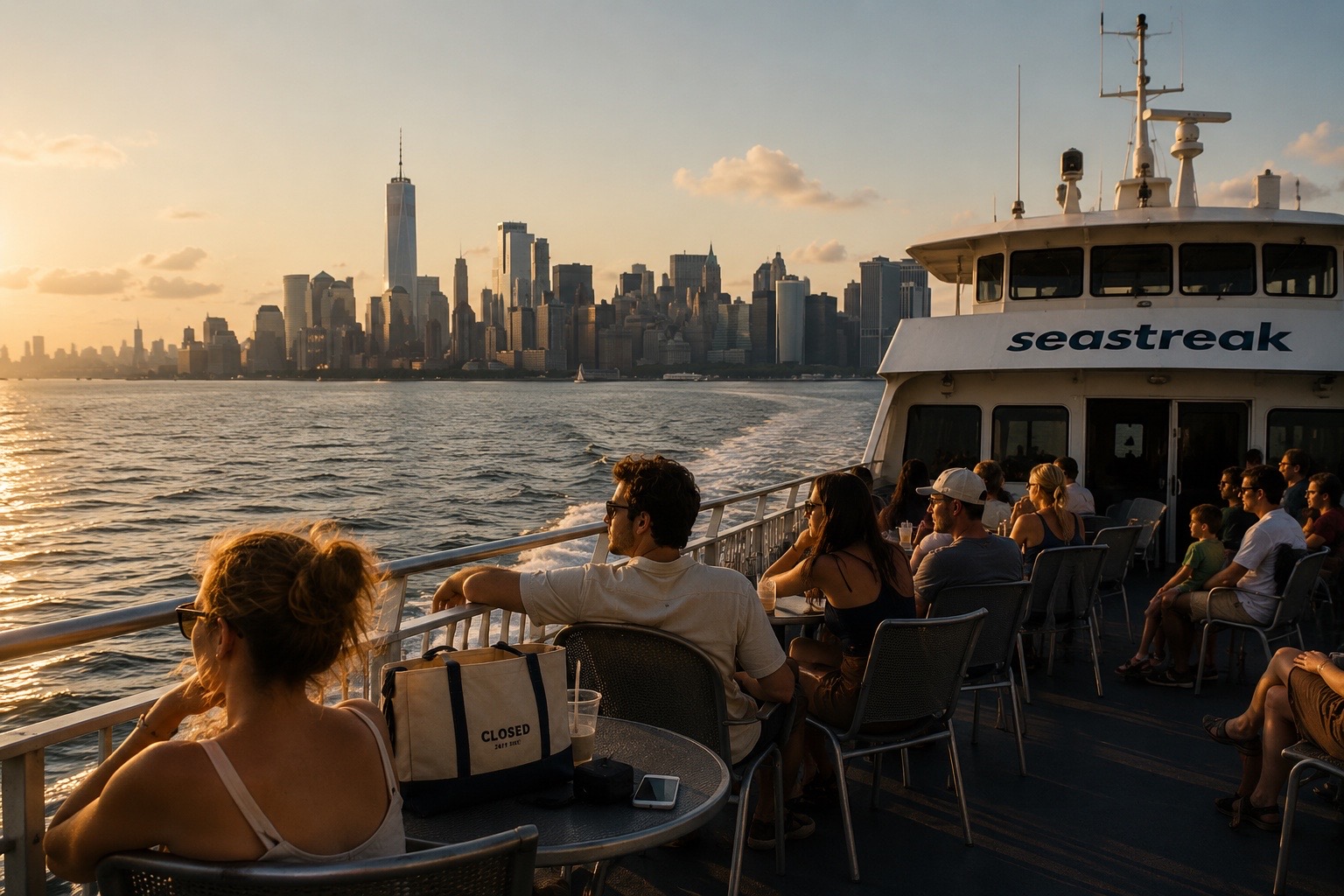
The route, which reportedly cuts travel time to roughly one hour and fifteen minutes, reframes the Shore not as a stressful operation but as something emotionally accessible again. Instead of sitting in traffic gripping a steering wheel for hours, passengers board a ferry in Manhattan and move toward the beach through open water, skyline views, lounge seating, and the psychological feeling that the vacation has already started.
And that shift matters.
Because modern consumers are increasingly willing to pay for reduced friction.
At roughly $69 one-way or $99 round-trip, the ferry is not necessarily cheap compared to driving. But that comparison misses the actual product being sold. The ferry is not competing against gasoline prices alone. It is competing against:
- lost time
- stress
- uncertainty
- fatigue
- parking anxiety
- emotional drain
The real luxury is not merely speed.
It is smoothness.
That may become one of the defining infrastructure conversations of this decade. Consumers no longer evaluate travel solely through efficiency. They evaluate it through emotional cost. How difficult does the experience feel? How much energy does it consume? How much resistance exists between someone and the life they are trying to enjoy?
The Jersey Shore has always represented escape for New Yorkers. But historically, that escape still required endurance. The Shore was not simply a destination. It was a commitment. A process. A logistical exercise.
The ferry compresses that emotional distance.
Point Pleasant does not physically move closer to New York because of this route. Psychologically, however, it absolutely does.
And once destinations begin feeling psychologically closer, behavior changes quickly.
Spontaneous trips increase. Day travel increases. Weekend movement accelerates. Restaurants become busier. Shore economies shift. Hospitality ecosystems emerge around the route itself. The transportation layer becomes part of the leisure experience instead of an obstacle before it.
That is the deeper story underneath the announcement.
Transportation is quietly becoming hospitality.
This is why the idea feels so modern. The future of premium infrastructure may not belong exclusively to whoever moves people fastest. It may belong to whoever removes the most stress from movement itself.
Cars once symbolized freedom because they gave travelers control. But increasingly, especially in dense metropolitan regions, the automobile also represents maintenance, vigilance, unpredictability, and cognitive exhaustion. The fantasy of freedom often collides with the reality of sitting motionless on a highway trying to reach the beach before sunset.
The ferry offers something different:
relief.
And relief has become extraordinarily valuable.
It is easy to look at this as merely a seasonal transportation story. In reality, it may be an early signal of a much larger cultural direction. Consumers increasingly want experiences that feel frictionless, emotionally light, and psychologically restorative from the very beginning.
The weekend no longer starts at the destination.
It starts the moment the stress ends.
Related Posts
Clive Davis Built Careers That Outlived Eras
The artists changed. The formats changed. His curiosity never did.
Cruise Control: Mission: Impossible – The Final Reckoning Ignites IMAX Screens This May
One Last Ride: Cruise Unleashes Mayhem in Mission: Impossible Finale.

James Landry Hébert Has Learned the Value of Staying strong
A conversation about work, worlds, and what lasts

MCM has unveiled a new capsule collection for Euro 2024, highlighted by a campaign starring German footballer Jonathan Tah
MCM Drops Euro 2024 Capsule Starring Footballer Jonathan Tah

LG Launches Its First Curated Content Channel: “LG Channels Showcase”
LG Electronics USA has announced the launch of a new FAST channel on L
Luxury, Authored: Willy Chavarria and Cultural Gravity
Defining Luxury Without Permission