


The Sunset Strip After Relevance
By Jackie Landerson
There was a time when culture required a location.
You had to be there.
Not metaphorically—physically. The right room, the right night, the right proximity. Places like the Sunset Strip were not destinations; they were infrastructure. Visibility was something you entered. Discovery was something that happened because you occupied the same space as it.
A table wasn’t furniture. It was positioning. A lobby wasn’t transitional. It was editorial. The room decided who was seen, who mattered, and what traveled beyond it.
If you weren’t there, you missed it.
That was the agreement.
For a long time, it held.
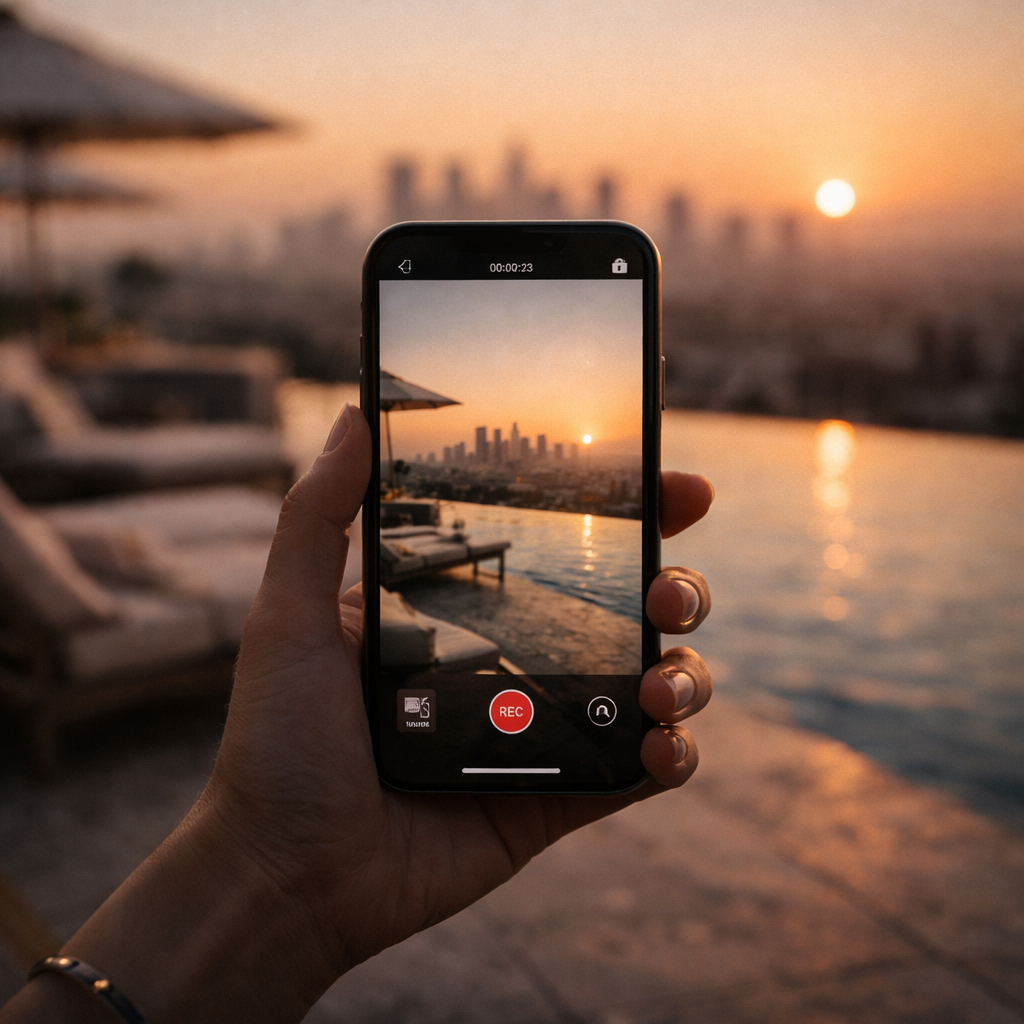
Then the phone entered the room—not as disruption, but as extension. At first, it supported the experience. A photo, a video. Proof you had been inside something worth documenting. The room still mattered. The recording was secondary. Evidence, not replacement.
Then the balance shifted.
Being there began to compete with capturing being there. Attention split. Subtly at first—then structurally. People angled toward the lens. Gestures held a second longer. Moments repeated, cleaner the second time.
The room was still full.
But no longer undivided.
Over time, the logic inverted.
Moments weren’t just happening in the room—they were constructed for what would leave it. Lighting wasn’t atmosphere; it was readability. Positioning wasn’t social; it was visual. The experience reorganized itself around its own documentation.
Then came the break.
You no longer had to be there to participate. The feed delivered it—faster, cleaner, often more complete than the experience itself. The audience outside the room surpassed the one inside it. Presence became optional. Distribution became primary.
What had been contained became continuous.
At that point, the room lost its function.
It no longer processed culture. It staged it. A set, not a system. What once required proximity was now handled more efficiently elsewhere.
Visibility moved.
From geography to interface.
From proximity to algorithm.
From rooms to systems.
And once that shift happens, economics follow.
Brands don’t need the room to reach people. Creators don’t need the room to be seen. Audiences don’t need the room to feel included. Physical infrastructure shifts from necessity to liability—expensive, fixed, and increasingly optional.
Most places can’t survive that transition.
Because the function that justified them is already gone.
This is why certain spaces can feel intact and irrelevant at the same time. The lights are on. The view is still the view. But the system that made it matter has moved elsewhere.
The room still exists.
It just isn’t required.
And once presence stops being required, infrastructure collapses—not physically, but functionally. It becomes optional. Then ornamental. Then replaceable.
Places weren’t built to compete with platforms.
They were built to be them.
That’s what’s ending.
Not nightlife. Not hotels. Not even the idea of going out.
What’s ending is the period in which a place could hold culture simply by containing it.
Now culture passes through people. It moves with them, not around them. Captured, edited, distributed—experienced in layers no single room can control.
The room can still host it.
But it no longer defines it.
The agreement has changed.
You don’t have to be there anymore.
So the place itself stops mattering.
The room used to matter.
Now the recording does.
Related Posts

Harrison Ford Embarks on a Whisky Adventure in Glenmorangie’s New Campaign
Harrison Ford Has Become the Face Of Glenmorangie Highland Single Malt

ASUS Republic of Gamers Introduces the Archer ErgoAir Gaming Backpack BP3800
ASUS Republic of Gamers has unveiled Archer ErgoAir Gaming Backpack BP

The Weeknd and Blue Bottle Debut Two Fresh Ethiopian Single Origin Coffees
The Weeknd continues to expand his collaboration with Australian coffe
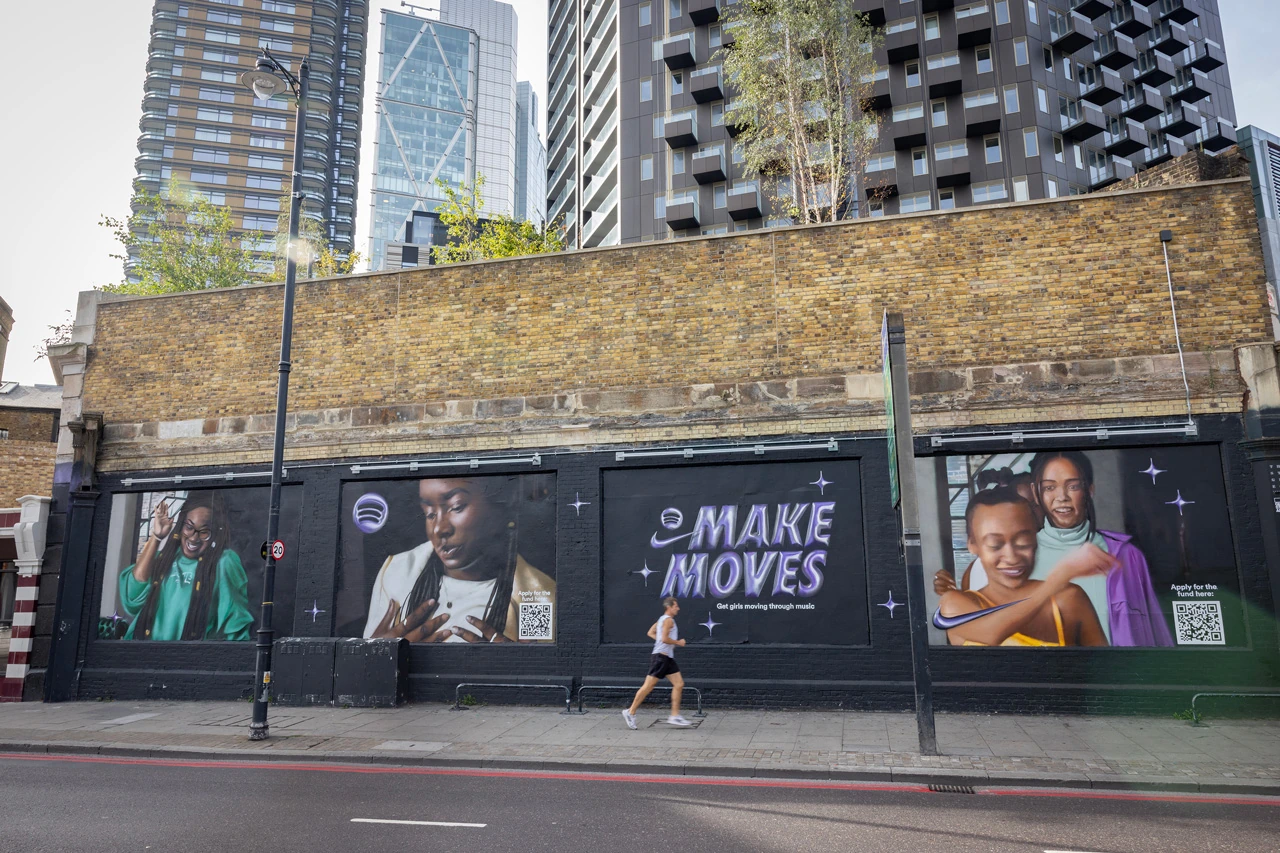
The collaboration between Nike and Spotify is sparking a transformative movement in the UK with the introduction of the Make Moves Fund
By Tucker Adams In the United Kingdom, a remarkable movement of libera

Clase Azul México Unveils Exclusive Limited Edition Tequila: The Loft Brooklyn Collection I
Clase Azul Tequila Pays Homage to New York City.
Godzilla Returns: Minus Zero Targets November 2026 Global Takeover
The Monster Returns
POST COMMENT