


The Interface Is Moving to the Body
By Brian k. Neal
For two decades, the smartphone has been the center of the technological universe. Every service, platform, and cultural moment eventually passed through the glowing rectangle in our pockets. Communication, entertainment, commerce, photography, navigation, and news collapsed into a single behavioral ritual: reach into the pocket, wake the screen, open the app. Entire industries organized themselves around that gesture. The smartphone did not simply deliver information; it defined how information was accessed.
But quietly, that model is beginning to fracture.
The most powerful technology companies in the world are now experimenting with something far more intimate than the device in your pocket. They are designing systems meant to live on the body itself. Intelligence is moving closer to the human interface layer — the ear, the eye, the wrist — where information can be delivered continuously rather than requested through a screen. What once required deliberate interaction is gradually becoming ambient.
The shift signals something larger than a new category of gadget. It suggests that the next technological platform may not be a screen at all. It may be the human body.
The smartphone era was built on a simple behavioral loop. You opened a device. You opened an application. You requested information. The system waited for your attention before it responded. Platforms competed to attract that attention, and the companies that won the smartphone economy were the ones that mastered the architecture of the screen. Social media feeds, push notifications, algorithmic timelines, ride-hailing apps, food delivery platforms, streaming services — each optimized itself around the assumption that the screen would remain the gateway through which intelligence flowed.
Artificial intelligence disrupts that assumption.
AI does not require a screen to function. It requires context. And context lives closer to the human body than it does inside a piece of glass.
When a system can listen, observe, interpret, and respond in real time, the need to manually open an application begins to disappear. The act of “checking a device” slowly dissolves. Instead of asking for information, the environment can anticipate it. Instead of searching, the system can suggest. The interaction becomes less mechanical and more conversational. Intelligence stops waiting behind glass and begins moving through the rhythms of daily life.
That is why a new race is quietly unfolding across the technology landscape.
OpenAI, historically known for building software intelligence rather than consumer devices, is reportedly exploring AI-native hardware designed to keep a conversational assistant present throughout the day. The significance of that move is not the device itself. It is the philosophical shift behind it: intelligence that travels with the user rather than waiting inside an application.
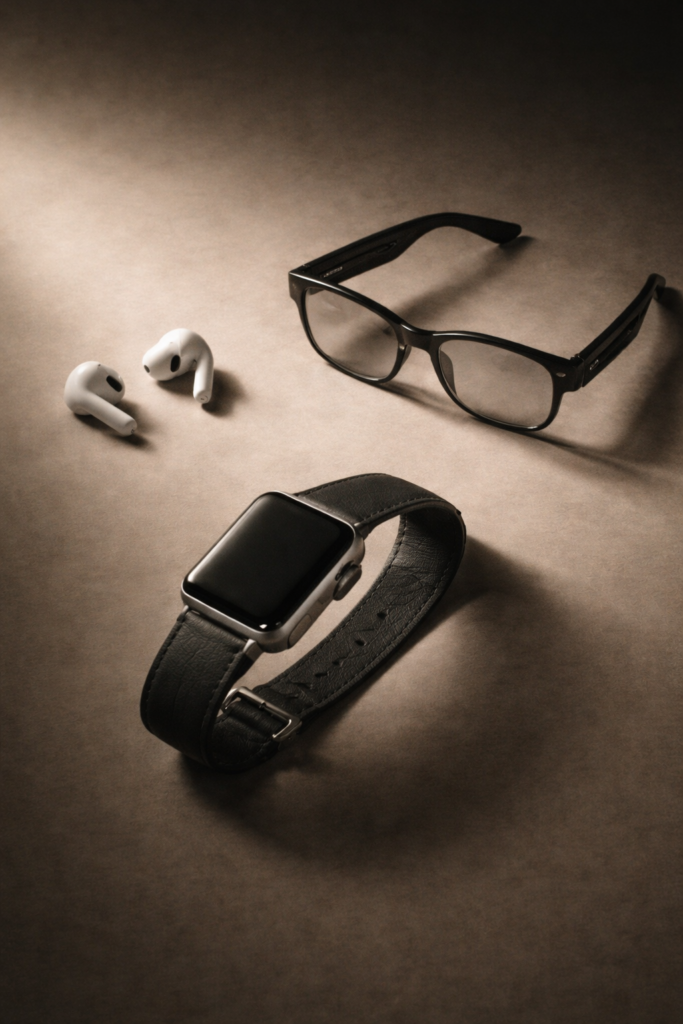
Apple has spent the past decade preparing a different version of the same future. Instead of beginning with artificial intelligence, Apple built an ecosystem of devices that already live on the body. The Apple Watch placed computing on the wrist. AirPods embedded audio interaction directly into the ear. Even spatial computing experiments such as the Apple Vision Pro suggest a long-term interest in interfaces that sit closer to the senses than to the pocket.
Meanwhile Meta is approaching the same destination from a visual direction. Through devices like the Ray-Ban Meta Smart Glasses and the Meta Quest platform, the company is experimenting with systems that interpret what the user sees and respond accordingly. If voice assistants represent one path toward ambient intelligence, computer vision represents another.
Each strategy emphasizes a different human sense. Voice. Vision. Presence. Yet the trajectory is unmistakably aligned. Technology is moving away from the screen and toward the body.
Every major computing era has been defined by its interface. The desktop computer relied on the keyboard and mouse. The smartphone introduced the touchscreen as the dominant gateway to digital life. These interfaces did more than control devices; they shaped human behavior. They determined how quickly we interacted with machines, how often we returned to them, and how information entered the cultural bloodstream.
Ambient intelligence suggests a new interface altogether.
Instead of pressing keys or tapping glass, interaction begins to resemble ordinary human behavior. A question spoken aloud. A glance at an object. A change in location. A shift in routine. The system interprets context and responds. Information arrives not because it was requested through an application but because the system understood that it was relevant.
In that environment, the device itself begins to disappear.
The interface becomes the person.
This is the quiet logic behind the current technological migration. When intelligence becomes ambient infrastructure, proximity becomes power. The closer a system sits to the body, the closer it sits to behavior. And the closer it sits to behavior, the more influence it holds over the flow of information, commerce, and culture.
The smartphone centralized attention around a screen that could be measured, monetized, and optimized. Entire industries learned to compete for seconds of visual focus. But when intelligence becomes ambient, interaction becomes more fluid and less centralized. Information may arrive through a whisper in the ear, a visual cue in the corner of a lens, or a subtle vibration on the wrist. The moment exists, delivers its message, and disappears.
The infrastructure of culture begins to shift.
Commerce becomes contextual rather than search-based. Communication becomes conversational rather than typed. Media distribution becomes less dependent on feeds and timelines and more dependent on proximity to the interface layer itself. The companies that control that layer will hold extraordinary influence, because they will control the moment when information meets the human senses.
This is why the current race is not really about hardware.
It is about proximity.
The smartphone turned the internet into something we carry. It collapsed entire industries into a device that could fit in the palm of a hand. For fifteen years, that device functioned as the center of gravity for the digital world.
But technology rarely stands still.
If the current experiments succeed, the next generation of computing will move even closer to the human interface layer. Intelligence will not wait inside a pocket for a command. It will travel with the user continuously, responding to voice, environment, and context in real time.
And once intelligence reaches that level of proximity, the platform is no longer the device.
The platform is the body itself.
Related Posts

The Store Is No Longer the Destination
The Store Is No Longer the Destination
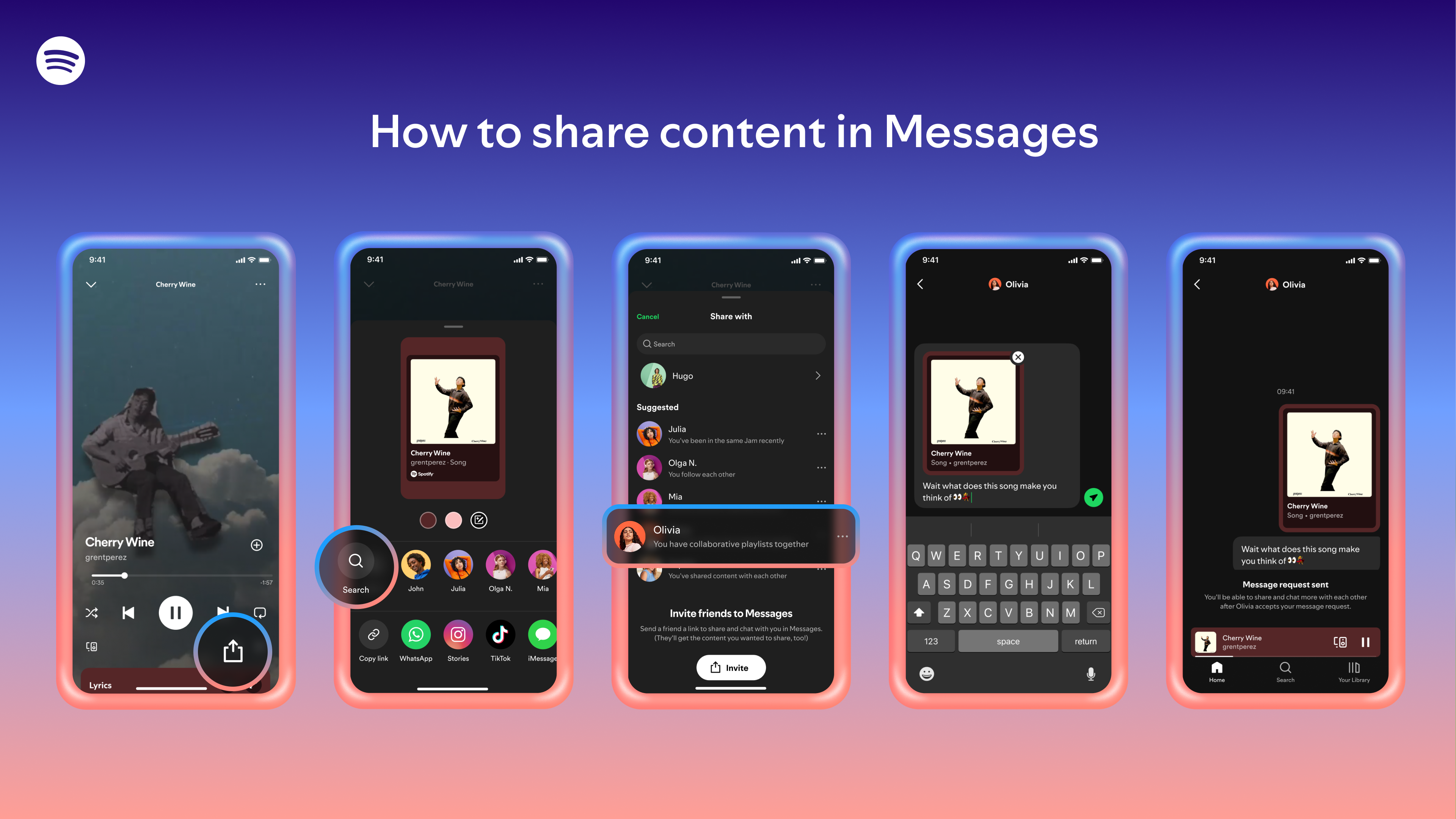
Introducing Messages: Spotify’s New Way to Share What Moves You
From Playlists to Personal Notes
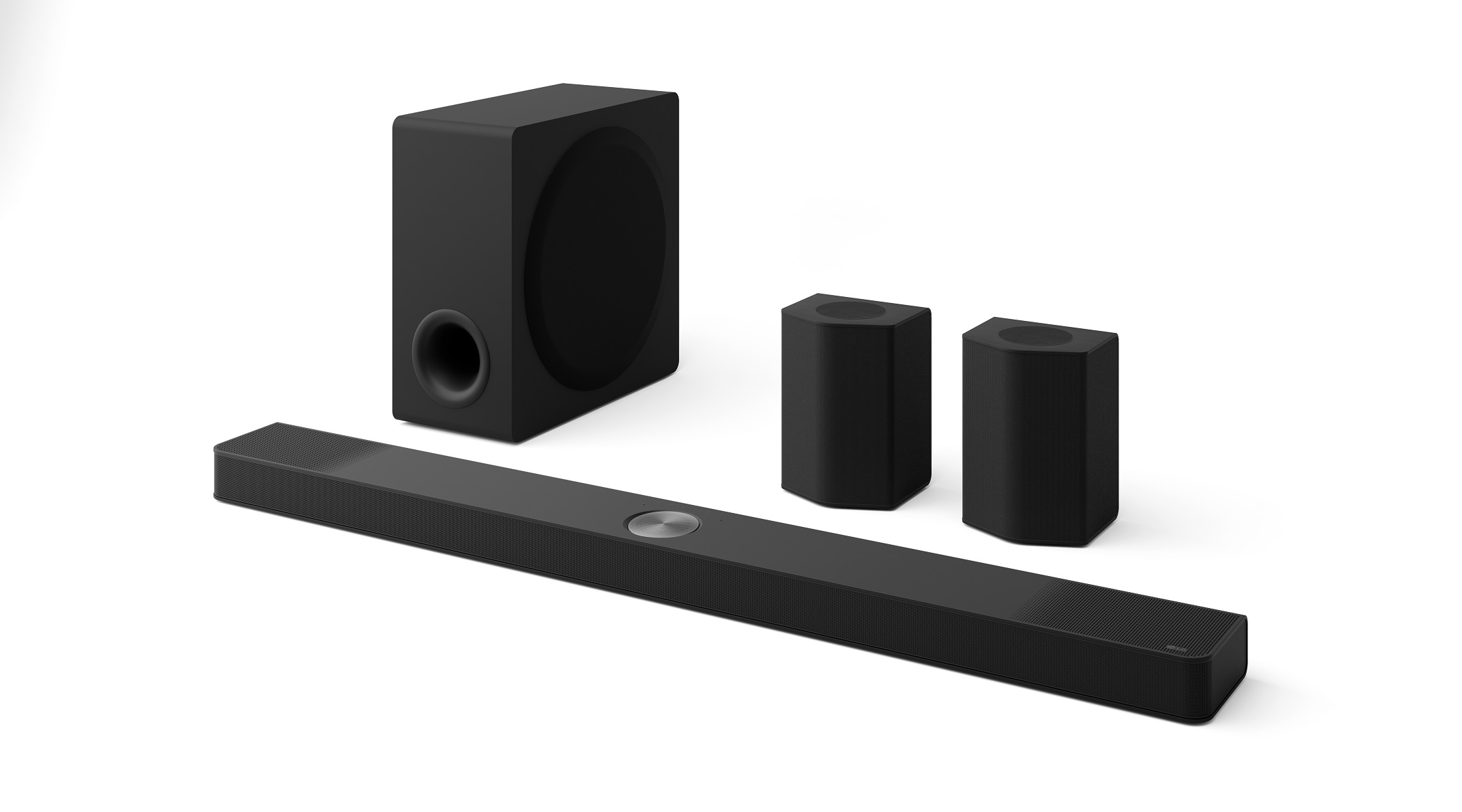
LG Electronics Unveils 2024 Soundbar Lineup for Elevated Home Cinema Experience
LG Electronics has introduced its 2024 soundbar lineup

Insta360 Elevates Action Photography with the New Ace Pro 2, Co-Engineered with Leica
Insta360 partners with Leica Again to Launch Ace Pro 2 Action Camera

Dreame Technology Unveils Roboticmower A1 at CES 2024, Revolutionizing Outdoor Home Cleaning
The Roboticmower A1 advances lawn maintenance

Valve Unveils Upgraded Steam Deck Featuring Enhanced OLED Display
By Brian K. Neal Last year marked the debut of Valve’s groundbre