

The Brand That Needed a Door—and What Happened When It Disappeared
By Tony Harrison
Hollister Co. didn’t sell clothes. It sold a requirement.
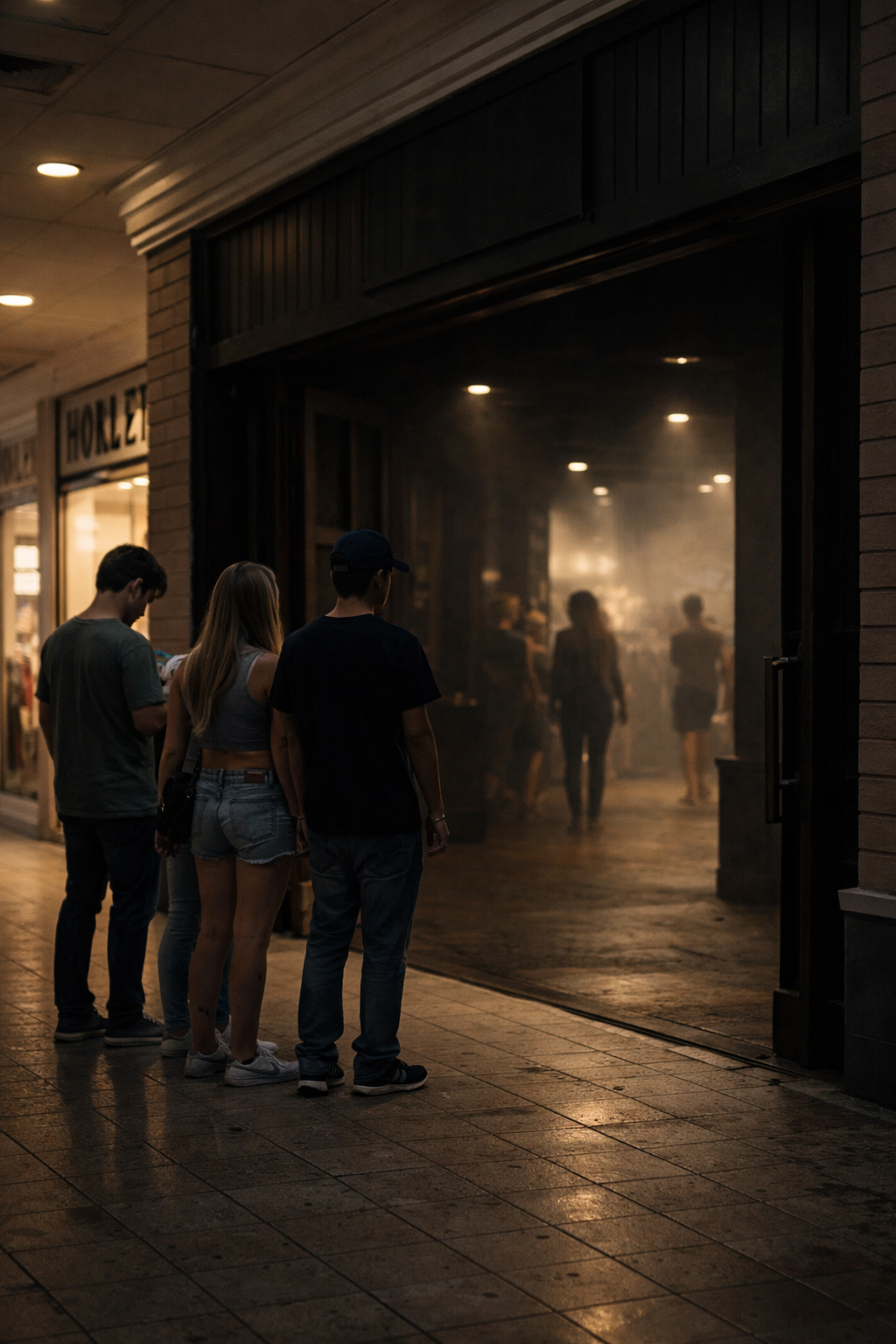
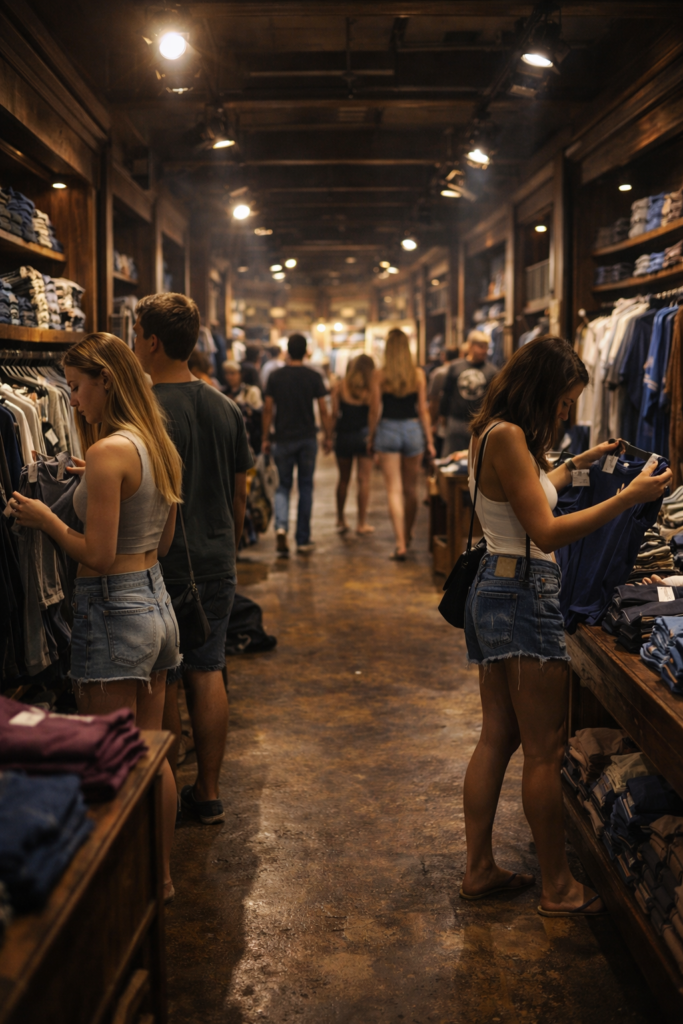
To understand the brand, you had to go there. The darkness, the scent, the music, the bodies—none of it translated outside the store. The product wasn’t the denim. It was the environment. And the environment only worked if you entered it.
That’s what gave it power.
The door.
Not as architecture, but as control. The store wasn’t just a place—it was a filter. It determined who experienced the feeling and under what conditions. You didn’t just walk in. You crossed into a constructed identity, one that only existed because it was contained.
Containment creates value.
For a time, the mall made that system scalable. The door could be replicated, but it couldn’t be bypassed. If you wanted the feeling, you had to show up. Presence wasn’t optional. It was the price of entry.
Then the requirement disappeared.
Platforms like Instagram and TikTok didn’t compete with that system—they removed the need for it. Discovery moved to feeds. Identity moved to profiles. Social validation detached from physical space and became continuous, portable, and immediate.
The door stopped mattering.
What Hollister delivered didn’t vanish. The desire for belonging, for visibility, for a role to step into—that stayed intact. But the structure that once controlled access to that feeling lost its authority. The environment no longer held the experience.
The feeling learned how to travel.
And once it could move freely, the place that once contained it lost its leverage.
This is the pattern most brands miss. They believe they are powerful because of where they exist. In reality, they are powerful because of the conditions required to access them. Remove those conditions, and what looks like cultural dominance reveals itself as dependency on a system that no longer holds.
The mall was the first system to break.
But it wasn’t the last.
Because platforms became the new doors.
For the past decade, environments didn’t disappear—they evolved. Feeds replaced storefronts. Algorithms replaced physical thresholds. If you wanted to exist culturally, you had to enter the system, learn its language, and perform within its frame. The platform became the place—and like the mall before it, it controlled access to visibility, identity, and relevance.
Now that control is weakening.
As tools evolve, the same shift is happening again. Aesthetic can be generated. Identity can be constructed. Environments can be simulated. The conditions that once required a platform are becoming reproducible without it.
The door is dissolving—again.
First the store. Then the feed.
Now anything that depends on being the place you have to go.
Hollister still matters because it revealed the mechanism early. It showed that environments don’t hold power on their own. Power lives in the requirement to enter them.
When that requirement disappears, the system doesn’t fade.
It breaks.
The brand didn’t fail.
The door did.
Creative Direction The Greay Firm @thegreayfirm
Related Posts

Life is Strange: Double Exposure Two Timelines. Twice the Suspects. One Impossible Mystery
By DaMarko Webster The latest trailer for Life is Strange: Double Expo

Four Seasons Debuts Luxurious Sleepwear Collection, Expanding Its Iconic Hospitality Experience to Nightwear
For the Dreamers: Four Seasons Debuts Hotel Pajamas Collection.

Mercedes-Maybach Unveils First Haute Parfumerie Collection: A Symphony of Elegance and Craftsmanship
Mercedes-Maybach Unveils First Haute Parfumerie Collection


What Happens When a Shoe Stops Explaining Itself
The Social Work of a Shoe

Racing in Stripes: adidas Powers Audi’s Formula 1 Debut
From Track to Street
POST COMMENT