

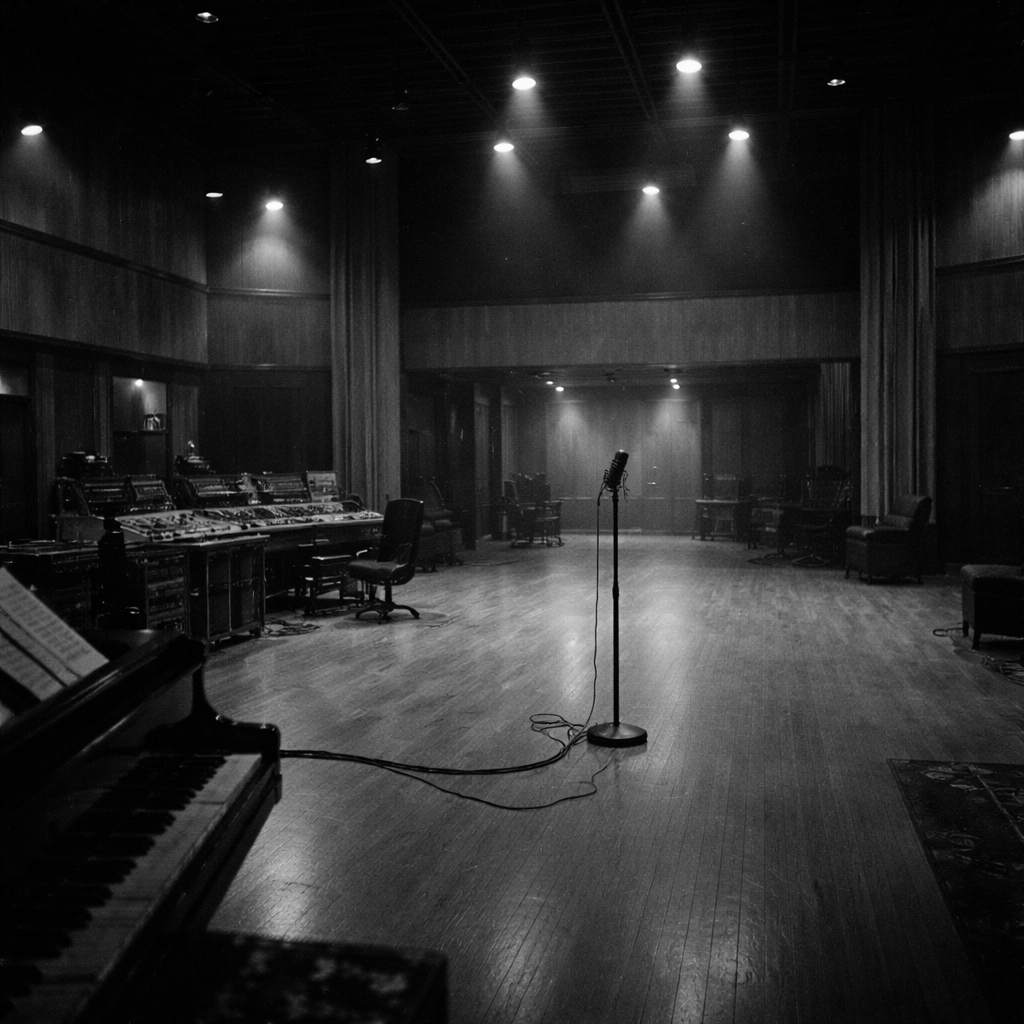
Tamla Was the Blueprint. Now It’s the Test Again

By DaMarko GianCarlo
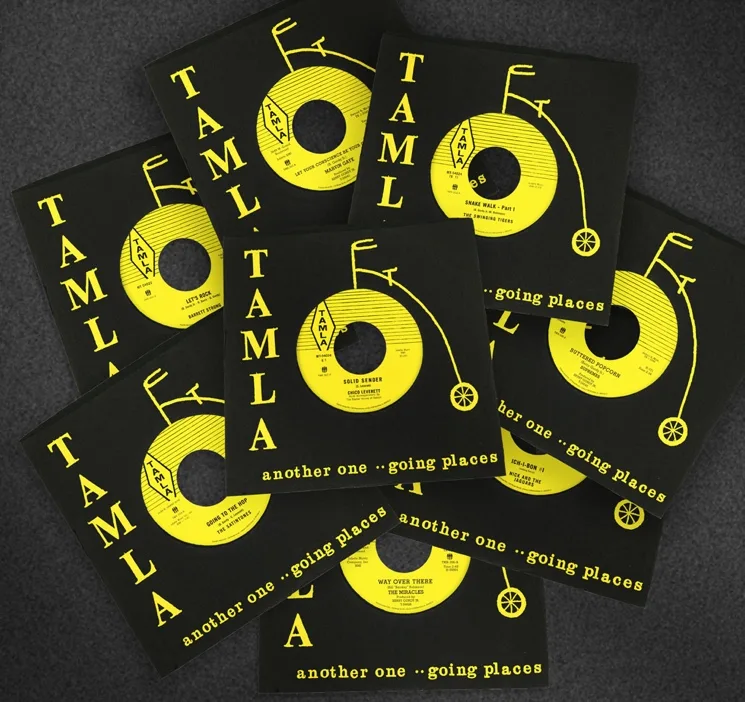
Before there was Motown, there was Tamla Records.
Not as mythology, but as mechanism.
A name stamped on early releases out of Detroit that would later be understood as the beginning of something much larger—not a label, but a system. A way of taking feeling, refining it, and sending it back into the world with precision. Songs didn’t just exist. They were constructed. Writers, producers, artists, all operating inside a structure designed to make records land the same way, over and over again, until it no longer felt like coincidence.
That was the blueprint.
Not nostalgia. Not legacy. Architecture.
And like most systems that work too well, it eventually dissolved into the culture it created.
The industry expanded. Technology flattened access. Artists gained independence. The machine that once engineered consistency was replaced by something looser, faster, less predictable. Hits still happened—but they started to feel discovered instead of built.
For a while, that felt like progress.
Until inconsistency became the norm.
Until scale stopped guaranteeing impact.
Until the industry quietly lost the ability to make records feel inevitable.
Now Tamla returns, not as a revival, but as a question.
Reactivated under Capitol Music Group, positioned within Motown Gospel, and anchored in Nashville—a city that has quietly become one of the most efficient songwriting ecosystems in the world—the label is being rebuilt inside a controlled environment.
Not to recreate the past, but to reintroduce the conditions that made it work.
The addition of Rodney Jerkins is not cosmetic.
It is structural.
Jerkins does not represent a sound. He represents translation—the ability to take an artist’s identity and convert it into records that move at scale. That was always the missing piece between intention and impact.
And it is the same function Motown once perfected.
But the input has changed.
Where the original system scaled love, youth, and aspiration, this version is centered around something more explicit. The language is clear. Positive. Uplifting. Life-changing. Framed within gospel, but not confined to it.
What was once implicit is now defined.
Belief.
Not as genre, but as product.
Because what the industry has been optimizing for over the past decade is not durability.
It is attention.
Speed over structure. Reach over resonance. Records are released into ecosystems designed to test reaction, not guarantee impact. The algorithm becomes the feedback loop. The audience becomes the filter.
And the hit, when it arrives, often feels less like intention and more like discovery—something surfaced rather than something built.
That model scales volume.
It does not consistently scale meaning.
Which is what makes Tamla’s return more than symbolic.
It introduces the possibility of control again.
Not control as restriction, but as construction.
A system where records are not simply released into culture, but engineered to arrive with weight. Where the message is not an afterthought layered onto a sound, but the foundation the sound is built to carry.
And that is a different proposition entirely.
Because if this works, the implication is not limited to gospel.
It extends to the entire industry.
It suggests that the next phase of music will not be defined by who can generate the most attention, but by who can build the most reliable system for meaning. That hits are not accidents waiting to be surfaced, but outcomes waiting to be engineered.
That culture, at scale, still responds to structure—
even if it has spent the last decade pretending it doesn’t.
Tamla was the blueprint.
Now it is the test again.
Related Posts

Rosé of Blackpink Stuns in Puma Palermo Debut: A Fashion-Forward Fusion
Blackpink’s Rosé rocks Puma Palermo in first campaign

It’s Not That Serious, But It’s Seriously Cool: Inside Ricky Ubeda’s Dance Film
Groove, Laugh, Repeat

Breitling Makes Acquisition with Purchase of Universal Geneve in Debut Major Transaction
Renowned Swiss luxury watchmaker Breitling
Michael B. Jordan Set to Direct and Star in New Thomas Crown Affair Remake
Michael B. Jordan is gearing up for his next big project

Innovative Eyewear Enlists Emmanuel Ogbah as Brand Ambassador
Smart eyewear manufacturer has announced Ogbah as a notable addition
Adam McArthur Finding Humanity Inside Anime’s Biggest Battles
Voice in the Chaos
POST COMMENT