

RZA Enters Hollywood’s Next Chamber
By DaMarko GianCarlo
For most of modern entertainment history, artists have been invited into the creative process but rarely into the machinery that delivers culture to the public. Directors make films. Actors perform. Writers craft stories. But the path between a finished work and the audience—the distribution pipeline—has traditionally been guarded territory.
That is why the latest move by RZA carries significance beyond a single film release.
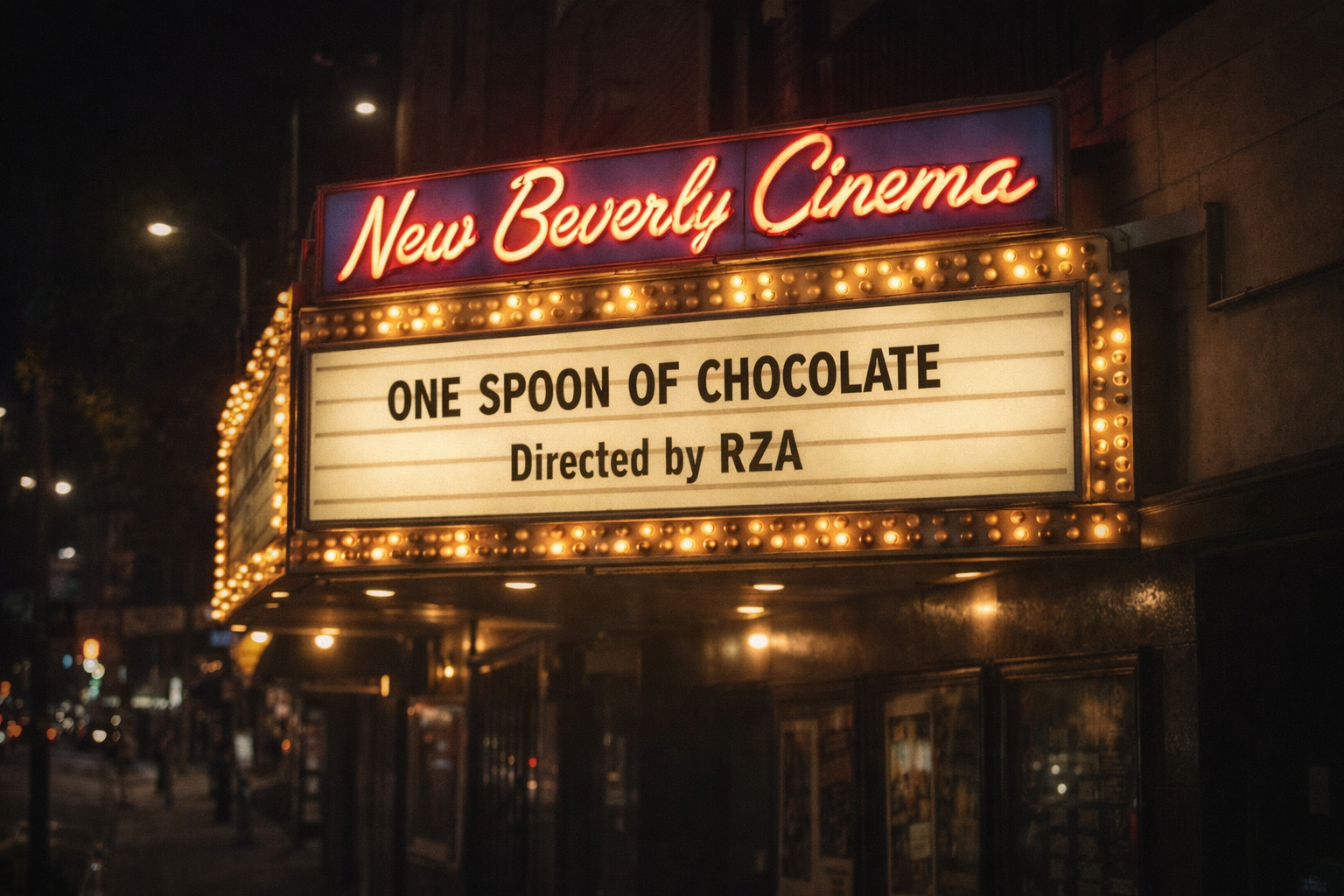
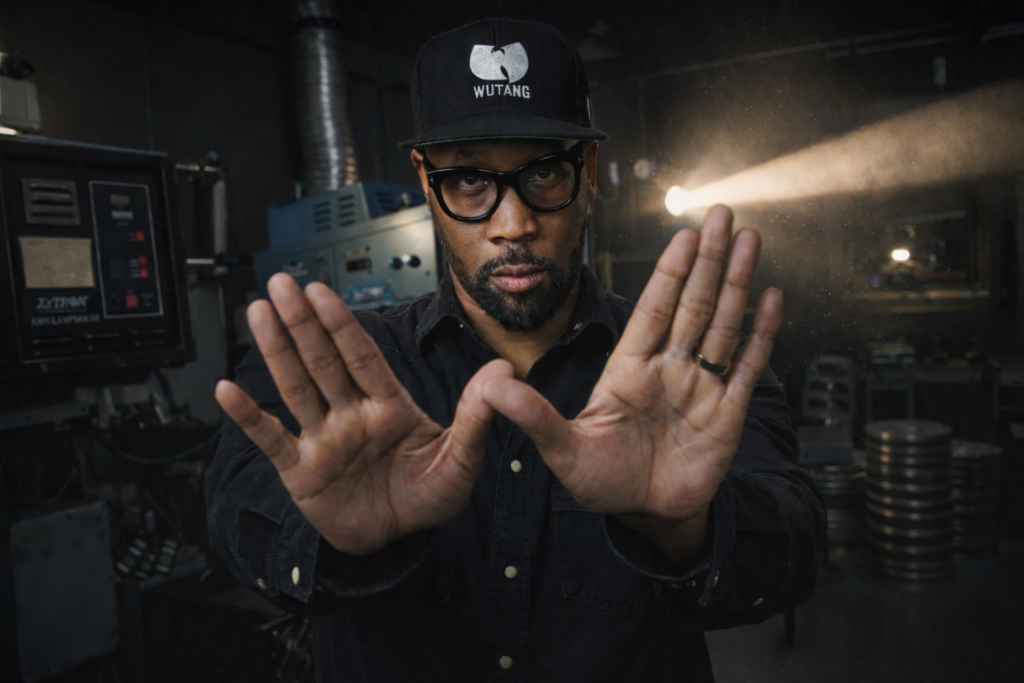
The producer, composer, and filmmaker behind Wu-Tang Clan has launched 36 Cinema Distribution, a new theatrical label designed to bring independent and genre films to theaters. Its first release will be One Spoon of Chocolate, a revenge thriller presented by Quentin Tarantino and starring Shameik Moore, Blair Underwood, and RJ Cyler.
At first glance, it may look like another example of a musician crossing into film. But that interpretation misses the deeper architecture of the move.
RZA is not simply directing a movie. He is stepping into the system that decides how movies reach audiences.
And that system has always been where the real leverage lives.
In the traditional Hollywood model, studios controlled three essential layers of the pipeline: financing, distribution, and exhibition. Artists could create inside the system, but the path from production to public viewing remained tightly managed by institutional gatekeepers.
That structure began to shift in the mid-twentieth century. In the 1950s and 1960s, major actors began forming their own production companies to escape the rigid studio contract system. Figures like Kirk Douglas used independent production to claim creative authority and financial participation in the work they helped bring to life. Douglas’ company, Bryna Productions, helped produce the epic Spartacus, a film that symbolized a growing transfer of creative control from studios to artists.
But production power was only part of the equation.
Distribution remained the real gate between art and audience.
The distributor decides whether a film receives a theatrical run, how widely it opens, and how it is positioned culturally. In other words, distribution determines which stories actually circulate through the world.
By launching 36 Cinema Distribution, RZA is stepping directly into that layer.
The move also reflects a philosophy that has quietly defined Wu-Tang’s approach to culture for more than three decades. From its earliest days, the group structured itself differently from most musical acts. Members could sign individual deals with different record labels while remaining part of the collective—a decentralized model that allowed individual artists to grow independently while strengthening the Wu-Tang brand as a whole.
It was an early experiment in creative autonomy inside a shared cultural ecosystem.
Years later, the group would test the boundaries of artistic ownership again with Once Upon a Time in Shaolin, the famously singular Wu-Tang album released as a one-of-a-kind physical artifact. The project challenged the assumption that music had to function as an endlessly reproducible commodity. Instead, it framed recorded music as something closer to fine art—valuable precisely because of its rarity.
Both moves shared a common thread: control over how art enters the marketplace.
Launching a distribution label is the cinematic extension of that same philosophy.
And the partnership with Tarantino adds an additional layer of cultural symmetry. The director has spent much of his career defending theatrical exhibition and the ritual of cinema as a communal experience. His ownership of the New Beverly Cinema in Los Angeles is part preservation project, part manifesto—an argument that film should still be experienced in the dark with strangers rather than quietly streamed at home.
Seen together, Tarantino’s commitment to exhibition and RZA’s move into distribution form two ends of the same cinematic pipeline.
One protects where films are shown.
The other shapes how they arrive.
More broadly, the move fits into a growing pattern across the entertainment industry. Creators are no longer content to occupy the role of talent within existing institutions. Increasingly, they are building their own infrastructure.
Actors launch studios.
Musicians launch media companies.
Digital creators launch production networks.
The next stage of that evolution is ownership of the pipelines themselves—production, distribution, and eventually the platforms that connect directly with audiences.
In that sense, 36 Cinema Distribution is not simply a business venture. It is a strategic step deeper into the architecture of cultural power.
Wu-Tang once redefined what a rap collective could look like. It created a structure that balanced individual independence with collective identity, turning a music group into something closer to a cultural federation.
Now its chief architect appears to be testing whether that philosophy can extend into one of Hollywood’s most carefully guarded layers.
Distribution.
And if the past thirty years have shown anything about Wu-Tang’s approach to culture, it is that the group rarely enters a new chamber without quietly trying to rewrite the rules inside it.
Related Posts

AI Isn’t Killing Creativity — It’s Exposing Who Never Had One
Taste, After the Tool

New Era: Apple Unveils iPad Pro with M5 — Where AI Meets the Tablet
Power Unleashed

Hisense Unveils CanvasTV™, Merging Art and Premium Entertainment
Hisense CANVASTV, a new blend of art and technology.

ASUS Expands Zenbook Lineup with Stunning AI-Powered Laptops Now Available at Best Buy
The Zenbook A14 now available in the elegant Zabriskie Beige.

Toyota Joins IONNA to Boost North American EV Charging Network
Toyota Invests in EV Charging Network IONNA

POST COMMENT