

Ryan Coogler’s Creative Infrastructure
By DaMarko GianCarlo
The morning after the Oscars, most coverage focuses on the moment: the speeches, the trophies, the red carpet images replayed across every screen. But sometimes the more interesting story is not the award itself—it is the system that produced it. The success surrounding Ryan Coogler is one of those moments. What unfolded on Oscar night was not simply a victory for a single film or a single performer. It was the visible result of a creative infrastructure that Coogler has been quietly building for more than a decade.
Great filmmakers rarely work alone. The most enduring directors in cinema history tend to build circles of trust—actors, cinematographers, composers, editors—who grow alongside them. Coogler’s career has followed that pattern with remarkable consistency. His films are not isolated projects; they are chapters in a long-term collaboration between artists who understand each other’s instincts, rhythms, and ambitions.
That pattern began early. Coogler and Ludwig Göransson first began working together while students at the University of Southern California. Their earliest collaboration came on the short film Locks, a modest student project that quietly established a partnership that would stretch across years of filmmaking. Göransson would go on to become one of the defining musical voices in Coogler’s films, eventually earning an Academy Award and cementing the idea that their collaboration was never accidental—it was structural.
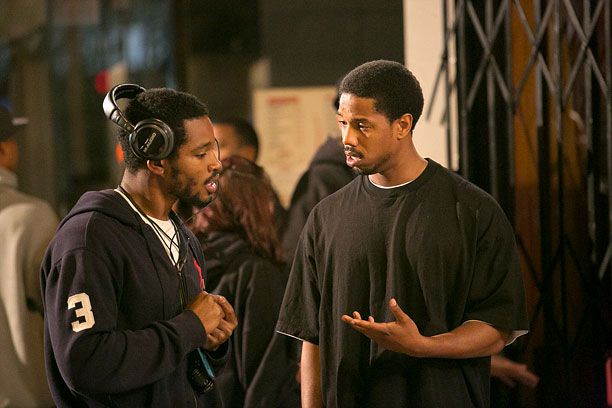
Another pillar of Coogler’s creative system arrived when he began working with Michael B. Jordan. Their first major collaboration, Fruitvale Station, introduced audiences to a partnership built on mutual trust and artistic alignment. Jordan’s performances under Coogler’s direction have repeatedly shown the advantage of that familiarity. A director who deeply understands an actor’s instincts can push a performance further than a one-time collaboration ever could.
Over time, the circle expanded. Cinematographer Autumn Durald Arkapaw became another essential voice in the visual language of Coogler’s films. Her work behind the camera demonstrates the way strong directors build visual continuity across projects, shaping how audiences experience the worlds their films create. When Arkapaw made history at the Academy Awards, becoming the first woman of color to win the Oscar for Best Cinematography, it was another sign that Coogler’s creative ecosystem was producing historic moments.
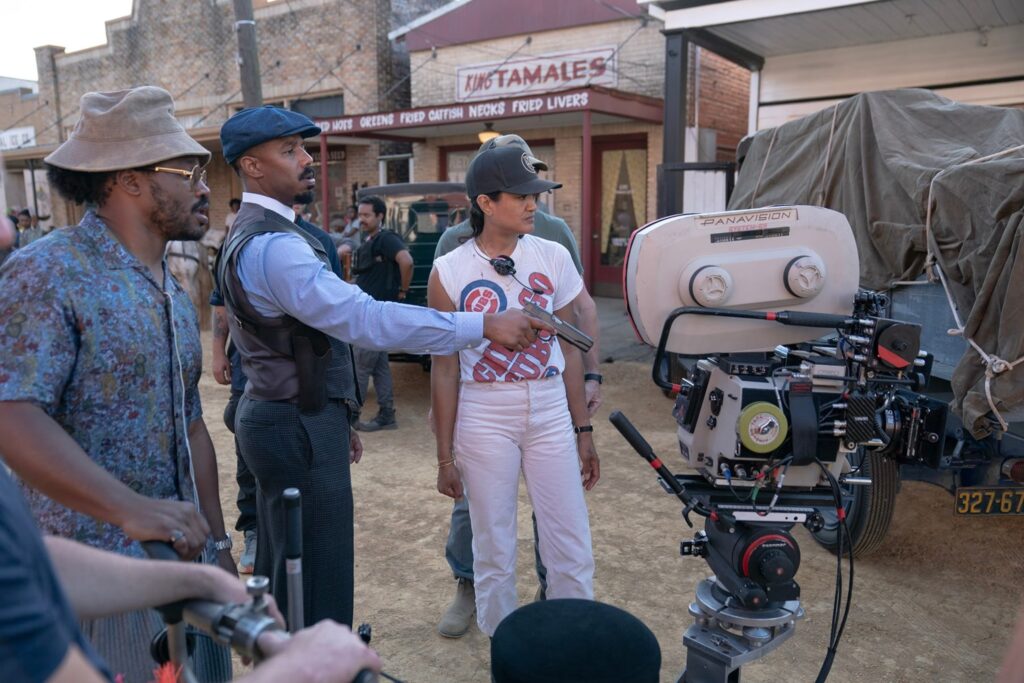
What makes this collaboration network notable is not simply its success, but its durability. Hollywood often thrives on temporary alignments—teams that form for a single project and dissolve immediately afterward. Coogler has taken a different approach. His films feel less like isolated productions and more like the work of a creative collective evolving over time.
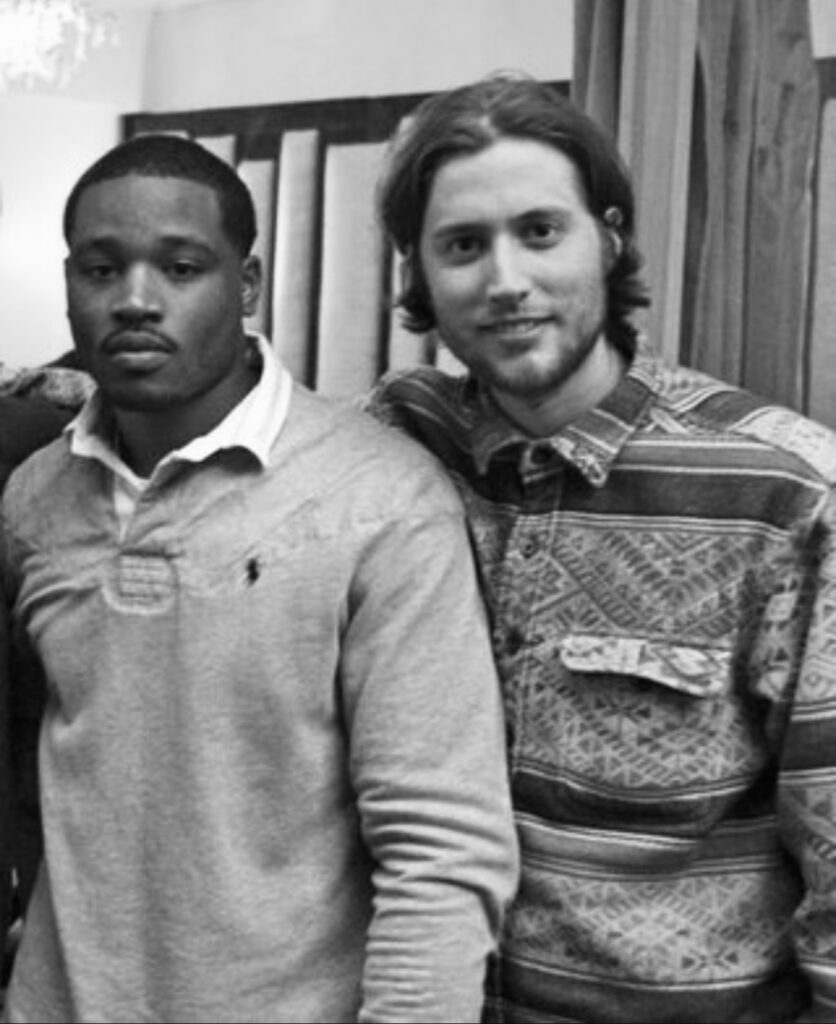
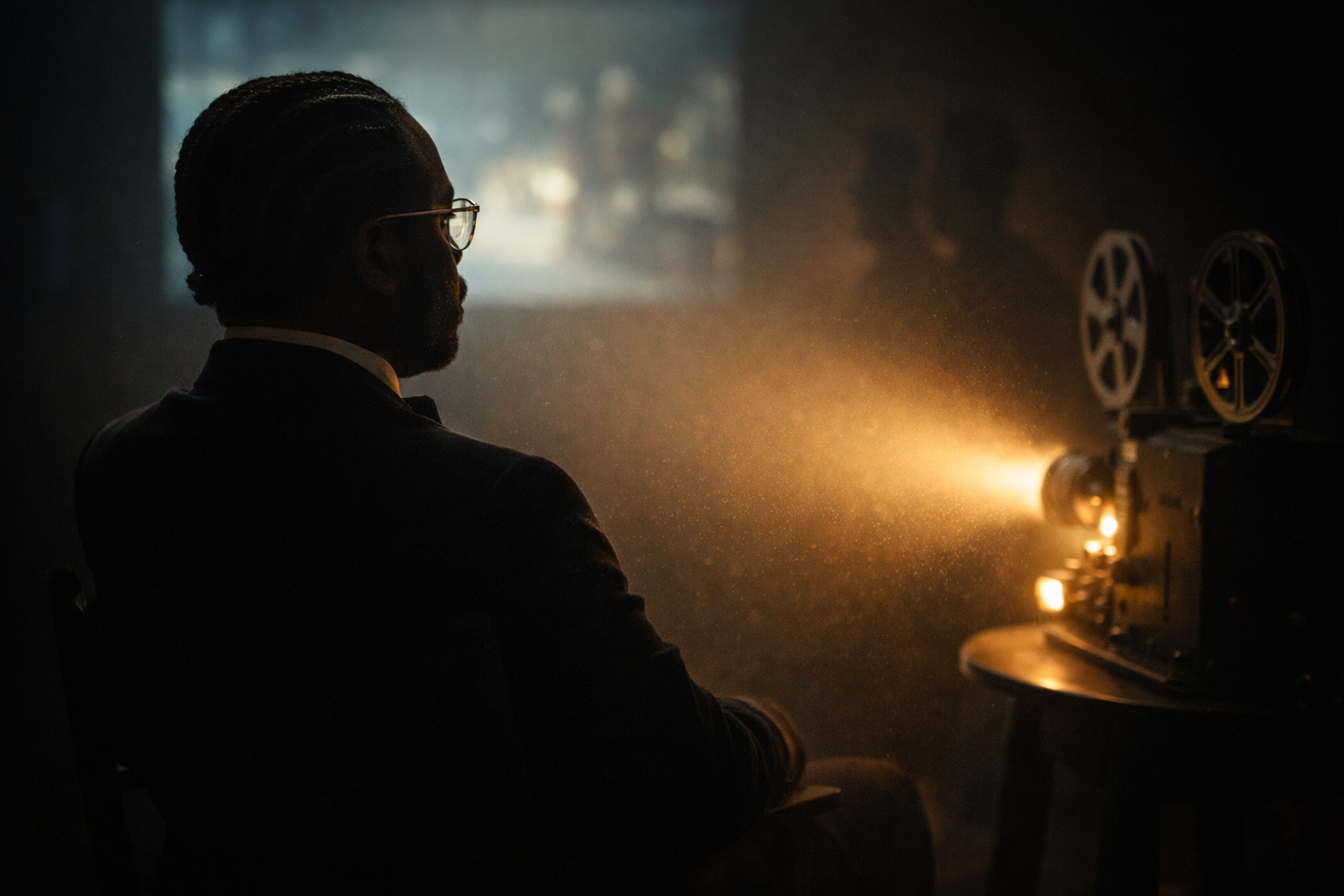
That evolution is visible in the imagery surrounding his career. One can trace a line from a young filmmaker studying cinema and imagining the stories he wants to tell, to a director guiding actors on set, to a full production team operating with confidence and shared vision. And then there are the quieter photographs—moments from the earliest days, when Coogler and Göransson were simply students at USC with an idea about what filmmaking could be.
Those images carry a different kind of meaning now. They reveal that the success recognized by the Academy was not sudden. It was the outcome of years of collaboration, trust, and creative alignment.
In Hollywood, infrastructure often goes unnoticed because audiences are trained to focus on the visible stars of the moment. But filmmaking has always been a collective art. Behind every celebrated performance or award-winning score is a network of relationships that make those achievements possible.
Ryan Coogler’s career demonstrates how powerful that network can become when it is built intentionally. The Oscars may have provided the spotlight, but the real story lies in the architecture behind it: a filmmaker who understood early that lasting cultural impact rarely comes from working alone.
Related Posts

Marriott Bonvoy and Starbucks Launch New Loyalty Program Collaboration
Starbucks and Marriott Bonvoy Collaboration Unlocks Exclusive Benefits
Tom Petty Estate Signs Global Agreement with Warner Chappell Music
TOM PETTY Estate Inks Global Deal
LOTTO Partners with Brooklyn Aces, Marking a Historic Entry into Professional Pickleball
LOTTO Partners with Brooklyn Aces

Tillamook Unveils Decadent Chocolate Collection and High-Tech iScreen for National Chocolate Ice Cream Day
Tillamook Unveils Decadent Chocolate Collection

Samsonite’s collaboration with BOSS unveils a fresh campaign designed to take travelers on an extraordinary journey with its distinctive aluminum luggage capsule
BOSS and Samsonite have launched the exciting new "Departures" campaig
Keke Palmer’s ‘Just Keke’ Is a Radical Act of Self-Writing
Vulnerability as Power
POST COMMENT