

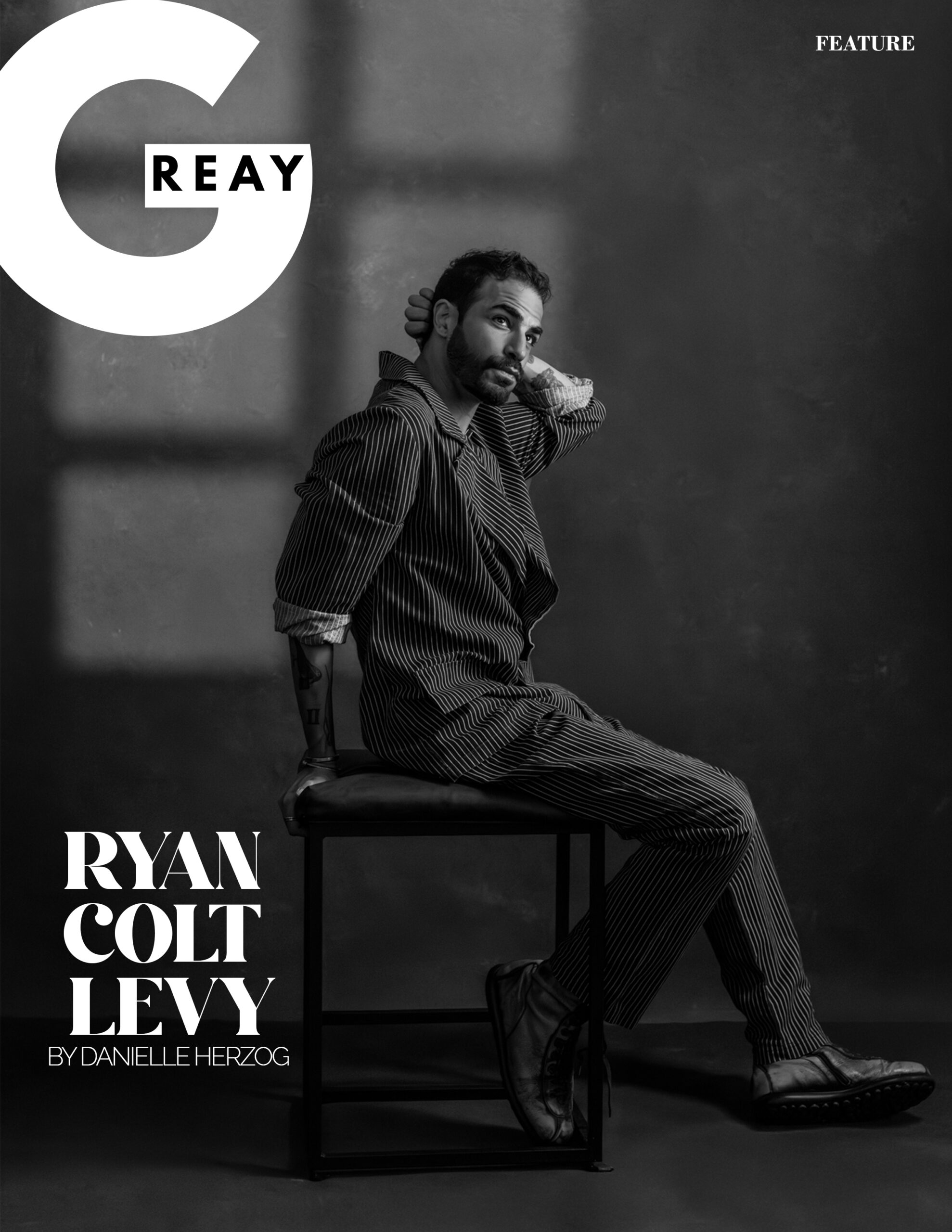
Protecting Pochita: Ryan Colt Levy on Love, Loss, and Finding Home in Anime
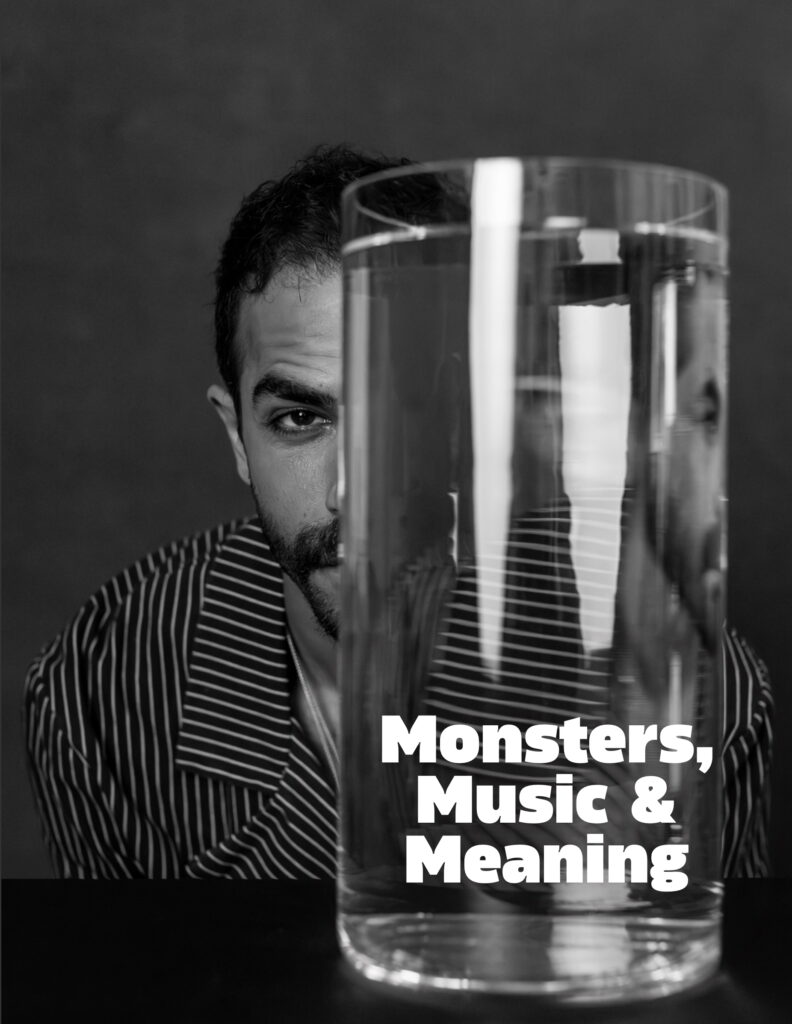
By Kyra Greene
Ryan Colt Levy doesn’t just voice characters—he lives them. Whether he’s channeling the reckless chaos of Denji in Chainsaw Man or the smooth-talking, street-smart charisma of Rody Soul in My Hero Academia: World Heroes’ Mission, Levy brings an emotional authenticity that resonates far beyond the screen. A former screamo frontman with a deep love for anime and storytelling, his performances are equal parts raw nerve and refined craft. In this exclusive conversation with Greay Magazine, Levy opens up about emotional catharsis, finding rhythm through music, the unspoken love between Denji and Pochita, and why voice actors deserve their moment in the spotlight.
Your portrayal of Denji in Chainsaw Man captures both the wild chaos and the emotional vulnerability of the character. What personal experiences or insights did you draw on to balance those extremes?
The thing that is so unique about Denji and the story is how deeply real his feelings, actions, and thoughts are. He is so raw, and the more we follow his experiences, the more I find that many people can relate to him. I have felt devastating heartbreak and loss, been led down the wrong path, lived at times in a very feral survival mode, and absolutely questioned my self-worth. It has been an incredibly cathartic experience to work through all of that within the performance.
You’ve voiced Rody Soul in My Hero Academia: World Heroes’ Mission and Denji in Chainsaw Man—two very different roles. How do you approach shifting between these distinct personalities, and what’s your process for finding each character’s unique voice?
It all comes down to an equation for me: the writing and tone of the story combined with the energy and attitude of the character. Rody lives in an interesting space in the My Hero Academia universe because he does come from the streets, but he had a loving family and was well educated beforehand, so there is an inherent smoothness to his vibe. You can sense his confidence in how he carries himself in both speech and physicality, regardless of his current position in life. He is also doing everything in favor of looking after his two younger siblings, so we come to see that he is pretty selfless in his true motives.
Denji, on the other hand, is a deeply fractured, cornered animal who never had any affection or education, which leads to a level of survival mode that can be just as self-destructive as anything else. All he has ever wanted is to be loved, seen, valued, and given a chance to live like everyone else. Sadly, since becoming Chainsaw Man, he may never get that chance, because everyone is after a part of him but never the true, genuine boy.
Chainsaw Man isn’t exactly a traditional action story—how did you physically and emotionally prepare for the more unhinged, brutal aspects of Denji’s character?
Thankfully, the chainsaw sounds and helmet tone are all done by professionals in the SFX and audio space. What was most important for us when Denji is Chainsaw Man was that my performance be far more unhinged and volatile, so I pulled from my old screamo band days.
Before stepping into voice acting, you had a passion for music. How has your musical background shaped your rhythm, tone, or emotional delivery behind the mic?
There are a large number of people in voiceover who come from, or still play, music in some capacity, and I absolutely think it is a bit of a superpower we can use to our advantage. After years and years of countless hours playing, singing, and tracking to metronomes, plus spending so much time focusing on mic dynamics, you build a second nature that helps me focus on the acting itself.
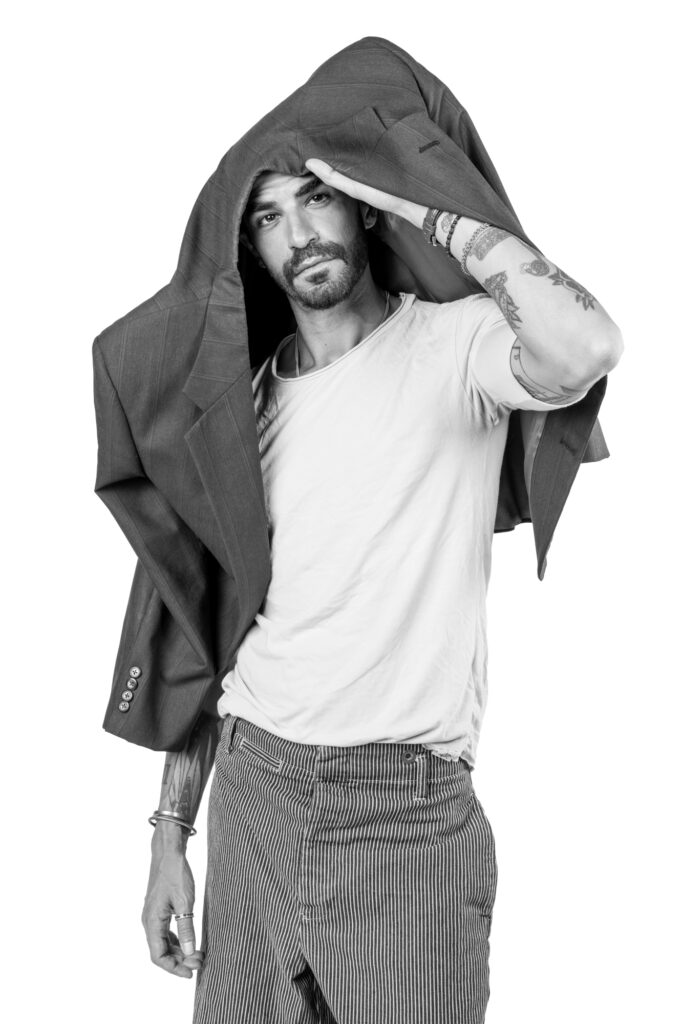
You’ve mentioned being an anime fan long before becoming a voice actor. Was there a specific series or character that inspired you to pursue this path—and how surreal is it now being on the other side of the screen?
Cowboy Bebop and the Studio Ghibli films were by far the most important in shaping my awareness of what the art form can do. I also remember seeing Paprika in theaters in Tribeca, NYC, when it first came out, and it absolutely melted my brain. It is a huge honor to be a part of anime. Chainsaw Man feels like a deeply important story for our time, and having the opportunity to work in this space when the awareness and popularity are so high is an incredibly cool thing.
When recording fight scenes or high-stakes dialogue, how do you prepare your voice and body for the physical demands of intense sessions?
I like to exercise early in the morning, which gets my body warmed up for the chaos ahead, but so much of what gives Denji his energy is just giving myself over entirely to the unhinged nature and absolutely going ape-shit (while still staying aware of mic technique). I leave many sessions sweaty and physically drained, but absolutely satisfied.
With the global rise of anime and dubbed content, how has your relationship with your audience changed—and do you feel a greater sense of responsibility knowing your voice reaches millions around the world?
From day one, before Denji even became a part of my life, I felt a deep responsibility to represent the characters, properties, and fans with as much respect, love, and passion as humanly possible. It is a major privilege to work in this space, especially on projects that are so high profile, and coming from music and on-camera work, I understand the layers of nuance needed to be in the public eye. I want to branch out into film, TV, and theater, so this has been an exciting time as everything has gained more attention in recent years. I think voice actors deserve to have the same awareness and opportunities as on-camera actors, but I also think there needs to be an understanding on the performers’ side of how much they need to protect their projects and fans.
Denji’s bond with Pochita is such a fan-favorite element of Chainsaw Man. How did you personally connect with that relationship, and what did you want to convey in those quieter, more heartfelt moments?
I have had pets most of my life, and knowing the depth of that bond has been tremendously powerful in creating the connection between Denji and Pochita. It is an unconditional love and friendship, which is so pure, really the only pure thing Denji has. I am also very close with Lindsay Seidel, who voices Pochita, and just knowing she is guarding me is the warmest feeling.
You’ve worked in both anime and video games—what are some of the unexpected joys or creative challenges that come with each medium?
There is a unique thing about anime where, since you are tied to the lip flaps and animation, you have to learn how to play within the lines and find freedom in your performance within those restrictions. Video game sessions are more often just working off a script, which gives you more malleability in performance and timing, and if you are fortunate enough to work in motion, performance, or facial capture, you get to play out entire scenes like a play or film. I love finding the energy to channel into each space so I can focus the physicality correctly.
The timeline between recording and release can be pretty long. How do you keep your energy and excitement alive while waiting for fans to finally hear your performance?
I get to play for a living; every day is a new, insane adventure! What more could I need to be excited 24/7?!
You’ve taken on roles in series like JoJo’s Bizarre Adventure and Moriarty the Patriot, which have deep fan bases and legacy status. How do you prepare to step into those kinds of narratives where expectations are high?JoJo‘s was so early in my career that I was still learning how to do everything at once, so I’m just glad my performance wasn’t an absolute dumpster fire and that the fans are happy! For Watson [Moriarty the Patriot], I had been a long-time Conan Doyle fan and was well versed in Sherlock stories. So the biggest focus was on trying to get the accent right as best I could. Thankfully, our Sherlock, Theo, is a proper Englishman and helped me find the right vibe.
The voice acting world is known for its tight-knit community. Are there any actors or mentors in the industry who’ve helped shape your growth or changed the way you work?
David Sobolov has by far had the most profound effect on my career. We worked together on an on-camera project where he was the director and afterwards produced my first voiceover demo, which is what led to me getting all of my initial work opportunities. I don’t know where I’d be now had he not seen some sort of promise in this mangy mutt.
With a grounded sense of purpose and a wildly expanding career across anime, video games, and beyond, Ryan Colt Levy is more than just a voice in the room—he’s a force redefining what it means to connect through performance. From chainsaws and chaos to quiet heartbreaks and fan devotion, Levy’s journey proves that vulnerability can be power and authenticity never goes out of style. As he looks ahead to film, theater, and more animated madness, one thing is clear: this is only the beginning.
Photos By Danielle Herzog
Grooming By Myrlen Monge
Related Posts

Audi and Inter Miami CF Announce Multi-Year Premium Partnership
Audi is the Premium Automotive Partner of Inter Miami CF
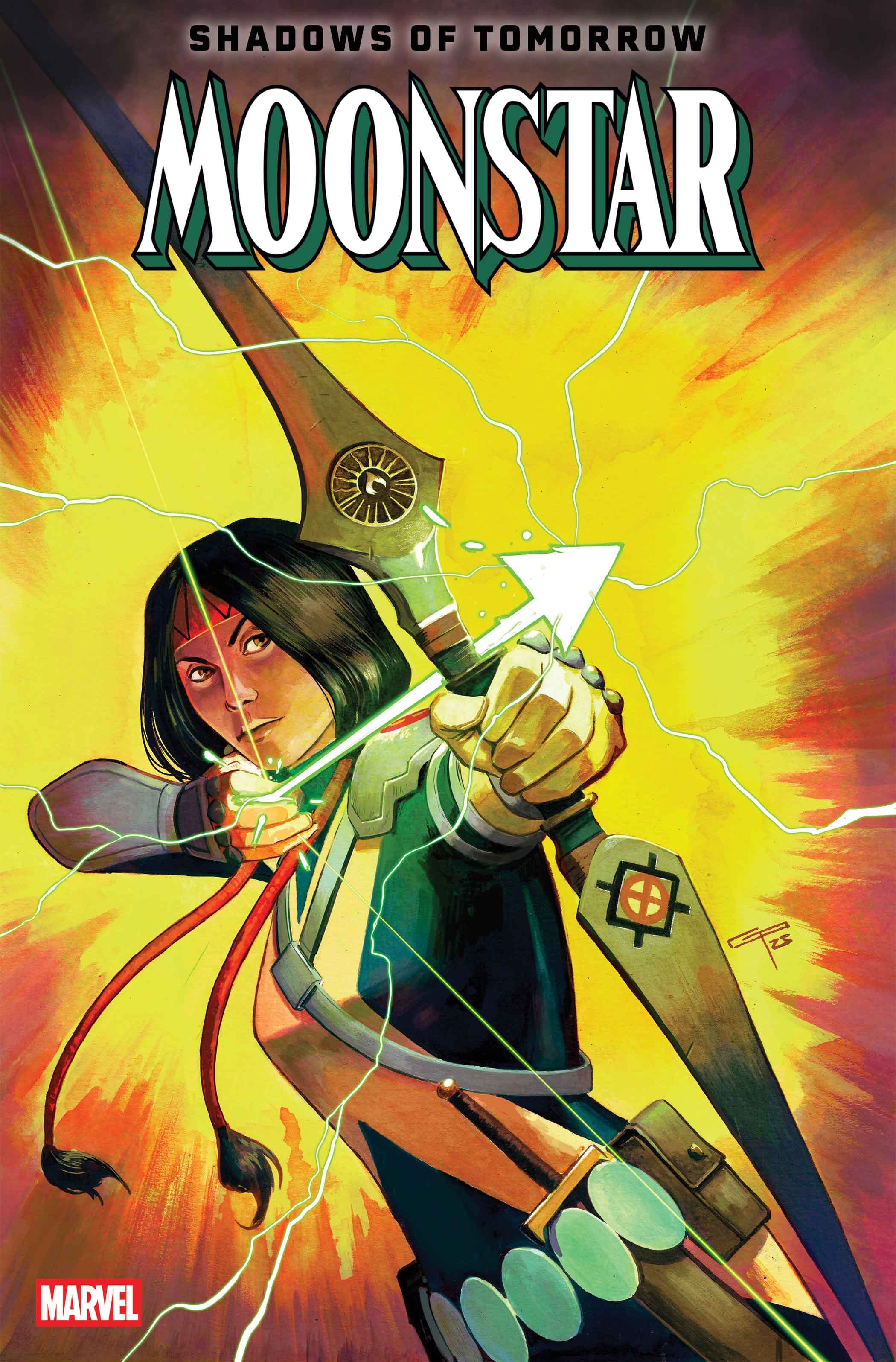
Moonstar Ascends: Marvel Gives Dani Moonstar Her First Solo Spotlight
From New Mutant to Leading Hero

Flying Above the Gridlock: Archer’s Air Taxi Network Takes Off in New York
From Midtown to Takeoff in 10 Minutes: The Future of NYC Travel

The Significance of the Blaxploitation Film Era: A Revolution in Cinema and Society
By Tyson Graves The Blaxploitation film era, which emerged in the 1970

Usher Joins Forces with Skims Mens for Latest Campaign
Usher teams up with Skims Mens for new campaign.

Louis Vuitton and Timberland Unveil Highly Anticipated Collaboration
Louis Vuitton and Timberland reveal highly anticipated collaboration .