


Nike Didn’t Leave Fitness. It Left the Room
By Tyler Moore
We have a habit of confusing where something happens with what it is.
A restaurant becomes the food. A theater becomes the performance. A gym becomes fitness. The walls take on meaning because they are where the experience is delivered, and over time, delivery starts to look like definition.
But infrastructure is not identity.
And when a company understands the difference, the room is the first thing to go.
From a distance, it reads like a retreat.
Boutique fitness is still expanding. Community-driven workouts still carry cultural weight. The appetite for shared physical experience has not disappeared.
Nike closing its studio locations fits a familiar narrative—enter, test, step back.
That narrative only works if you believe Nike was trying to win the room.
It wasn’t.
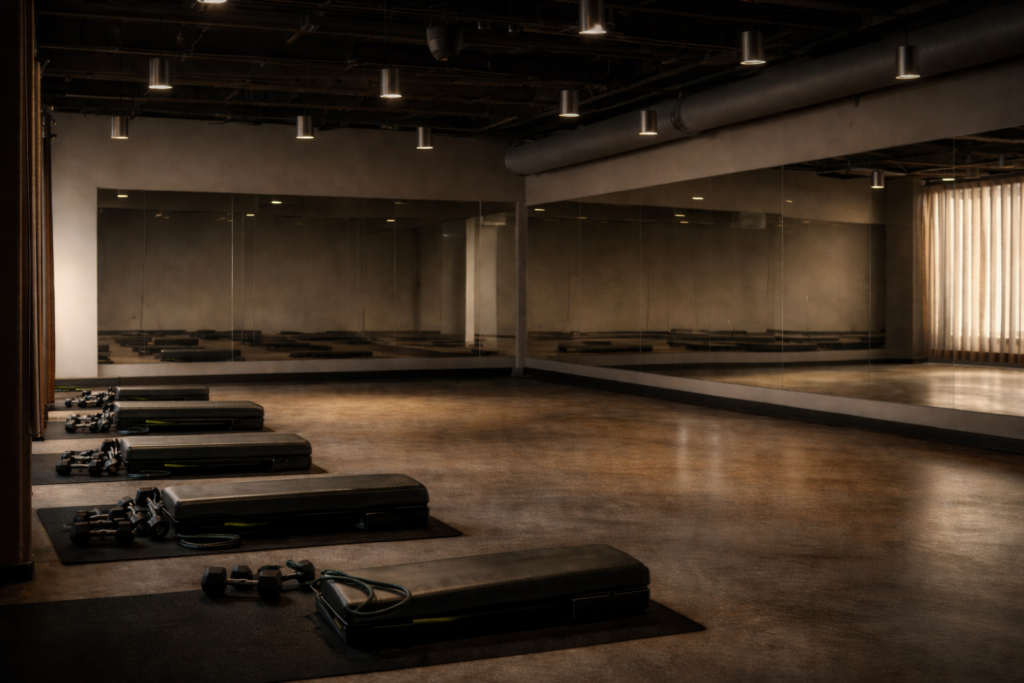
The studio was never the product. It was the question.
What happens when a company that already owns the language of performance steps into a space built on proximity?
Boutique fitness operates on containment. You show up, you enter, you participate. The energy is localized. The instructor is the conduit. The experience exists because the room holds it together.
Without the room, the system collapses.
That’s the model.
Nike doesn’t build systems that depend on presence.
Nike builds systems that travel.
The uniform moves. The aspiration moves. The athlete moves. The feeling of becoming something better than you were five minutes ago—that moves too. It doesn’t require a fixed location to exist. It only requires recognition.
So when Nike entered boutique fitness, it wasn’t adopting the model.
It was testing its limits.
Could identity be anchored to a room?
The answer is now clear.
It doesn’t need to be.
The physical layer adds friction.
Leases. Schedules. Staffing. Geography.
Necessary for operators whose value is tied to access.
Optional for a brand whose value is tied to meaning.
And meaning moves differently.
You don’t need to own the room if you already own what the room is trying to produce.
This is where the move becomes precise.
Nike didn’t just close the studios. It separated itself from the operational layer. The physical system remains. The locations continue under different operators. The room persists—just without Nike at the center of its execution.
That separation clarifies roles.
Infrastructure runs the space.
Nike runs the signal.
And the signal is where the leverage is.
Fitness, at its highest level, is not about where you go. It’s about who you believe you are when you move. That belief is constructed through repetition, imagery, community, and narrative. Nike has been building that system for decades. Not inside a room, but across culture.
Run clubs don’t need to be owned to be activated.
Training programs don’t need walls to feel real.
Athletes don’t need studios to validate movement.
The system already exists.
The studio was a layer on top of it.
And layers that don’t add leverage get removed.
Nothing was lost. Only what wasn’t needed.
Because the truth is simple, even if it’s easy to miss:
The room was never the source of the experience.
It was the container for it.
Nike doesn’t need containers.
It builds environments that follow you.
Related Posts

Fruit or Condiment? Heinz Just Made Ketchup Drinkable
Savory Meets Sweet

Rolling Art: Cadillac’s CELESTIQ Revives the Glamour of American Automotive Luxury
This Is What a Half-Million Dollar American EV Looks Like

Victor Wembanyama soars into the limelight as the latest house ambassador for Louis Vuitton
Victor Wembanyama is Louis Vuitton’s newest ambassador

Emerging Brazilian Soccer Talent Endrick Felipe Moreira de Sousa Joins Forces with New Balance in Major Collaboration
New Balance Football has recently inked a deal with the rising Brazil

2024 Welcomes Rapid Arrival of Innovative Drivers by Cobra Golf
Cobra Golf takes a step beyond introducing its DARKSPEED drivers

Hollywood Built Stories for Theaters. The Phone Rebuilt Them for the Hand
The Device Is the Director Now
POST COMMENT