

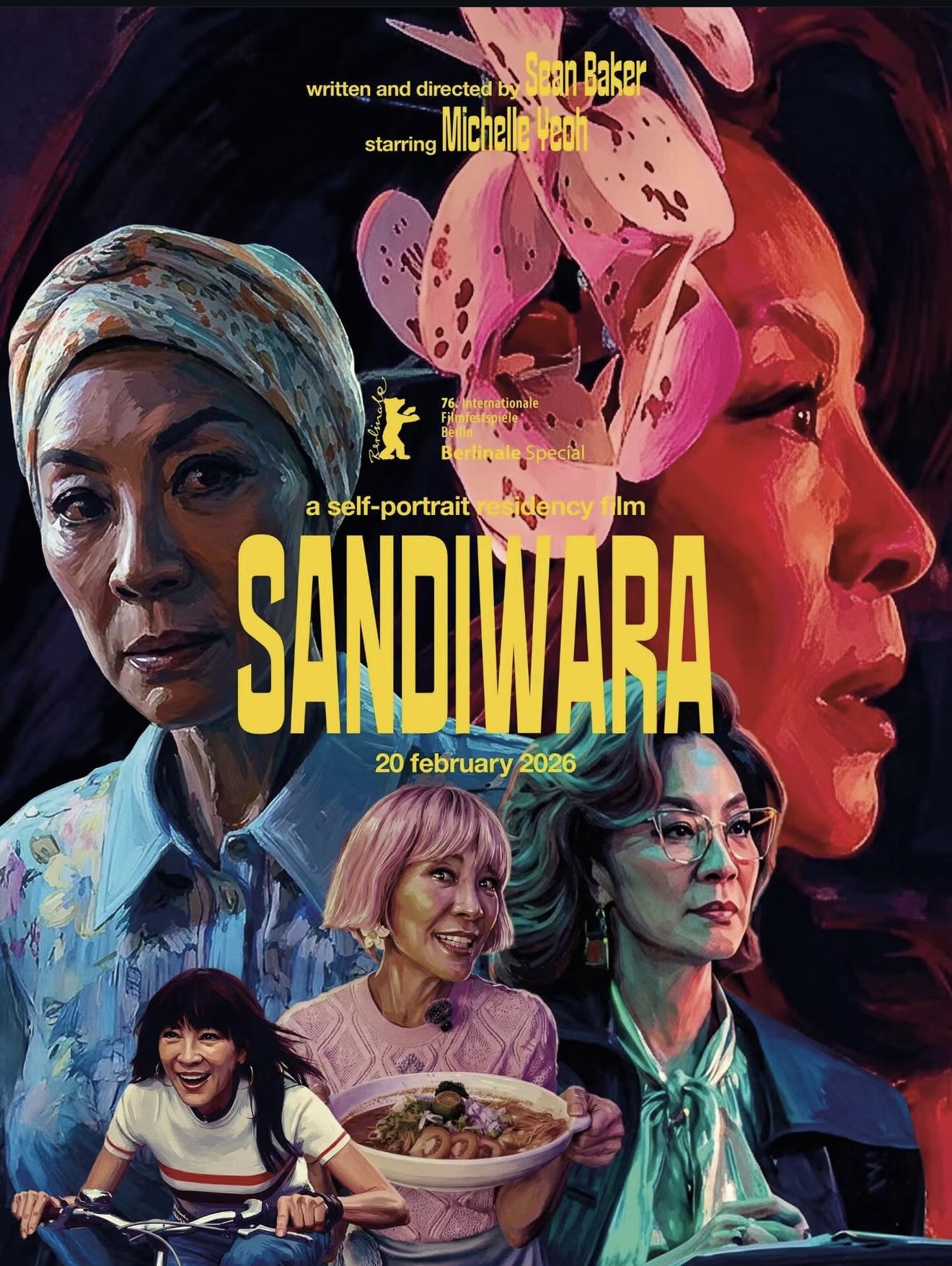
Michelle Yeoh and the Authorization of the Next Standard

By Kyra Greene
Michelle Yeoh has never needed reinvention.
Her career has already moved through multiple cinematic eras—Hong Kong action cinema, global studio franchises, prestige international drama, and finally the Academy Awards stage. At this point, she is not simply a performer within the industry. She is part of its institutional memory. When someone operating at that level makes a creative decision, it rarely functions as a novelty. It functions as a signal.
That signal becomes clear in Sandiwara.
The film was shot on an iPhone. It was filmed in Malaysia. It premiered at a major international festival and then became available directly through its own website. None of those elements individually are unprecedented. Independent filmmakers have used phones as cameras for years. Creators across media have experimented with direct distribution. The infrastructure for lighter production and autonomous release has been developing quietly.
What changes the meaning is who is participating.
When Michelle Yeoh steps into that model, the conversation shifts from experimentation to legitimacy.
For decades, the film industry equated scale with seriousness. Large productions signaled credibility. Soundstages, complex camera systems, and global marketing pipelines formed the architecture that delivered films to audiences. A project moved through a sequence of institutional gates before it could be seen.
Studio development.
Production infrastructure.
Marketing apparatus.
Theatrical or streaming distribution.
Then the audience.
The system created prestige through accumulation.
Sandiwara compresses that structure without discarding its legitimacy. The film still enters the world through a festival premiere, preserving the cultural accreditation that cinema values. But from there, the pathway becomes far lighter. Distribution becomes direct. Access becomes immediate. The layers that once separated creators from audiences become optional rather than mandatory.
This does not represent a rebellion against cinema’s past. It represents the quiet maturation of its present.
For years, technological change has made filmmaking tools smaller and more mobile. Cameras have become more accessible. Editing systems have moved onto laptops. Distribution platforms have multiplied. Yet cultural acceptance of those changes has lagged behind the tools themselves. The industry continued to treat lightweight production as an emerging filmmaker’s necessity rather than a legitimate professional choice.
That perception changes when someone with Michelle Yeoh’s stature embraces the same tools voluntarily.
An Academy Award–winning actress choosing to perform in a phone-shot film does not diminish the craft of cinema. Instead, it reframes where cinematic authority actually resides. It suggests that storytelling power does not originate from the size of the machinery surrounding a production. It originates from the credibility of the artists involved.
The camera becomes a tool rather than a status symbol.
Equally significant is the film’s geographical grounding. Malaysia is not used as a distant location for spectacle. It functions as an environment with cultural specificity and lived texture. By placing the story within Penang, the film reinforces another evolving truth about the global film landscape: the center of gravity for storytelling no longer belongs exclusively to one industry or one city.
Hollywood historically controlled the mechanisms that connected films to global audiences. But those mechanisms no longer dictate access in the same way. The audience can now be reached through multiple pathways, many of which bypass the traditional gates that once defined the industry.
What Michelle Yeoh demonstrates through Sandiwara is not defiance of the existing system. It is fluency within a broader one.
She moves comfortably between large-scale studio productions and intimate, mobile filmmaking. She participates in global franchise cinema and in lightweight independent storytelling. The coexistence of those worlds suggests a new standard emerging across the industry: flexibility without loss of prestige.
Cinema is not shrinking.
It is becoming lighter.
Production does not require enormous infrastructure to achieve emotional impact. Distribution does not require exclusive corporate pipelines to reach an audience. What once appeared experimental is becoming normalized.
And normalization, in any industry, requires validation from figures who possess institutional credibility.
Michelle Yeoh does not need to prove the value of a new production model. Her presence alone confirms that the model has matured enough to hold serious artistic work. When she participates in a film shot on a phone and released through a direct platform, she does not frame the choice as radical. She simply treats it as viable.
That calm acceptance carries more weight than disruption ever could.
Revolutions announce themselves loudly. Evolution, by contrast, tends to arrive quietly. It becomes visible only when the most established participants in a system begin operating within the new structure without hesitation.
In that sense, Sandiwara is less a technological experiment than a cultural milestone. It shows that the film industry has entered a phase where its infrastructure is flexible enough to support both the grand scale of traditional cinema and the intimacy of modern, mobile storytelling.
The apparatus has not disappeared.
It has become optional.
And when optionality reaches the highest tier of filmmaking, it stops feeling experimental. It becomes precedent.
Michelle Yeoh did not revolt against the system.
She stepped into its evolved form—and by doing so, quietly authorized the next standard.
Related Posts

Junk Food Custom Arcades Introduces The SWORL: Redefining Game Controllers
A Next-Gen Controller Customization for Precision for Gamers of All L

Community Gaming Expands Esports Presence in Latin America with Moonton Partnership
Community Gaming Joins Forces with Moonton as Official Esports Partner

Erakulis Unveils Revolutionary Wellness App Backed by Cristiano Ronaldo
Cristiano Ronaldo Unveils Erakulis Wellness App
Cineverse Partners with Vionlabs to Enable Next-Generation Search via Cognitive AI
By DaMarko Webster Cineverse Corp the global streaming technology and

AI Isn’t Killing Creativity — It’s Exposing Who Never Had One
Taste, After the Tool

LG Sound Suite Reimagines Home Audio With Flexible Dolby Atmos Immersion
From Soundbar to Cinema