

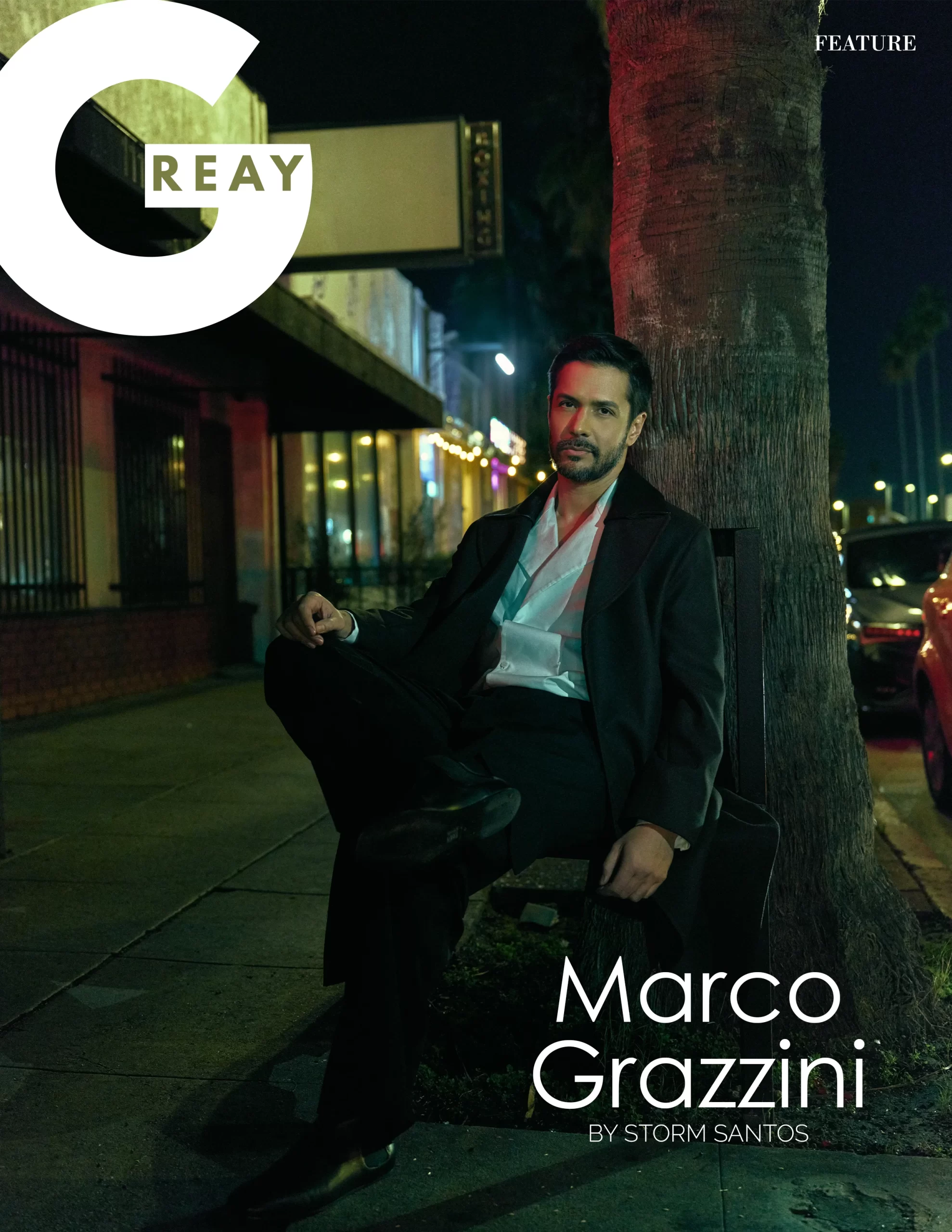
Marco Grazzini: The Discipline of Restraint
By Kyra Greene
In its sixth season, Virgin River has become more than comfort television — it has evolved into an emotional infrastructure viewers return to with ritual loyalty. Within that world, Marco Grazzini understands that stepping into an already-beloved narrative isn’t about volume; it’s about stewardship. As Mike, he doesn’t chase attention — he earns presence. His performance is built on restraint, accumulated trust, and the quiet discipline of reaction rather than declaration. In an industry that often rewards spectacle, Grazzini sharpens his craft in stillness. For him, credibility isn’t delivered in grand gestures. It is constructed — breath by breath, brick by brick.
Virgin River has an incredibly loyal audience. When you step into that world as Mike, what responsibility do you feel toward viewers who are deeply invested in the emotional fabric of the show?
This is now the sixth season of me playing Mike on Virgin River, and I’m so appreciative of how emotionally invested our fans are. I don’t see it as pressure so much as stewardship–I’m stepping into a world people already trust. The fanbase is smart, they’ll sense when something feels inauthentic or rushed. I figure out what the truth of the situation & relationship is, and I simply react to it as Mike, who is all about being dependable and emotional restraint. I know and trust the audience is emotionally intelligent and will meet me halfway.
Mike exists in morally complex territory—he’s steady, but not without ambiguity. How do you approach playing a character who must earn trust rather than demand it?
Mike is a very earnest and honorable man – in my opinion, at least! I approached him with the idea that trust is something accumulated through behavior and actions, not speeches. He listens more than he talks, and when he does speak, it matters. think audiences are smart enough to sense intention even when answers aren’t spelled out. I think all the characters on the show navigate situations of moral ambiguity. These shades of Greay (dadjoke) and the back & forth amongst the fans is one of the primary drivers of the show’s staying power.
The show thrives on subtle emotional tension rather than spectacle. As an actor, how does working in that quieter register challenge or sharpen your craft?
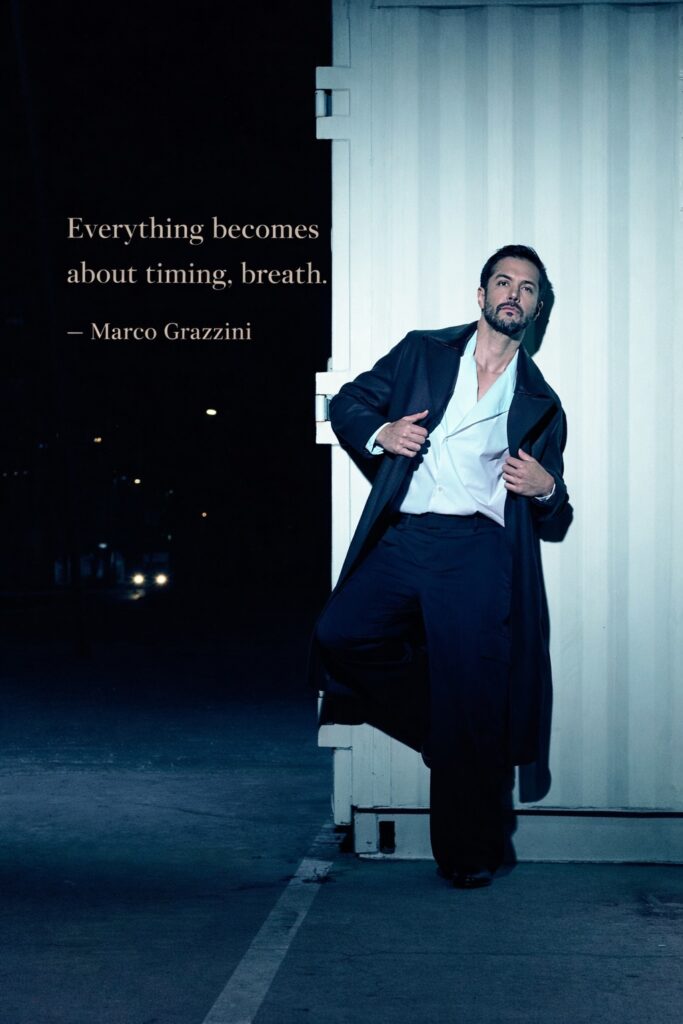
So true!! Other than the occasional boat explosion, fire, and attempted murder, Virgin River is truly a show about relationships and connections. In the quieter and more intimate scenes, everything becomes about timing, breath, and sometimes what remains unspoken. That kind of environment sharpens your instincts because there’s nowhere to hide. It can be tricky, but staying grounded in my character and circumstances is always the best bet.
Virgin River often explores masculinity through patience, restraint, and emotional availability. How has playing Mike influenced the way you think about portraying men on screen?
Playing Mike reinforced the idea that patience and emotional availability are active choices, not passive traits. It has definitely changed how I think about masculinity on screen—it can be steady, responsive, and still compelling. Sometimes restraint actually carries more weight. The audience will bestow an infinite amount of qualities on characters in their moments of silence – it’s fascinating. But paramount to all of that working is the underlying thoughts and feelings of the character. I’ll also tip my hat to the other gentlemen on the show, I’ve learned so much from working alongside them.
You’ve built a career primarily through television rather than chasing constant reinvention through film. What has longevity in TV taught you about pacing, sustainability, and choosing roles?
Television teaches you endurance – I’ve learned how to pace myself creatively and emotionally over long stretches of storytelling. Being in the business for almost 20 years has taught me that trust is such an integral factor, both with collaborators and audiences. It’s also taught me to be selective in a different way: not every role needs to reinvent you, some can just deepen you.
Supporting characters often have the most freedom—they can surprise the audience without carrying the entire narrative. How do you see the creative advantage of being in that space?
Supporting roles can come with a certain creative freedom because the expectation is lighter. I found a lot of joy in season 6, due to the fact that we got to see Mike in several lighter scenes. I’m a huge comedy fan, so I was excited by the fact that the writers leaned into my comedic abilities. Definitely a stark contrast from the usual investigative storylines or love triangle drama, but it really fleshed out Mike’s character and gave us insight into who he is when he’s not on the beat.
Fans frequently debate Mike in comparison to other characters. How do you process audience discourse when it’s passionate, divided, and Ongoing?
I love the Team Mike vs Team Brady convo. People care deeply about our show and it’s a testament to how engaged they are with the love triangle storyline. If I do come across something negative about my character, I take it as a compliment! I never take things personally; people are just reacting to characters on television – it comes with the territory!
If people are debating, it means that our work landed somewhere meaningful and impactful. And if it’s something mean or disrespectful, I just dismiss it as crazy internet people.
You often project a grounded, composed presence on screen. Is that something you consciously cultivate, or does it mirror who you are away from the camera?
What you see on screen is one of the many facets of who I am, but I wouldn’t say it’s my natural default in everyday life. I can be very pragmatic, measured, and dry, but I’m also very animated, opinionated, and default to finding the humor. And sometimes the hot-blooded Italian chef’s blood gets the best of me – so yeah, there’s more stoicism and measuredness that I’m trying to implement in my day-to-day.
As television continues to blur with prestige cinema, how do you see the actor’s role evolving—especially for performers building careers episode by episode?
Well, just think about how the art of storytelling changes based on a 2-hour movie as opposed to a 45-minute episode or God forbid, a 30-second episode. The actor’s role becomes more cumulative – you build a character brick by brick over time, not by just a single arc.
In my opinion it’s an incredible time to be an actor, erasure of that line between film and TV only serves to open up opportunities for all actors. I think we’re seeing an upswing in cinema reclaiming the ‘event’ status that it used to have.
I also think the upcoming infusion of vertical series will continue to require actors to evolve and be nimble.
You’ve worked across network TV, streaming, and genre projects. What creative instincts help you decide when a role will add depth rather than just another credit?
I’m not going to be disingenuous and pretend like the financial aspect of a role doesn’t have any bearing haha. To be a working actor is a privilege. Having said that, I always try to find something creatively that I can anchor into for the role. I try to pursue material that impassions me and/or challenges me. And if the role does feel familiar to something I’ve previously done, I aim to find a fresh take or a new way into the character, that still stays truthful and grounded.
Looking ahead, what kind of stories—or versions of yourself as an actor—are you most curious to explore next, especially beyond the world audiences currently know you from?
I’m a huge fan of sci-fi with a dense mythology, I would find it so exhilarating being a part of something like that. I’m also keen to continue growing in the comedic genre, a comedy set is truly unlike no other. Just having funny people around you is such a blessing, and to pass that on to the audience is a very lucky gig. Who doesn’t want to laugh all day?
What becomes clear in conversation is that longevity, not noise, defines Marco Grazzini’s approach. Nearly two decades into his career, he speaks less about reinvention and more about depth — about pacing oneself across seasons, about masculinity expressed through patience rather than dominance, about earning audience trust through behavior instead of rhetoric. As television continues to expand into prestige, vertical, and hybrid storytelling forms, actors are asked to evolve faster than ever. Grazzini’s answer isn’t acceleration — it’s refinement. Whether navigating moral ambiguity on Virgin River or imagining himself inside a dense sci-fi mythology, his compass remains the same: stay truthful, stay grounded, and let the silence do the heavy lifting. In a cultural moment obsessed with immediacy, that kind of composure feels almost radical — and unmistakably earned.
Photography By Storm Santos @Stormsantos
Related Posts

ANTA and Kyrie Irving Celebrate the Launch of ANTA KAI 1
ANTA and Kyrie Irving Launch ANTA KAI 1

Scandi Style Takes Flight: NUDIENT Launches First-Ever Luggage Collection
Minimalist, Durable, Beautiful—NUDIENT’s Luggage Sets a New Standa
Victor Belmondo Named Berluti’s Brand Ambassador for 2025
Victor Belmondo joins Berluti

Flying Above the Gridlock: Archer’s Air Taxi Network Takes Off in New York
From Midtown to Takeoff in 10 Minutes: The Future of NYC Travel
Red Sole Evolution: Jaden Smith Named Christian Louboutin’s First Men’s Creative Director
A New Era of Luxury
Tamla Was the Blueprint. Now It’s the Test Again
Motown Isn’t Going Back. It’s Reinstalling the System