

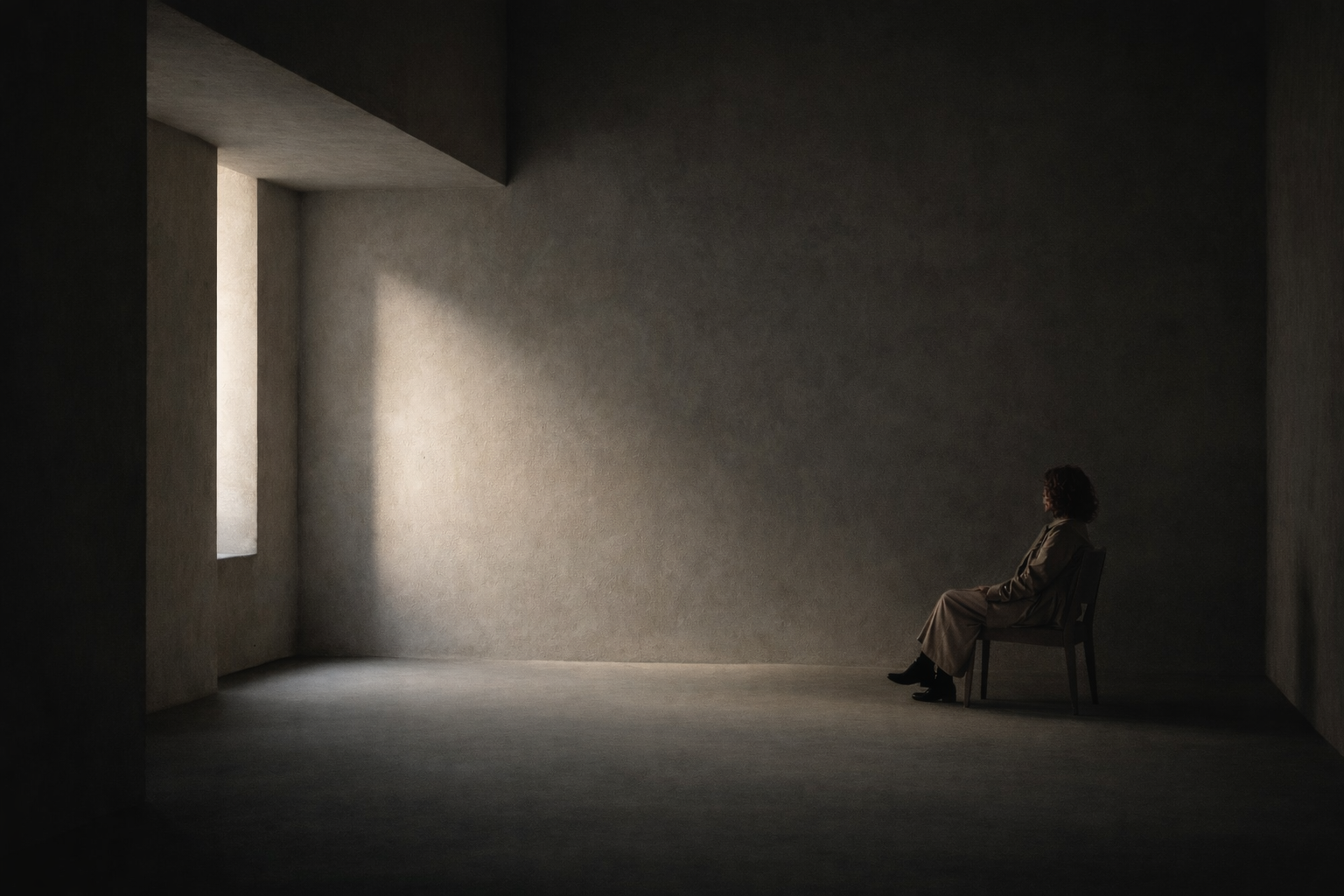
Luxury Doesn’t Need Ads Anymore — It Needs Worlds

DaMarko GianCarlo
It had a shape. A face. A moment. A campaign would declare itself with total clarity—this is the season, this is the image, this is the person you are meant to see it through. The system worked because attention was still interruptible. Media could be bought. Space could be taken. The audience would stop long enough to receive it.
That model didn’t collapse. It dissolved.
Because attention didn’t disappear. It reorganized.
The feed didn’t kill the campaign. It changed the conditions under which anything is allowed to exist. What once succeeded through scale now has to survive through gravity. You don’t win because you are placed in front of someone. You win because they choose to stay.
And staying requires something campaigns were never designed to do.
Contain.
Not information. Not messaging. But feeling.
This is where the shift becomes visible.
When Burberry releases an animation, the surface read is experimentation. A legacy house trying something new. A creative risk. A break from tradition.
But that’s not what’s happening.
What you’re seeing is a brand testing whether it can build a space that holds attention without asking for it.
Because the modern audience doesn’t respond to presence. It responds to environment.
An ad presents.
A world surrounds.
That distinction sounds subtle until you understand what it changes.
In a campaign, time is borrowed. The viewer gives you a second, maybe two, before deciding whether to stay. Everything has to resolve instantly. Recognition becomes the currency. This is why celebrity became so central. Familiarity shortens the distance between exposure and understanding.
But in a world, time expands.
There is no immediate demand for comprehension. You can enter without knowing exactly what you’re looking at. You can linger without being instructed to. Meaning is not delivered. It accumulates.
And once time expands, everything else shifts with it.
Impressions stop mattering in isolation. Duration begins to carry weight. The question is no longer “did they see it?” but “did they remain inside it long enough to feel something?”
That’s a different metric. A different ambition.
It’s also a different kind of control.
Campaigns rely on precision. Every element is engineered to communicate a specific idea as efficiently as possible. Worlds operate on coherence. They don’t need to explain themselves immediately, but they have to feel internally consistent. The logic may be subtle, but it cannot break.
This is why so many brands struggle here.
You can buy a campaign.
You have to build a world.
And building requires discipline that isn’t visible at the surface. It requires restraint. It requires the confidence to let something breathe without over-defining it. It requires understanding that not everything needs to convert in the moment to have value later.
Most importantly, it requires accepting that the audience is no longer outside the experience.
They are moving through it.
This is where distribution changes form.
Luxury once depended on controlled environments—the store, the runway, the placement. Access was part of the architecture. The door mattered because it defined who could enter and under what conditions.
But the feed removed the door.
Or more precisely, it made every entry point optional.
Now the only way to recreate that sense of entry is not through restriction, but through construction. You don’t keep people out. You build something they want to step into.
And if the construction is strong enough, something unexpected happens.
Distribution becomes voluntary.
People don’t share because they were targeted.
They share because they found something worth carrying with them.
This is the part most brands misread.
They think the shift is about creativity.
It isn’t.
It’s about architecture.
Creativity is the surface expression of a deeper system—one that understands how attention moves, how emotion anchors, how environments hold. Without that system, even the most visually striking idea collapses back into content. And content, by itself, is disposable.
Luxury cannot afford to be disposable.
Not at the level it operates. Not at the price it commands. Not with the history it carries.
So it adapts.
Quietly at first. Experimentally. A short animation here. A tonal shift there. A campaign that feels less like a declaration and more like an atmosphere.
Until eventually, the pattern becomes undeniable.
The brands that feel most current are not the ones speaking the loudest.
They are the ones building the most complete spaces.
Spaces where product is present, but not dominant. Where narrative exists, but is not forced. Where identity is not instructed, but discovered through proximity.
Because once someone feels like they belong inside a world, the transaction has already happened—whether or not they’ve purchased anything yet.
The product simply becomes the physical evidence of that decision.
Which brings luxury back to the thesis it never explicitly stated, but always understood at its highest level:
Value is not created at the moment of sale.
It’s created at the moment of alignment.
Campaigns were designed to accelerate that moment.
Worlds are designed to sustain it.
And in a system where attention is no longer guaranteed, sustainability wins.
Related Posts

RÉMY MARTIN UNVEILS XO NIGHT, A NEW MEMBER OF THE XO FAMILY
RÉMY MARTIN UNVEILS XO NIGHT
Delaney Quinn Is Growing Through the World of Buddy
The Work Can Still Be Play

Sadder, Bloodier, Better: Netflix Confirms Cyberpunk: Edgerunners 2
Night City bleeds once more.

Official Features Trailer for The Last of Us Part 2 Remastered
The Last of Us Part 2 Remastered stands as an enhanced version.
Alexie Olivo Is Learning That Success Means Choosing Her Own Direction
Choosing purpose over expectation

Marvel Unlocks New ‘Psylocke’ Solo Comic Series
Alyssa Wong and Vincenzo Carratù's 'Psylocke' begins this November.