

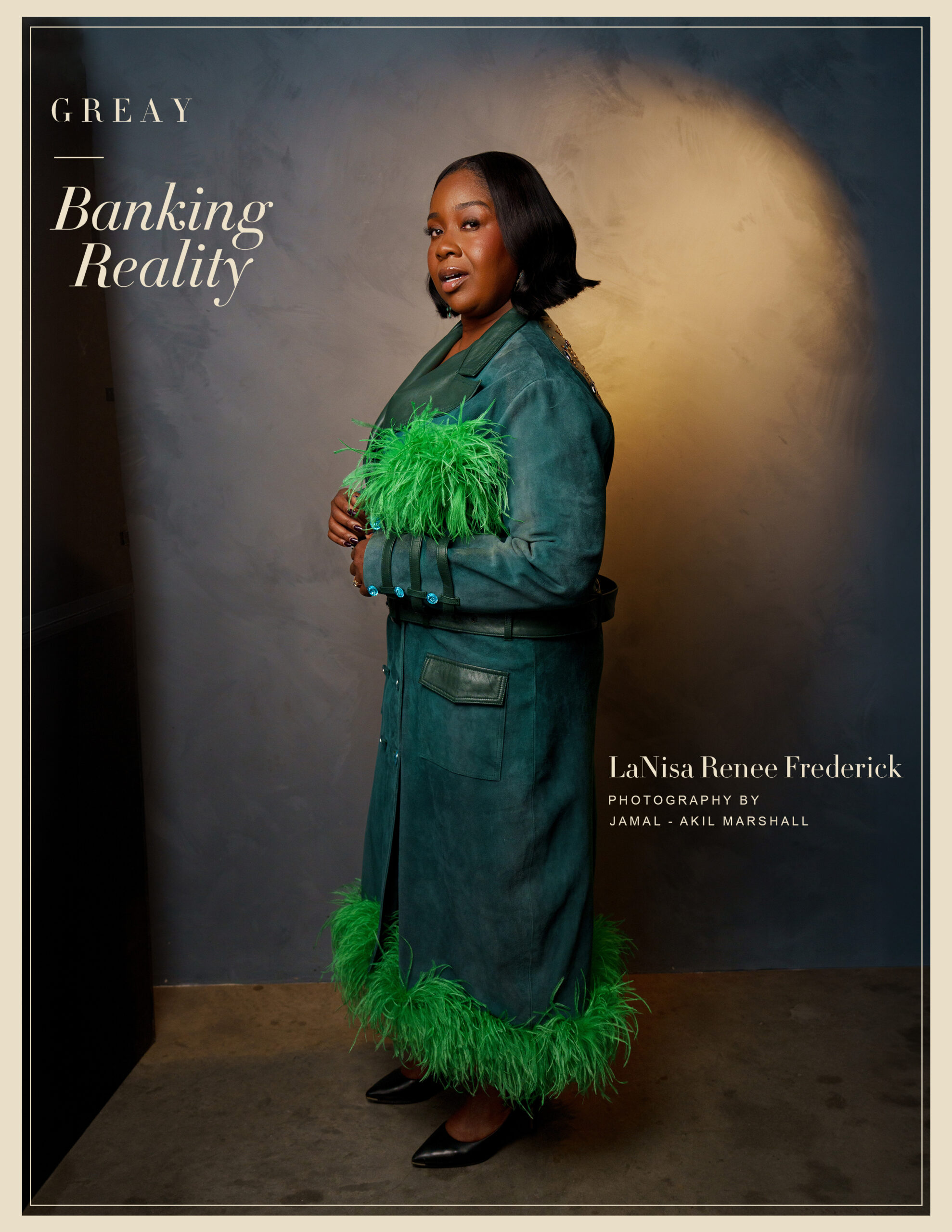
LaNisa Renee Frederick Is Interested in the Person Behind the Performance
By Kyra Greene
Some people spend their lives moving through systems they never stop to question. Others learn early that every structure—whether a workplace, a belief system, or a television production—is built on rules, expectations, and performance. For actress LaNisa Renee Frederick, that awareness arrived long before cameras entered the picture. From navigating a high-control religious environment in her youth to stepping into one of television’s most unusual social experiments, Frederick has developed a rare ability to observe the space between authenticity and performance. Whether portraying Jackie in Jury Duty Presents: Company Retreat, lending her voice to iconic characters, or hosting conversations that examine identity, belief, and belonging, her work consistently returns to a simple question: what happens when people finally stop performing and allow themselves to be seen?
- You’ve lived inside systems most people don’t even realize they’re part of—and now you’re acting inside one on screen. When did you first recognize the difference between what’s real and what’s being performed?
I grew up in a high-control religious group, so I learned early to observe and question, which probably shaped my instincts as an actor. I watched people move through a doctrine they deeply believed in and follow a leader they trusted, even when it felt performative or theatrical to me. I didn’t have language for it yet, but I could observe the difference between genuine belief and the roles people learn to play to survive inside a structure.
- This show only works if behavior feels real. What did you refuse to fake?
I refused to fake the given circumstances.
Everything depended on responding truthfully to what was actually in front of me, the other actors, and Anthony. The moment we tried to push or manufacture something, we could feel it, and we knew Anthony could feel it too.
And that’s hard to trust as an actor. During the Dougathlon, for example, my team “The Hotties” had to purposely lose an event. Instead of just letting that happen, I felt the instinct to perform, to do something funny, instead of trusting that the situation itself was already funny. I remember clocking Anthony looking a little skeptical, and it was an immediate reminder to pull back and trust the process.
So we kept coming back to what we called “banking reality,” staying grounded in what was actually happening, and our director, Jake Szymanski, was incredible at helping us recalibrate and stay there.
- Jackie feels specific—she’s a mother, she works in logistics, and she’s just happy to be away. What part of her felt closest to you, and what part required the most discipline to hold back?
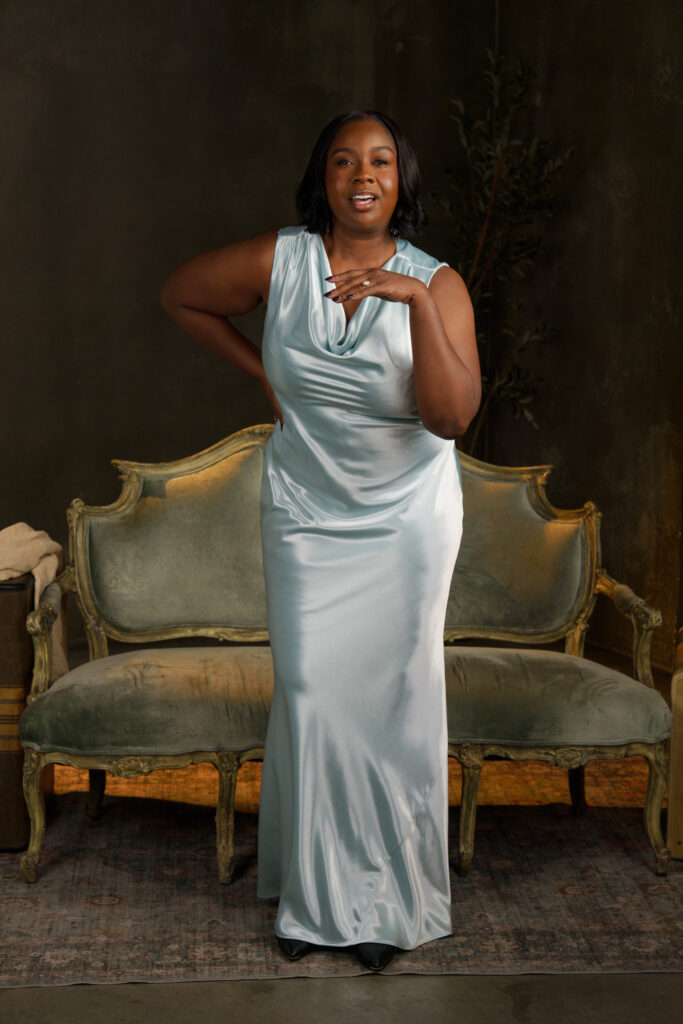
It’s an honor to hear that Jackie feels specific. I’ve done my job! Truthfully, she is 90% me. I’m loyal, I give incredible side eye, and I’m an extremely hard worker. Just like Jackie.
We were encouraged to build our characters as heightened versions of ourselves, because otherwise it would be impossible to stay in a character that’s completely separate from who we are for 24 hours a day. Jackie might speak up a little more than I do, but that part of her is still rooted in me.
There are surface differences, of course. I don’t work at a family-run hot sauce company, and I don’t have three kids. But I’ve worked at small businesses, and I have three amazing nieces, so her emotional life still felt very familiar.
- In a world where one person doesn’t know everyone else is acting, performance becomes restraint. How did that change your instincts on set?
Oh, I actually don’t think performance becomes restraint. I think it becomes more real.
We had to be so locked in to our surroundings to make it work, constantly paying attention and staying present. I developed a sensitivity to what was happening around me, which forced me to rely on instincts in ways I normally wouldn’t.
Because we couldn’t call “cut” or “action,” I had to trust my instincts more than I ever had before. And as an artist, that was really thrilling. It made each day what I like to call “beautiful chaos.”
On a typical set, there are so many knowns: call time, lunch, wrap. But in this environment, we didn’t have that structure, so I had to fully commit to the moment and trust myself.
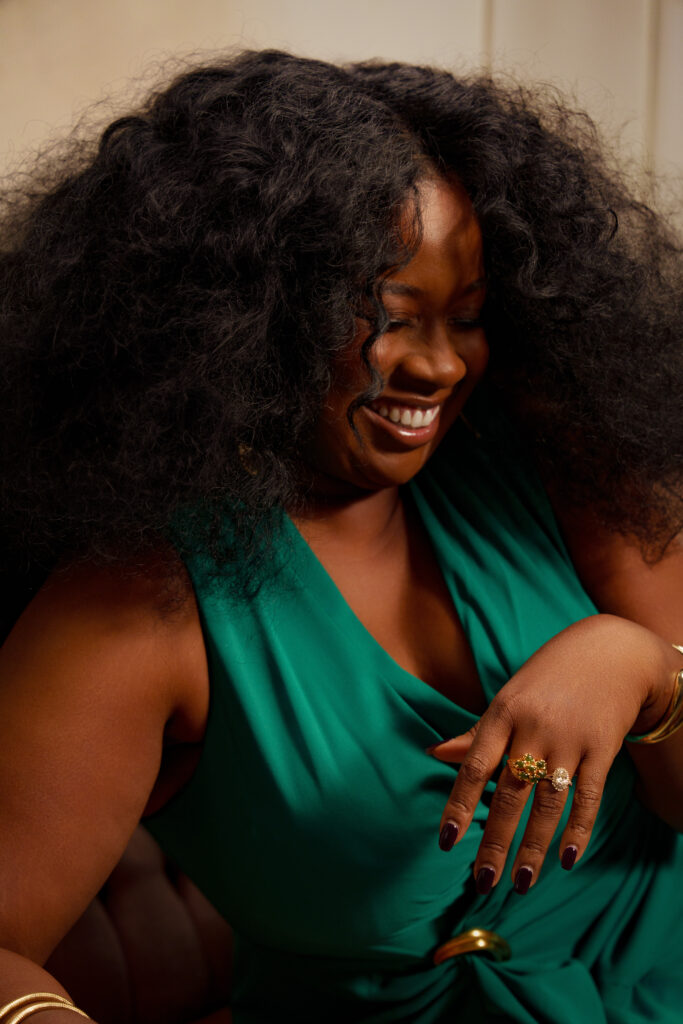
- The premise is built on one person not understanding the system they’re in. In real life, do you think most people actually understand the systems around them—or are we all just performing inside something we haven’t fully questioned?
I think I’ll start with Shakespeare to answer this question: “All the world’s a stage, and all the men and women merely players.”
I think most people know we’re players inside a system. Whether we fully understand the systems around us or how they operate, I’m not so sure.
We live in a world that rarely gives us the time or space to truly question the systems we’re in. Hustle culture is celebrated. Rest is treated like weakness. “Sleep when you’re dead.” But at what cost?
Questioning a system, especially one you’ve been taught to trust, takes courage, support, and time. And our present isn’t really designed for reflection. It’s designed for consumption and constant motion. We’re encouraged to keep going, keep producing, keep performing. Not necessarily to stop, breathe, and ask who benefits from the system in the first place.
- This season leans into a corporate retreat—structure, hierarchy, forced connection. What did you notice about how people behave when they think they’re being watched versus when they forget?
Actually, what surprised me looking back was that when we forgot we were being watched, we actually became more human. More generous. More protective. We all understood how delicate our show was and how much trust it required, not just from Anthony, but from us as a cast.
For example, I would sometimes say things that maybe weren’t mic-appropriate (I have a potty mouth sometimes lol), but my castmates always had my back. And they would remind me that I’m mic’d when I forgot. We built genuine relationships very quickly, and we really wanted each other to win.
You’d think a high-pressure environment like that would turn into a Lord of the Flies-type situation, but it actually became the opposite. The more immersed we became, the more protective, collaborative, and thoughtful we were with each other. We held the reality of the world together as a team.
- With Black and CULTivated, you’re revisiting something deeply personal, but through humor and conversation. What did you have to reclaim in your voice to be able to tell those stories your way?
When I decided to produce and host a podcast about being raised in a cult, I had to reclaim courage and lean into my comedy to tell the story in the way I wanted to. And thus, Black and CULTivated was born. It’s super scary to share such a vulnerable part of yourself publicly. I wasn’t just afraid of judgment from outsiders, but also from former members and people who shared that world with me.
Shame loves secrecy, and I refused to be ashamed of my story. More importantly, I wanted other people to feel less ashamed of theirs. Humor and conversation became a way to open that door without losing the humanity and complexity of what many of us went through.
- You’ve experienced a system that was designed to control belief and behavior. How does that awareness show up in the way you read scripts or build characters now?
I think it’s given me more empathy and curiosity toward characters that might initially seem unlikeable. I always want to dig deeper into their ‘why.’ Rarely are humans “bad” for the sake of “badness.” So I’m interested in what makes them tick, what they’ve experienced, what they’re protecting, or what belief system they’re operating inside of.
Having been raised in a religious high control environment I understand how people can justify behavior, adapt to systems, or lose themselves inside ideas they deeply believe in. That awareness shows up in the way I read scripts and build characters.
For me, digging deeper into the backstory creates authenticity. It helps me connect to the character in a fuller way so that by the time I get to set or step onto a stage, I’m ready to play because I already understand the emotional life and backstory underneath their behavior.
- There’s a throughline in your work—whether on screen or behind a mic—where you’re navigating environments that ask people to conform. Is that something you’re consciously drawn to, or something you recognize after the fact?
I actually don’t think I’m being asked to conform. As an actor, I’m not trying to become someone completely separate from myself. I’m usually uncovering parts of myself that may not live on the surface every day, but it’s there. There’s a little bit of me in even the most outrageous character. My job is to peel back the onion of myself, find that connection, and make it truthful. The throughline in my work is less about conformity and more about just being human.
- You’ve moved between comedy, drama, voice work, and performance capture. What stays constant in you, even when the medium changes?
My process and my respect for the work stay constant, no matter the medium. I approach everything with the same level of curiosity, preparation, and care.
I’ve been fortunate to study in a variety of places, including The Second City Chicago, Steppenwolf Theatre Company, and earning my master’s degree from East 15 Acting School in England. But honestly, some of my greatest tools also come from real world experience. Like my years working in education within the Chicago Public School system, being a nanny, struggling through temp jobs, navigating life, observing people. Sometimes I pull from those experiences even more than my formal training.
All of that becomes part of my character toolbox when I approach a script. For me, it always starts with facts and reality. What does this character want? What do they need? How do other people perceive them? Those questions don’t change just because the medium changes. At the center of all of it is still connection, listening, and being specific.
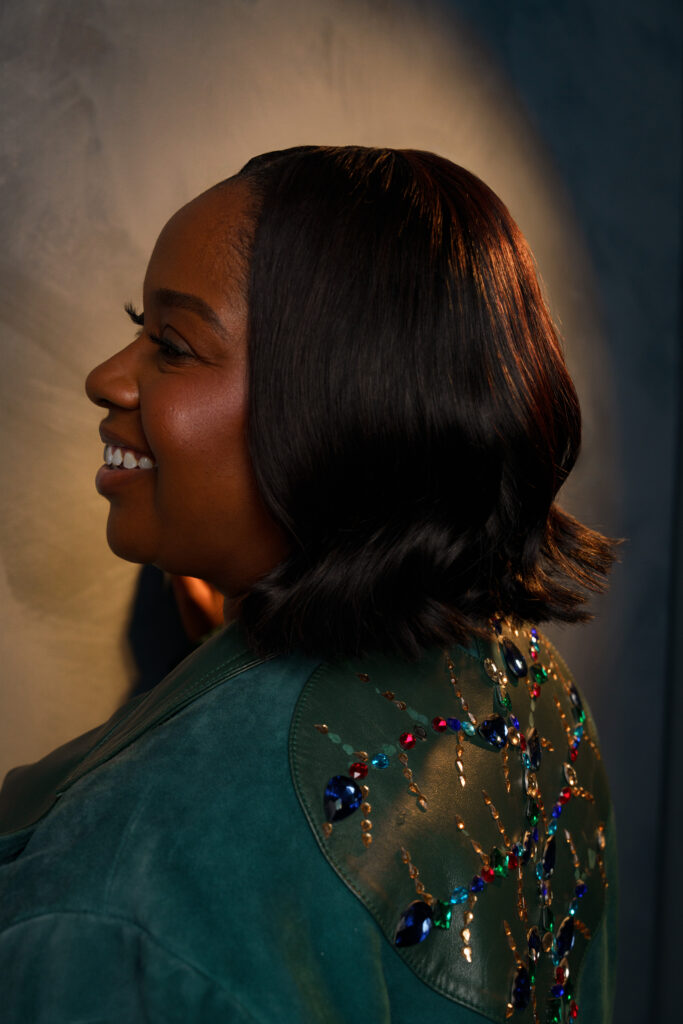
- Being the first Black woman to be a major playable character in Call of Duty is a milestone—but also a kind of visibility people project onto. How do you carry that without letting it define the full scope of who you are?
I’m so proud of my work playing Syd on Call of Duty: Modern Warfare, especially knowing what that representation meant to so many people. It was a job I approached with the same care and commitment I bring to all of my work.
Millions of people may know Syd, but they don’t necessarily know the person behind the voice. In some ways, that gives me a freedom that can be really beautiful as an actor.
So I’ve never felt boxed in by it. Soon after Call of Duty, I booked a series regular role playing an anthropomorphic sloth preschool teacher, lol, which tells you how wildly different my work can be. I’ve always wanted a career where I could move across genres, mediums, and characters freely, and I’ve been fortunate enough to do that.
- You’re building across performance, voice, and conversation—but underneath all of it is perspective. What do you want people to understand about you that they might miss if they only watch the work?
I think if people only watch the work, they miss the journey behind it. They see the final product, but not the years of training, discipline, failures, sacrifice, survival jobs, and continuing even when I didn’t fully believe in myself. So when I enter a space now, I don’t take any of it for granted.
I love being an artist, and I believe art has a responsibility beyond entertainment. Nina Simone said, ‘An artist’s duty, as far as I’m concerned, is to reflect the times,’ and I think about that often when I approach my work.
I want my art to spark joy and conversation, challenge ideas, and push us all to look at ourselves and the world more honestly.
What emerges from a conversation with LaNisa Renee Frederick is not a performer chasing visibility, but an artist committed to understanding people. Across comedy, drama, voice acting, podcasting, and performance capture, her work is guided by curiosity, empathy, and a willingness to look beneath the surface of the systems that shape us. She speaks openly about discipline, doubt, survival, and the long road that exists behind every opportunity, carrying each experience into the characters and stories she helps bring to life. If there is a throughline connecting her work, it is not conformity or performance—it is humanity. The desire to listen closely, question deeply, and create work that reflects the world back to itself with honesty, humor, and grace.
Photographer Jamal Akil Marshall @jmlakl
Words By Kyra Greene @noteasybingreen
Make Up Dion Xu @makeupbydion
Hair Brian Chist0pher @brianchrist0pher
Wardrobe Natasha Sackx @sackxstudios
Produced By The GREAY Firm @greayfirm & Firstsight.intl @firstsight.intl
Related Posts
Brands Don’t Sponsor Culture Anymore They Sponsor Control
The Crowd Shows Up. The Brands Step Back

Ancestry Inspires People to Discover, Preserve and Represent All That They Are With “It’s a Family Thing” Integrated Brand Campaign
By Tanner James Ancestry®, the global leader in family history, today

ONE Musicfest 2024 Lineup Announced: A Two-Day Extravaganza Celebrating 15 Years of Music, Culture, and Unity
ONE Musicfest, presented by Procter and Gamble, Celebrates its 15th An
Après-Ski, Reimagined: Nike and Jacquemus Blur the Line Between Sport and Style
Skiwear, Elevated

Salomon’s Paris Hub Signals a New Era for Performance-Led Lifestyle
From Trail to City

Louis Vuitton Accelerates into Formula 1 with Historic Partnership
Louis Vuitton Becomes Official Partner of Formula 1.