


KitchenAid Didn’t Redesign the Mixer—It Reprogrammed It
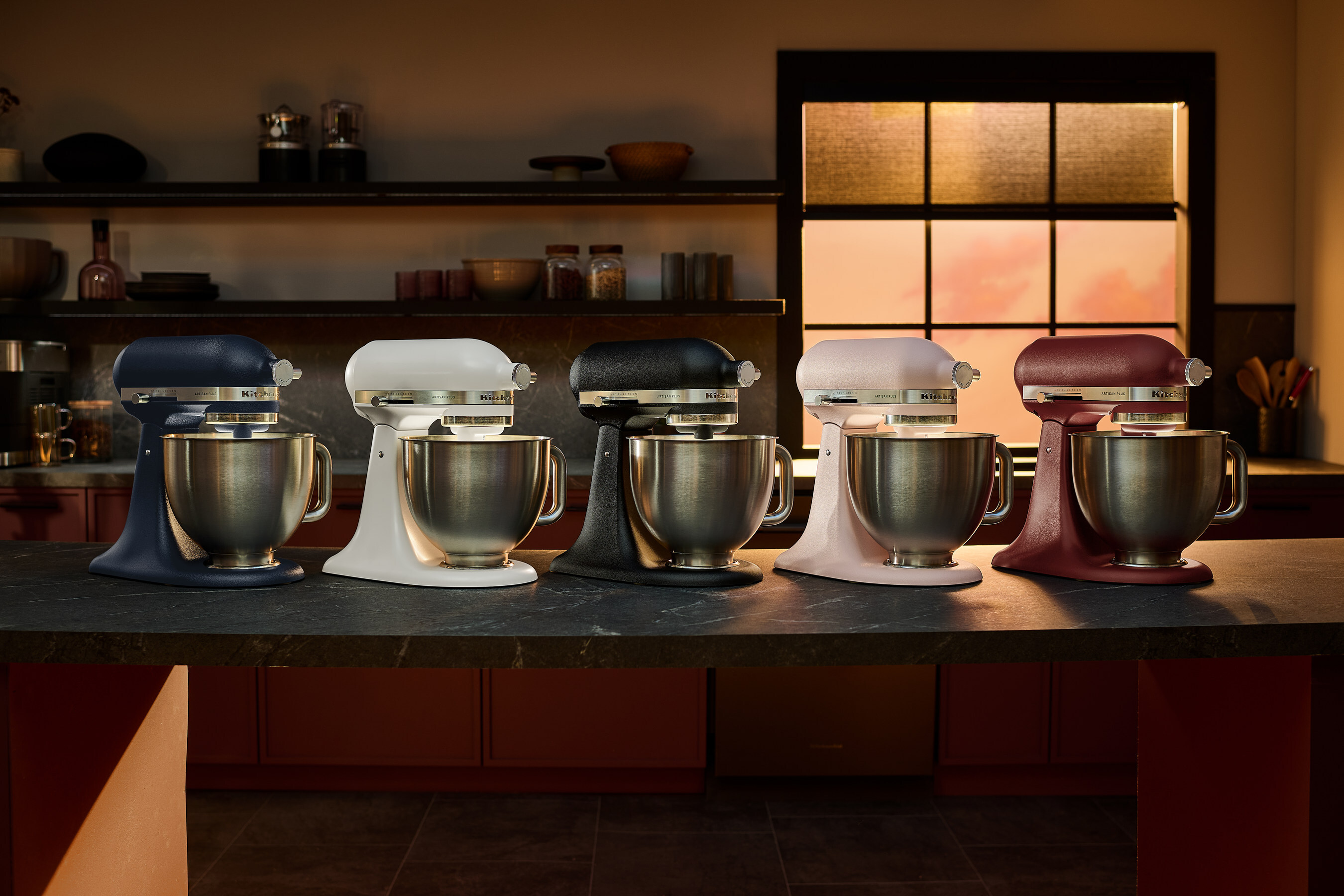
By DaMarko Webster
We like to imagine innovation as visible.
A new silhouette. A new interface. A rupture you can point to and say: this is where the future began.
But most systems don’t evolve that way.
They hold their shape.
And change their behavior.
KitchenAid understood that long before this release.
Because the stand mixer is not just a product. It’s a fixture. It lives on the counter, not in the cabinet. It signals continuity. It signals taste. It signals that what happens in this space matters enough to remain visible.
So you don’t redesign it.
You don’t chase novelty.
You don’t make the owner relearn the object.
You protect the silhouette.
And then you rebuild everything that can’t be seen.
The update isn’t aesthetic. It’s computational.
Not in the way the tech industry has trained us to expect—no screen, no app, no notification layer—but in something more fundamental: the encoding of judgment into motion.
Speed is no longer a fixed output. It’s interpreted.
The machine doesn’t just rotate at a selected level. It maintains an intention. It responds to resistance. It absorbs density changes. It stabilizes what would have previously required correction.
The user used to adjust for the system.
Now the system adjusts for the user.
That’s the shift.
And it shows up in places that feel small until you understand what they remove.
A soft start that eliminates the moment of chaos.
A fractional speed that protects fragility without guesswork.
A beater that closes the loop so intervention becomes unnecessary.
Light that turns the bowl into a readable environment rather than a blind process.
None of this announces itself.
Which is exactly why it works.
Because the goal is not to impress.
The goal is to disappear the friction.
This is where legacy brands usually fail.
They either freeze—protecting heritage so aggressively that they become static—or they overcorrect, layering on features that break the emotional contract people have with the object.
KitchenAid chose a third path.
Preserve the identity.
Upgrade the behavior.
It’s the same play we’re watching unfold across every mature category.
Cars still look like cars, but they’re governed by software systems that interpret the road in real time. Cameras still resemble the bodies we recognize, but the image is now as much computed as it is captured. Luxury still presents itself through familiar codes, but its authority increasingly comes from what is verified, not just what is seen.
Form remains.
Intelligence migrates.
And when it’s done correctly, the user doesn’t experience it as technology.
They experience it as ease.
That’s the part most companies misunderstand.
The future is not always louder. It’s often quieter. More precise. Less negotiable. It removes the need to think about the thing you’re using so you can think about what you’re making.
KitchenAid didn’t digitize the mixer.
They did something more disciplined.
They embedded decision-making into it.
So the outcome becomes more consistent without asking the user to become more skilled.
And that’s where this moves from product update to system design.
Because once behavior is encoded, expectation changes.
You don’t go back to guessing.
You don’t go back to correction.
You don’t go back to interruption.
You begin to expect the tool to meet you at the level of your intent.
That’s what software did to everything else.
Now it’s happening here.
Quietly.
Without breaking the object that made it possible in the first place.
Related Posts
CANVAS: The Future of Integrated TV Sound That Doesn’t Compromise on HiFi
The Only Soundbar That Sounds Like Real HiFi

Among Us VR is Getting a 3D Makeover for PC
Among Us is adapting for PC .

SayMotion™: DeepMotion’s Dive into the Future of 3D Animation with the Power of Language
DeepMotion, a pioneering force in AI-driven motion capture technology

The Phenomenal Success of Minecraft: Over 300 Million Copies Sold Worldwide
By DaMarko Webster Minecraft, the sandbox video game created by Markus

SmallRig Unveils the SmallRig X Brandon Li Mobile Video Kit
By Ju Hann SmallRig has collaborated with renowned filmmaker Brandon L
LG Unveils 2024 QNED TVs Featuring Upgraded Picture Quality and a Wide Array of Screen Options
(LG) has unveiled its latest range of QNED and QNED Mini LED TVs for 2
POST COMMENT