
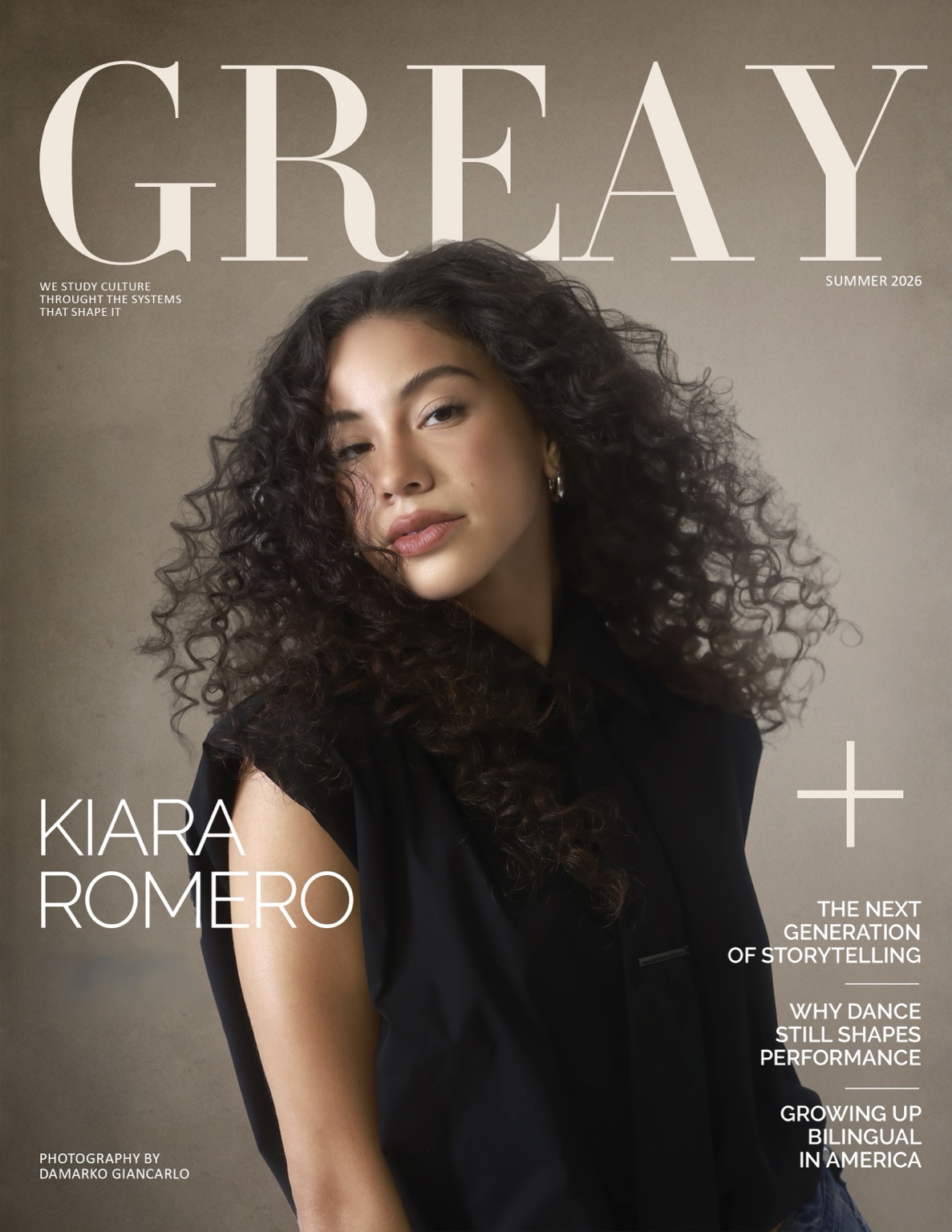
Kiara Romero Is Learning to Trust the Person She Already Is
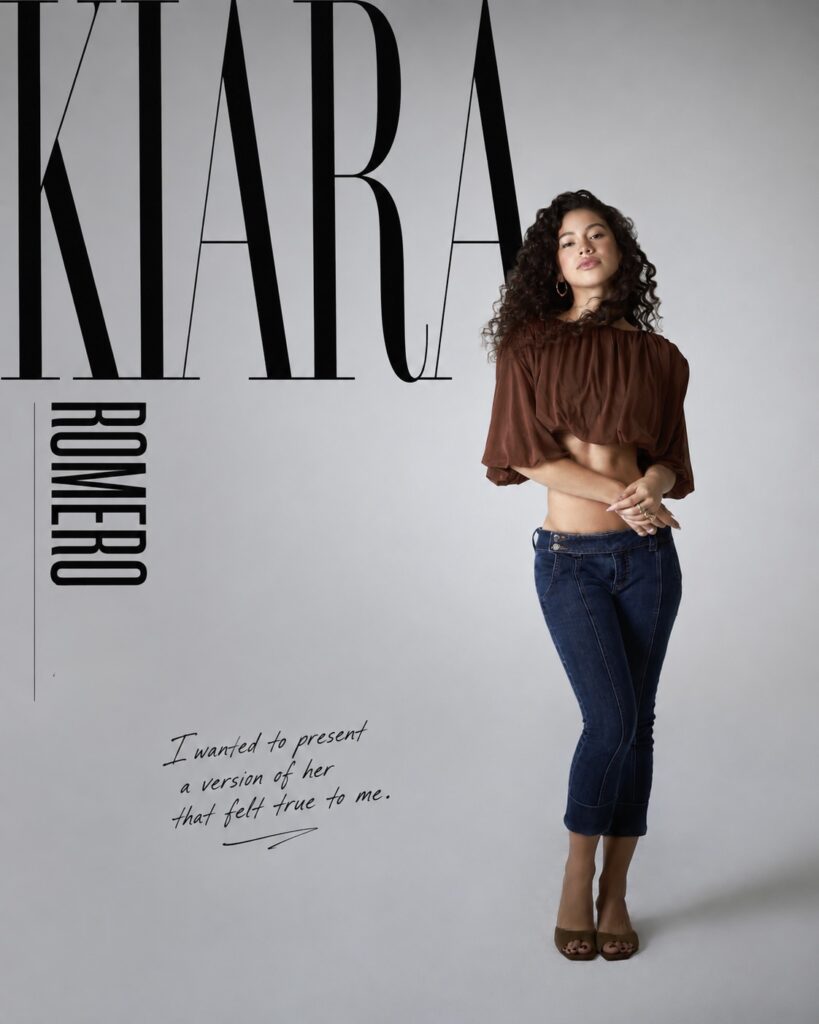
There is a particular kind of confidence that arrives before certainty. It does not come from knowing exactly where life is going or believing that every opportunity will work out. It comes from beginning to understand what parts of yourself you want to carry with you, no matter how much the world around you changes.
Kiara Romero seems to be discovering that kind of confidence in real time.
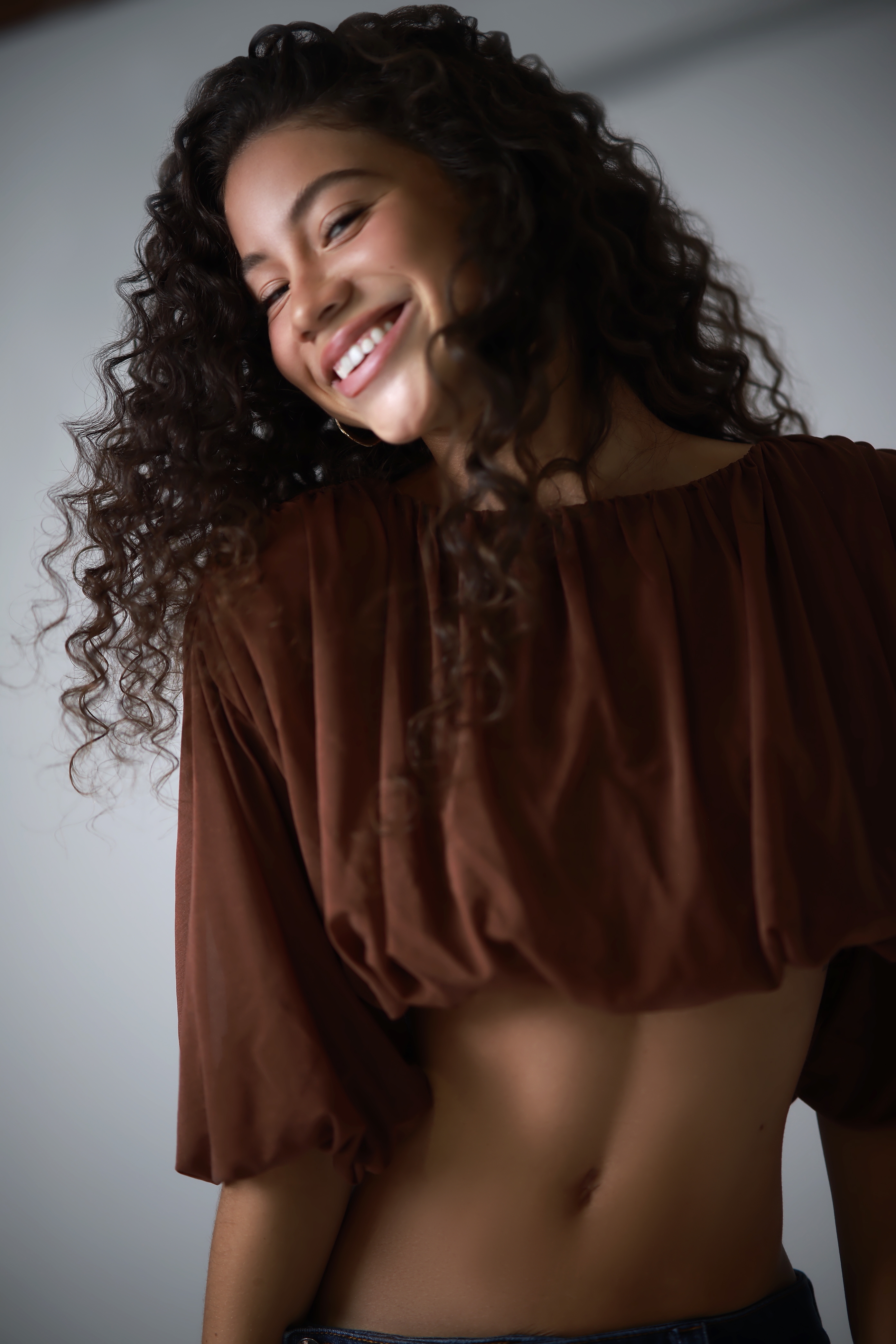
Her career is entering the sort of chapter young performers spend years imagining. Romero plays Hazel Hook, the daughter of Captain Hook, in Disney’s Descendants: Wicked Wonderland, the fifth film in the Descendants franchise.
For Romero, though, the significance of joining that world is difficult to separate from her own childhood.
She grew up watching Disney Channel, standing in front of the television and copying the choreography she saw onscreen. Now, another kid may grow up doing the same thing while watching her.
“The fact that I am a part of the Disney family is still wild to say out loud,” she says.
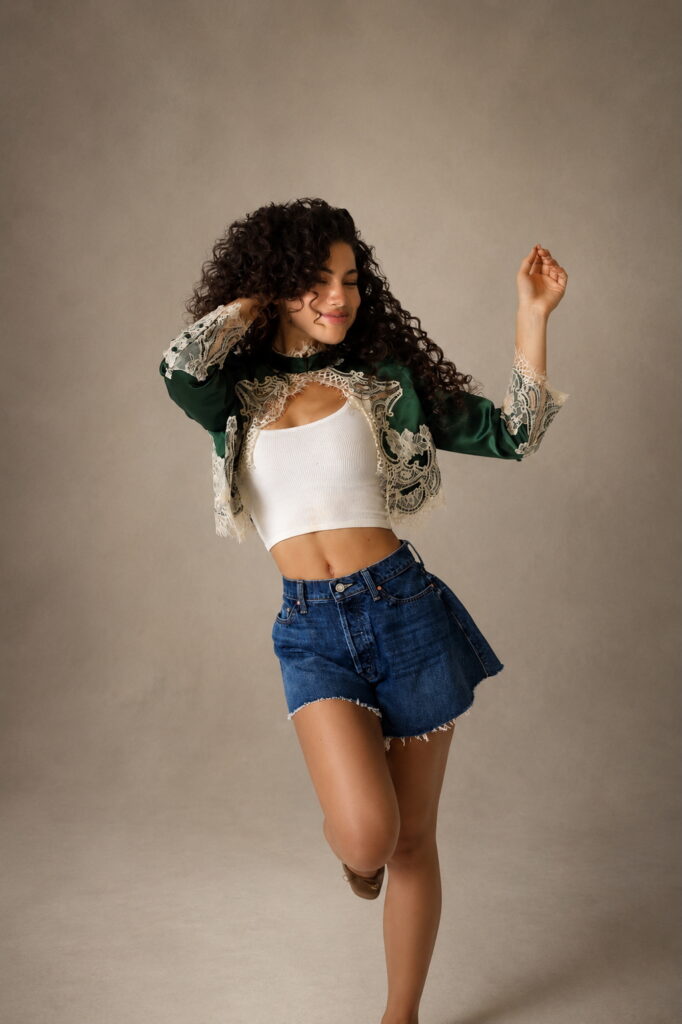
There is something beautifully circular about that. But what makes Romero interesting isn’t simply that she reached a place she once dreamed about.
It is what she carried with her when she arrived.
Romero grew up in New York in a Colombian and Puerto Rican family where music, family and big personalities filled the room. She spent summers in Puerto Rico, a place she describes as a second home. Salsa became part of the rhythm of her life. Long before an industry had the opportunity to tell her what was realistic, her parents gave her permission to imagine something enormous.
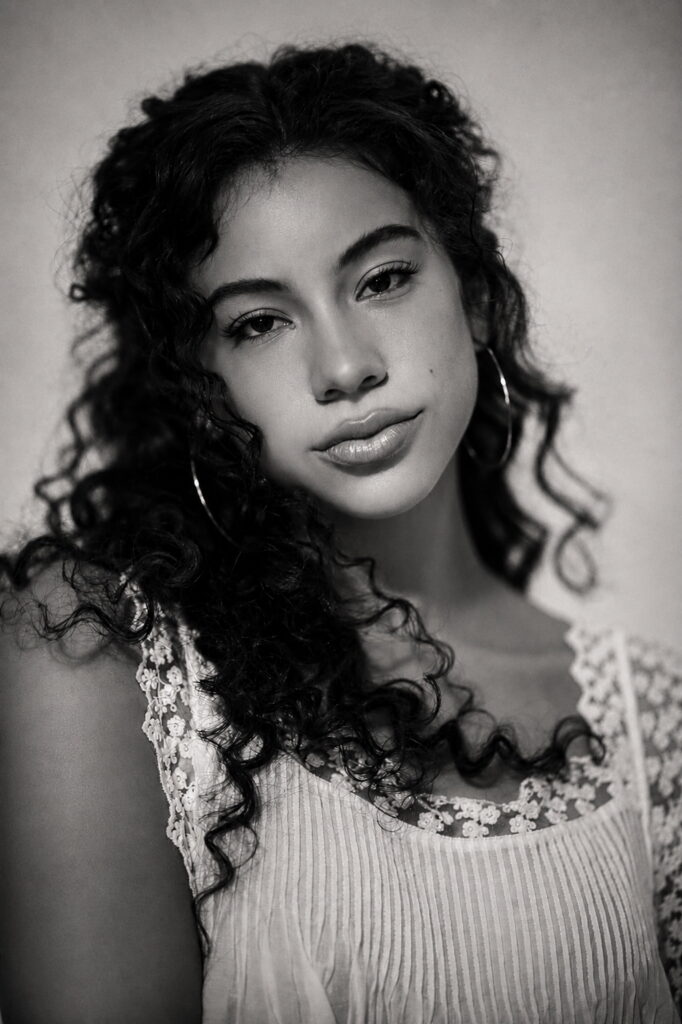
“My parents helped me envision myself at the highest level,” she says. “Their belief in me has never wavered.”
There is a gift in being taken seriously as a child when you say what you want your life to become.
It doesn’t guarantee that the dream will happen. It simply gives you somewhere safe to begin believing that it might.
Romero eventually had to discover what that belief required from her.
At the Joffrey Ballet School, ambition became physical. There were injuries and long days, rejection and disappointment. There were rooms where Romero knew she wasn’t necessarily the most naturally equipped dancer standing in them. She remembers arriving at Joffrey feeling significantly behind in her technique. Flexibility did not come as naturally to her as it did to some of the dancers around her.
Her father’s advice became a kind of internal compass: be the hardest worker in the room.
So she worked.
“I had to earn my place at that school,” Romero says. “I had to fight to be better everyday and I am proud of that.”
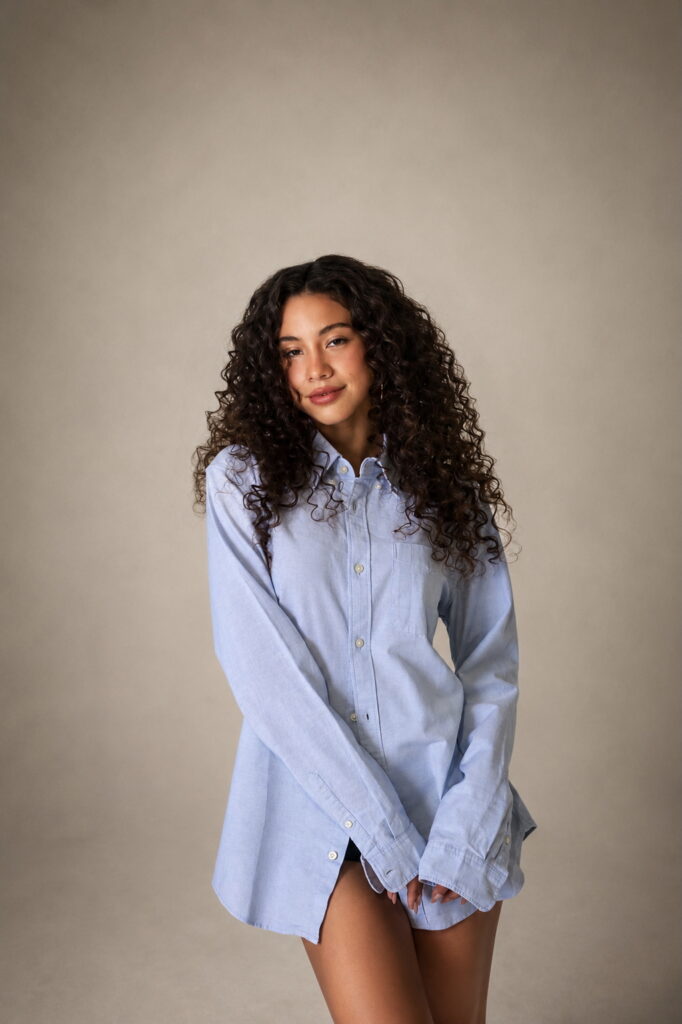
There is something revealing in the way she tells that story. She doesn’t rewrite the difficult part now that she has made it through. She remembers feeling behind. She remembers wanting to give up. And she is proud not because it eventually became easy, but because she learned that she could keep going when it wasn’t.
Dance taught Romero resilience. It gave her thick skin. It showed her that progress could be earned through repetition.
But it also reinforced something she would eventually have to learn to loosen her grip on.
Perfection.
A dancer can repeat a movement hundreds of times. The body remembers. Technique improves. There are corrections to make and measurable ways to get closer to executing something correctly.
Then Romero began acting.
Suddenly, the instincts that had helped her become a stronger dancer could also get in her way.
“With acting I’ve learned the same isn’t true,” she says.
There was no perfect version of a feeling to reproduce. No amount of drilling could guarantee that a scene would become more truthful. Sometimes the work required Romero to stop controlling the moment long enough for something unexpected to happen inside it.
For someone who describes herself as a perfectionist, that wasn’t simply a lesson about acting.
It was a different way of understanding what being good at something could mean.
Romero had spent years learning how to perform. Acting began showing her that becoming a better performer might sometimes require allowing more of the person underneath the performance into the room.
That idea follows her all the way to Hazel.
Hazel is one of the new characters introduced in Wicked Wonderland, a villain kid and daughter of Captain Hook. But the character did not explicitly require Romero’s Colombian or Puerto Rican heritage. Romero could have treated those parts of herself as separate from the role—important to Kiara, perhaps, but irrelevant to the character she had been asked to play.
Instead, she saw Hazel through the world that had shaped her.
“So much of this character came from my actual personality and my family,” Romero says.
She even incorporated Spanish words during the audition process. Not because Hazel needed to become a statement about Latin identity, but because Romero’s own cultural vocabulary helped her understand who the character could be.
“I wanted to present a version of her that felt true to me,” she says. “I always say that if I tried to be something I wasn’t I wouldn’t have gotten the role.”
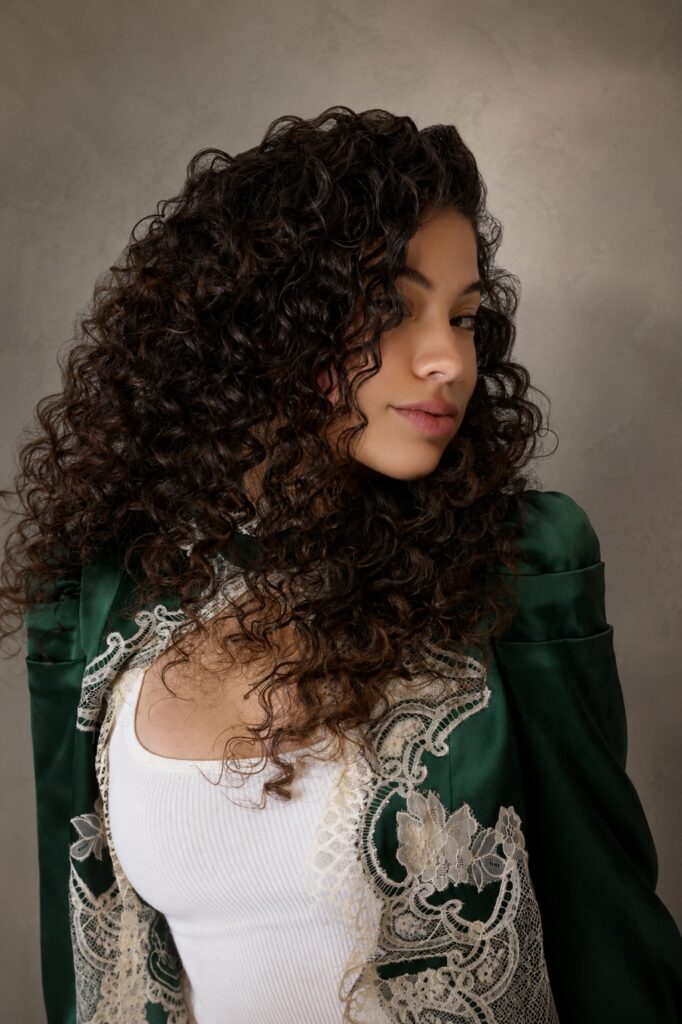
That may be the most revealing thing Romero says.
Young performers enter an industry built around transformation. They change clothes, voices, characters and environments. They walk into rooms where other people have already imagined who they might become. And as visibility grows, so does the number of people with an opinion about what version of them should exist next.
Romero’s experience with Hazel suggests something quieter.
Sometimes what a role needs isn’t another transformation.
Sometimes it needs the part of you that was already there.
Romero is still learning what that means across the different parts of her creative life. Dance, acting and music each reveal something different. She describes performing as a place where, since childhood, she has been able to access an alter ego—a version of herself that feels more confident than she sometimes does away from the stage or camera.
Yet all of those creative identities, she says, come from the same place.
“My art always stems from a part of myself.”
Perhaps the distance between the performer and the person isn’t as large as it can sometimes feel.
That doesn’t mean Romero has figured everything out. There is something refreshing about the fact that she doesn’t speak as though she has. She is ambitious. She is still learning. She can be hard on herself. She is excited by what is happening and aware of how easily excitement about the future can become anxiety about getting there quickly enough.
That pressure is difficult to escape.
The entertainment industry has always encouraged young talent to move quickly, but social media has made someone else’s progress permanently visible. There is always another announcement, another milestone, another person whose career appears to be moving faster.
Romero has felt it.
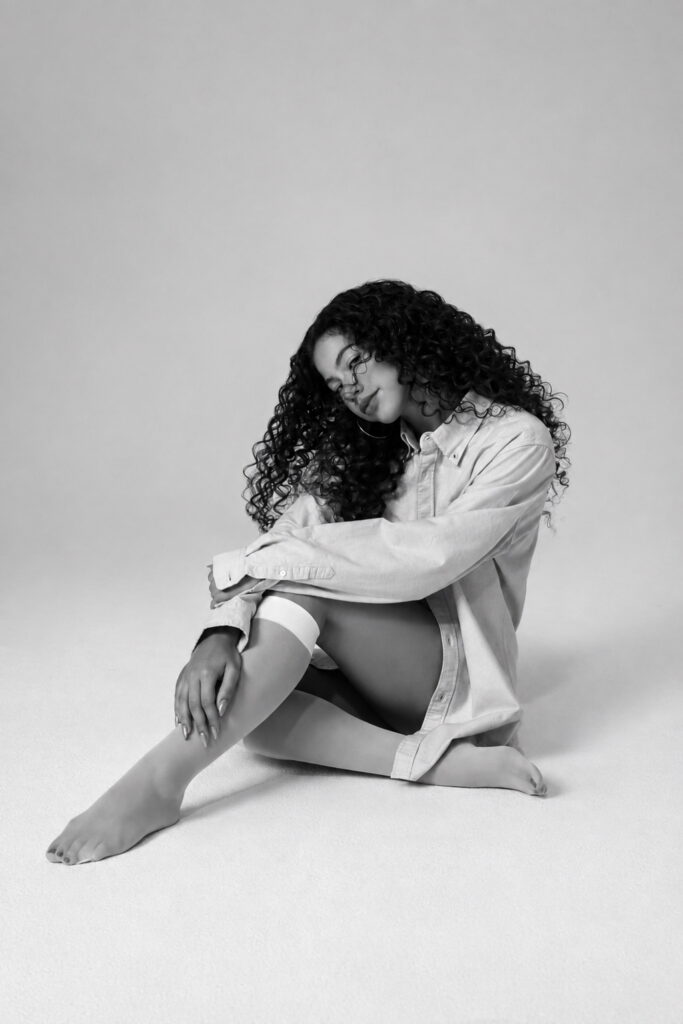
“This industry, especially with social media, can make it easy to feel like you are falling behind or not where you should be,” she says.
Then comes a much simpler thought.
“Growth takes time.”
It is easy to agree with that sentence when nothing is asking you to hurry.
It is harder when opportunities are arriving.
Because a career can grow faster than a person does.
Romero’s world is getting bigger. More people will know her name. More people will see her work. More people will form opinions about her without ever meeting her. She admits there was a time when the idea of having so many eyes on her felt overwhelming.
What seems to matter now is maintaining something underneath all of that attention that belongs only to her.
Family helps.
So does perspective.
So does remembering where this began.
There is a moment when Romero sees Descendants: Wicked Wonderland and the words “Disney Channel Original Movie” appear onscreen.
She gets chills.
For a second, the language of career disappears.
There is no trajectory to analyze. No next move to calculate. No pressure to turn one opportunity into another.
There is simply a young woman looking at something she once watched from the other side of a television screen and realizing that she is now part of it.
The kid who copied Disney choreography is inside the world she used to imitate.
And somewhere, another kid may be watching.
There is something especially moving about that possibility because Romero’s own beginning was shaped by adults who made room for her imagination. Her parents did not know exactly where dancing in front of the television would lead. They simply made sure she never felt silly for believing it could lead somewhere.
Now the circle is a little wider.
Romero gets to become part of someone else’s imagination.
And this fall, that relationship moves beyond the screen.
Beginning September 25, Romero will join Disney’s Worlds Collide Concert Tour, a 48-arena run across the United States, Canada and Mexico. The production brings together the worlds of Descendants, ZOMBIES and, for the first time, Camp Rock, with Romero among an eight-performer cast. Disney is building the arena show around music from the three franchises, new mashups, choreography, special effects and audience interaction.
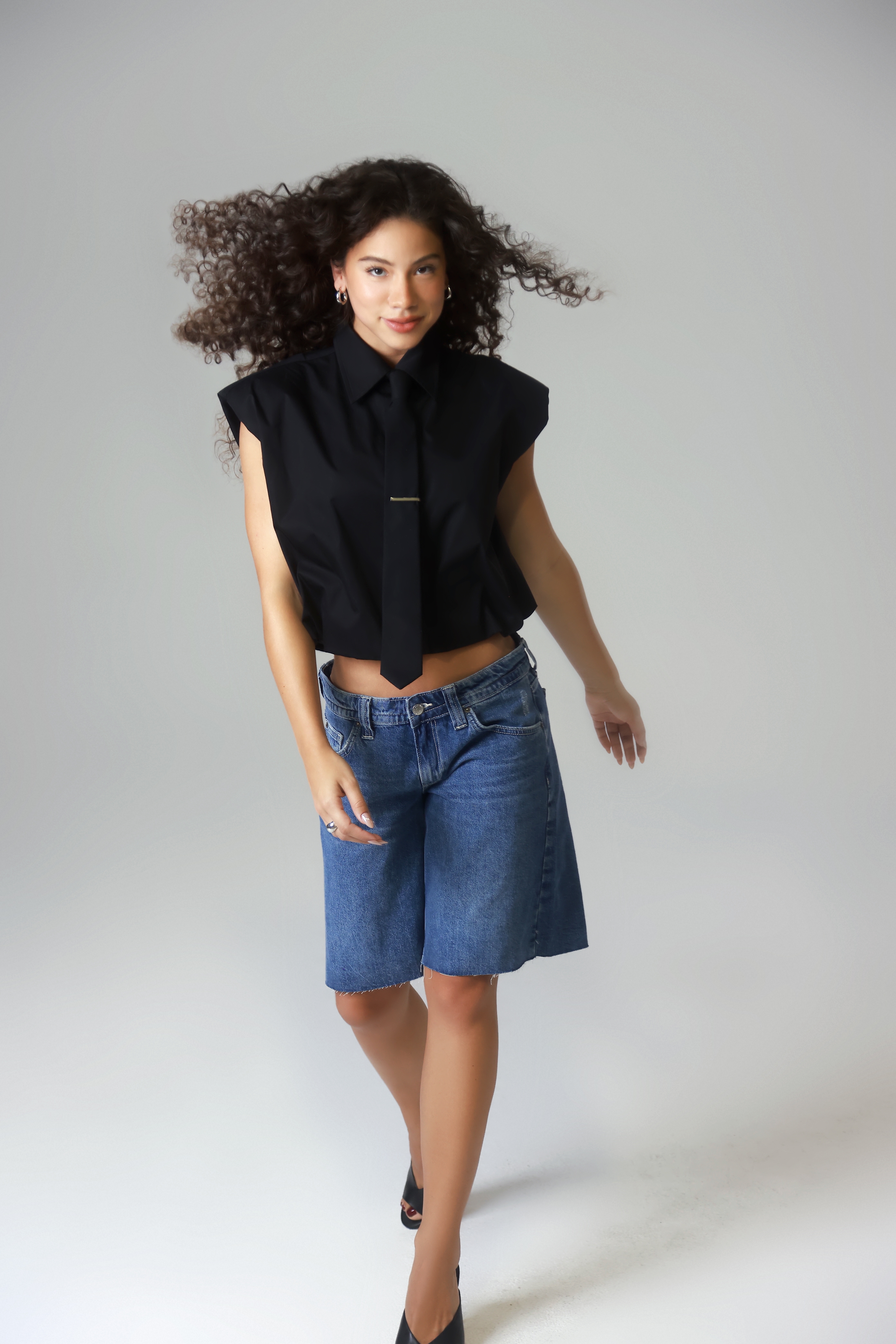
For Romero, the next step creates another unexpected circle.
Before Hazel, before Descendants, before there were arenas waiting for her, there was a kid standing in front of a television copying choreography.
Now she will be the person onstage.
The distance between those two images is a career beginning to take shape.
But it is also a childhood becoming real.
The natural question is what she does with that opportunity next.
She is learning not to live entirely inside that question.
“If you are always looking to what’s next,” she says, “you end up missing what’s right in front of you.”
Maybe that is the deeper evolution happening here.
Romero spent years learning control through dance and is learning to make room for uncertainty through acting. She found confidence through performance, then discovered that Hazel became more truthful when she brought her own family, culture and personality into the character. Now the dancing that once happened in front of a television is taking her into arenas across North America.
The world around her keeps getting larger.
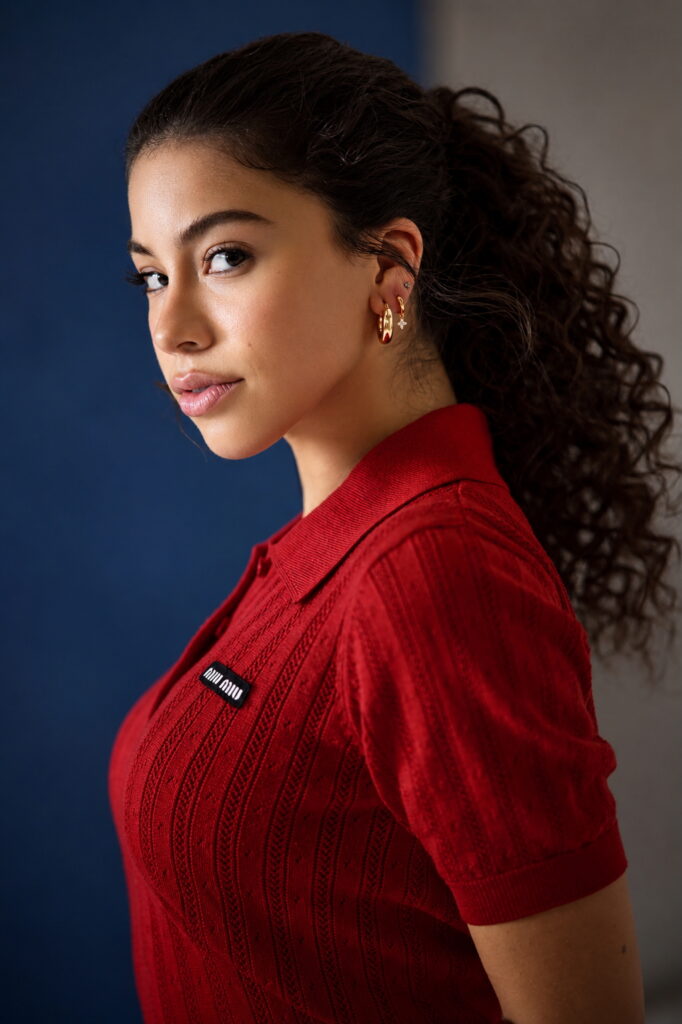
Her challenge is not allowing that expansion to convince her that she must constantly become someone new to deserve it.
Those aren’t contradictions she needs to solve.
They are part of growing up.
And perhaps that is why this particular moment in Kiara Romero’s life feels worth paying attention to.
Not because we know exactly who she is going to become.
We don’t.
Neither does she.
What we can see is the foundation underneath whatever comes next: a family that taught her to dream without embarrassment, a father whose advice stayed with her when talent wasn’t enough, a cultural identity she carries naturally into her work, the discipline to keep going when she feels behind and a growing understanding that ambition doesn’t have to mean rushing through the life she once wanted.
Kiara Romero’s world is getting bigger.
Soon, quite literally, it will include arenas full of people.
The beautiful part is that she is beginning to understand she doesn’t have to become smaller inside it.
Photography DaMarko GianCarlo @damarkogiancarlo
Words Kiara Greene @noteasybingreen
Wardrobe Veronica Graye @veronicagreay
Make Up Samuel Paul @samuelpaulmakeup
Hair Christian Marc @christianmarc
Produced By Greay Firm @greayfirm
Related Posts
All American, All Heart: Michael Evans Behling’s Rise
Beyond the Game, Beyond the Screen
David Lim Creativity Has No Boundaries
David Lim from Actor to Jewelry Designer.
Camille Sullivan: Craft, Courage, and the Chaos Between Takes
Survivor’s Guilt, Found Footage, and Faith
Eve Harlow Builds Through Structure, Then Lets It Breathe
Awareness Is Authority

Alexandra Breckenridge Craft, Courage, and the Characters That Changed Everything
The Vulnerability That Moves Millions
Chyler Leigh Is Choosing Whatever Comes Next With Purpose
The Freedom to Choose What Matters