

Google Decided Where Culture Moves — Dominican Republic
By Jason Echo
There was a time when culture moved because it was compelling. A film broke through, a song traveled, a face became familiar across borders not because of systems, but because of resonance. That idea—romantic, almost nostalgic now—assumed movement was organic. That if something mattered enough, it would find its way. What we’re watching now is the quiet dismantling of that belief. Culture doesn’t just move anymore. It is routed.
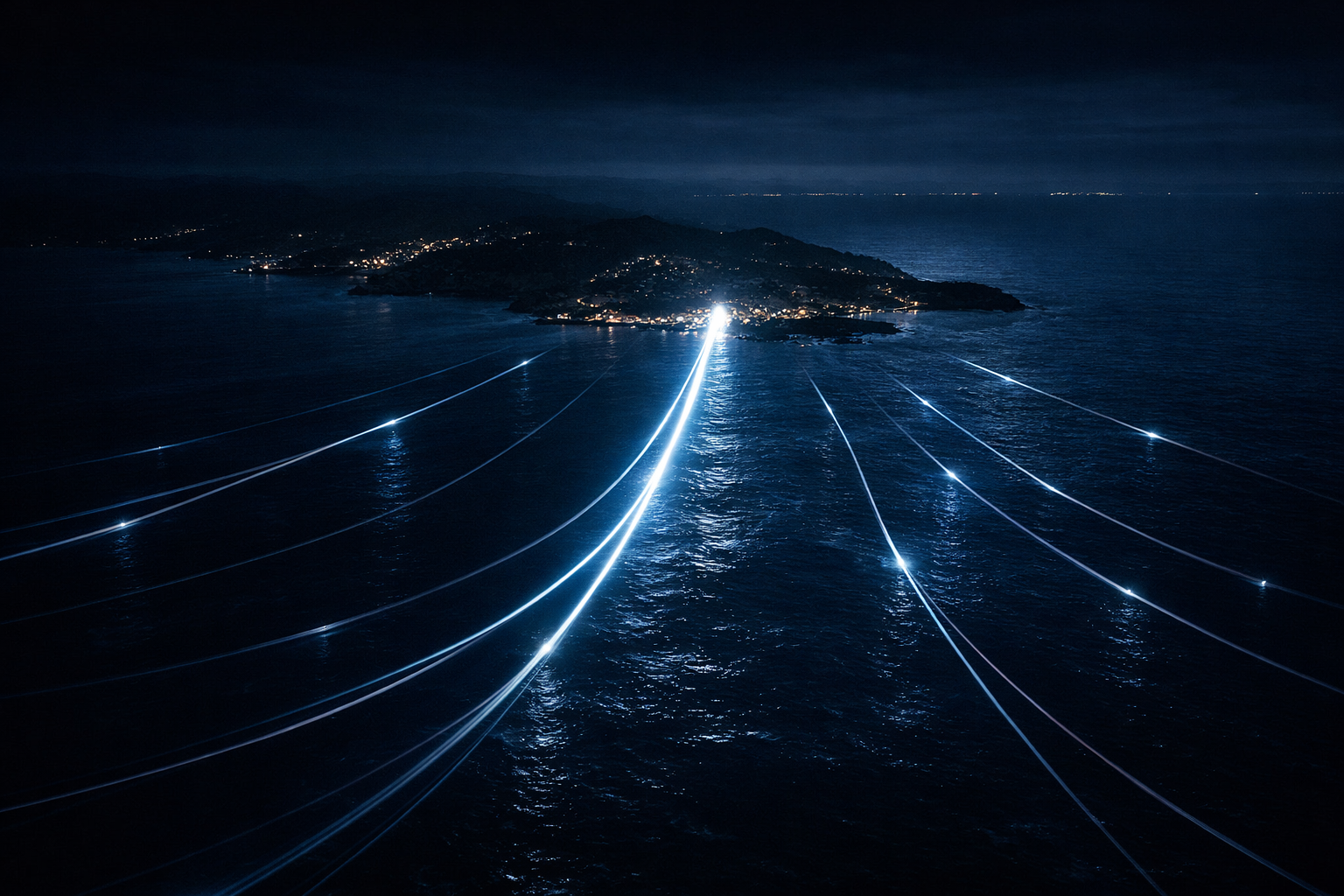
Google did not announce a cultural initiative. It didn’t sign a slate of artists, fund a festival, or acquire a media company. It did something far more consequential. It placed infrastructure in Dominican Republic. And in doing so, it made a decision long before any piece of culture arrives: where it will be able to go.
The language used around moves like this tends to obscure their weight. “Digital hub.” “Connectivity investment.” “Regional expansion.” These are soft words for hard systems. What is actually being built is not access, but direction. Not participation, but positioning. A digital exchange hub is not a venue. It is an intersection. And whoever owns the intersection begins to influence every route that passes through it.
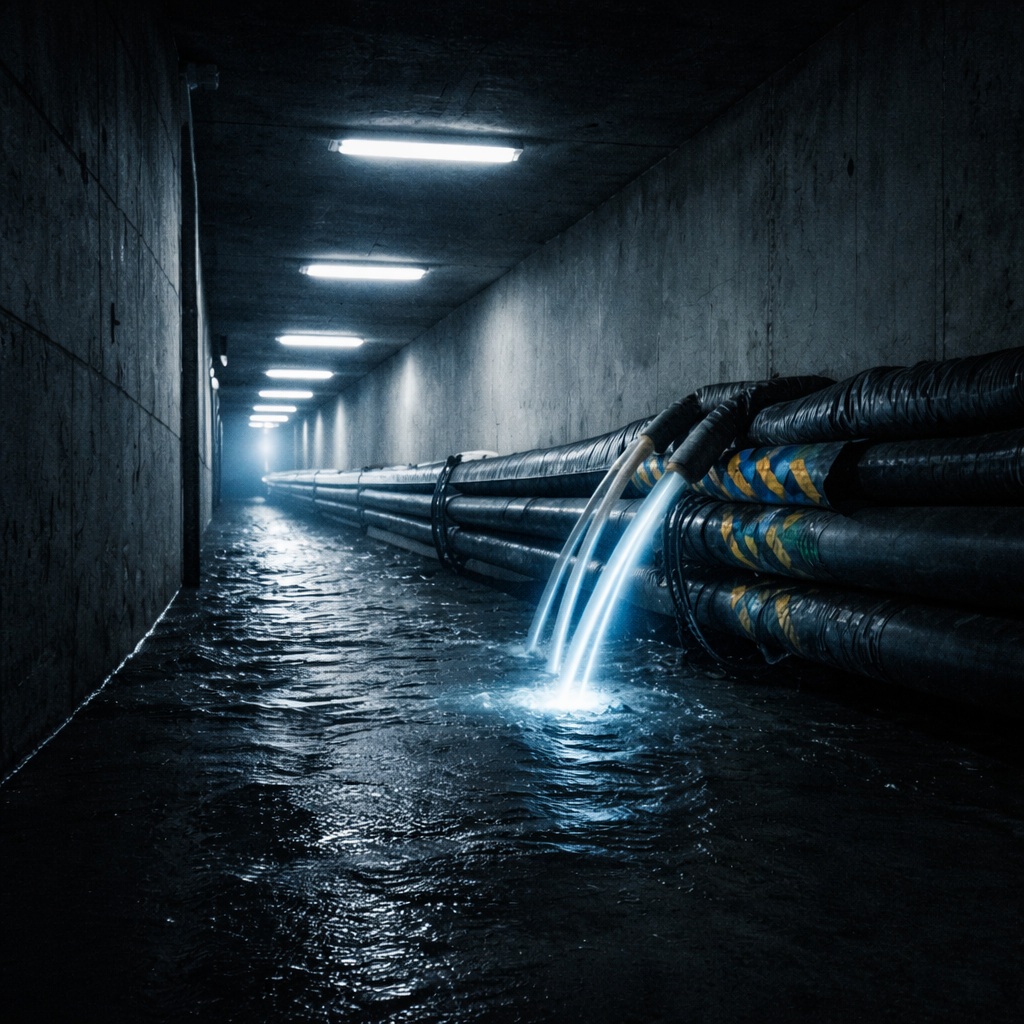
This is the layer most industries still pretend doesn’t exist. Platforms get the attention. Distribution gets the headlines. Talent gets the narrative. But underneath all of it is the physical logic of the internet itself—the cables, the nodes, the exchanges, the invisible architecture that determines speed, cost, proximity, and ultimately, viability. Before anything is streamed, posted, downloaded, or discovered, it has already been decided whether it can move efficiently enough to matter.
That is the shift. Culture is no longer only shaped at the point of creation or even at the point of distribution. It is shaped before both—at the level of infrastructure. And infrastructure does not ask what deserves to travel. It defines what can.
The choice of the Dominican Republic is not symbolic. It is spatial. Positioned between North and South America, adjacent to major submarine cable routes, close enough to the United States to integrate, and distinct enough to operate with different constraints, it becomes something more than a location. It becomes a node. A point where data converges, redirects, and accelerates. Not the origin of culture, but increasingly, the condition for its movement.
And movement is everything now.
We have spent the last decade watching platforms redefine visibility. Netflix reorganized how stories are distributed. Instagram reshaped how identity is performed. Apple refined the environments in which these experiences live. Each layer felt like the center of gravity at the time. But what this moment makes clear is that none of those layers are the foundation. They are tenants.
Infrastructure is the foundation.
When a company like Google places a hub in a region, it is not just improving latency or increasing bandwidth. It is reducing friction in one direction and, by extension, increasing it elsewhere. It is making certain pathways more efficient, more attractive, more economically viable. Over time, those efficiencies compound. Businesses follow them. Creators follow them. Platforms optimize for them. And eventually, culture appears to “naturally” emerge along those routes, as if it had chosen them.
It didn’t.
The route was set first.
This is the part that rarely gets articulated because it doesn’t feel like storytelling. There is no face attached to it. No premiere, no release date, no viral moment. But it is the precondition for all of those things. The reason one region becomes a hub of output while another remains a consumer. The reason certain voices travel faster, farther, and more consistently than others. The reason some cultural moments feel global within hours while others never leave their point of origin.
The internet flattened distribution. Infrastructure is reintroducing hierarchy.
Not loudly. Not through restriction, but through optimization. The fastest path becomes the preferred path. The preferred path becomes the dominant path. And dominance, over time, feels like inevitability.
This is where the Dominican Republic shifts from geography to function. It becomes part of a network that doesn’t just carry culture, but shapes its trajectory. A place where latency drops, where capacity increases, where proximity to major networks tightens. These are technical improvements on paper. In practice, they are cultural accelerants. They determine which markets can operate in real time, which creators can compete without delay, which stories can move without degradation.
And in a world where speed often defines relevance, that distinction is everything.
What makes this moment particularly important is not just the investment itself, but the timing. As artificial intelligence scales, as cloud infrastructure becomes more central to creative production, as real-time distribution becomes the expectation rather than the exception, the importance of physical data routes intensifies. Training models, rendering content, streaming experiences, syncing platforms—none of it exists without the underlying network. And the closer you are to that network’s most efficient nodes, the more capable you become.
This is how regions evolve from audiences into participants.
But participation is not evenly granted. It is engineered.
There is a tendency to view moves like this through the lens of opportunity, and there is opportunity here. Economic growth, technological development, increased access. But there is also authorship. The entity that builds the system writes the logic of the system. It determines how traffic flows, how value accumulates, how dependencies form. Over time, that logic becomes invisible, embedded in the way things simply “work.”
That is power at its most refined. Not controlling what is said, but structuring the conditions under which anything can be said at all.
For a publication like GREAY, which has always been concerned with how culture is constructed rather than just how it appears, this is not a peripheral story. It is central. Because it reframes the entire conversation. The question is no longer just who is creating, or even who is distributing. It is who is deciding the pathways those creations depend on.
And increasingly, that decision is being made far upstream.
The Dominican Republic will not suddenly become the origin of all culture moving through it. That is not how this works. What it becomes is a critical point in the system that allows culture to move at scale. A place where the conditions are right for acceleration. Where latency is low enough, capacity is high enough, and proximity is strategic enough to matter.
From the outside, it will look like growth. From within the system, it is alignment.
This is the quiet architecture of the next era. Less visible than platforms, less celebrated than creators, but far more determinative. Because before a story reaches an audience, before a song crosses a border, before an image becomes ubiquitous, it has already traveled a path.
And someone decided where that path would run.
Related Posts

Chainsaw Man: Reze Arc Hits Theaters Early With New Dubbed Trailer
From TV to Big Screen

The New Uniform of Cool: Abercrombie & Fitch Takes the NFL Beyond the Game
Sundays in Style

High Fashion, Higher Frequency: A$AP Rocky x Moncler
Cold World, Hot Style
A$AP Rocky’s Wayfarer Puffers Channel Harlem Cool and Global Edge
Puff & Presence

Lauren Lucas Is Coming Back to Herself
A Life Bigger Than the Timeline

Between Vulnerability and Strength: Andrew Liner’s Story
Unscripted Truths