


Global Streaming Infrastructure Is Being Rewritten in Africa—And Showmax Is the Test Case

By Jackson Trule’
There is a particular kind of speed to the modern headline—a velocity that favors conclusion over understanding. Something changes, and within minutes it is declared finished. A platform restructures, and the word “shutdown” arrives before the details do. It is a rhythm built for reaction, not reflection. Which is why the story surrounding Showmax has been so easily misunderstood. Because nothing here has ended. If anything, something far more deliberate has begun.
To be clear, there are real pressures shaping this moment. Reports indicate that Showmax has struggled financially, with losses rising significantly year over year, prompting its stakeholders to reconsider the platform’s current structure. Plans are underway to phase out elements of the existing service and replace them with a new, more integrated streaming system under Canal+ and its partners. On the surface, that reads as a shutdown. And at a literal level, parts of the platform as we know it will, in fact, disappear.
But stopping the analysis there misses the more important shift. Because what is being removed is not the market—it is the model. And what is being introduced in its place is not an absence, but a reconfiguration of how streaming will operate moving forward.
What appears, at first glance, to be contraction—losses, restructuring, the quiet language of corporate adjustment—is, in reality, the visible edge of a deeper shift. One that does not concern content in the way audiences have been trained to expect, but the systems that sit beneath it. And those systems, increasingly, are where the real power lives.
For years, streaming taught us how to look at it. We were told to focus on the shows, the scale, the cultural noise. Libraries grew. Budgets expanded. Platforms competed loudly, almost theatrically, for attention. It felt like dominance. It felt like control. But that assumption is now quietly dissolving. Because content, no matter how strong, still has to move. And movement requires infrastructure.
What has taken shape around Showmax is not a retreat from Africa, but a rethinking of how to operate within it. Through its partnership with NBCUniversal, the platform has been re-architected. Rebuilt not as a standalone service trying to replicate Western models, but as something more adaptive. A system that blends global technology with local reality.
It is a subtle distinction. But it is the distinction.
Exporting a platform is easy. Engineering one for a specific environment is not.
Africa does not behave like other streaming markets. It is mobile-first. Cost-sensitive. Shaped by bandwidth conditions that demand flexibility rather than assumption. The audience is young, engaged, globally aware—but grounded in local consumption patterns that resist uniform design. Which means success here cannot be loud. It has to be precise.
And precision requires control.
Not just of content. But of delivery.
This is where the industry’s center of gravity begins to shift. Because the real competition is no longer about who has the most to watch. It is about who controls how watching happens at all. The pipelines. The compression. The payment systems. The interfaces that quietly determine access itself.
Content may be the face. But infrastructure is the hand guiding it.
What Showmax represents, then, is not simply a regional play. It is a prototype. A way of testing how global media companies can embed themselves into local ecosystems without flattening them. A hybrid model—part global machine, part local intelligence.
And like all prototypes, it reveals something larger than itself.
That streaming, as we understood it, is evolving.
Not abruptly. Not loudly. But with a quiet consistency that only becomes visible once the shift is already underway.
There is, of course, a human cost to this kind of evolution. There always is. Systems that become more efficient remove redundancies. Roles shift. Some disappear. And that is where the narrative tends to land—on layoffs, on contraction, on the visible friction of change.
But that friction is not the story.
It is the evidence.
Because underneath it all, the industry is migrating. Away from the idea that content is king, and toward the understanding that control of distribution is the crown. That owning the system through which culture travels is more powerful than owning any single piece of culture itself.
And once that system is in place, everything else begins to reorganize around it.
This is why Africa matters in this moment. Not as a peripheral market, but as a proving ground. A place where assumptions are tested. Where models are forced to adapt. Where the future arrives earlier because the conditions demand it.
What works here will not stay here.
It will scale.
So what appears, from a distance, to be a regional adjustment is, in truth, something closer to a blueprint. A quiet redrawing of how streaming will function in its next phase.
Because the map is no longer being drawn by content libraries alone.
It is being drawn by the invisible systems beneath them.
And those systems are deciding—more than ever—where culture can go.
And who gets to follow it.
Related Posts
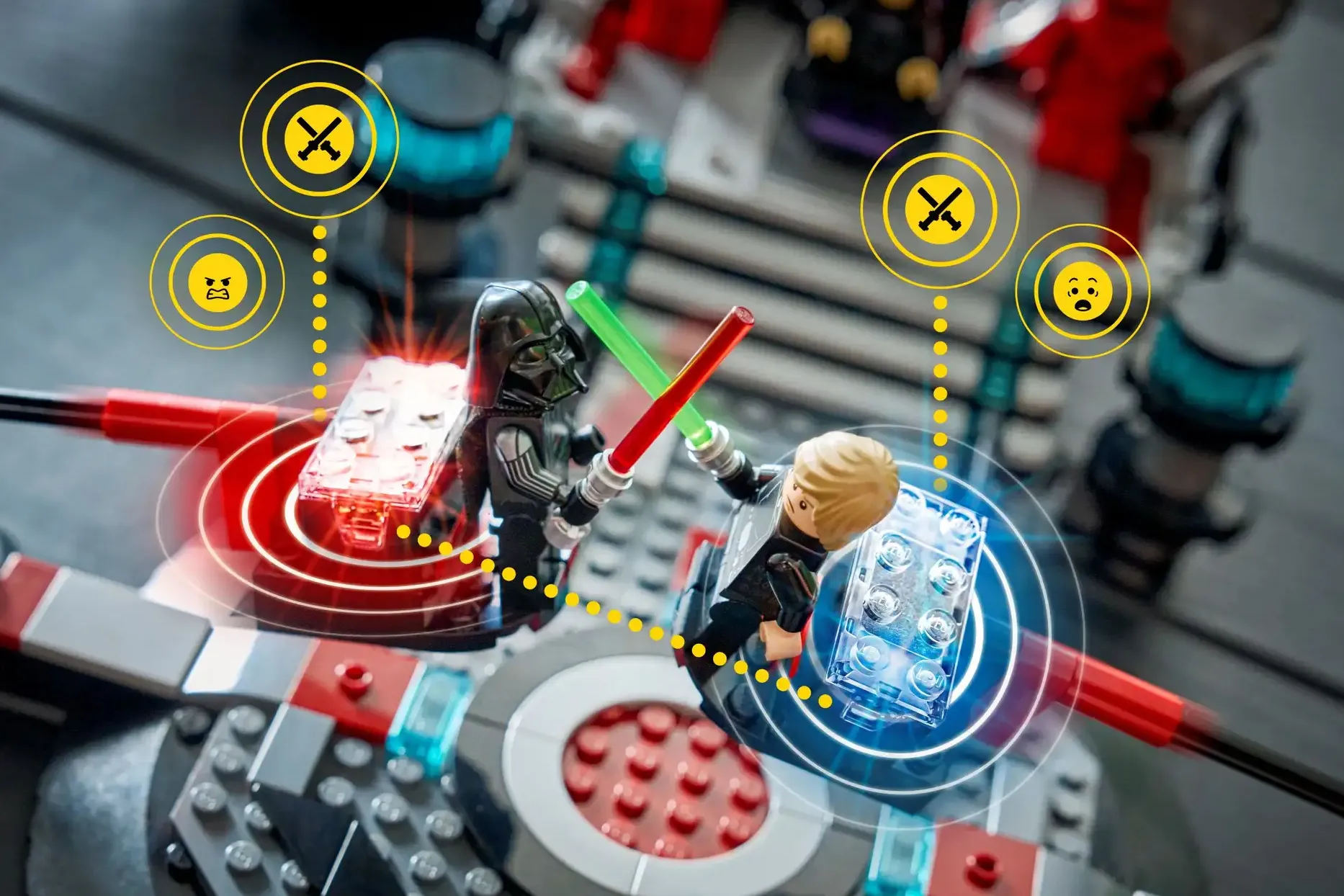
LEGO Smart Play Debuts at CES 2026 as a Subtle Rethink of Interactive Toys
When Bricks React

Cambridge Audio Unveils Melomania P100: A New Era in Over-Ear Headphones
Cambridge Audio has announced its first venture into the over-ear head

Gen Z Icons TOMORROW X TOGETHER Announce First-Ever VR Concert ‘HYPERFOCUS’
TOMORROW X TOGETHER Embark On Groundbreaking K-Pop VR Concert

The Smartphone Became the World’s Camera Leica Moved In
Photography Didn’t End. It Changed Platforms.

RayNeo Unveils Air 2s: Elevating XR Industry with Symmetric Audio, Visual Excellence, and Unmatched Comfort
RayNeo Air 2s: Redefining the Future of XR Wearables

Introducing the New Motorola razr Family: Industry’s Largest, Smartest External Display, Iconic Design Revamp, and Advanced AI Features
Twenty years after the revolutionary launch of the RAZR V3
POST COMMENT