

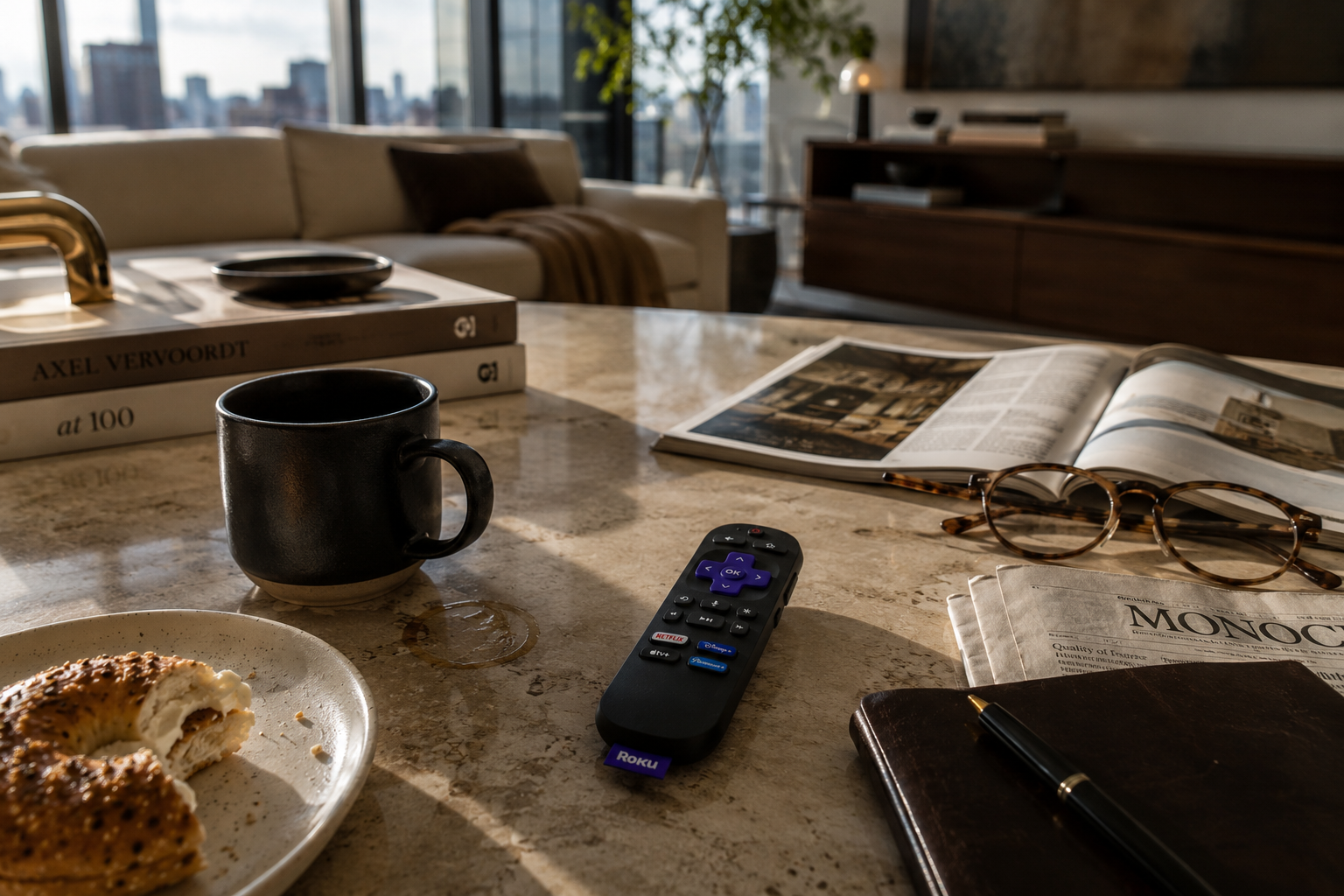
Fox Isn’t Buying Roku:It’s Buying the Television
By Dwayne Christian
For decades, media companies fought to control what appeared on television.
They invested in studios, acquired networks, secured sports rights, and built vast libraries of intellectual property. Success was measured by ownership of content and the audiences that followed it.
Fox’s proposed acquisition of Roku suggests the next phase of media competition may revolve around something else entirely.
Not the shows.
Not the movies.
Not even the streaming services.
The screen itself.
Roku began as a simple solution to a simple problem. It helped viewers access streaming content. Over time, however, the company evolved into something far more significant. Today, Roku serves as the operating layer for millions of households, shaping how audiences discover, access, and navigate television.
That distinction is what makes the acquisition noteworthy.
For most viewers, Roku is not a destination.
It is the environment.
People do not wake up thinking about Roku. They simply turn on their televisions and begin navigating the entertainment ecosystem through it. Recommendations appear. Apps are surfaced. Advertisements are served. Viewing habits are recorded. Discovery happens.
All before a single show begins.
That position has become increasingly valuable as streaming matures.
The entertainment industry no longer struggles to create content. It struggles to organize it.
Every major studio now operates a streaming platform. Every platform competes for attention. Every viewer faces more choices than they can reasonably consume.
In a market overflowing with content, visibility becomes a scarce resource.
And scarce resources become valuable assets.
That is why the Roku acquisition extends beyond streaming strategy.
Fox already controls major content businesses through news, sports, entertainment programming, and Tubi. Roku potentially gives the company access to another layer of the ecosystem—the place where audiences decide what to watch next.
The difference may seem subtle.
It is not.
Historically, media companies competed to own programming.
Increasingly, they are competing to own discovery.
Technology companies understood this shift years ago. The most influential platforms rarely produce everything users consume. Instead, they create the systems through which consumption occurs.
Operating systems became more valuable than individual applications.
Marketplaces became more valuable than individual products.
Platforms became more valuable than many of the experiences built upon them.
Television now appears to be moving in the same direction.
The cultural significance of Roku reflects that evolution.
The company’s now-famous Roku City screensaver is a surprisingly revealing example. Millions of viewers recognize it instantly. What began as a simple screensaver became a shared piece of streaming culture—a digital environment people spend time inside even when they are not actively watching anything.
That is not the behavior of a utility.
It is the behavior of infrastructure.
Infrastructure becomes invisible precisely because it becomes essential.
If approved, Fox’s acquisition of Roku will be remembered as a major media transaction.
But its larger significance may be what it reveals about where power is moving.
For years, media companies fought over content.
The next battle may be over access.
Because in a world where every company can produce a show, the most valuable position may belong to the company that controls the screen before viewers press play.
Related Posts

Usher Reveals Super Bowl Halftime Show Commercial: A 30-Year Journey Unleashed
Usher's Musical Journey Culminates at Apple Music Super Bowl Halftime

Chainsaw Man: Reze Arc Hits Theaters Early With New Dubbed Trailer
From TV to Big Screen

Lin-Manuel Miranda and Eisa Davis to Drop Star-Studded Concept Album Inspired by ‘The Warriors’
Lin-Manuel Miranda and Eisa Davis Collaborate With Nas.

Flying Above the Gridlock: Archer’s Air Taxi Network Takes Off in New York
From Midtown to Takeoff in 10 Minutes: The Future of NYC Travel

Becca Breitfeller Is Learning to Trust Where Acting Takes Her
By Kyra Greene There is a particular kind of uncertainty that comes wi
Delaney Quinn Is Growing Through the World of Buddy
The Work Can Still Be Play