

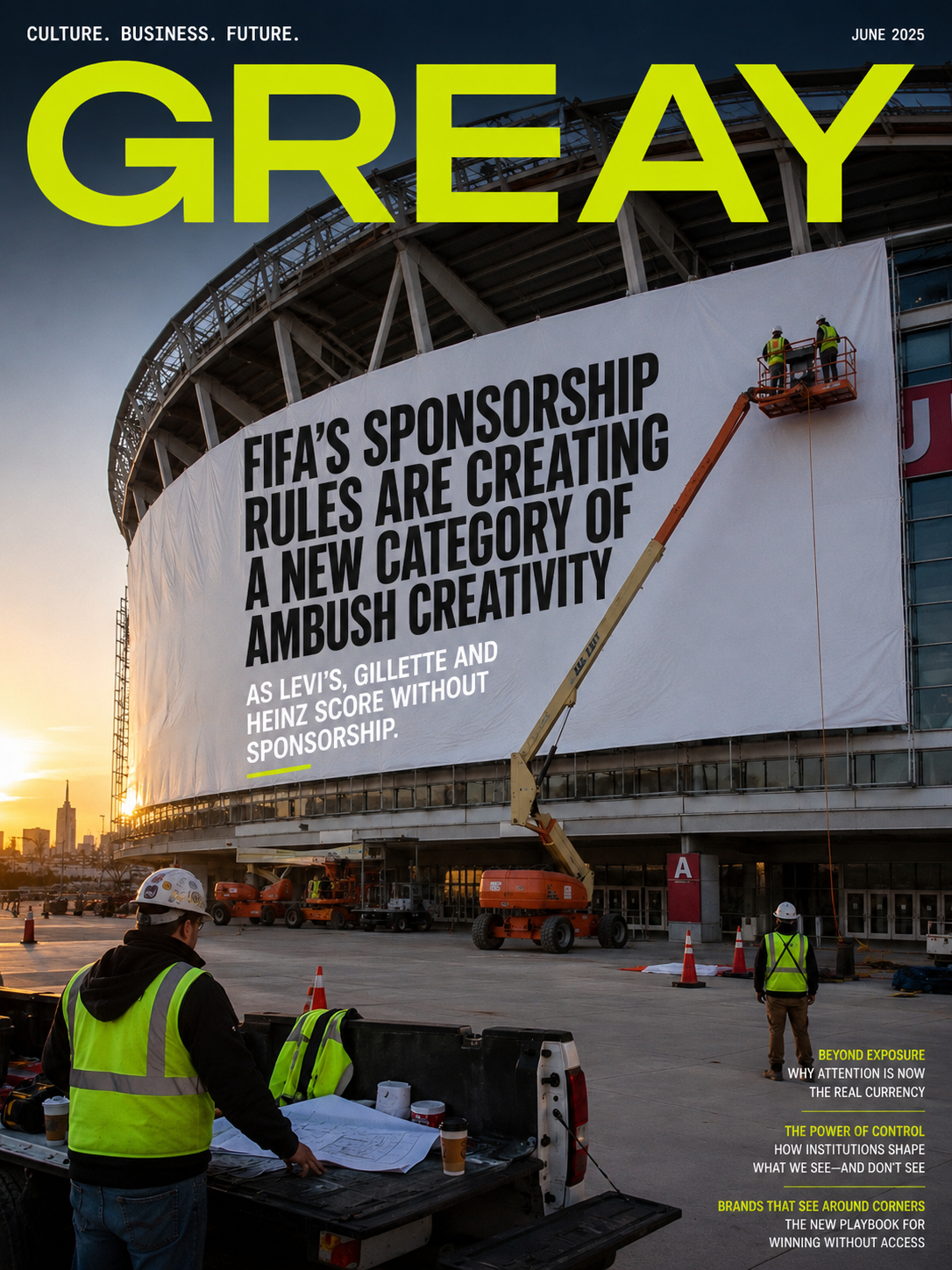
FIFA’s Sponsorship Rules Are Creating a New Category of Ambush Creativity as Levi’s, Gillette and Heinz Score Without Sponsorship
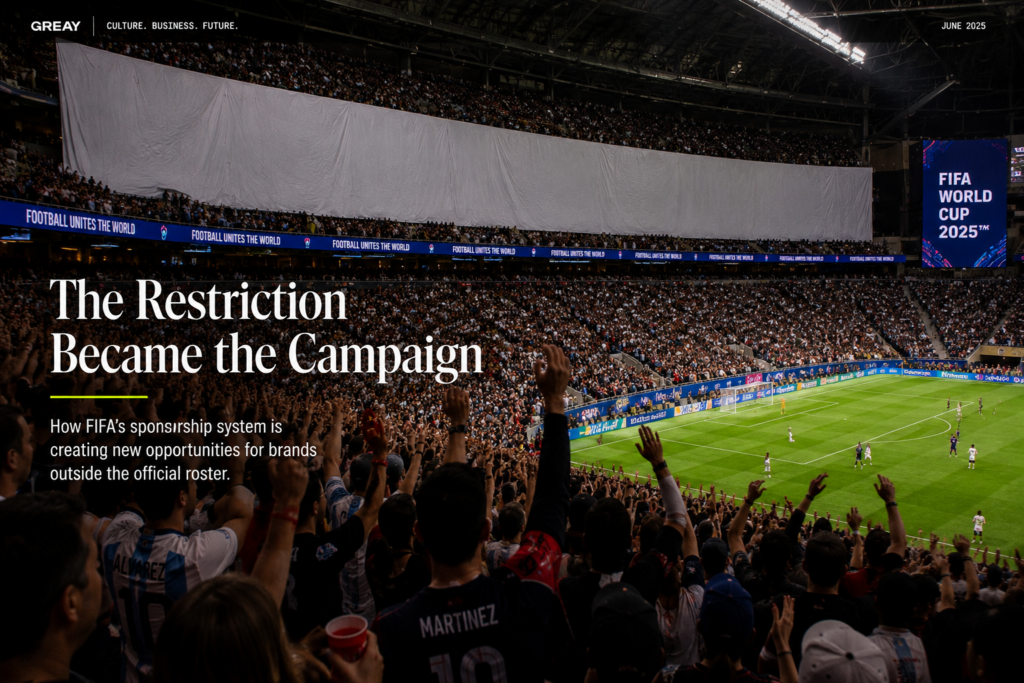
By Xavier Newman
Every institution is designed to protect something.
Museums protect art. Universities protect knowledge. Banks protect capital.
FIFA protects one of the world’s most valuable commercial ecosystems.
Every sponsorship agreement, venue requirement, and branding guideline exists for a reason: to preserve the value of official partnerships. Visibility is not left to chance. It is carefully constructed, managed, and sold.
For decades, that model has defined the economics of global sport.
But as the FIFA Club World Cup unfolds, something unexpected is happening.
The system designed to control visibility is beginning to create new forms of creativity outside of it.
Levi’s offered one of the clearest early examples. As FIFA’s clean-stadium requirements transformed how branding could appear around tournament venues, the restriction itself became part of the story. Instead of disappearing from the conversation, the absence generated one.
Gillette soon followed. A giant layer of shaving foam covered the location where its stadium signage would normally appear, transforming a limitation into a campaign that spread far beyond the venue itself.
Then Heinz pushed the idea even further.
After photographs of taped-over condiment bottles inside FIFA-controlled environments began circulating online, Heinz Canada responded by releasing its own limited-edition “Unofficial Stadium Ketchup,” embracing the very restriction intended to minimize its visibility.
Three different brands.
Three different industries.
One common condition.
At first glance, these appear to be clever marketing campaigns.
In reality, they reveal something much larger.
Institutions that tightly control visibility often create new markets for attention.
That principle extends far beyond sports.
Social media platforms create algorithms, and creators invent new formats to navigate them. Luxury brands manufacture scarcity, and collectors create secondary markets around it. Streaming platforms control distribution, and independent filmmakers discover new paths to audiences.
Again and again, the pattern repeats itself.
When access becomes regulated, innovation doesn’t disappear.
It relocates.
FIFA’s sponsorship ecosystem is now demonstrating that phenomenon in real time.
The organization is not trying to inspire ambush creativity. It is fulfilling its obligation to official partners by protecting the commercial value of sponsorship.
Yet every new restriction creates another opportunity for brands to ask a different question.
If we cannot buy visibility, how do we earn attention?
That distinction defines modern marketing.
Visibility can be purchased.
Attention must be deserved.
A logo on a stadium creates exposure.
A story about the removal of that logo creates conversation.
And conversation increasingly travels further than exposure.
The Heinz example may be the most revealing of all.
The tape obscures the label.
It does not obscure the brand.
Consumers recognize the bottle before they read the name.
Inadvertently, FIFA’s sponsorship rules are exposing something they were never intended to measure: the strength of brand equity itself.
The logo disappears.
Recognition remains.
This is why Levi’s, Gillette, and Heinz matter.
Not because they defeated FIFA.
Not because sponsorship has become less valuable.
But because they reveal a broader shift in how influence is created.
The most valuable asset is no longer simply being seen.
It is becoming part of the story people choose to share.
FIFA still controls the stadium.
FIFA still controls the sponsorship inventory.
FIFA still controls the commercial environment.
What it cannot fully control is the creativity that emerges in response to those controls.
And that may become one of the defining marketing stories of this World Cup—not because it challenges the sponsorship system, but because it reveals how every system, no matter how carefully engineered, inevitably inspires new ways of thinking just beyond its boundaries.
Related Posts
High Fashion, Higher Frequency: A$AP Rocky x Moncler
Cold World, Hot Style
Michael Bay and Sydney Sweeney Set to Rev Up OutRun Movie Adaptation
Sega’s OutRun Powers Up for a Blockbuster Film Adaptation.

Channing Tatum: The New Face of Versace Eros
Channing Tatum is the new face of Versace Eros fragrances.

McDonald’s Introduces CosMc’s: A New Galactic Experience
McDonald's is expanding its universe an innovative small-format conce
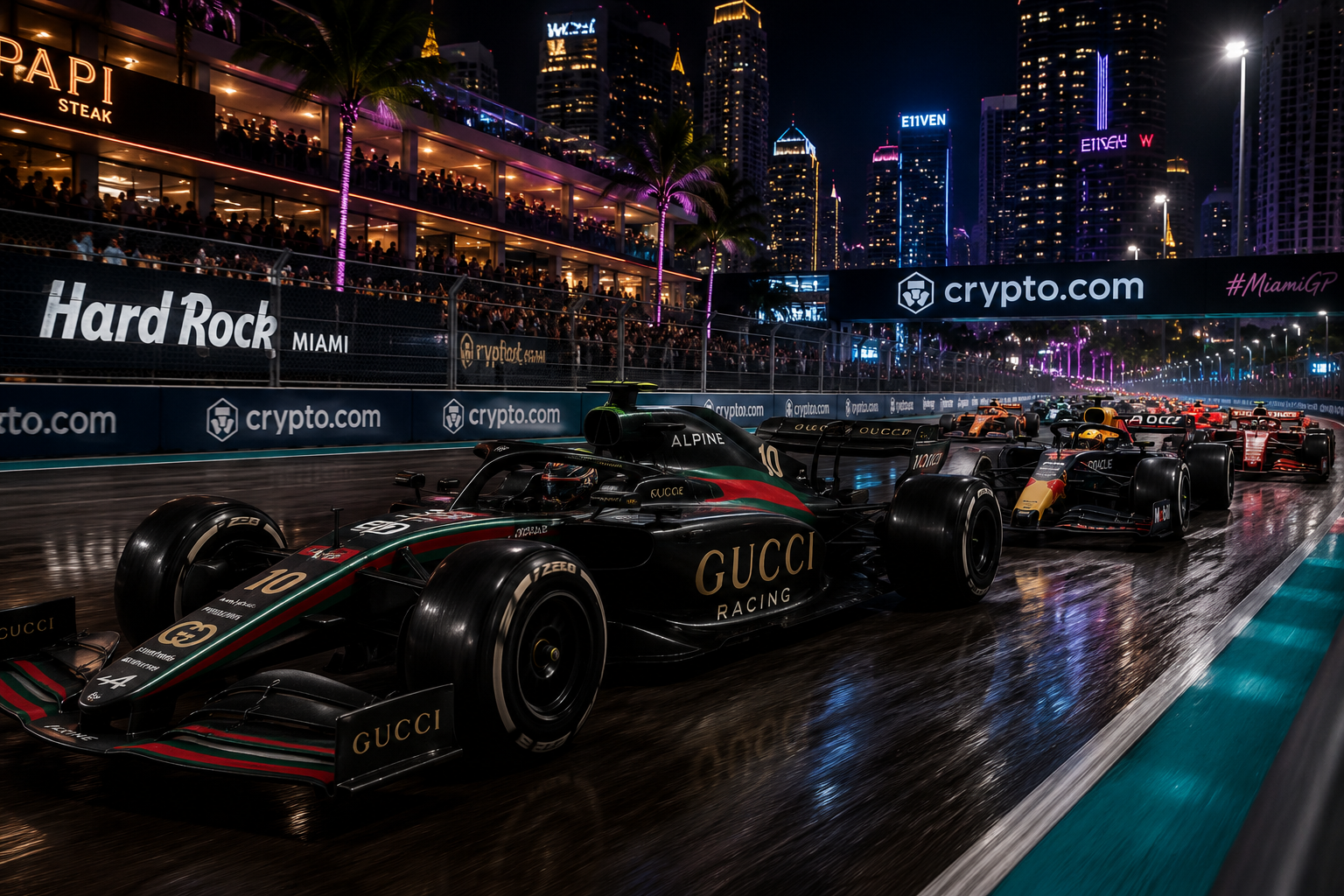
Gucci and Formula 1 Become the Same Luxury Language in 2027
Luxury's newest runway travels at 200 miles per hour.

Cincoro Tequila and AC Milan Unite for Exclusive 125th Anniversary Release
Cincoro Tequila and AC Milan Unveil Exclusive Limited-Edition Bottle.