

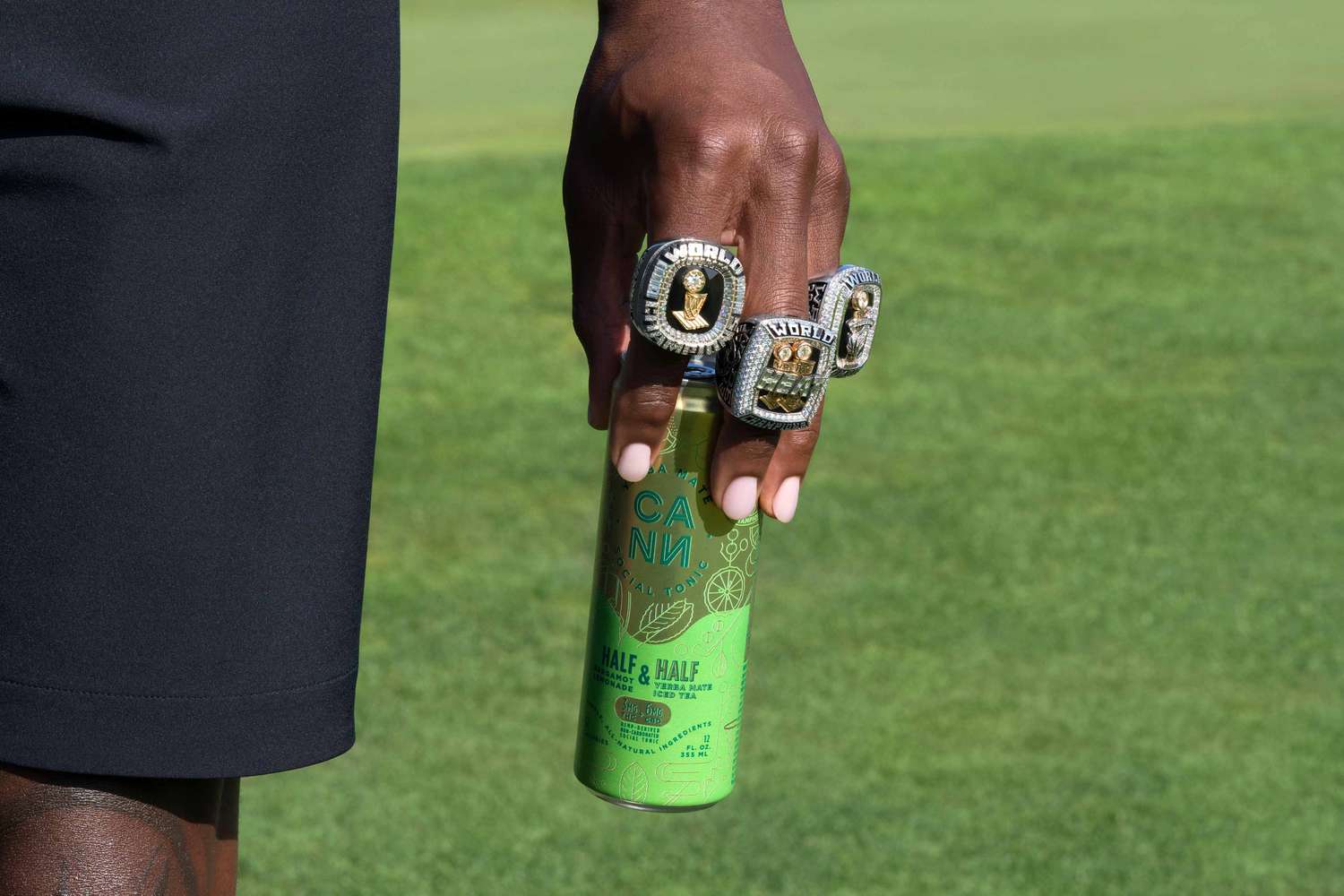
Dwyane Wade Is Betting on a Different Future for Social Drinking
By Jared Conner
Dwyane Wade’s latest beverage isn’t really about convincing people to stop drinking alcohol. It is about something potentially more consequential: giving people more control over what drinking socially means.
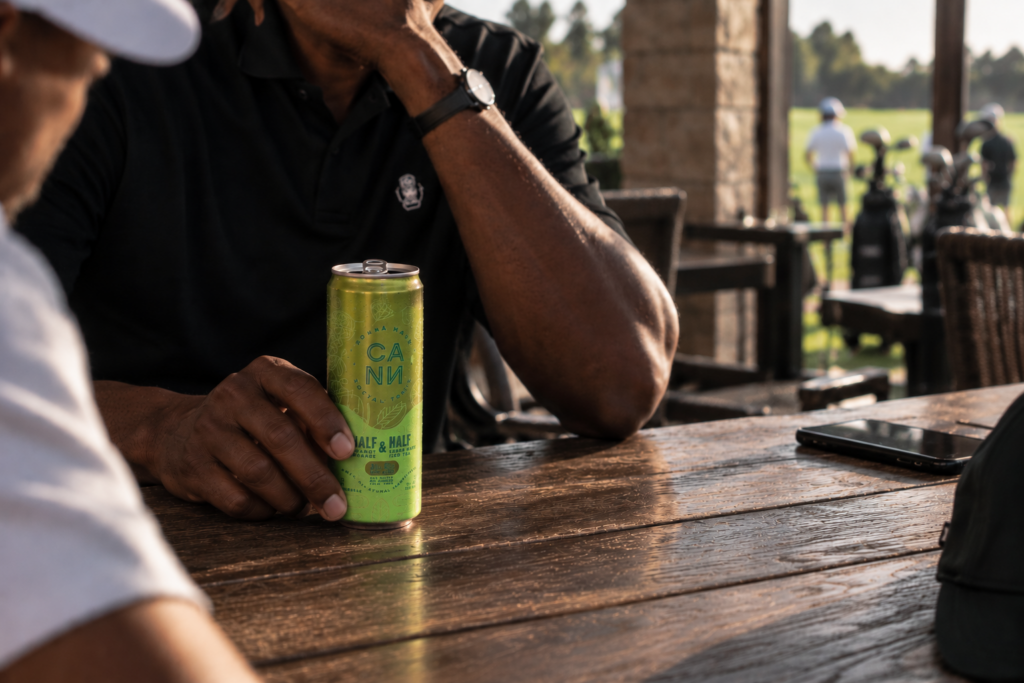
That idea sits underneath Wade’s collaboration with Cann on Half & Half, a bergamot lemonade and yerba mate iced tea available in a low-dose version containing THC and CBD and a 0MG version without THC. Wade’s relationship with the company did not begin with his name being placed on a can. He was a consumer, became an investor and eventually helped develop a product around something he felt was missing from his own life.
That sequence matters.
Celebrity beverage partnerships are easy to understand. A famous person brings attention, distribution gains a story and a product gains cultural relevance. Wade brings all of those things to Cann. But looking at Half & Half only as another celebrity collaboration misses what his beverage investments have gradually started to reveal.
Wade has been moving around the edges of the traditional drinking experience for years.
In 2020, he worked with Budweiser on Budweiser Zero, the company’s zero-alcohol beer. Through Wade Cellars, he has maintained a position inside traditional wine culture. Now Cann places him inside another emerging part of the market, where cannabis, functional ingredients and nonalcoholic beverages are beginning to occupy occasions that once belonged almost automatically to alcohol.
On paper, those businesses point in different directions. Wine contains alcohol. Budweiser Zero removes it. One version of Cann’s Half & Half introduces THC and CBD instead, while another removes THC entirely.
But together they make Wade’s position more interesting.
He isn’t betting on what replaces alcohol. He is betting that consumers will increasingly expect a choice.
For a long time, the architecture of social drinking was remarkably simple. Alcohol occupied the center. Beer at the game. Wine at dinner. Cocktails at the bar. Champagne at the celebration. Choosing not to drink was possible, of course, but the alternative often existed outside the ritual rather than being designed as part of it.
That distinction is beginning to disappear.
Nonalcoholic beer increasingly looks, tastes and behaves like the category it came from. Mocktails have become deliberate parts of menus rather than substitutions assembled after someone decides not to drink. Functional beverages borrow the packaging and sophistication of adult drinks. Cannabis beverages preserve one of alcohol’s most powerful behaviors—the simple act of opening a drink and sharing a moment—while changing what creates the effect.
Half & Half belongs inside that shift.
Wade has talked about wanting something that made sense in situations like playing golf, where drinking is often woven into the social experience but where another alcoholic beverage might not always be what someone wants. It sounds like a small problem. From a product perspective, it is a revealing one.
The golf course does not disappear. The friends do not disappear. The drink does not even disappear.
Only the assumption about what needs to be inside it changes.
That is why the existence of both versions of Half & Half matters. The low-dose version offers one experience. The 0MG version offers another. The occasion can remain almost identical while the consumer decides what they want their drink to do.
That reverses an old relationship.
For years, the occasion largely determined the beverage. Increasingly, the consumer may determine the beverage while keeping the occasion.
And that is a much larger opportunity than cannabis drinks alone.
If that behavior continues, beverage companies are no longer competing only within categories. Beer does not simply compete with beer. Wine does not simply compete with wine. A cocktail, nonalcoholic beer, functional beverage, low-dose cannabis drink and sparkling water can all compete for the same thirty minutes of someone’s life.
The real market becomes the occasion.
That possibility helps explain why Wade is particularly interesting inside this transition. His portfolio does not require him to predict a single winner. He can participate in traditional wine culture while also backing products designed for consumers who want less alcohol, no alcohol or a different experience altogether.
There is also a broader evolution happening in what celebrity participation can look like.
The traditional athlete endorsement generally began after the product existed. The company built something, the athlete supplied visibility and the consumer connected the two. Wade’s path with Cann moves in another direction: consumer to investor to collaborator. His lifestyle becomes part of the product research.
That is a more valuable position than simply being the face on the package.
It also reflects a larger shift in the business careers of elite athletes. Cultural influence is increasingly being converted into ownership, investment and product development rather than rented to brands one campaign at a time. Wade’s basketball career created attention. What he does with that attention after basketball is becoming a business architecture of its own.
Cann is one piece of it.
And none of this means alcohol is disappearing. Wine, beer and spirits remain deeply embedded in restaurants, nightlife, sports, hospitality and celebration. Cannabis beverages face regulatory and distribution constraints that traditional drinks do not. Consumer curiosity does not automatically become permanent behavior.
But alcohol does not have to disappear for the market to fundamentally change.
It only has to lose its automatic claim on the occasion.
That may be the more important shift Wade is positioning himself around. The future bar does not necessarily become sober. The golf course does not become cannabis-first. Dinner does not abandon wine. Instead, the table becomes more fragmented—and more personal.
One person can order wine. Another can have a nonalcoholic beer. Someone else can choose a low-dose THC beverage. Another person may want nothing intoxicating at all.
They can still be having the same night.
For beverage companies, that creates a different question. It is no longer simply what will people drink?
It is who will give them the most ways to participate?
Wade’s investments suggest he understands the distinction.
He has sold wine. He helped introduce a zero-alcohol beer. Now he is investing in a company building both cannabis-infused and non-THC drinks around the same social ritual. Those moves do not tell us exactly what the winning beverage of the next decade will be.
They tell us something potentially more useful.
There may not be one.
Dwyane Wade isn’t betting that people will stop drinking.
He is betting that drinking socially will no longer require everyone to make the same choice.
Related Posts

Chameleon Unveils Upcoming Cold-Brew Coffee Varieties Inspired by Girl Scout Cookie™ Flavors
Chameleon Organic Coffee®, renowned for its consciously crafted bottl
Jin of BTS Joins Gucci as Global Ambassador, Elevating the Fashion House’s Korean Influence
BTS' Jin has been named Gucci's newest global ambassador
UGG Reveals the Latest Evolution of Regenerate by UGG™ Collection
UGG®, the global lifestyle brand introduces new line .
Now You See Me: Now You Don’t” Trailer Drops, Teasing Diamond Heist and Star-Studded Return
Magic, Mischief, and Diamonds: “Now You See Me 3” Set for Fall Rel
Calm Is the New Power: Volvo’s EX60 Redefines Electric Luxury
Less Noise, More Meaning
The Brand That Needed a Door—and What Happened When It Disappeared
From Storefront to Feed to Nowhere