

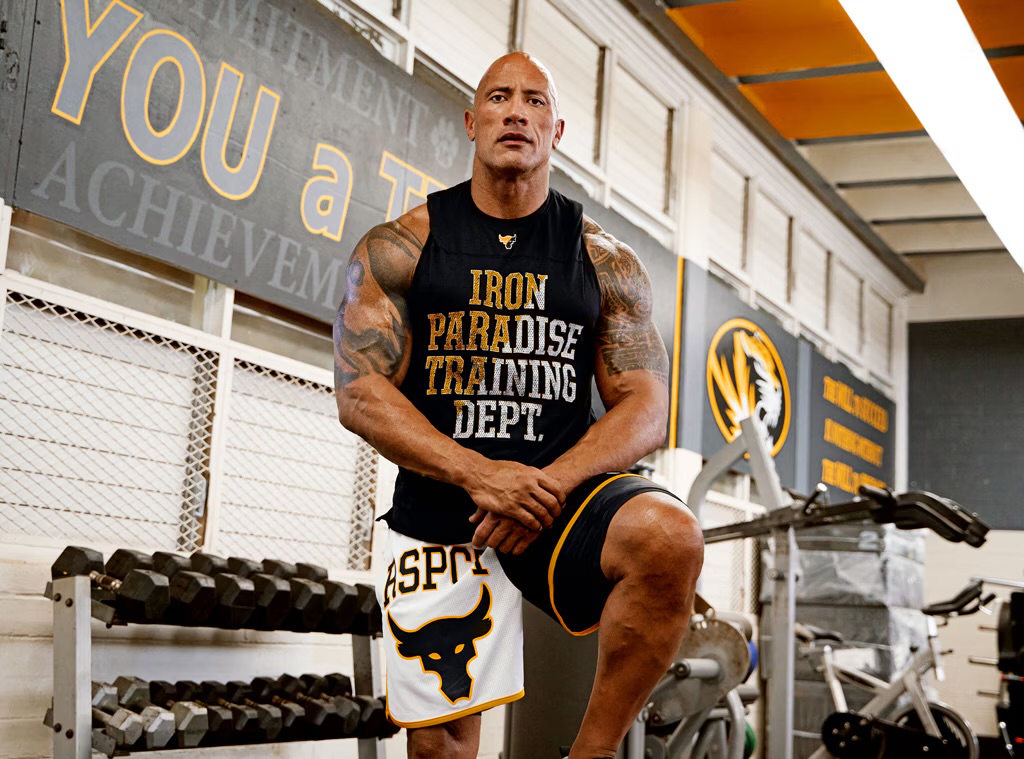
Dwayne Johnson Is Taking Project Rock Beyond Under Armour
By Kyle Muller
For most celebrities, the end of an apparel partnership means the end of the product. The corporation owns the manufacturing, controls the distribution, develops the technology and eventually moves whatever remains to the clearance section. The celebrity collects the final check, the campaign disappears and the collaboration becomes another completed chapter in a much larger career.
Dwayne Johnson and Dany Garcia constructed Project Rock differently.
After ten years, Johnson and Under Armour are ending the partnership that transformed his training philosophy into footwear, apparel and accessories. Under Armour will continue selling Project Rock merchandise through October 2026, but the brand itself is not disappearing with the relationship. Johnson and Garcia retain control of Project Rock and are seeking a new manufacturing and distribution partner for what comes next.
That distinction is the entire story.
Johnson is not simply leaving Under Armour for another endorsement. He and Garcia are attempting to carry Project Rock beyond the company that helped make it tangible. And in doing so, they are about to answer a question considerably larger than one celebrity apparel deal: Can a personality use a corporation’s machinery to build an asset valuable enough to eventually survive without the corporation?
That is what Project Rock’s second decade is really testing.
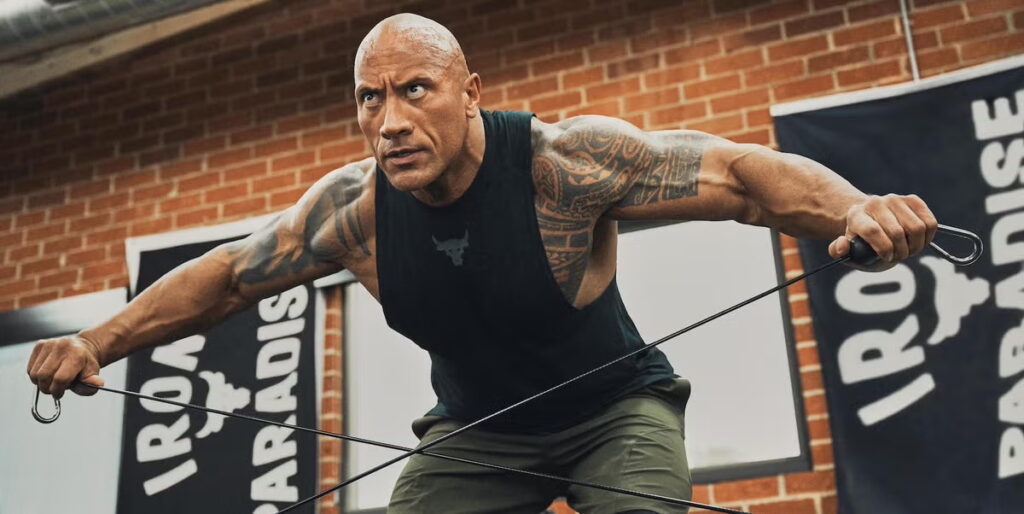
When Under Armour announced its partnership with Johnson in January 2016, Project Rock was not yet a conventional athletic label. Johnson was entering the relationship with something powerful but difficult to put on a balance sheet: an identity he had spent years constructing around work. The predawn workouts, the Iron Paradise, the Brahma Bull and the language of discipline, repetition and personal accountability were not incidental pieces of the Dwayne Johnson mythology. Training had become part of the mythology itself.
Under Armour understood how to turn that mythology into objects. It had designers, footwear developers, material specialists, performance technology, manufacturing relationships, stores, e-commerce operations and wholesale distribution. It could take an idea associated with Johnson and engineer a shoe someone could actually train in.
Johnson possessed something Under Armour could not manufacture nearly as easily: meaning.
Project Rock became the place where those two capabilities met. Under Armour helped translate Johnson’s identity into footwear, apparel and accessories, eventually incorporating its performance technologies into Project Rock products. Collections expanded across categories and audiences. Project Rock entered Under Armour’s retail ecosystem and outside retailers, developed multiple footwear models and eventually expanded into a multiyear relationship with the UFC.
But the products were only one layer of what was being built. Project Rock offered customers access to an idea Johnson had made central to his career: greatness was not something reserved for the naturally gifted. It was something constructed through repetition, discipline and work.
That proposition was larger than any particular Dwayne Johnson movie. Someone did not need to have watched Black Adam, attended WrestleMania or followed every turn of Johnson’s Hollywood career to understand what Project Rock was selling. They only needed to recognize the person they hoped to become when they entered the gym.
That is the difference between celebrity merchandise and the beginnings of a brand.
Johnson and Garcia also appear to have understood something important about where that value was being created. If meaning was the valuable part, their organization needed to participate in constructing it rather than simply allowing Johnson’s image to sit on top of someone else’s marketing operation. Through Seven Bucks Creative, their broader business ecosystem participated in Project Rock’s strategic and creative marketing, allowing the campaigns to draw directly from the mythology Johnson had already built around himself.
The architecture becomes more interesting in retrospect. Under Armour was building much of the machinery. Johnson and Garcia were building much of the meaning. For ten years, consumers experienced those things as one product.
Now they are being separated.
That is why the end of this partnership is more consequential than the usual celebrity departure. Project Rock is attempting to become portable intellectual property.
The traditional endorsement model generally makes the corporation permanent and the celebrity temporary. A company owns the product, distribution and commercial architecture. The celebrity supplies attention. When the agreement ends, the celebrity moves somewhere else while the corporation retains the underlying system.
Project Rock potentially reverses that relationship. The operator can change. The brand can remain.
Johnson and Garcia are not entering the marketplace asking another company to imagine Project Rock from nothing. They are looking for a company capable of helping operate something that has already spent a decade establishing itself. That gives them a fundamentally different negotiating position than Johnson had in 2016.
Ten years ago, the proposition was theoretical: could Dwayne Johnson’s enormous audience and training identity support a legitimate performance collection? Today, a prospective partner can see a decade of products, established visual codes, footwear history, apparel categories, partnerships and consumer expectations. There is a recognizable Brahma Bull. There is an established philosophy. There is a customer who already understands what the words Project Rock are supposed to mean.
Perhaps most importantly, there is evidence that the idea can extend beyond Johnson himself.
When Lindsey Vonn became Project Rock’s first global ambassador in 2019, the decision quietly tested one of the most important questions any celebrity-created company eventually confronts: Is the founder the brand, or did the founder create the brand?
Those are very different propositions.
If Project Rock is simply another name for Dwayne Johnson, its relevance will always remain attached to Johnson’s own cultural presence. If Project Rock instead represents an ideology—discipline, resilience, effort and accountability—then other athletes can inhabit it. Johnson can remain its founder and spiritual center without necessarily remaining the only person capable of carrying its meaning.
The UFC partnership pushed that experiment further. Project Rock became the promotion’s official footwear partner, putting the brand into an athletic environment where Johnson’s philosophy could be associated with competitors rather than only with Johnson himself. Those moves suggested the beginnings of something larger than celebrity merchandise.
But suggesting it and proving it are two different things.
Ownership is not independence. A trademark cannot cushion someone’s foot. A philosophy cannot manufacture a shoe. Cultural recognition cannot manage inventory.
For a decade, Under Armour provided much of the invisible machinery underneath the visible Project Rock identity. Product development, sourcing, manufacturing, performance technology, quality control, logistics, e-commerce and retail distribution rarely become part of the consumer story precisely because successful companies make those systems disappear. Customers saw Project Rock. Behind Project Rock stood Under Armour.
Now Johnson and Garcia must separate those identities without making consumers feel as though something has been removed.
That is the real work.
And it makes the first major post-Under Armour Project Rock product more important than the final Project Rock product made with Under Armour, because that product will begin answering a question the first decade never could: What exactly were consumers buying?
Were they buying Dwayne Johnson? Were they buying Project Rock? Or were they buying an Under Armour performance product interpreted through Dwayne Johnson?
While the partnership existed, those three things could occupy the same shoe. Once the Under Armour architecture disappears, they cannot.
If Project Rock can move to another manufacturer, maintain or improve its product quality and convince customers to follow it, Johnson and Garcia will have proven something extraordinarily valuable. The consumer relationship belonged to Project Rock.
That is where celebrity becomes enterprise value.
There is another layer to the story because Under Armour itself is changing. The company has been working through a broader restructuring while attempting to restore greater clarity and strength to the Under Armour name. In November 2025, Under Armour and Stephen Curry announced that Curry Brand would separate from the company, allowing Curry to pursue the brand independently while Under Armour redirected its basketball strategy toward UA Basketball.
Project Rock should not automatically be treated as an identical situation. The relationships, economics and structures are different. But placed beside each other, the departures reveal something difficult to ignore. Within less than a year, two personalities who helped Under Armour create recognizable worlds inside its larger business reached the end of those relationships while the brands associated with them remained capable of pursuing futures beyond Under Armour.
Under Armour is concentrating attention back toward Under Armour. Curry is concentrating attention toward Curry. Johnson and Garcia are concentrating attention toward Project Rock.
There does not need to be a loser for the shift to matter. In fact, the more revealing story may be that all sides have reached a point where separating makes strategic sense.
And that takes Project Rock beyond the sportswear business and into a much larger evolution occurring throughout celebrity culture.
For generations, celebrity operated as rented media. Corporations owned the factories, products, distribution and intellectual property. Athletes and entertainers supplied attention. Their fame increased the value of someone else’s asset, and they were compensated for allowing a corporation to borrow some of their cultural equity.
The most sophisticated celebrity businesses increasingly ask a different question: Why should the value created by my audience accumulate only inside someone else’s company?
That question changes the objective. The largest endorsement check is no longer necessarily the greatest prize. Ownership is. Equity is. Intellectual property is. The ability to carry an audience from one operating system to another is.
Johnson’s broader business career makes Project Rock particularly revealing in that context. Alongside Garcia, he has spent years constructing businesses around the idea that celebrity can be converted into ownership rather than merely compensation. Seven Bucks became more than a production label attached to Johnson’s acting career. Other ventures extended his identity into consumer categories where the objective was not simply to appear in advertising but to participate in the value being created.
Project Rock may now become the cleanest test of that philosophy because Johnson and Garcia received something unusually valuable during their first decade: ten years inside a major sportswear company’s machinery.
Under Armour helped de-risk the proposition. It helped establish that consumers would purchase the products. It gave Project Rock performance credibility. It helped develop the footwear, put the products into stores and teach Project Rock what customers expected from a training brand.
Under Armour did not simply manufacture Project Rock. It helped teach Project Rock how to be a company.
Now the student is leaving the building.
That does not mean the student can reproduce the building. And that tension is what prevents this story from becoming a victory lap for Johnson.
The next manufacturing partner matters enormously. Product quality matters. Distribution matters. Price matters. Retail presence matters. The first Project Rock shoe without Under Armour’s technical architecture matters. Johnson’s celebrity cannot indefinitely compensate for an inferior product.
If the next generation feels cheaper, less technical or less credible, consumers may discover that Under Armour contributed more to their understanding of Project Rock than anyone realized.
But the opposite possibility is considerably more consequential.
If Project Rock survives the transition—if the products improve, the distribution remains strong and customers barely hesitate when the corporate logo changes—then Johnson and Garcia will have discovered exactly where the value accumulated during those ten years.
Under Armour helped build the machinery. But the audience belonged to the idea.
That would make Project Rock an important case study for the next generation of celebrity partnerships. The lesson would not be that famous people no longer need corporations. They do. Johnson and Garcia are searching for another partner precisely because manufacturing and distributing performance products requires expertise and systems that celebrity cannot replace.
The lesson would be more sophisticated: the corporation does not necessarily have to own the thing the celebrity is helping it build.
A company can provide technical capability. A personality can provide cultural meaning. Together they can create value neither could create as effectively alone. But if the relationship is structured correctly, the end of the partnership does not require the destruction of the asset.
The machinery can change. The meaning can travel.
That is why October 2026 is not really the ending of Project Rock’s Under Armour story. It is the beginning of its proof.
Project Rock’s first decade established that Dwayne Johnson’s philosophy could become a commercial product. Its second decade must prove something considerably harder: that the product became a brand capable of surviving the system that introduced it.
Johnson and Garcia are not walking away from Under Armour empty-handed. They are carrying ten years of accumulated recognition, consumer expectations and cultural meaning into whatever comes next. But they are also leaving behind a company that quietly performed thousands of functions necessary to turn those things into products people could actually buy.
Now the two sides of Project Rock’s value are finally being pulled apart. And for the first time, the marketplace will be able to see which part customers were truly attached to.
Under Armour helped prove that Project Rock could sell products. Dwayne Johnson and Dany Garcia now have to prove that Project Rock learned how to exist without Under Armour.
If they can, this will have been more than a successful celebrity collaboration followed by an amicable separation. They will have turned rented corporate capability into owned cultural equity.
Under Armour was the platform that helped Project Rock become real.
Now Project Rock has to prove that it became the asset.
Related Posts

Troye Sivan Named Rabanne’s Global Makeup Brand Ambassador
TROYE SIVAN New RABANNE GLOBAL AMBASSADOR.
A$AP Rocky Takes Center Stage in Savage X Fenty’s Latest Classics Campaign
A$AP Rocky Savage X Fenty's Campaign With Son RZA.

Nike Built the Myth-China Is Building the System
Not a Takeover. A Rebuild

Angel Reese and Daniel Ricciardo Star in Animated Beats Pill Campaign for New Summer Colors
Beats Pill Adds Two New Colors Just in Time for Summer.

LG Launches Its First Curated Content Channel: “LG Channels Showcase”
LG Electronics USA has announced the launch of a new FAST channel on L

Building Great Ones: Susie Abromeit on Purpose, Pain & Reinvention
From Tennis Warrior to Creative Alchemist