

Disney Converted Esports Into a Rights Package
By Kyle Neal
There was a time when esports existed outside the system—fast, native, and self-contained. It lived on platforms that didn’t need permission, didn’t require scheduling, and didn’t answer to broadcast logic. It was culture in motion: immediate, participatory, and frictionless. You didn’t tune in. You clicked in. And that distinction mattered, because it meant esports wasn’t built to be programmed—it was built to be experienced.
Disney understood something most didn’t: behavior doesn’t have to be replaced to be redefined. It only needs to be repackaged.
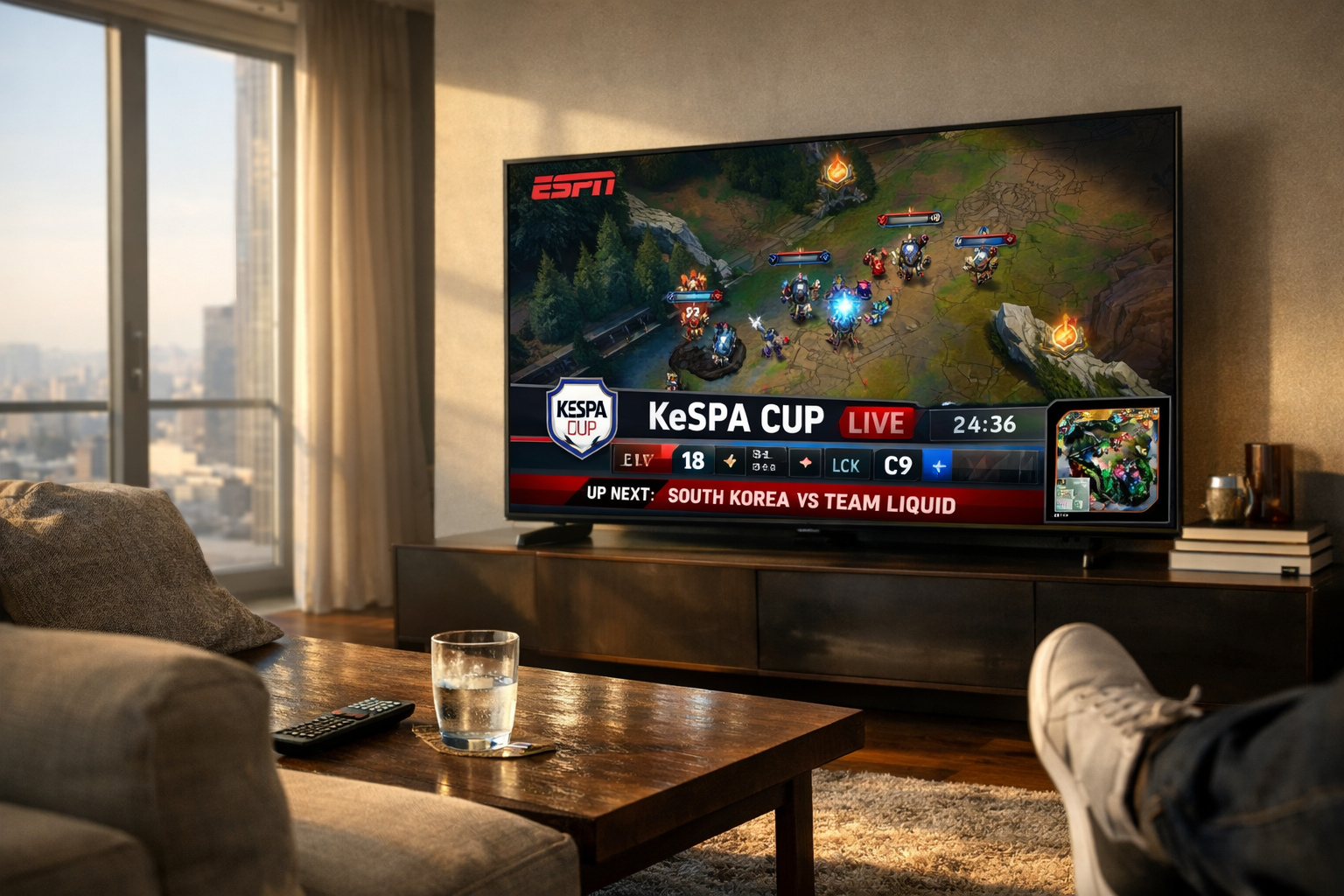
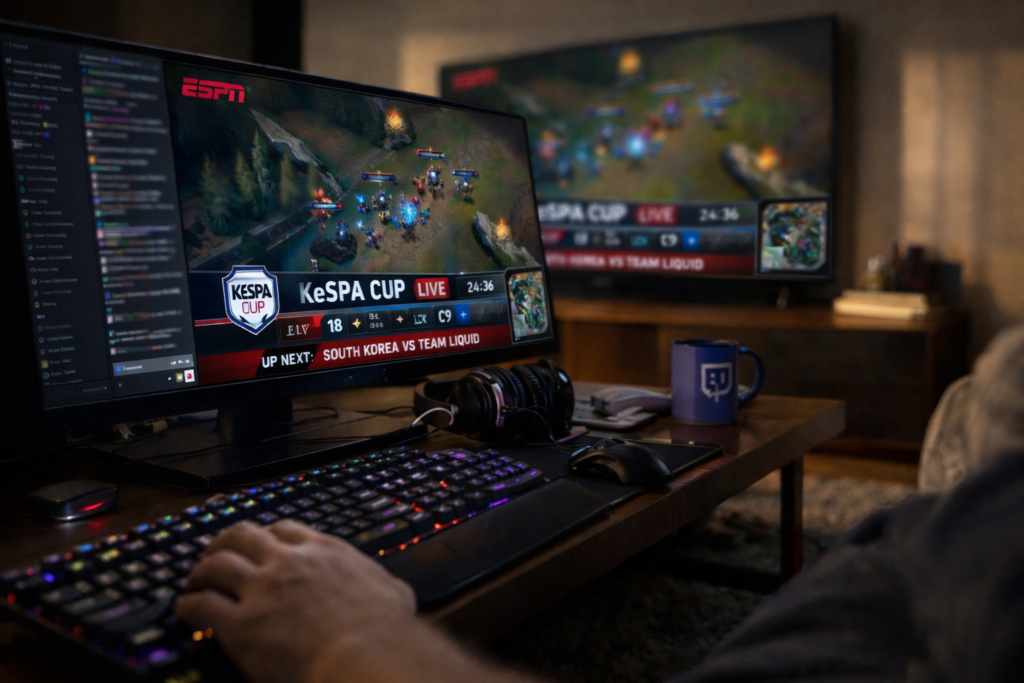
With a multi-year partnership alongside the Korea e-Sports Association, Disney+ didn’t just secure streaming rights to the KeSPA Cup. It secured the full architecture around it. All ten LCK teams. International bridge teams like Cloud9 and Team Liquid. National team matches feeding into the global stage of the Asian Games. And most critically, the application of ESPN branding—an institutional layer that doesn’t just distribute content, but classifies it.
That classification is the shift.
Because ESPN doesn’t touch categories lightly. It standardizes them. It translates them into formats that can be scheduled, sold, and scaled. When ESPN enters, the question is no longer what is this? It becomes how do we program it? And in that transition, esports moves from something you watch into something that can be slotted, repeated, and monetized across a global system.
The KeSPA Cup is a precise entry point. Not the biggest tournament, but the most useful one. It carries signal without saturation. It functions as a testing ground for rosters, narratives, and future stars. In traditional sports, this is where systems are built—summer leagues, preseason circuits, developmental pipelines. Disney didn’t choose spectacle. It chose infrastructure.
And infrastructure is where power consolidates.
Because once you control the pipeline, you don’t just show the game—you shape how it’s understood. LCK dominance becomes global narrative. Western teams become access points. National team competition introduces stakes that transcend fandom and enter identity. What was once fragmented across platforms is now routed through a single, legible system.
This is where the difference between Twitch and Disney becomes clear.
Twitch built access.
Disney builds structure.
Twitch allows esports to exist.
Disney makes it make sense.
And sense is what unlocks scale. Advertisers don’t buy culture—they buy predictability. Brands don’t invest in chaos—they invest in systems that can be measured, repeated, and extended. By converting esports into a rights package, Disney didn’t just make it visible. It made it legible to the institutions that determine what grows and what doesn’t.
The addition of national team coverage ahead of the Asian Games completes the transition. Because now esports doesn’t just mirror sports—it participates in the same geopolitical framework. Country versus country. Flag over logo. Narrative over match. This is how categories solidify: not through popularity, but through structure.
And structure is what travels.
What Disney built here isn’t a broadcast deal. It’s a routing system. Korean competition, Western organizations, global distribution, and institutional framing—all moving through a pipeline that can be scaled, repeated, and exported. This is no longer about where esports lives. It’s about where it’s understood.
Because once something is understood, it can be priced.
And once it can be priced, it can be packaged.
And once it’s packaged, it no longer behaves like culture.
It behaves like inventory.
Related Posts
The Sims Mobile Logs Off: EA Ends a Seven-Year Digital Life
A Digital Goodbye.
The Status Pro X and the Engineering of Sound
Built for Listening
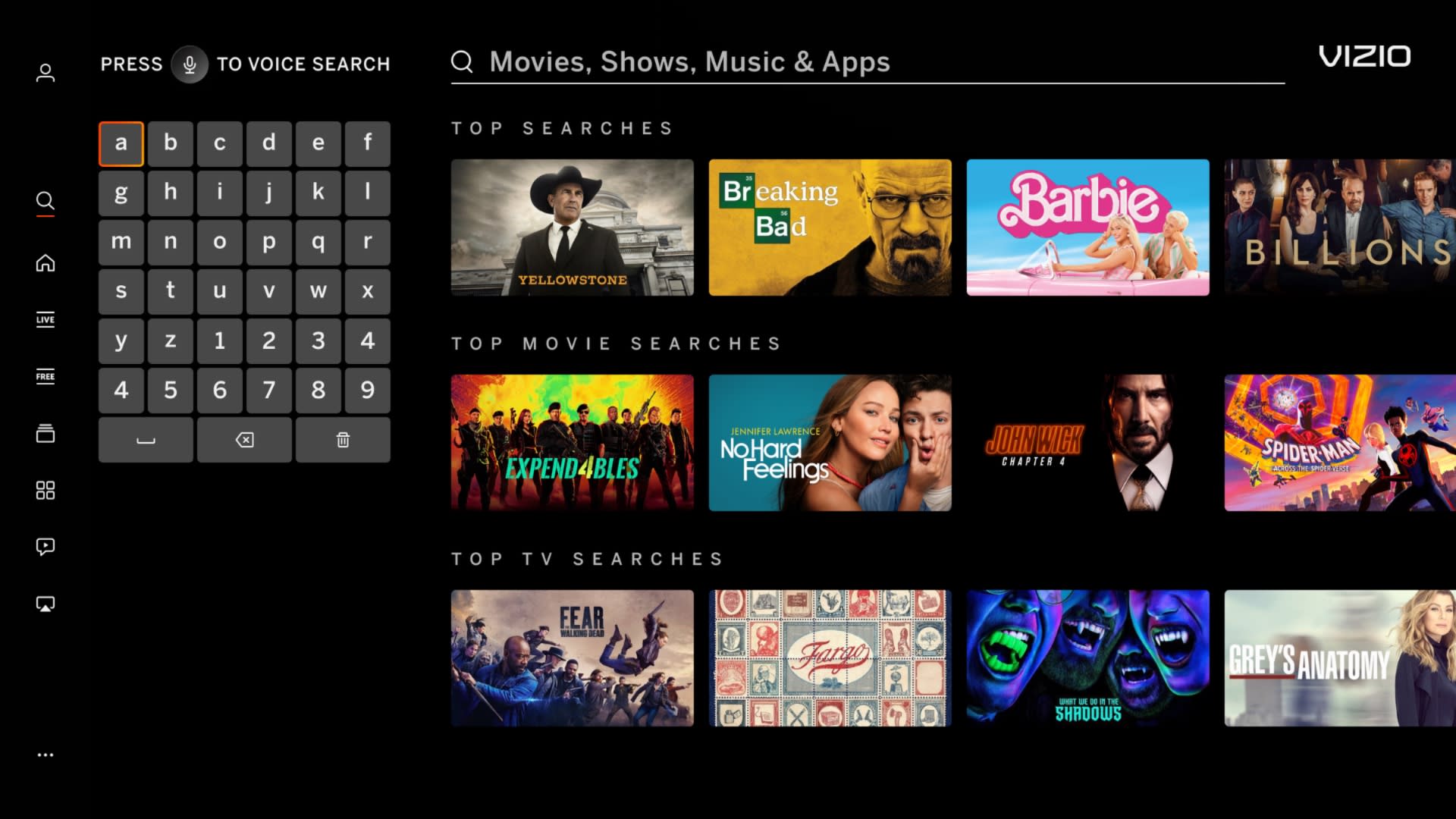
VIZIO Enhances User Experience with Swift Loading and Seamless Navigation in VIZIO Home Upgrade
Vizio Bid to redefine home entertainment
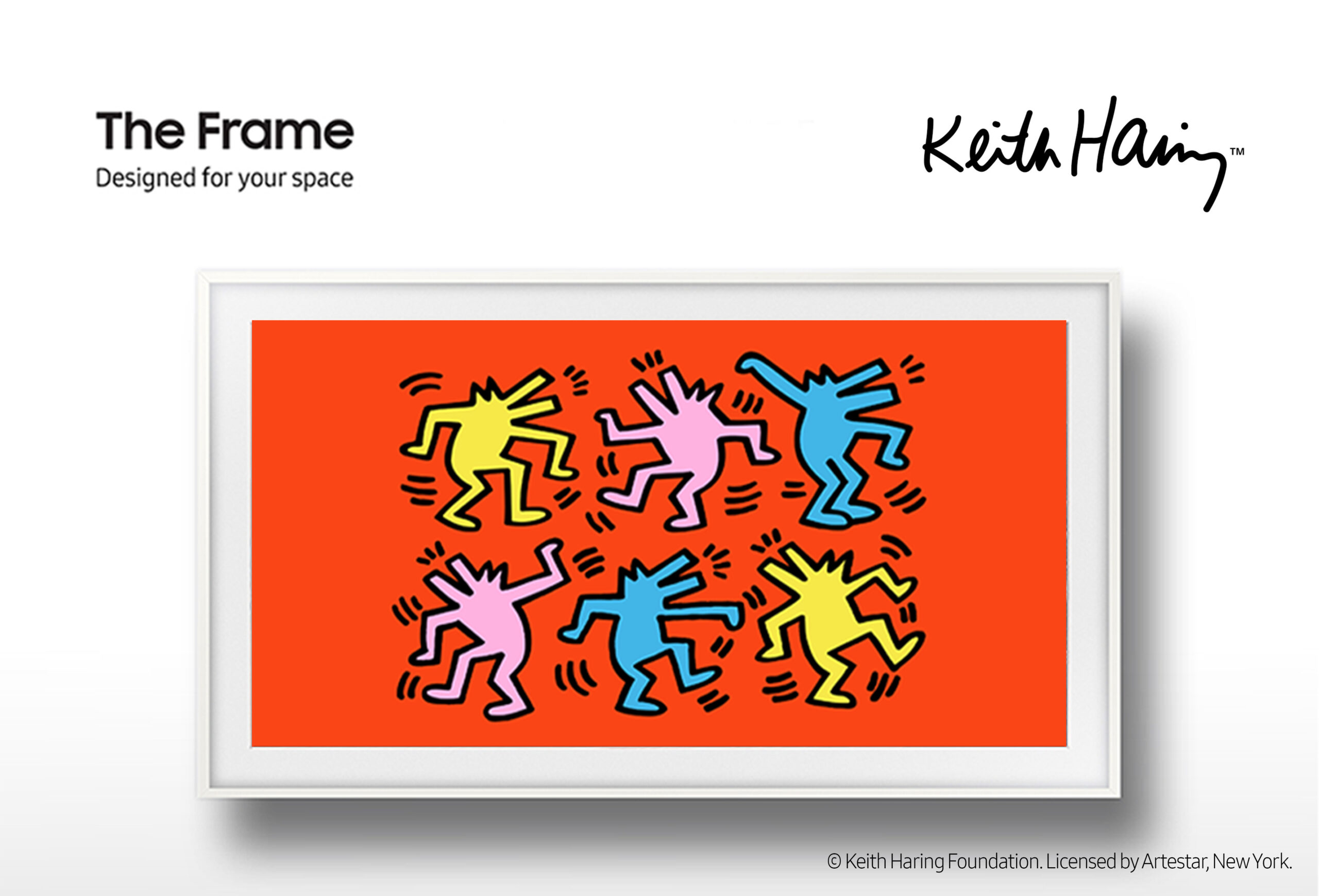
Samsung Unveils The Frame with Exclusive Collection of Iconic Artist Keith Haring’s Work
Samsung Electronics, a global leader in the display industry, has unve
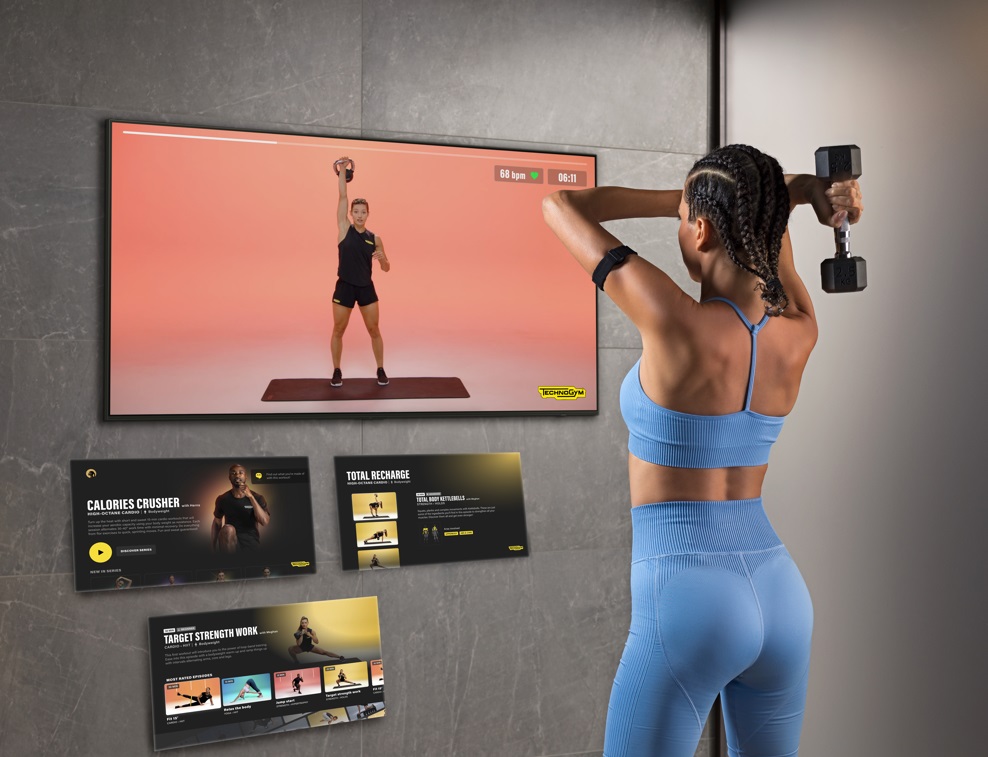
Samsung and Technogym Team Up to Revolutionize At-Home Fitness with New App for 2024 Smart TVs
Samsung TVs Boost Home Fitness Offerings With Technogym App

Fueling Life Science Innovation: University Lab Partners Secures $2M for Accelerating Scalable Ventures
by Genesis Graves University Lab Partners (ULP), a leading nonprofit w
POST COMMENT