

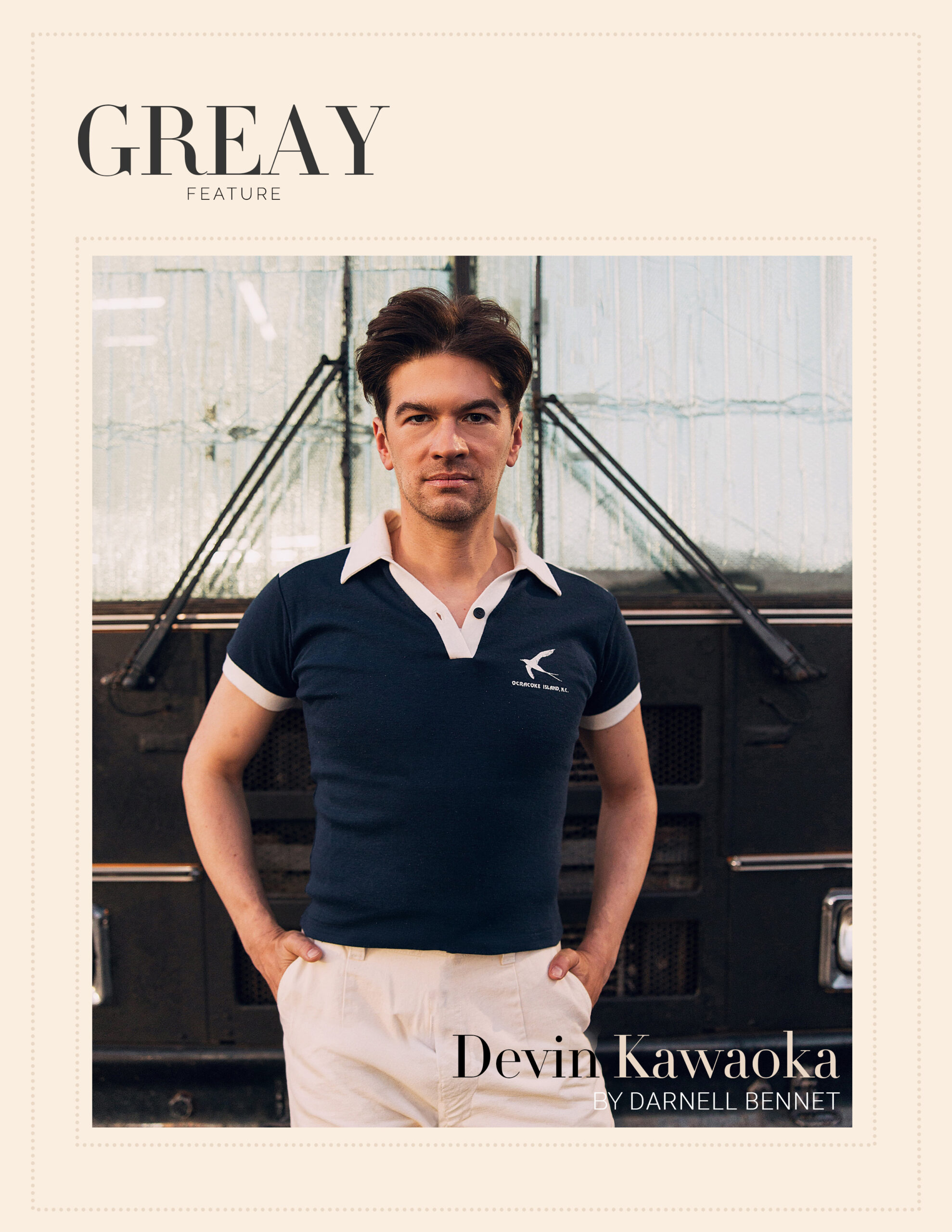
Devin Kawaoka: Control Is the Performance
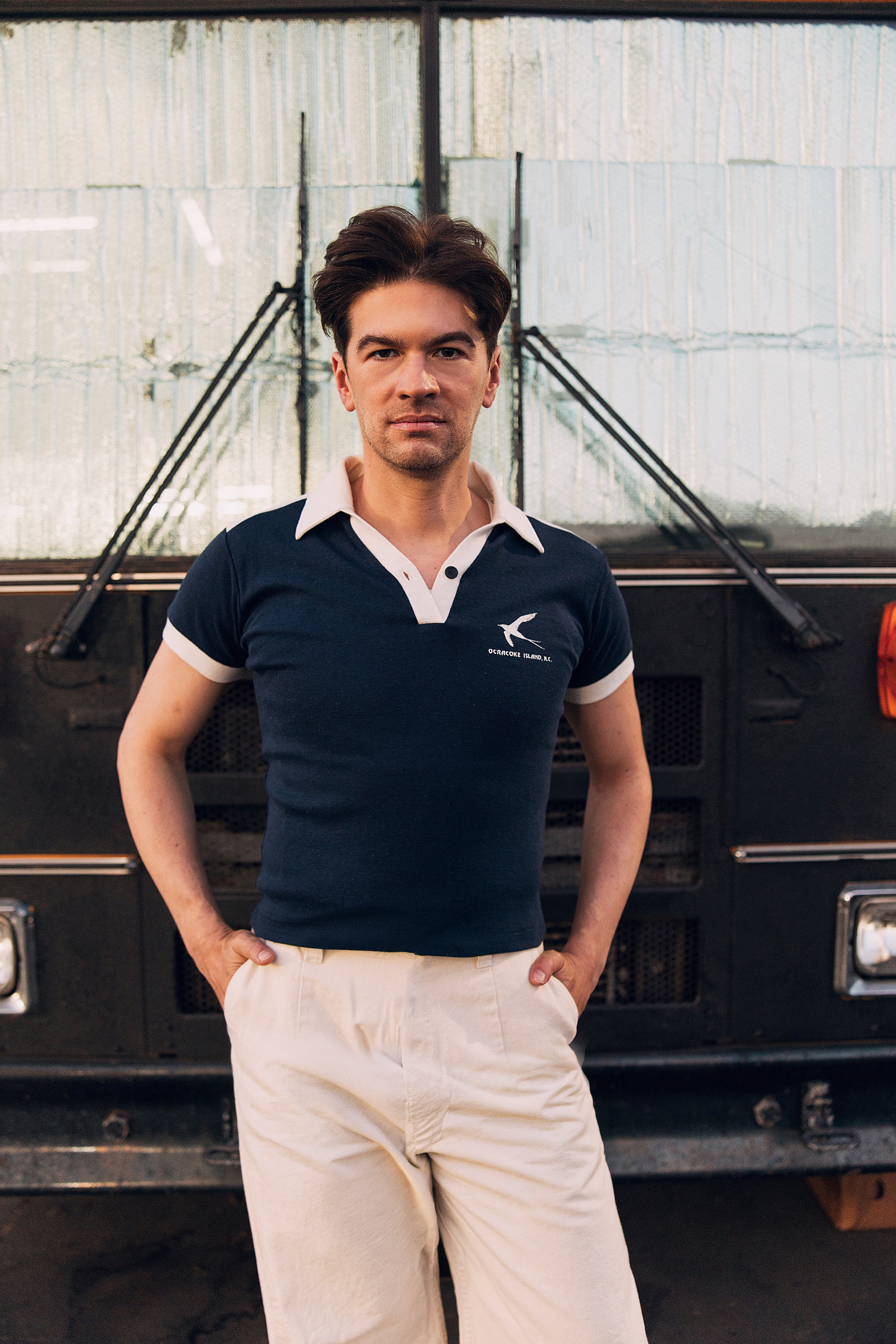
By Kyra Greene
In Shrinking, emotion isn’t expressed—it’s managed. Pressure moves through the room like a system, transferring from one character to the next until someone absorbs it, redirects it, or lets it fracture. Devin Kawaoka understands that architecture with precision. His portrayal of Charlie doesn’t compete for attention; it redistributes weight. In a series where grief and humor occupy the same breath, Charlie functions as a stabilizing force—not by commanding the frame, but by grounding the people inside it. The performance isn’t built on visibility, but on control. What emerges is a study in restraint, where intimacy is engineered, not announced. In this conversation, Kawaoka breaks down the mechanics behind that discipline—how stillness carries tension, how comedy protects vulnerability, and how a character can hold narrative gravity without asking to be seen.
Shrinking operates on emotional logistics—who absorbs pressure, who destabilizes it, who restores equilibrium. Charlie often feels like the stabilizing force. When you built him, what did you define as his structural function in the ensemble, and how do you prevent quiet stability from becoming narratively invisible?
It started with my audition. Everything in the scene was unraveling — and somehow Charlie was the calmest person in the room.
Jimmy has just vomited in the middle of Brian’s big romantic moment, everything is falling apart, and Brian storms off, disappointed that it’s all gone wrong. Charlie follows him, and in the middle of Brian expressing his frustration, he accidentally reveals he was about to propose.
What struck me immediately was that Charlie heard the proposal before Brian did. In the middle of all that chaos, he heard it clearly. That told me everything. Charlie sees Brian fully — through the anxiety, the fear, the mess — and loves him not in spite of those things, but because of them.
From there, I started to understand Charlie as someone who stabilizes not by controlling the room, but by grounding the person he loves. He doesn’t need to be the loudest voice. Sometimes it’s just a look, a “babe,” or a hand on the shoulder that brings Brian back to earth — especially when Brian is flying a little too close to the sun.
And to your question about invisibility — I think what keeps Charlie from disappearing is that he wants things, too. He wants a healthy marriage. He wants a child. He has a vision for his life. So even though he’s steady, he’s not passive. His presence carries weight because it comes with intention.
Also, let’s be honest — loving Brian is not exactly a low-stakes activity.
Apple TV+ has built a brand around prestige intimacy—shows where tonal precision replaces spectacle. When Shrinking pivots between grief and humor, what is your technical approach to ensuring the comedy never becomes emotional anesthesia?
I actually think comedy is what allows the grief to land more deeply. If everything lives in the same emotional register, you start to go numb. Humor keeps the audience open — it creates space so the heavier moments can actually reach you.
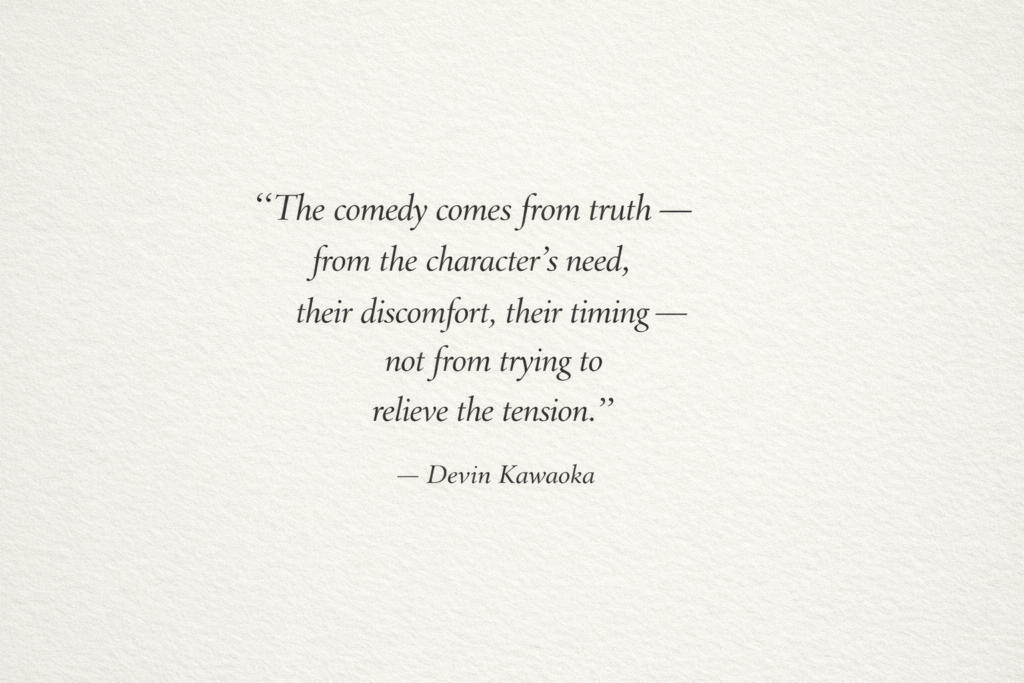
From a technical standpoint, it’s about not playing the joke as a joke. The comedy comes from truth — from the character’s need, their discomfort, their timing — not from trying to relieve the tension. If anything, you let the tension stay. Which, as an actor, can be mildly uncomfortable… but usually means you’re in the right place.
On Shrinking, the humor often lives right next to the pain, sometimes in the same breath. So the work is in honoring both without tipping too far in either direction. You’re not trying to protect the audience from the grief — you’re inviting them to stay with it. The comedy just makes that possible.
Charlie’s relationship feels lived-in rather than performative. What choices—rhythmic, physical, conversational—did you make to protect authenticity instead of turning partnership into a thematic statement?
It was very important to me that Brian and Charlie’s relationship feel intimate and real — something recognizable, especially to our LGBTQ audience.
Early on, Michael and I had a conversation about physical touch. In a lot of storytelling, especially on television, physical intimacy can either be overemphasized or oddly absent. We wanted to be intentional about it. So we built a kind of physical vocabulary together — small, instinctive gestures that come from trust: a hand on the back, leaning in without thinking, staying close even in silence. The kind of things you don’t choreograph… because they’d feel very strange if you did.
That physical language started to shape everything else. It influenced the rhythm of our scenes — how we listen, when we interrupt, when we let something land. The relationship stopped feeling like something we were “playing” and started to feel like something we were living inside of.
Because ultimately, authenticity isn’t about making a statement — it’s about making something feel familiar enough that people recognize it as their own.
Moving between Shrinking and more procedural storytelling like Chicago Med, what shifts first internally for you—the tempo of thought, the ethical posture, the physical containment? How deliberate is that recalibration?
The first thing that shifts for me is the physical life, which is driven by the thoughts and images each character is carrying.
Charlie moves through the world with a kind of openness — he dotes, he loves, he laughs — so his physicality tends to be softer, more expressive, and less contained. There’s a generosity to how he takes up space. Kai, on the other hand, is constantly assessing — he studies, he challenges, he judges — so his physicality becomes more precise, more contained, almost sharpened by his point of view.
That shift in physicality then affects everything else — the tempo of thought, the ethical posture, even how quickly a moment lands. Charlie might let something breathe. Kai is more likely to decide.
They both listen deeply and think quickly, but their priorities are completely different. And that difference in priority is what ultimately makes them feel like two distinct people… even though, technically, they share the same face.
Theatre demands sustained risk in real time. Television often demands microscopic control. What did stage work teach you about emotional stamina, and what did camera work teach you about restraint?
The idea of risk is the whole reason to be an actor. It’s what sustains me.
On stage, stamina comes from doing the same material night after night while keeping it alive. The challenge is honoring the structure — the blocking, the text — while still allowing something to feel newly discovered. There’s always something to explore: a different impulse, a shifted memory, hearing a line in a new way. Those small moments of discovery create a sense of risk that keeps the work fresh and the actor engaged.
That same need for risk exists on camera, but it expresses itself differently. The frame is smaller, so it demands more restraint. The risk becomes internal — it lives in thought, in stillness, in what you choose not to show. In some ways, that makes it more potent. You’re asking the audience to lean in rather than projecting outward — a quieter kind of risk, but in some ways a more personal one.
For me, that’s the throughline. Whether on stage or on camera, the work only comes alive when there’s something at stake in the moment. And honestly, that’s the fun of it.
Your performances feel natural, which usually signals high discipline. What does your actual craft maintenance look like when no one is watching? What are the drills that keep you sharp between jobs?
The life of a working actor is auditioning — it never really stops. So in a lot of ways, that’s the practice. You’re constantly encountering new material, making choices quickly, and learning how you respond under pressure.
For me, the discipline is in how I approach that repetition. I try to treat every audition, every scene, every self-tape as an opportunity to learn something — not just about the craft, but about myself. What am I reaching for? What am I avoiding? Where am I honest, and where am I pushing?
In practice, that often means standing in my living room at midnight, talking to an imaginary person and trying to find multiple versions of the same moment — all of them possible, all of them truthful, all of them contributing to the life of the character.
Over time, those repetitions compound. I may not be able to point to a single exercise, but I can trace a line through the material I’ve worked on — roles, auditions, scripts — that quietly built the instincts I relied on when I auditioned for Charlie, and really every role since.
And I’ve found that the discipline itself becomes the reward. There’s something deeply satisfying about staying sharp — even when no one’s watching.
You trained as a downhill skier—an environment built on repetition and fear calibration. How has that athletic conditioning shaped your ability to stay composed under narrative or professional pressure?
The physical rigor of ski training made me very practice-oriented. So when I fell in love with acting, it felt natural to approach the craft with the same discipline.
There’s a moment at the start of a race where you’re waiting in the gate — you have to stay mentally ready for the course ahead while keeping your body warm and your mind present. I remember that same feeling standing backstage before my Broadway debut, and honestly, before every performance since.
That preparation allows you to stay present once you’re in it. Because as a ski racer, not every turn is going to be perfect — and it’s how you respond to those imperfections that determines how well you finish the run.
Acting is very similar. No performance or take is ever perfectly controlled. The work is in how you adapt — how you stay present with the unexpected, how you use it rather than fight it. No one is trying to act the fastest, but there is something about that same relationship to pressure and spontaneity that creates the most alive performances.
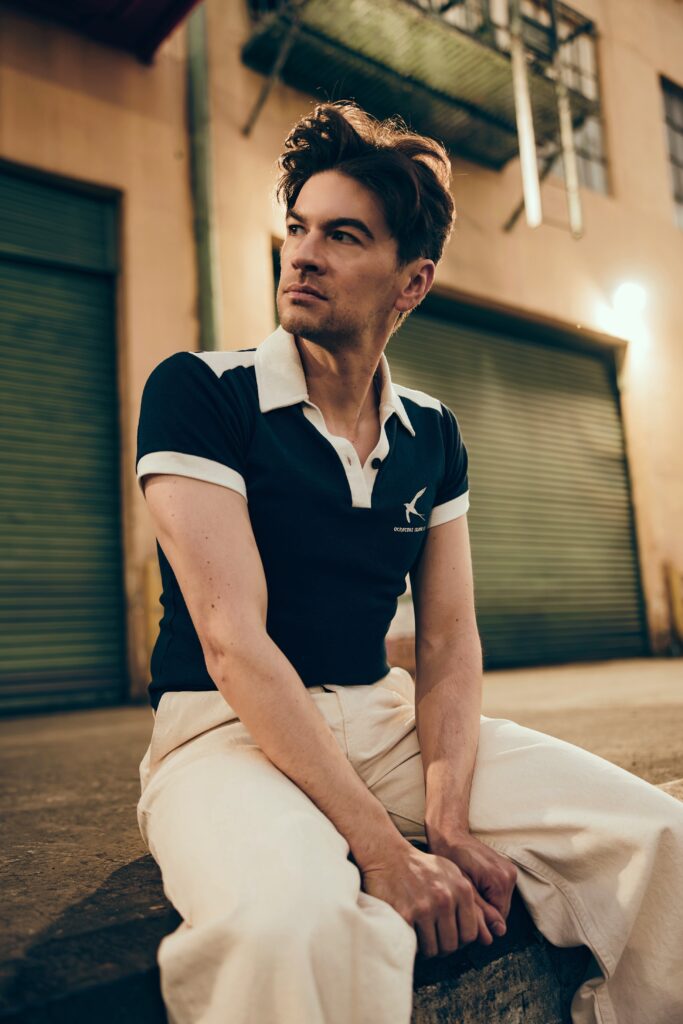
As a biracial Japanese-American actor working in prestige television, do you feel the industry is genuinely expanding the emotional vocabulary afforded to Asian men on screen—or refining familiar archetypes with
better writing?
There has absolutely been movement in how Asian men are represented on screen — not just in visibility, but in the emotional range we’re allowed to inhabit. That said, I think we’re still in a transitional moment. In some cases, we’re expanding the vocabulary. In others, we’re refining familiar archetypes with more nuance and better writing.
Where I feel the most opportunity is in specificity — in seeing Asian men exist within the full complexity of their lives. As leads. As fathers. As partners. As people whose emotional lives aren’t defined by a single trait or cultural shorthand.
As a mixed-race actor, I’m especially aware of how rarely we see families that reflect that reality. I would love to see more interracial families on screen — not as a point of commentary, but simply as a reflection of the world we live in. Recently, seeing Hudson Williams in Heated Rivalrywith parents that looked like mine meant a great deal to me. It felt both specific and familiar.
I’d love to see an entire family of biracial children — Succession, but make it part Asian.
Anyway you slice it, the next step is allowing that kind of representation to exist without explanation — where complexity isn’t the exception, but the baseline.
There’s a difference between visibility and authorship. At this stage, how intentional are you about shaping your career as a body of work rather than a sequence of roles? What does authorship mean to you?
This is something I’ve been thinking about a lot recently.
Acting is an interpretive art, and there’s deep artistry in that — in bringing someone else’s words to life. But I’ve started to feel a pull toward being more generative. I’ve begun writing my own work — pilots and films that explore stories that feel personal to me: Asian stories, queer stories, stories about love, grief, desire, shame… the full range of the human experience as I understand it.
For me, authorship is about intention. It’s about shaping a body of work that reflects a point of view — not just in what I create, but in what I choose to be part of. Whether I’m interpreting or generating, I want the throughline to be clear: that these are stories grounded in humanity, complexity, and specificity.
And if there’s a larger hope in that, it’s that someone coming up behind me sees that and feels permission — not to follow a path, but to trust their own voice, whatever form it takes.
If someone examined your performances a decade from now as a thesis, what through-line would you hope they find? What are you consciously building beneath the surface?
I think the through-line would be that joy and sadness aren’t opposites — they exist side by side. You can’t really have one without the other. That tension is something I’m always drawn to.
I’m interested in characters who are trying to hold both at once — who are strong and vulnerable, composed and unraveling, often in the same moment. Because to me, that’s where people feel the most real.
Beneath the surface, I think I’m building toward a body of work that reflects that kind of humanity — where intimacy and vulnerability aren’t weaknesses, but sources of strength. Where people can recognize themselves, even in the contradictions.
Across every answer, a pattern reveals itself: control is never the objective—presence is. Whether navigating the tonal tension of Shrinking, recalibrating between mediums, or moving toward authorship, Kawaoka’s work resists the instinct to resolve complexity too quickly. Instead, he sustains it. Joy and sadness coexist. Stability carries desire. Stillness contains risk. What he’s building isn’t a sequence of performances, but a body of work organized around emotional truth—where characters don’t simplify the human experience, they hold it. And in an industry that often mistakes visibility for impact, that distinction becomes the work.
Related Posts

Yahya Abdul-Mateen II to Lead Man on Fire Adaptation for Netflix
Yahya Abdul-Mateen ll to Lead Man on Fire Adaptation for Netflix
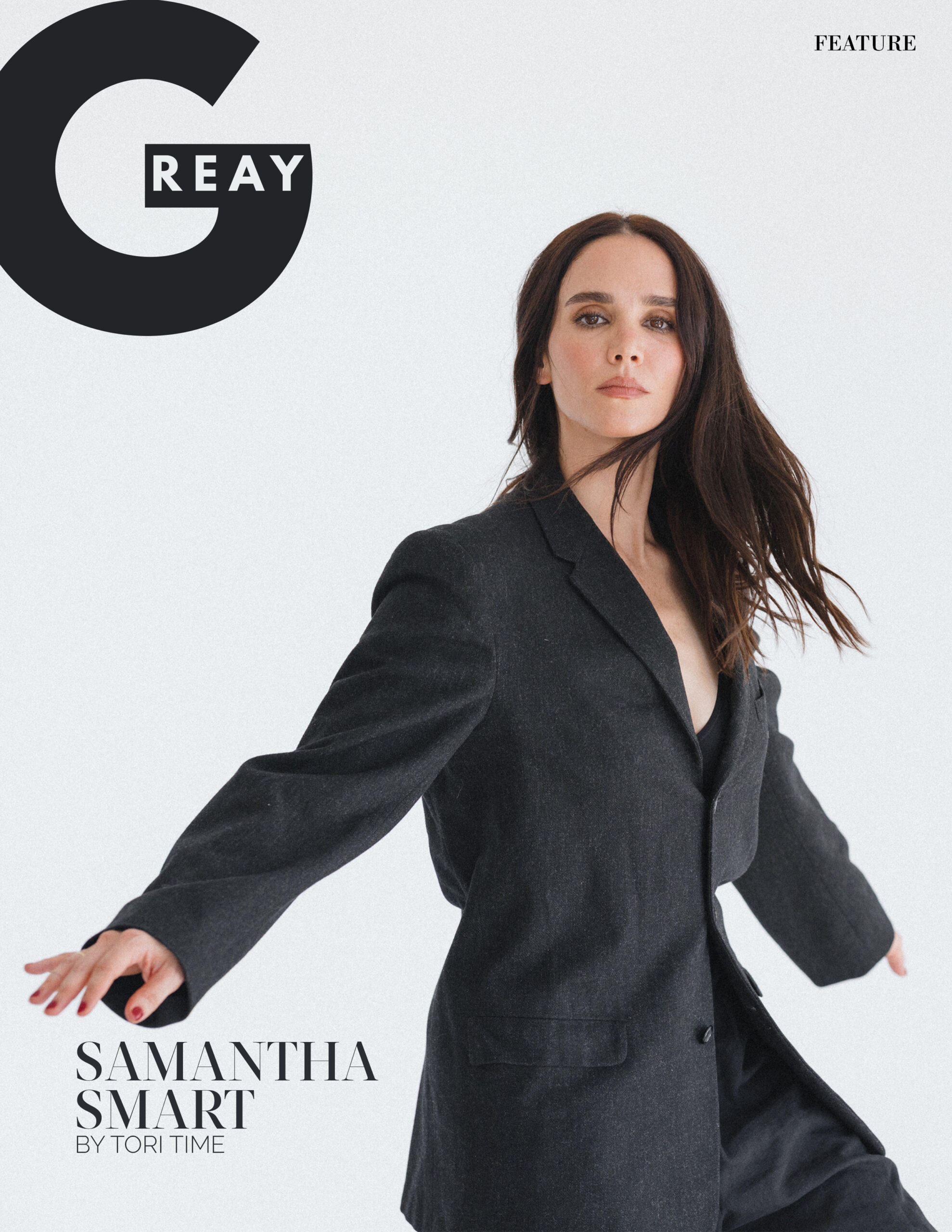
Inside CharlieBird: Samantha Smart Expands the Frame
Building Dimension

Urban Decay and Los Angeles Sparks Renew Sponsorship for 2024 WNBA Season
Urban Decay and Los Angeles Sparks Renew Sponsorship
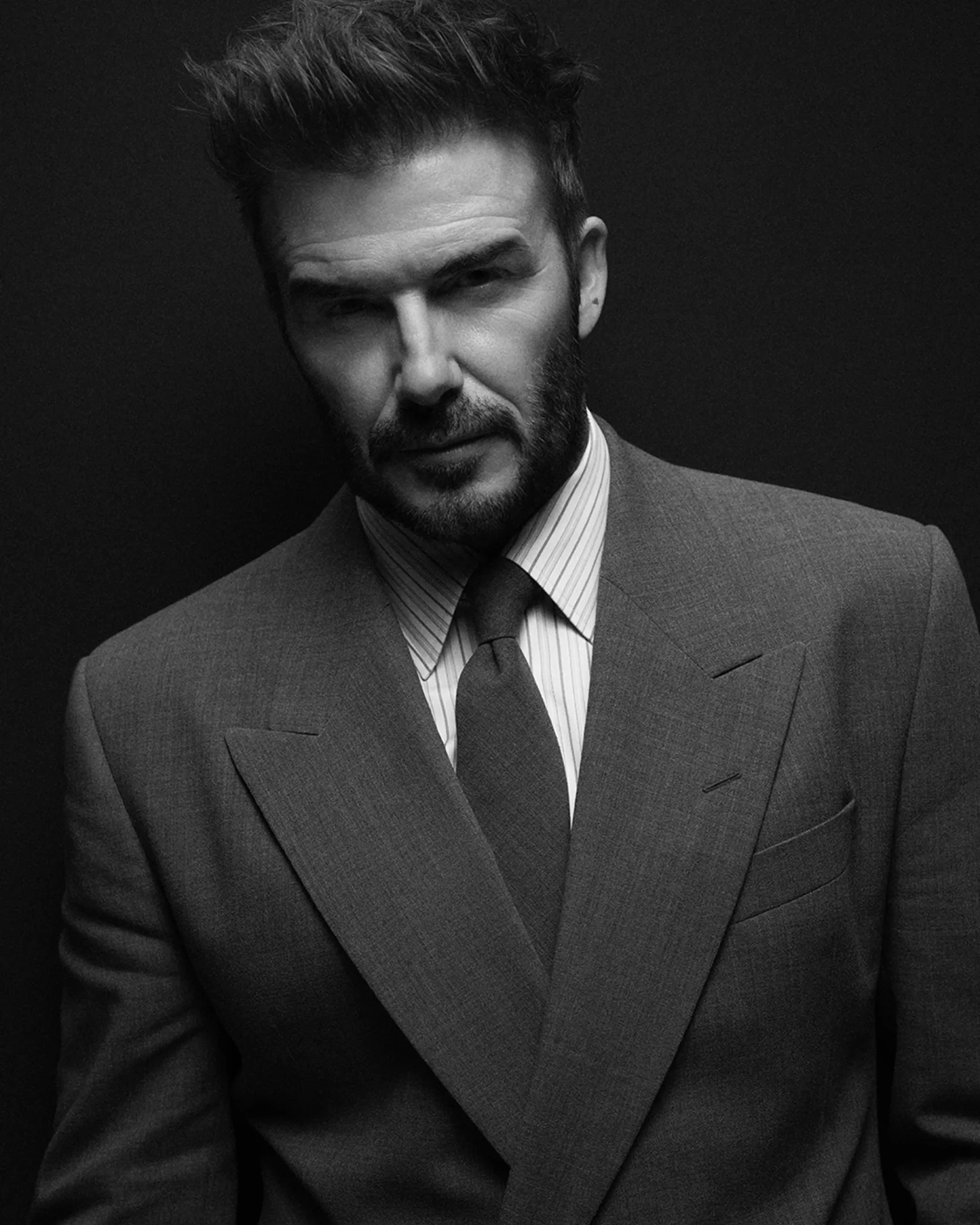
David Beckham to Design Boss Men’s Collections for Spring/Summer 2025 Season
David Beckham to design for Boss


Kith and TUMI Forge Multi-Year Collaboration with Exclusive Travel Collection
Kith and TUMI Debut Premium Travel Bag Collection.
POST COMMENT