

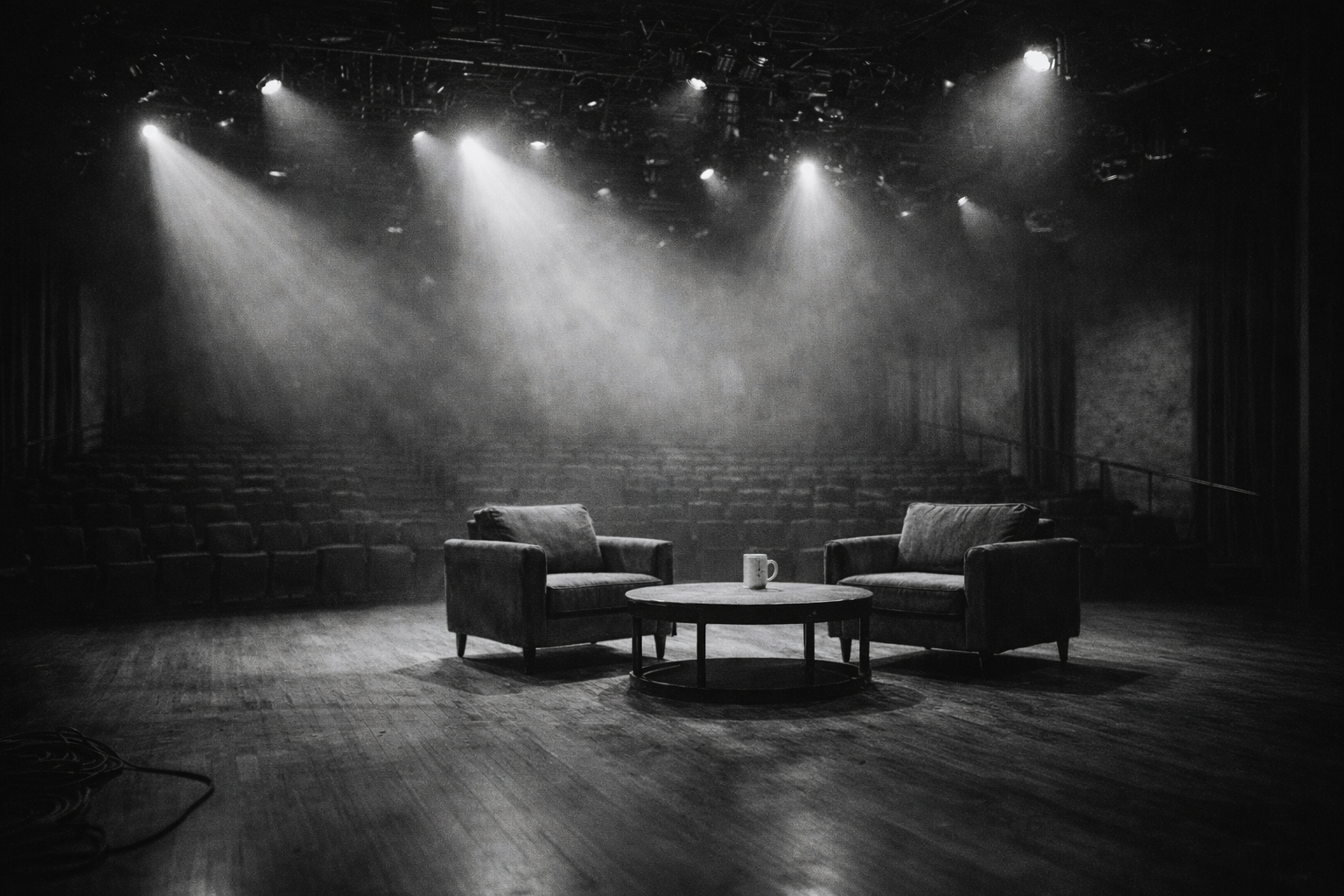
Creation First, Amplification Second

By Kyle Jackson
When The Kelly Clarkson Show and Sherri concluded within the same cycle, the immediate reading was contraction. Another tightening of daytime television. Another adjustment in broadcast economics.
But cancellation is not the story.
Certification is.
For decades, syndicated talk — from The Oprah Winfrey Show through The Ellen DeGeneres Show — did more than attract viewers. It conferred legitimacy. The stage did not merely host culture; it validated it. Distribution signaled arrival. Infrastructure preceded authority.
Arrival flowed downward.
Networks approved.
Studios built.
Audiences followed.
Today that order has reversed.
Authority increasingly forms before infrastructure touches it.
Portable conversation now commands sustained engagement without inherited scaffolding. A recorder set down on a table can generate loyalty once reserved for leased stages and affiliate networks. Conversation no longer requires architecture to exist.
The distinction is structural, not aesthetic.
Traditional talk requires union crews, fixed schedules, advertising stability, and physical infrastructure. Portable media requires proximity, trust, and consistency.
Low overhead shifts leverage.
When an audience voluntarily commits to extended dialogue, legitimacy crystallizes independently of gatekeepers. Attention becomes the proof. Infrastructure no longer manufactures gravity. It responds to gravity.
Creation first. Amplification second.
This reordering changes the power map.
In the broadcast era, executive validation preceded public recognition. Today sustained attention precedes executive recruitment. Institutional platforms increasingly scout personalities who have already demonstrated durable resonance. The invitation follows proof.
Infrastructure now chases attention.
This is not an obituary for television.
Institutional stages remain essential for moments that require scale — live broadcasts, cultural ceremonies, inflection events. Spectacle retains value.
But origin power has shifted.
The stage no longer generates relevance. It scales relevance already proven elsewhere.
The headlines read as endings.
The blueprint reads as relocation.
Capital-heavy systems compress during volatility. Margin-efficient ecosystems expand. Portable media does not require national simultaneity to survive. It requires loyalty density over mass uniformity.
Authority follows efficiency.
Over the next five years, the logic sharpens.
Institutional media will function primarily as amplification infrastructure rather than discovery engines. Budgets will cluster around creators with pre-validated attention. Contracts will protect portability rather than enforce dependency. Conversational ecosystems will refine production aesthetics while maintaining operational lightness. Hybrid mobility between decentralized platforms and institutional stages will become structural, not exceptional.
The building does not disappear.
Its function changes.
Discovery decentralizes.
Validation crowdsources.
Amplification institutionalizes.
We are not witnessing isolated cancellations.
We are documenting a zoning change in cultural infrastructure.
The stage remains.
But it is no longer the origin.
Attention is.
And in volatile systems, the structures that can produce legitimacy without permission tend to anchor the next center of gravity.
Not collapse.
Reallocation.
Not spectacle.
Redesign.
Related Posts

Duran Duran Goes Analog Again: Inside the WE-001 Pop Trash Special Edition
Chrome, Pop, & Nostalgia

KitchenAid Didn’t Redesign the Mixer—It Reprogrammed It
The Icon Stayed. The Intelligence Moved

Beyond Collaboration: Creative Power Reassigned — G-DRAGON and the Author Era
From Image to Authority

Opera Expands Access to Aria AI Assistant: Now Available Without Log-In for Desktop, Gaming, and Android Users
Opera makes Aria AI available without log-in

Savant, a GE Lighting Company, Unveils Cutting-Edge Full Color Smart Undercabinet Fixtures for 2024
GE Lighting, a Savant company, continues to uphold its reputation.
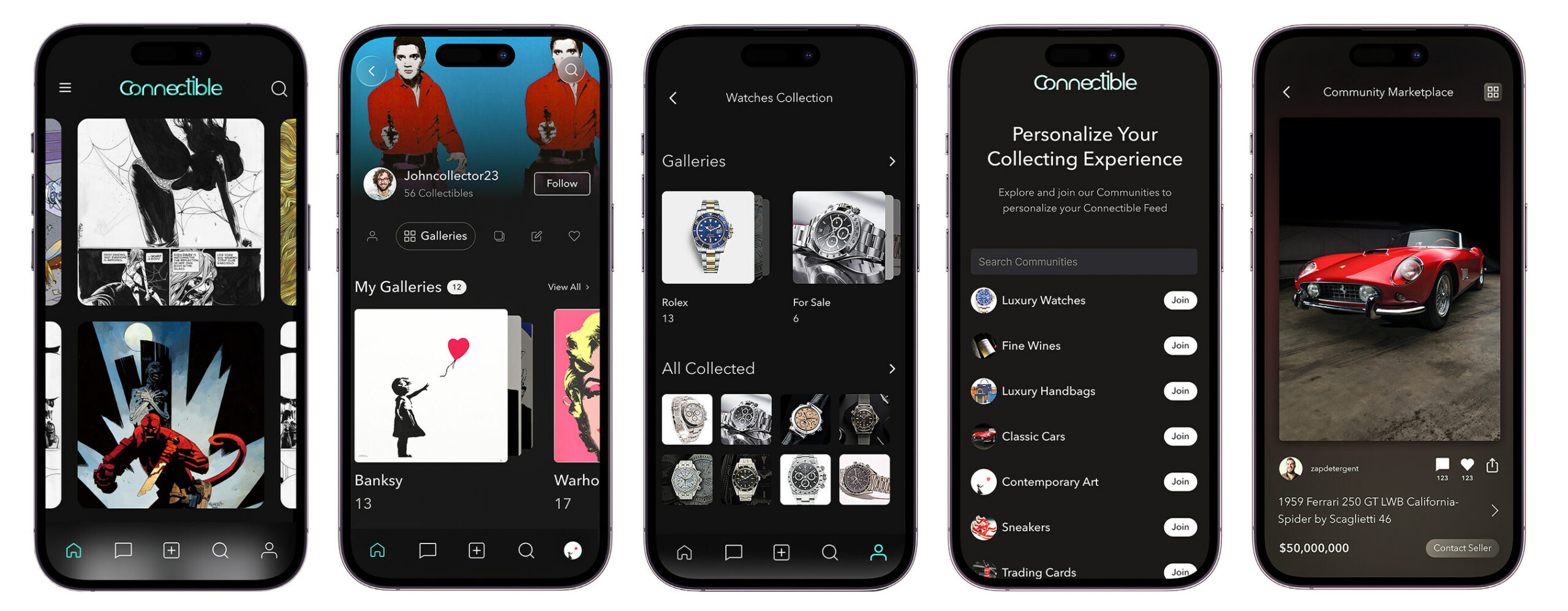
The World’s First Social App for Collectors – Connectible
By Frances Duncan Connectible is the world’s first social media