

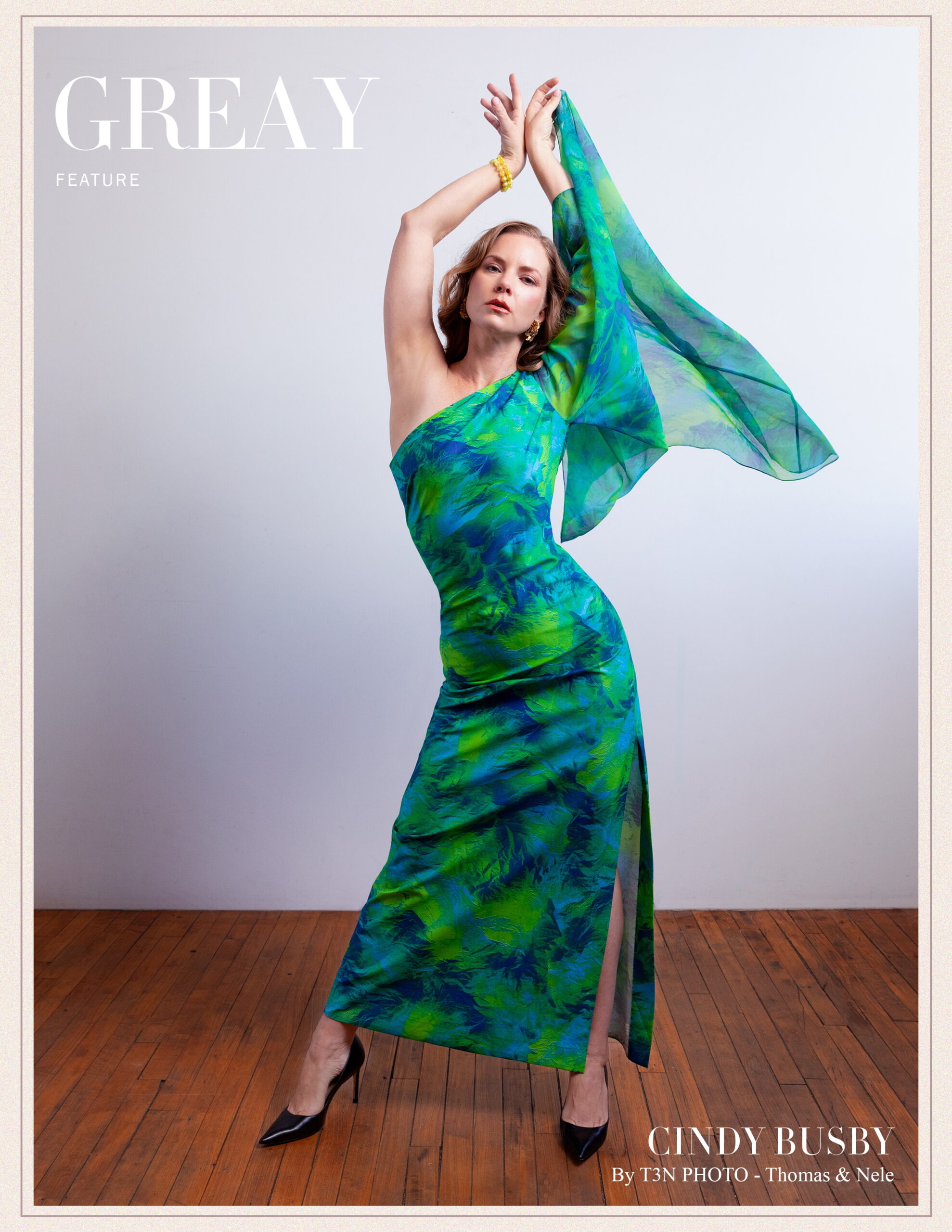
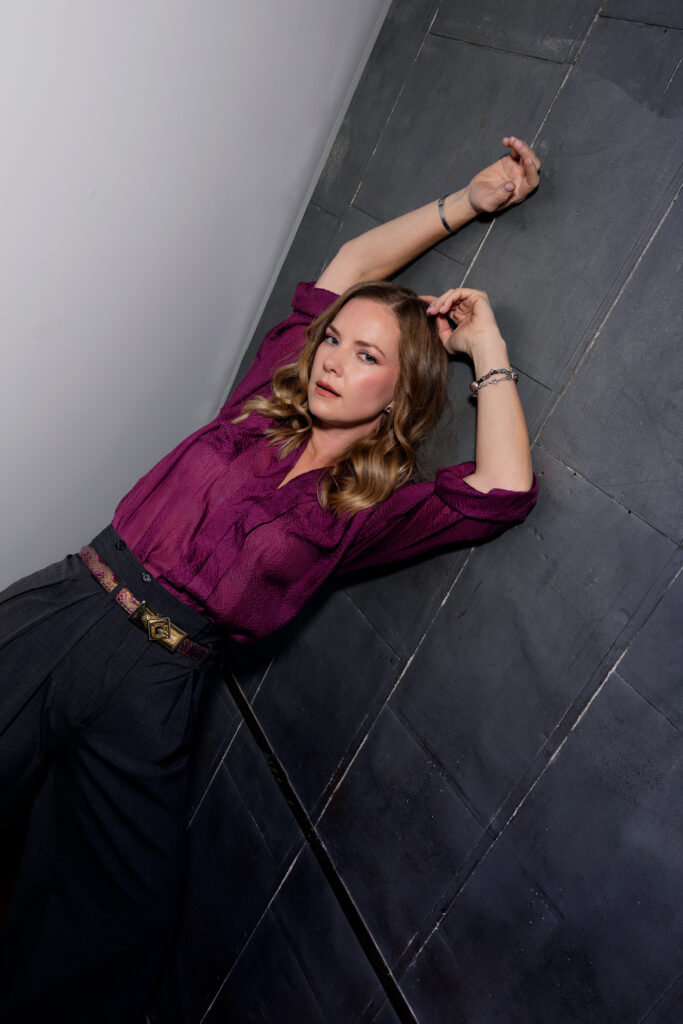
Cindy Busby Doesn’t Chase — She Aligns
By Kyra Greene
Careers are often mistaken for momentum—movement mistaken for meaning, visibility mistaken for direction. But the work that holds is built differently. It doesn’t expand outward first. It sharpens inward. Cindy Busby’s trajectory doesn’t read as acceleration—it reads as alignment. As her internal world stabilized, the roles followed. Not by chance, but by calibration. What appears effortless on screen is structured beneath it: discipline, emotional precision, and a clarity of self that the camera doesn’t create—it detects.
- You gained early visibility in teen-oriented television before transitioning into romantic leads and character-driven ensemble series. What shifted internally when you moved from being part of a youthful ensemble to carrying emotional narratives as a central figure?
My career naturally changed alongside me, as I matured and gained more life experience. I’ve always been able to interpret complex stories no matter the context, however the moment I became more grounded and confident in who I was, so did the parts I would book. I recognized that my internal world becomes the reflection of my external world and that is a driving force for me.
- Over time, you’ve become strongly associated with comfort-forward, romance-driven storytelling. How conscious have you been in shaping that positioning, and do you view it as a niche, a strength, or a strategic foundation?
I love being associated with romance-driven stories. I grew up being a huge fan of romantic comedy movies, so to be able to bring these feel good movies to life is a full circle moment. It’s a niche that’s given me strength to strategically build a long term rewarding foundation.
- Longevity in this industry demands reinvention without instability. What personal discipline have you developed to sustain momentum while protecting your sense of self outside of the work?
Consistency, authenticity, Integrity and grit. My work ethic has always been something I take great pride in and I recognize that everyone’s role on set is just as important as another. Maintaining a sense of self has become a nonnegotiable in my life. Every day I take time to reconnect with myself through mindful practices, movement, and quality time with the people I love.
- Across series television and standalone films, how does your preparation shift when building a character who must evolve over multiple seasons versus one whose arc resolves within a contained narrative?
My character preparation is typically the same for both series and films. I consider all the information provided to me through the character breakdown and scripts. I then research the time period, job description, etc. I build a history and fill in the blanks where necessary. For a series, I’ll usually have a conversation with the show runner to see what’s in store for my character and any unanswered questions. There’s a lot of imagination involved in creating a fictitious human. The more I know about them the more I can be present and grounded while I shoot.
- In romantic-centered stories, chemistry often drives audience investment. Do you approach chemistry as something instinctual, or do you construct it intentionally through listening, rhythm, and rehearsal?
Chemistry is so important and sometimes it works and sometimes it doesn’t. It’s important to feel connected to your scene partner and build a sense of trust with each other, so you can freely explore romance on set. Listening is a subtle art to bring forth instincts within the unspoken moments creating specificity to the relationship on screen.
- Many of your projects exist within aspirational tonal worlds. How do you ground performances in realism so that warmth and optimism feel earned rather than decorative?
I bring the truth of the character within their circumstances to life. These stories may seem aspirational but they are all grounded in humanity. My job is to authentically bring the vulnerability to life, which is without a doubt what makes any story relatable to the audience.
- Was there a specific moment or project where you felt yourself step into a new level of authority as a performer—where your instincts felt sharper, more owned?
Yes! A few years ago, I took on a very challenging role, which demanded I dig deep, find empathy, and love for a character with a dark side. She was a woman filled with duality in a hard world where she wasn’t given a choice but to go down a road of harshness. I found her and felt her on such a deep and grounded level. It was an opportunity that I was intimidated to take on, and I walked away feeling changed and accomplished. I did her and the story justice.
- The streaming era has altered audience expectations around pacing, tone, and emotional complexity. Have you felt that shift reflected in the types of roles being offered or in how audiences engage with your work?
When it comes to the particular types of shows and movies I’m a part of, I think the pace, tone and emotional complexity has been quite consistent. The audience continues to tune in because they know what to expect and that feels comfortable and familiar.
- When stepping back into When Hope Calls, which carries a devoted and emotionally invested audience, do you feel more responsibility to preserve its established tone or to quietly expand the emotional dimensions of your character?
I feel a little bit of both. I know audiences feel an attachment to what they already know and I respect that. I want to preserve the world of “When Hope Calls” and allow Nora to breathe her own energy and truth within what’s been created. It’s inevitable that when you bring in new characters that will have an impact on the dynamics and energy of the story.
- Period storytelling requires restraint and calibration. How do you balance historical authenticity with intimacy so that performances feel lived-in rather than stylized?
When it comes to period storytelling, it’s important to do the research. I want to understand what it was like being a woman in 1920, a lawyer, stature, and what the societal expectations were. The more I know, the more I can embody the character authentically on screen. The fundamentals of being human remain the same, but understanding those timely specifics make a difference in creating the world.
- The series leans into themes of faith, community, and restoration. How do you approach scenes of optimism in a way that keeps them rooted and human rather than simply aspirational?
I give praise to the writers for creating fictional stories grounded in truth and realism. The characters in “When Hope Calls” go through struggles and challenges just as anyone would in real life. Faith and community is how they get through everything. I don’t feel like that is aspirational but rooted in the human condition.
- Returning to an established ensemble means relationships already carry shared history. What shifts for you internally when stepping into scenes layered with emotional groundwork instead of fresh introduction?
As an actor, it’s important to enjoy working with both new and familiar co-stars as that’s the nature of the business. However, when you get a chance to be a part of a series where you collaborate with consistent scene partners a sense of trust and safety opens you up and allows you to play on a deeper more vulnerable level. I love getting to create that kind of connection and I get to do that with the actors on When Hope Calls.
Over time, the work stops asking for permission. It becomes legible on its own terms. Romance, familiarity, emotional access—these aren’t limitations, they’re infrastructure. Repeated with intention, they build trust. And trust, sustained long enough, becomes authority. In an industry that rewards constant motion, Cindy Busby holds position. Not by resisting change, but by refusing misalignment. The result isn’t reinvention. It’s recognition.
Photography: T3N PHOTO – Thomas & Nele. IG: @t3nphoto
Styling: Chanèle Casaubon. IG: @chacha.casaubon
Hair & MakeUp: Justine Fang. IG: @disc0_lem0nade
Related Posts

Tyler The Creator Presents LACOSTE X le FLEUR
By Fall Lewis Tyler the Creator’s le FLEUR* and Lacoste have joi
Jin of BTS Joins Gucci as Global Ambassador, Elevating the Fashion House’s Korean Influence
BTS' Jin has been named Gucci's newest global ambassador

Marvel’s New X-Men Series Puts the Mutants in Charge of Protecting Earth
Mutants Become Earth’s Defenders

MM6 Maison Margiela and SALOMON Unveil the X-Alp: A Stylish Fusion of Urban and Outdoor Footwear
MM6 Maison Margiela and SALOMON Unveil the X-Alp
Moët & Chandon and Roger Federer Unveil a Cinematic Celebration: Where Energy, Anticipation, and Play Set the Stage for a Special Dinner
Moët & Chandon unveils a captivating short film brimming with festive

Sadder, Bloodier, Better: Netflix Confirms Cyberpunk: Edgerunners 2
Night City bleeds once more.