

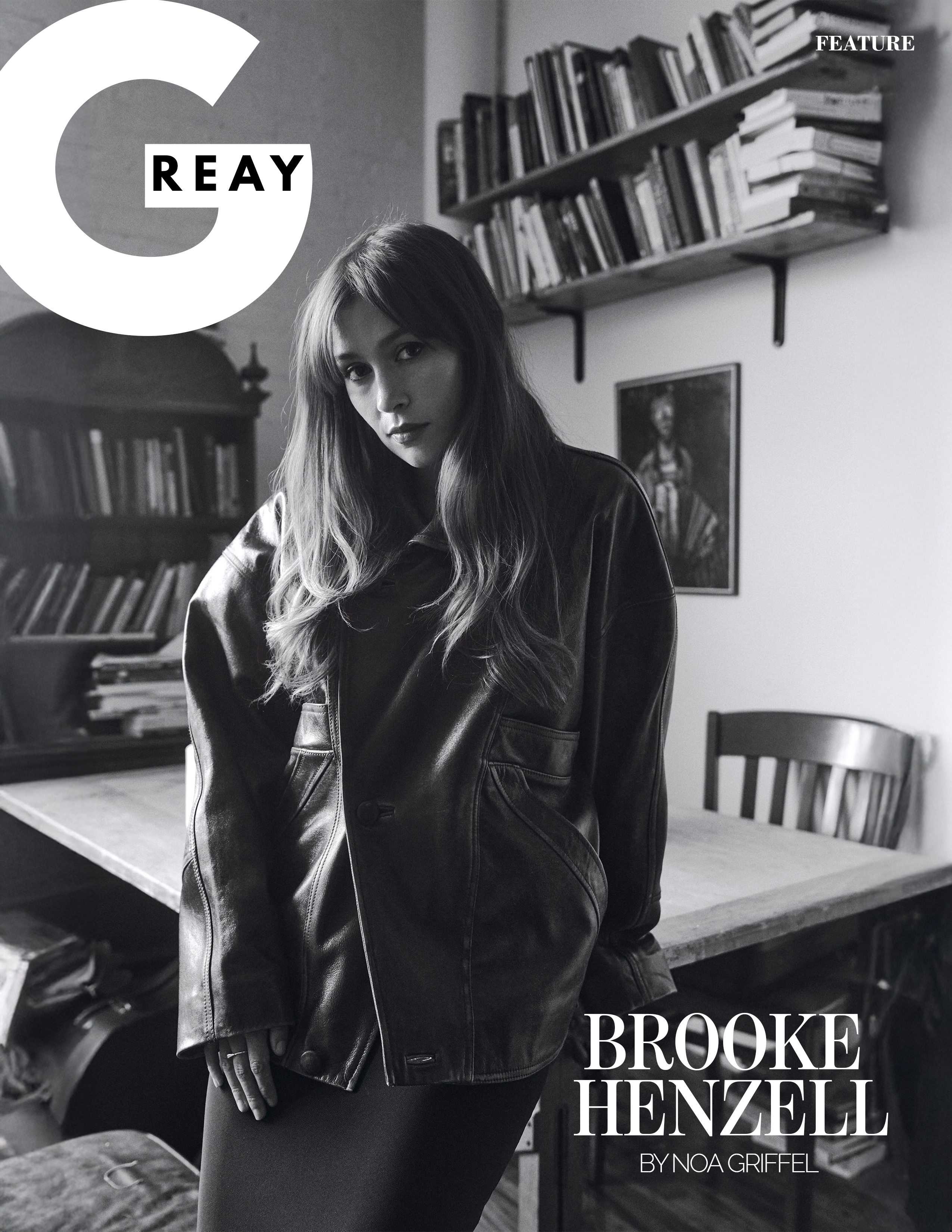
Brooke Henzell Makes Her Own Frequency
By Kyra Greene
There’s a certain calm that follows Brooke Henzell into a room — the kind that belongs to people who create from instinct rather than impulse. An Australian-born actor and musician now based in New York, Henzell doesn’t perform emotion so much as she engineers it. Her process is patient, deliberate, and disarmingly human — playlists for her characters, scrapbooks for their inner worlds, and a quiet awareness of what makes people move. Whether she’s playing Samantha, a grounded journalist caught in holiday chaos in Jingle Bell Heist, or writing songs that orbit around interior moments, Henzell approaches every project like a conversation with herself: one where curiosity, control, and vulnerability are all given equal weight.
Your work straddles two worlds—music and film. When you’re preparing for a role, do you ever “score” your own emotions, almost like writing a soundtrack for the character’s inner life?
I do typically create a playlist for any given character I’m playing (of other people’s music). I like to scrapbook together images and anything that helps me feel attuned to the world of the character, as I understand them, and the music compilations go hand in hand with that process. That’s the most consistent part of my method. As to marking out the script, I take a different approach to that with each role. I don’t write out literal emotions but I do regularly jot down alongside the lines some ideas about what my character’s motivations are moment to moment, what they’re trying to do to the other person or people in the scene.
You’ve spoken about moving from Australia to New York. What did that first year in the city teach you about resilience—not just as an artist, but as a human being finding rhythm in chaos?
When I first came to New York, I was here to study, so I was lucky to have some of the scaffolding of college life to support me. Ultimately, being able to make friends was the most important thing. I think no matter what transition or difficulty someone is weathering, a good support system is key.
Jingle Bell Heist puts a quirky, comedic twist on a holiday story. But beneath the humor, what emotional or human truth did you want your character to carry through the chaos?
Samantha is a fairly grounded character in the story’s comedic pandemonium. I knew that the humour of the whole film would be magnified by imagining her outside the tonal context of the film; she’s a serious journalist and a normal woman, going about her job. A lot of comedy works better if the character is sort of blind to the humor. That said, when we were doing ADR, Michael (Fimognari, the film’s director) did have me toy with this idea that some of the holiday spirit creeps into her tone, even when she’s largely being serious. She’s still a normal woman turning up to work, but she has a family and a Christmas-time of her own unfolding somewhere.
And when filming Jingle Bell Heist, did anything unexpected happen on-set—a moment that wasn’t scripted but somehow defined the project for you?
We wound up improvising for a little bit with me swapping into different costumes every now and again which was fun! I never really have a reason to dress like Samantha does. It really was transformative to be in so many skirt suits!
In an earlier interview, you mentioned the importance of initiative and seizing opportunities. Looking back now, do you think ambition and patience can coexist in the same artist—or does one always outpace the other?
I think they have to coexist. In order to be making things, you’ll need both the intrinsic drive to ultimately do something (and do it well) and the patience to know it will take time, it won’t be perfect straight away, etcetera. Initiative and opportunity are both words that pertain to external success, I suppose. And so I think in that vein, you have to try and then not be patient so much as… release expectation. Opportunity presenting itself is a lot about luck. I think it helps to focus more on what you can control, and then of course, try to meet cool opportunities with your best foot forward when they do present themselves.
Every performer has a creative ritual before stepping into a scene. Yours blends music, method, and mindfulness—what does that pre-performance ritual actually look and sound like in real life?
Film is generally such a rush and there are so many technical moving pieces that I’ve never had a ton of control over the moment right before heading to set. Depending on what the scene calls for, I might try to do some breathing exercises, walk through the scene in my mind, or if I can, I do some stream of consciousness journaling about anything I’m worried about going wrong. There was a study that shows that last exercise improves performance in quantifiable situations like a math test, and I do feel like it translates to artistic performance.
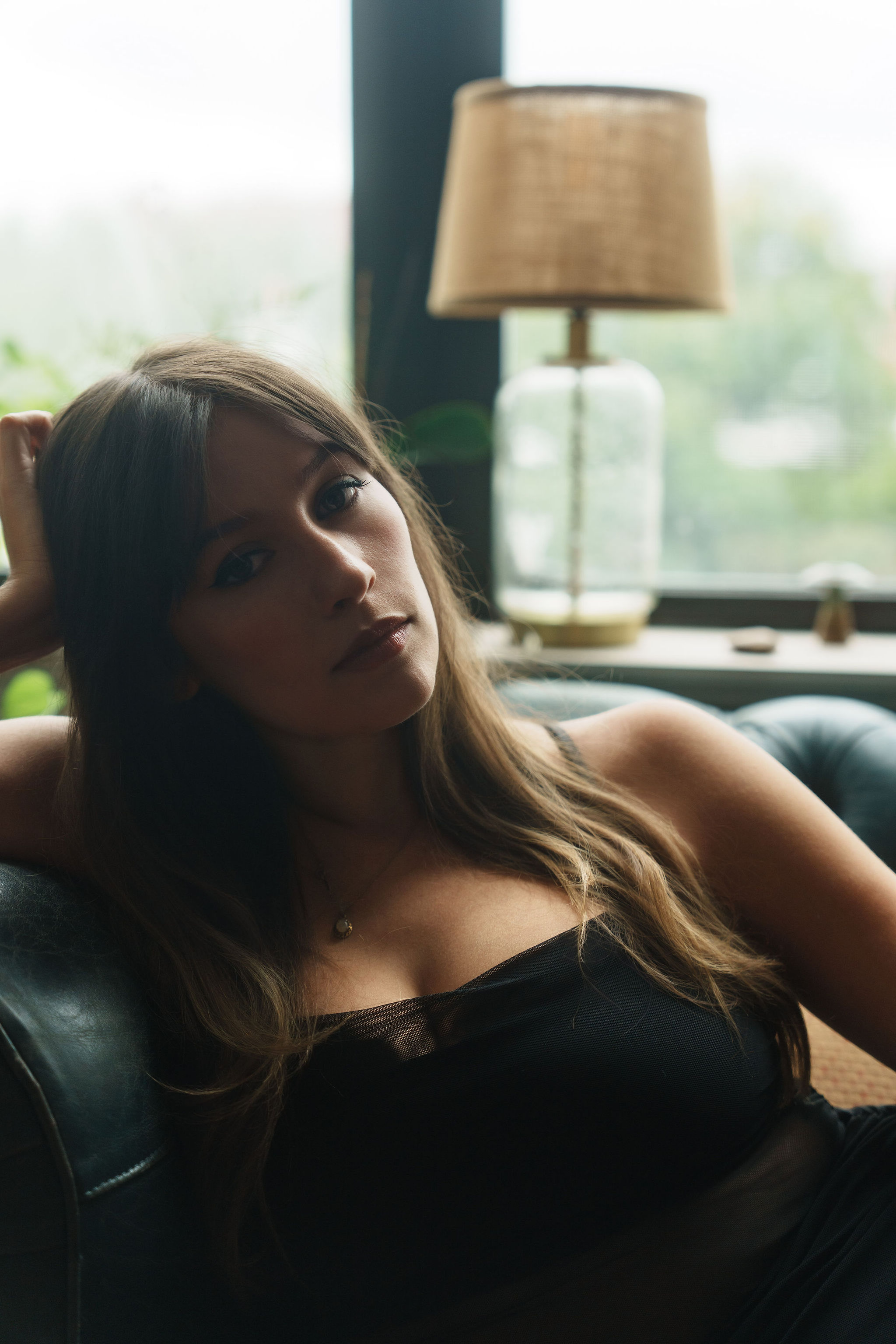
When you switch between acting and songwriting, do you ever feel like you’re borrowing emotional colors from one art form to paint the other?
Yes, although it’s hard to trace precisely. Just like any parts of our lives wind up informing everything else we’re doing, I think my relationship to all the mediums I’m engaged with creates a broader, richer idea of what process can look like.
Many actors hide behind characters; musicians reveal themselves. As someone who does both, where do you feel the truest version of Brooke Henzell lives—behind a role or behind a lyric?
I’d say actors and musicians are equally inclined towards performance and towards authenticity. I hope there are glimmers of the true me in both, though I think I’m more inclined towards hiding than revealing. The truest Brooke Henzell exists in my real life… I hope!
If you could design your dream project that merges both sides of your artistry—music and cinema—what would that world look like? Genre, tone, collaborators, everything.
Inherent Vice by Paul Thomas Anderson is a film I love with an incredible soundtrack, based on a wonderful book by Thomas Pynchon. I’d love to be a part of something like that.
What’s something you wish people understood about the early grind of creative life—that quiet, invisible chapter before anyone knows your name?
That it is work just like any other work, whether people know your name or not. There are parts of the work that are glamorous and adventurous and personally gratifying, but even more often there are long days, boredom, frustration, discomfort, and dull repetition. Being in the arts is a career in service, at the end of the day. In the very beginning, that’s just service without so much acknowledgement or compensation, like so many other worthwhile careers.
What becomes clear after speaking with Brooke Henzell is that her artistry lives in the tension between motion and restraint — in knowing when to reach for more and when to simply listen. She talks about art as work, about patience as part of the practice, and about the invisible labor that shapes creative life long before recognition arrives. In a world obsessed with immediacy, Henzell is building a career anchored in thought, empathy, and composition — proof that the most resonant performances don’t just fill a room, they recalibrate its silence.
Photos By Noa Griffel @noagriffel
Related Posts
The Humanity of Performance: David Ajala on Storytelling as Survival
Stage, Screen, and Beyond
Brett Landin The Company We Keep, The People We Outgrow
Durability Over Noise
Between Vulnerability and Strength: Andrew Liner’s Story
Unscripted Truths
Protecting Pochita: Ryan Colt Levy on Love, Loss, and Finding Home in Anime
Voice First, Spotlight Next
Frankie Kevich: Giving Voice to Fear and Freedom
From Apex to Silent Hill
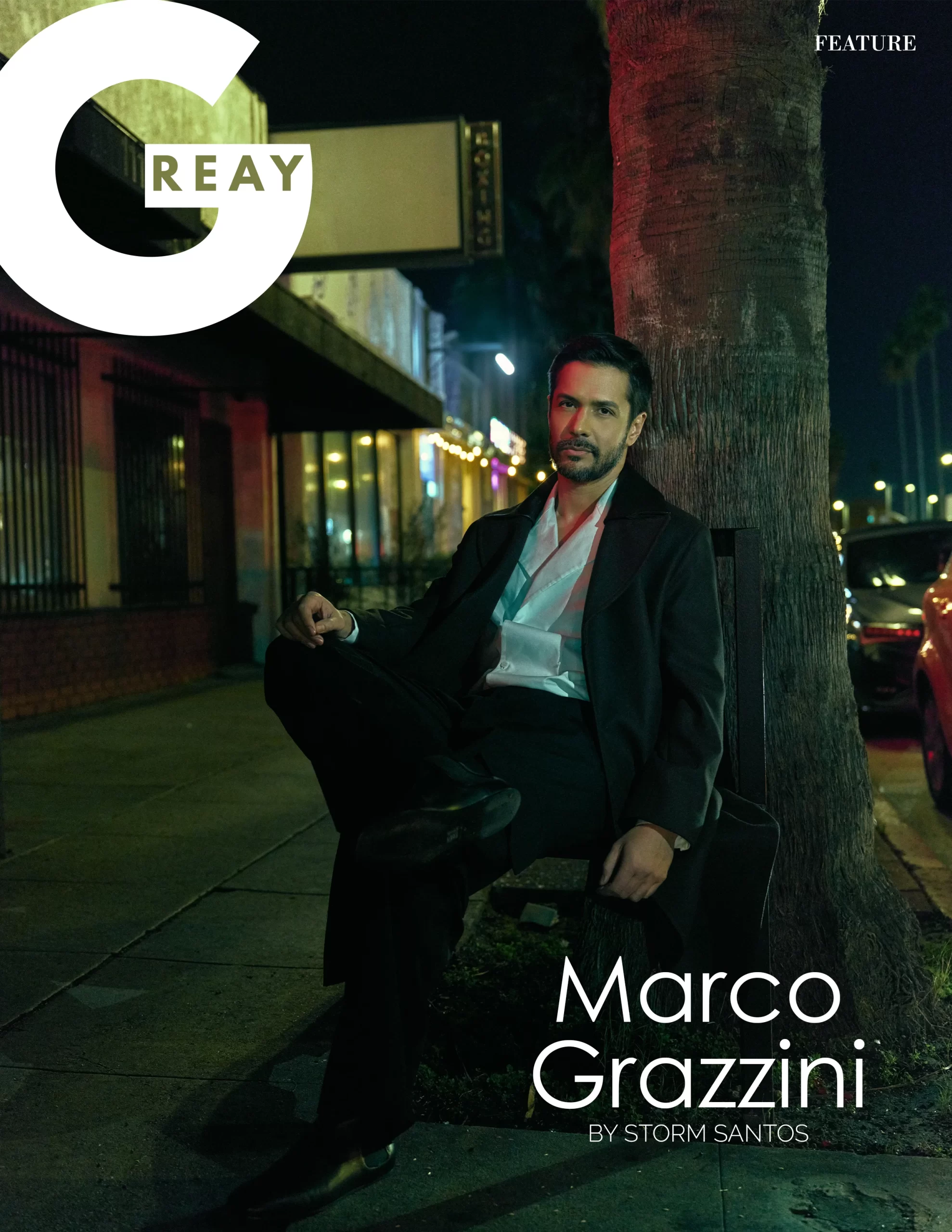
Marco Grazzini: The Discipline of Restraint
Behavior, Not Speeches