

Bose Is Expanding Beyond Audio Hardware Into Media and Entertainment
By Brian K. Neal
For most of its history, Bose has occupied a unique position within culture.
The company helped people experience music, films, and entertainment with greater clarity through speakers, headphones, and audio systems that became fixtures in homes, offices, and daily life. Bose benefited from culture, but it was never directly responsible for creating it.
The artist made the music.
The studio recorded it.
The label distributed it.
Bose helped audiences hear it.
For decades, those roles remained relatively distinct.
Today, they are becoming increasingly interconnected.
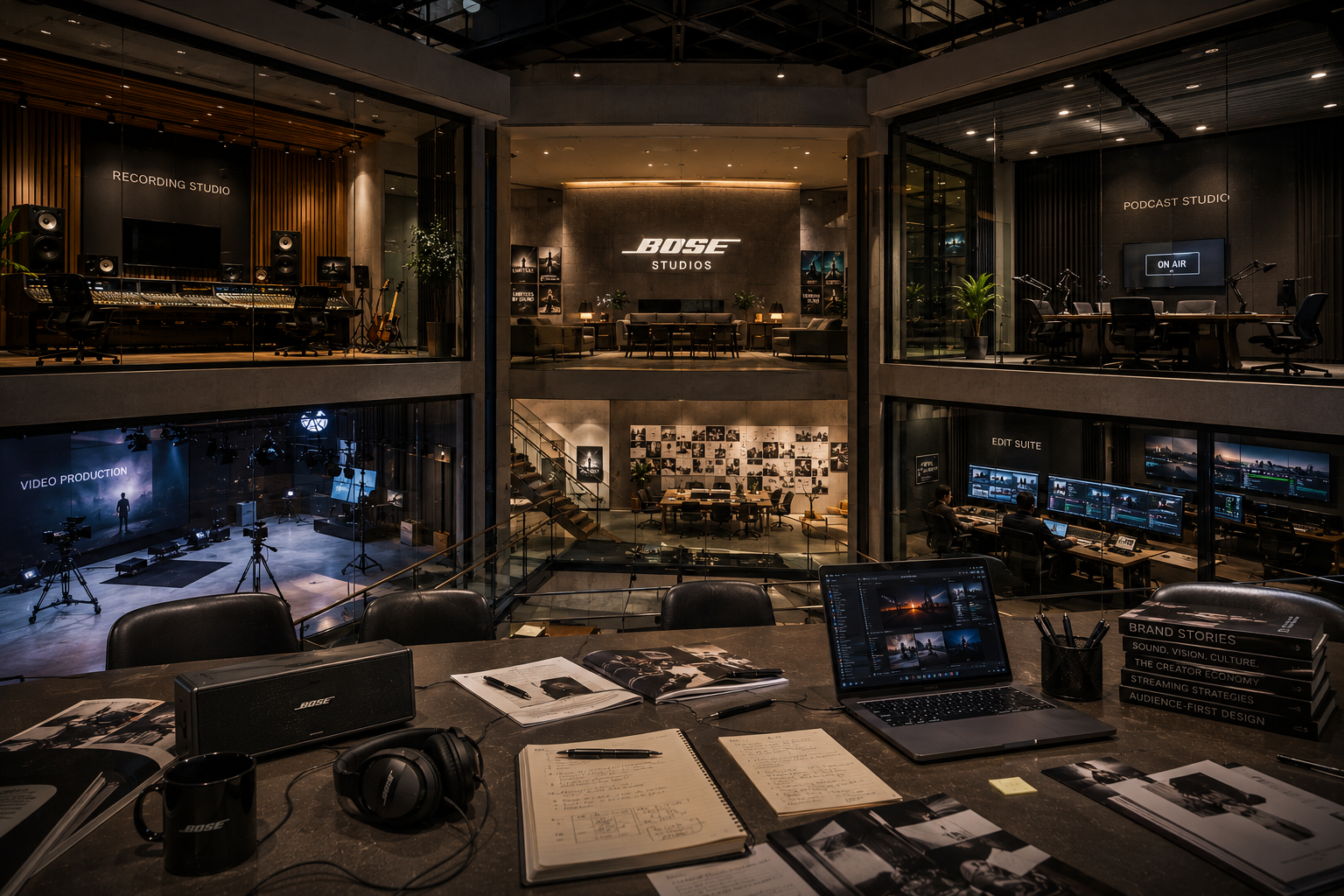
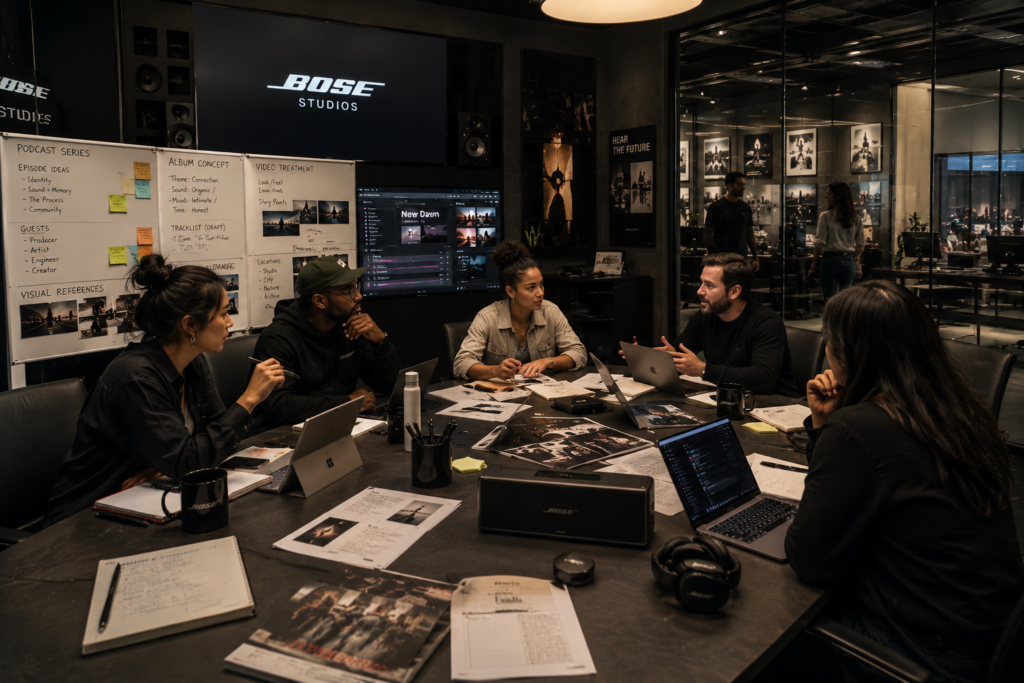
Through the launch of Bose Studios, the company is expanding beyond audio hardware into media and entertainment with initiatives that include artist development, original content, podcasts, live experiences, and a record label. The announcement represents more than a diversification strategy. It reflects a broader shift in how companies think about culture, relevance, and long-term growth.
Historically, brands built relationships with audiences by positioning themselves alongside cultural moments. Sponsorships, advertising campaigns, celebrity endorsements, and event partnerships created visibility. Culture was created elsewhere, and brands paid to be associated with it.
That model produced some of the most recognizable marketing campaigns in history.
But modern audiences engage with culture differently.
Discovery increasingly happens through creators, communities, platforms, and digital ecosystems. Influence moves faster. Attention is more fragmented. Cultural relevance is no longer determined by a handful of gatekeepers.
As a result, many organizations are looking beyond traditional advertising and asking a different question:
How can we move closer to the creation process itself?
That question is becoming increasingly visible across industries.
Technology companies are producing films and television. Athletes are launching media businesses. Retailers are building advertising networks. Platforms are investing directly in creators. Organizations that once operated within clearly defined categories are expanding into adjacent spaces where culture is developed, distributed, and experienced.
Bose appears to be making a similar move.
The significance of Bose Studios is not simply that the company wants to own a record label.
The significance is that Bose is investing in the environments where culture originates.
Artist development, podcast production, original programming, and live experiences are not products. They are infrastructure. They create opportunities for Bose to participate in the creative ecosystem long before a song is streamed, a podcast is downloaded, or a video reaches an audience.
For most of its history, Bose operated at the end of the pipeline.
Culture was created.
Culture was distributed.
Culture was consumed through Bose products.
Bose Studios moves the company closer to the beginning.
Closer to artists.
Closer to storytellers.
Closer to the systems that shape cultural output before it reaches the public.
Whether the initiative succeeds remains to be seen. Building media infrastructure requires a different set of capabilities than building world-class audio equipment. Success will ultimately depend on execution, talent, and the ability to create meaningful experiences that resonate with audiences.
But the larger pattern is already visible.
For decades, companies paid for access to culture.
Increasingly, they are investing in the systems that produce it.
Bose Studios is not simply an expansion into entertainment.
It is another sign that businesses no longer want to stand next to culture.
They want to be present when it is made.
Related Posts

tvOS 18 Debuts Smarter Features: InSight, Enhanced Dialogue, and More
tvOS 18 introduces intelligent features

Wondershare Elevates Screen Recording and Editing with AI-Powered DemoCreator 7
Wondershare DemoCreator, a trailblazer in integrated recording and edi
The Director Didn’t Leave the Film — He Stayed Inside It
A Film Now Has Versions — At the Same Time
Epic Games Unveils Trailer for The Weeknd’s Fortnite Festival Concert
Epic Games has officially unveiled a trailer for its collaboration wit
LG’s New StanbyME 2 Max Is a 32-Inch 4K TV You Can Roll Around the House
The Television That Doesn’t Need a Permanent Room
VIZIO Enhances User Experience with Swift Loading and Seamless Navigation in VIZIO Home Upgrade
Vizio Bid to redefine home entertainment