

Beats 360 Makes Customization Part of the Audio Upgrade

By DaMarko GianCarlo
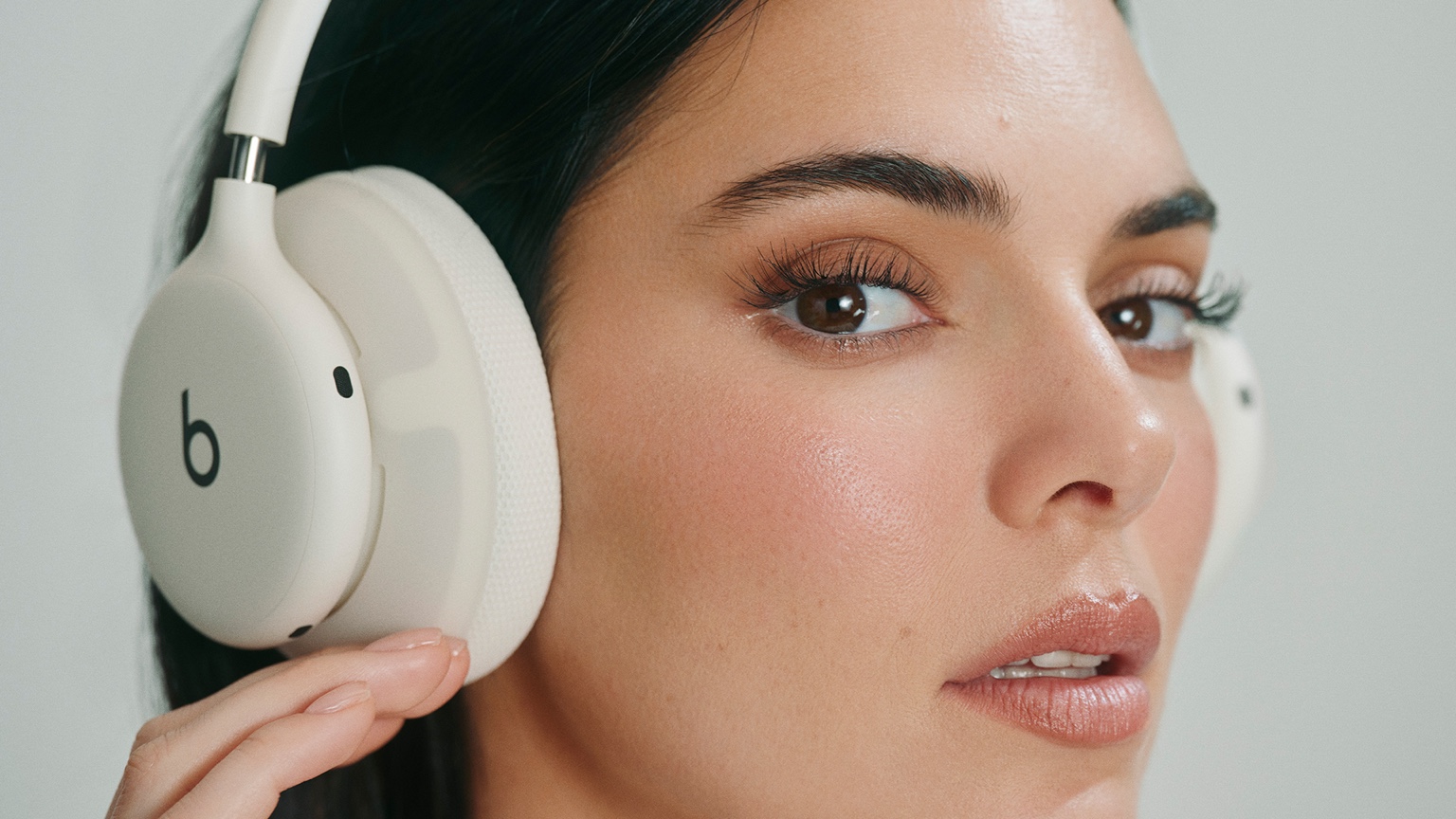
Beats is introducing the Beats 360 with a simple idea: your headphones should not have to look exactly the same every day you own them. Its launch campaign makes that point almost literally. Multiple versions of Kendall Jenner appear together, each wearing the new headphones differently, under the message “One headphone. Every version of you.” The campaign turns customization into the immediate story of Beats’ new $349.99 flagship.
But interchangeable cushions alone would make for a fairly thin reason to introduce a new $350 pair of headphones. What makes Beats 360 more consequential is that the company has changed what is happening underneath them too.
Beats 360 introduces a new acoustic architecture built around custom drivers using three-layer diaphragms and dual neodymium magnets. Beats says the system is designed to reduce distortion while improving detail and depth across the frequency range. The company has also upgraded active noise cancellation, claiming up to 1.75 times more combined active and passive noise cancellation than Studio Pro under its testing methodology. Adaptive EQ continually measures what is happening inside the earcups and adjusts frequencies based on fit, while Personalized Spatial Audio with dynamic head tracking uses an accelerometer and gyroscope to respond as the listener moves.
There are nine microphones across the system, supporting both noise cancellation and voice pickup, alongside beam-forming processing intended to better isolate the wearer’s voice. Beats 360 is also the company’s first over-ear headphone with an IPX4 sweat- and water-resistance rating, an important addition for a product Beats clearly expects people to wear beyond the desk, airplane and commute.
That technology changes how the customization story should be understood. Beats did not simply take an existing headphone, make the pads removable and call it a new flagship. It upgraded the audio experience while simultaneously reconsidering some of the physical components people interact with most.
Both the ear cushions and headband cushion can be removed and replaced. Beats is promoting that primarily as personalization. Owners can mix colors and choose between Performance Knit and UltraPlush materials, allowing the same headphone to take on a different appearance or feel. That is precisely why Kendall Jenner makes sense at the center of the campaign. Beats is not merely selling different colors. It is selling the idea that one object can move between different versions of the person wearing it.
Yet the same architecture creates a quieter advantage that may become more important after the launch campaign is gone.
Headphone cushions live a much harder life than the electronics inside them. They sit against skin, encounter sweat and oils, compress with use and can eventually show their age through deterioration, cracking or peeling depending on their construction. It is entirely possible for an expensive pair of headphones to continue functioning properly while the pieces touching the owner make the entire product feel old.
Beats is not claiming that 360 eliminates every form of long-term wear, and interchangeable cushions do not make the entire headphone modular or user-repairable. That distinction matters. But making the ear and headband cushions replaceable means some of the components most exposed to everyday use no longer have to age alongside the permanent electronics.
A worn cushion can become a replacement rather than a reason for an otherwise functional premium headphone to look finished.
There is a business play here too. Beats is turning those replaceable components into an accessory category. Cushion Kits are sold separately, meaning the relationship between Beats and the customer does not necessarily end when the headphones leave the store. Someone can return because they want another color, prefer another material or eventually need to refresh what they already own.
That makes the customization system simultaneously aesthetic and commercial. Beats gets another product to sell. The customer gets more control over how the original product changes over time.
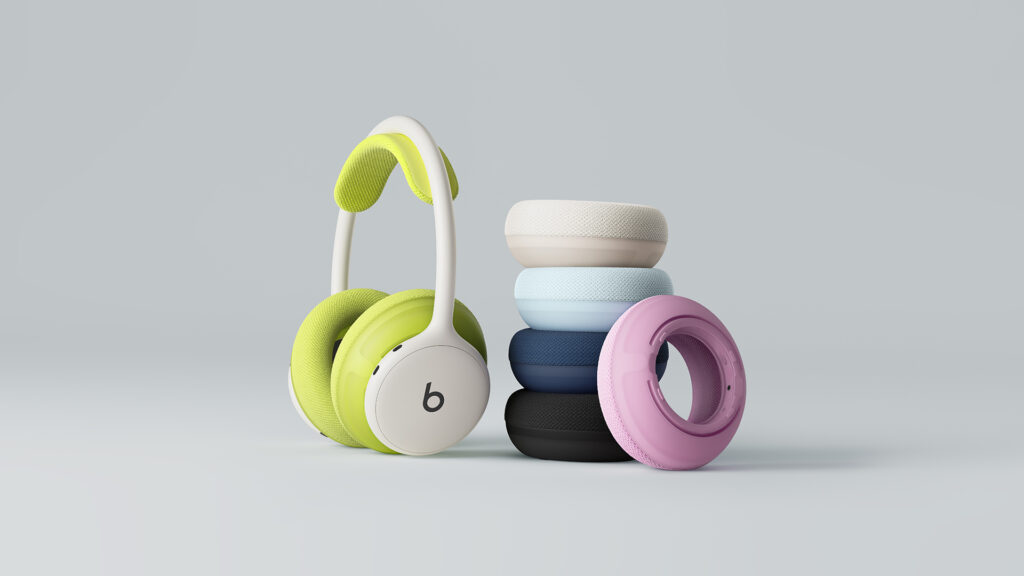
And there is an interesting consistency between the physical and digital sides of Beats 360. Adaptive EQ changes the sound according to conditions inside the earcups. Spatial Audio responds to movement. Noise cancellation reacts to the environment. The interchangeable cushions allow the physical experience and appearance to change as well.
The headphone is being built around adaptation.
That is why Beats’ massive Kendall Jenner campaign is important without necessarily being the most important part of the story. “One headphone. Every version of you” gives Beats an easily understood way to introduce the product. Different Kendalls wearing different combinations can communicate personalization faster than a specification sheet ever could.
GREAY’s larger view is what sits behind that image.
Beats has upgraded the technology consumers cannot immediately see while making some of the pieces they can see and touch replaceable. The customization attracts attention. The new acoustic system, stronger noise cancellation, Adaptive EQ and expanded everyday durability give consumers a technological reason to consider the new flagship. And the replaceable cushions could make the product easier to refresh long after its launch campaign ends.
At $349.99, that distinction matters. Without the audio upgrades, Beats 360 could easily be reduced to an expensive new headphone built around changing pads. Instead, Beats has made customization part of a broader technical upgrade.
Kendall Jenner is selling the different versions you can create on day one. The more consequential idea may be that Beats 360 does not have to remain the version you bought on day one.
Related Posts

Dreame Technology Unveils Roboticmower A1 at CES 2024, Revolutionizing Outdoor Home Cleaning
The Roboticmower A1 advances lawn maintenance

DoorDash Air Shows That the Future of Logistics Will Be Defined by Intelligent Orchestration
The next era of delivery will be defined by intelligence, not vehicles

Meet the New King of Handhelds: AYANEO NEXT II Brings Console Luxury to Your Fingertips
Pocket Titan

Revolutionizing Education with AI: A New Solution to the Teacher Shortage Crisis
EdYOU Adaptable AI Meta-Human Learning Solution has launched

NASA has just introduced its inaugural on-demand streaming service and an overhauled app
By Dennis Albright NASA has just launched its on-demand streaming serv

AI Isn’t Killing Creativity — It’s Exposing Who Never Had One
Taste, After the Tool
POST COMMENT