

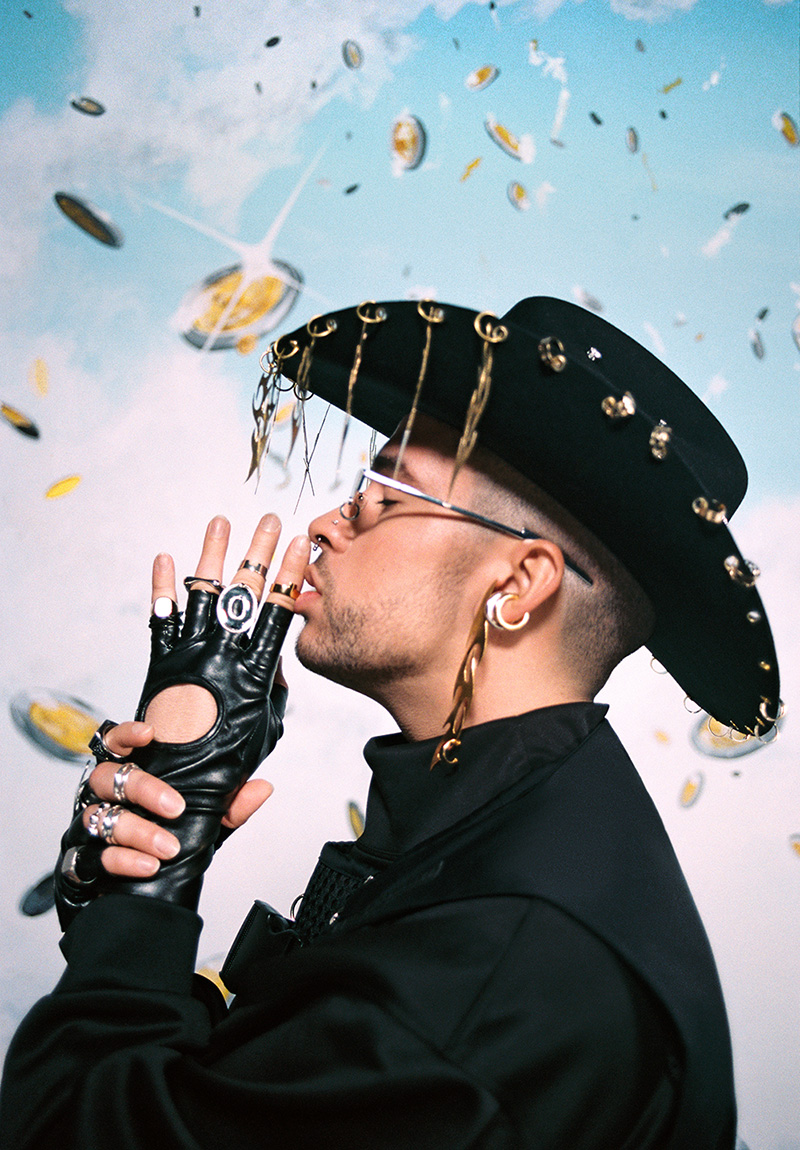
Bad Bunny and the End of Cultural Permission
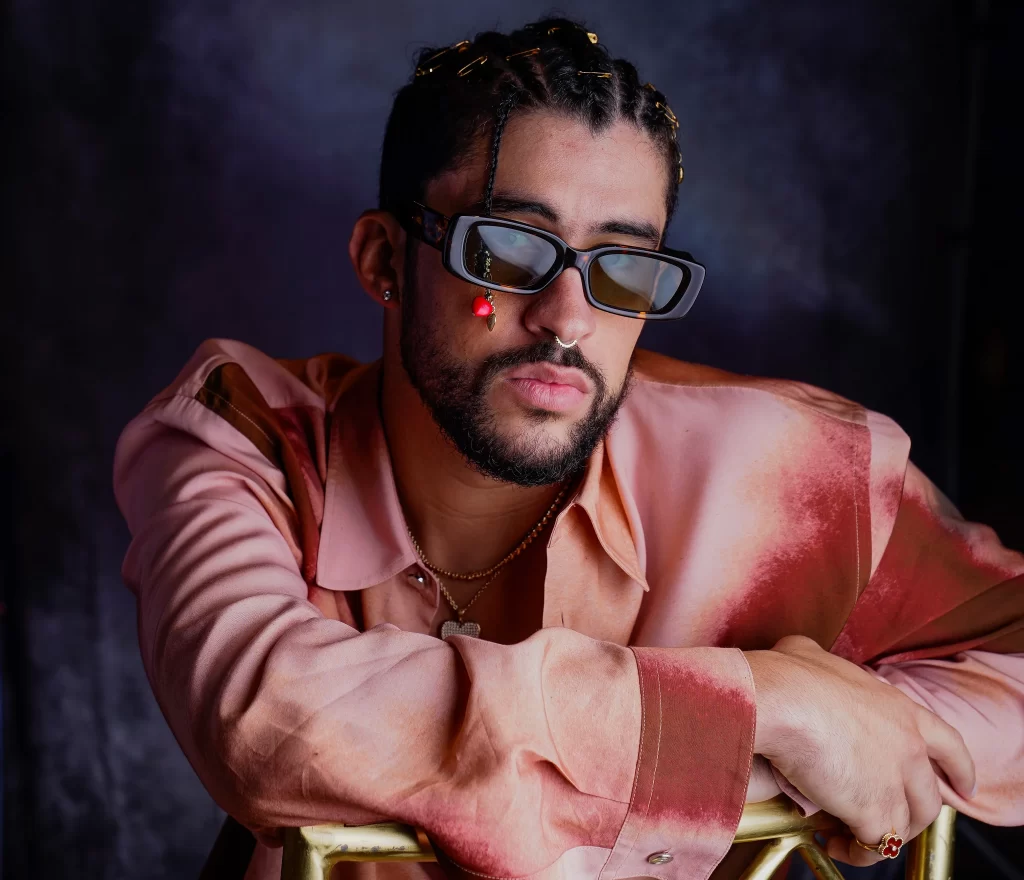
By Jackson Lopez
Bad Bunny headlining the Super Bowl halftime show is not a breakthrough—it is confirmation that cultural authority no longer requires American permission to be legitimate.
The moment Bad Bunny steps onto the Super Bowl halftime stage, the question is not why him, nor why now. Those are surface-level inquiries—useful for recaps, irrelevant for understanding power. The more instructive question is why the Super Bowl, one of America’s most tightly held cultural institutions, now requires him.
For decades, the halftime show functioned as cultural reinforcement. It reaffirmed who belonged at the center, which sounds counted as universal, and which aesthetics could masquerade as neutral. English was default. Familiarity was safety. Authority was inherited through repetition. The show was not a reflection of the world—it was an insistence that the world still revolved here.
That model no longer holds.
Bad Bunny does not arrive as a guest seeking translation. He arrives already fluent in the dominant language of global culture: scale. Streams at planetary volume. Tours that redraw the map of what a “major market” means. Fashion that reconfigures masculinity without explanation. A body of work that refuses to flatten itself for comfort. By the time the Super Bowl extended its invitation, the negotiation had already ended.
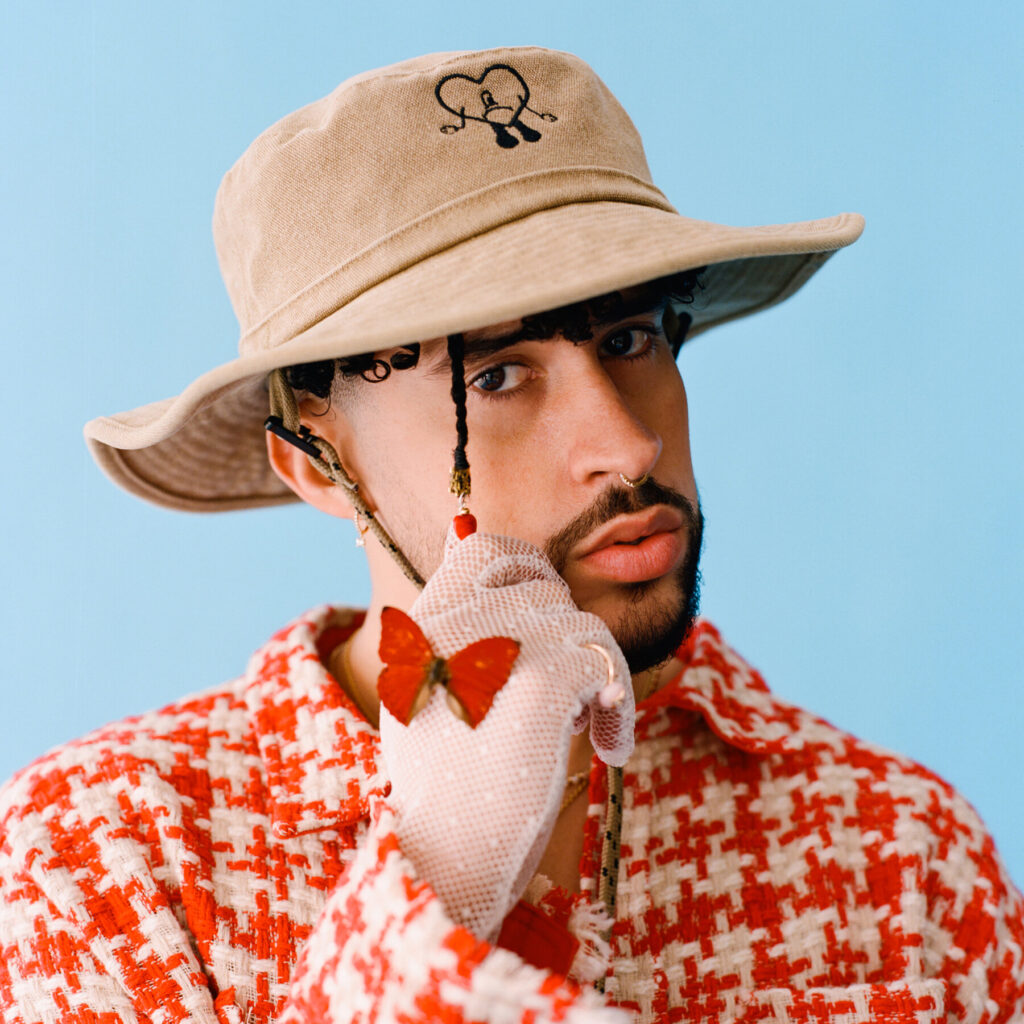
This is what makes the moment canon: representation is not the point. Representation implies admission. Admission implies a gate. But there is no gate left to pass through. The platform did not anoint him; it recognized that its relevance depends on proximity to power it does not control.
American pop culture once operated as a distributor of legitimacy. It exported language, sound, and taste outward with the assumption that authority traveled in one direction—center to margin, English to everywhere else. That assumption did not collapse through resistance; it eroded through irrelevance. Streaming flattened borders. Platforms dissolved curation. Audience allegiance detached from geography. Culture began scaling horizontally, not hierarchically.
By the time institutions noticed, the transfer had already occurred.
What this halftime moment confirms is not evolution but lag. The Super Bowl is not leading a cultural shift; it is acknowledging one it failed to contain. Authority no longer gathers at the largest stage—it accumulates wherever attention, trust, and repetition converge. Bad Bunny’s presence does not expand the definition of American pop culture; it exposes the limits of its former reach.
This is why the language debate misses the point. Spanish is not being introduced—it is arriving with proof of dominance. No translation required. No permission requested. The stage is not adapting to him; it is conceding space to remain credible in a world that has already moved past monocultural order.
Even the backlash proves the thesis. Anxiety over language. Appeals to tradition. Complaints framed as patriotism. These reactions are not defenses of culture; they are indicators of lost stewardship. Institutions only argue about ownership after ownership has slipped away.
Culture no longer asks to be centered.
It arrives centered, already in command of its audience, its language, and its future.
Institutions now face a simple choice: follow in its wake—or continue mistaking resistance for relevance.
Related Posts

Lewis Hamilton Shifts Gears from F1 to Fashion: Unveiled as Dior’s Latest Menswear Ambassador and Guest Designer
Dior Announces Lewis Hamilton as Brand Ambassador and Guest Designer

Celebrating Hip-Hop’s Legacy: Wu-Tang Clan’s Influence Immortalized in New Board Game “Shaolin”
New Board Game "Shaolin"
Godzilla Returns: Minus Zero Targets November 2026 Global Takeover
The Monster Returns
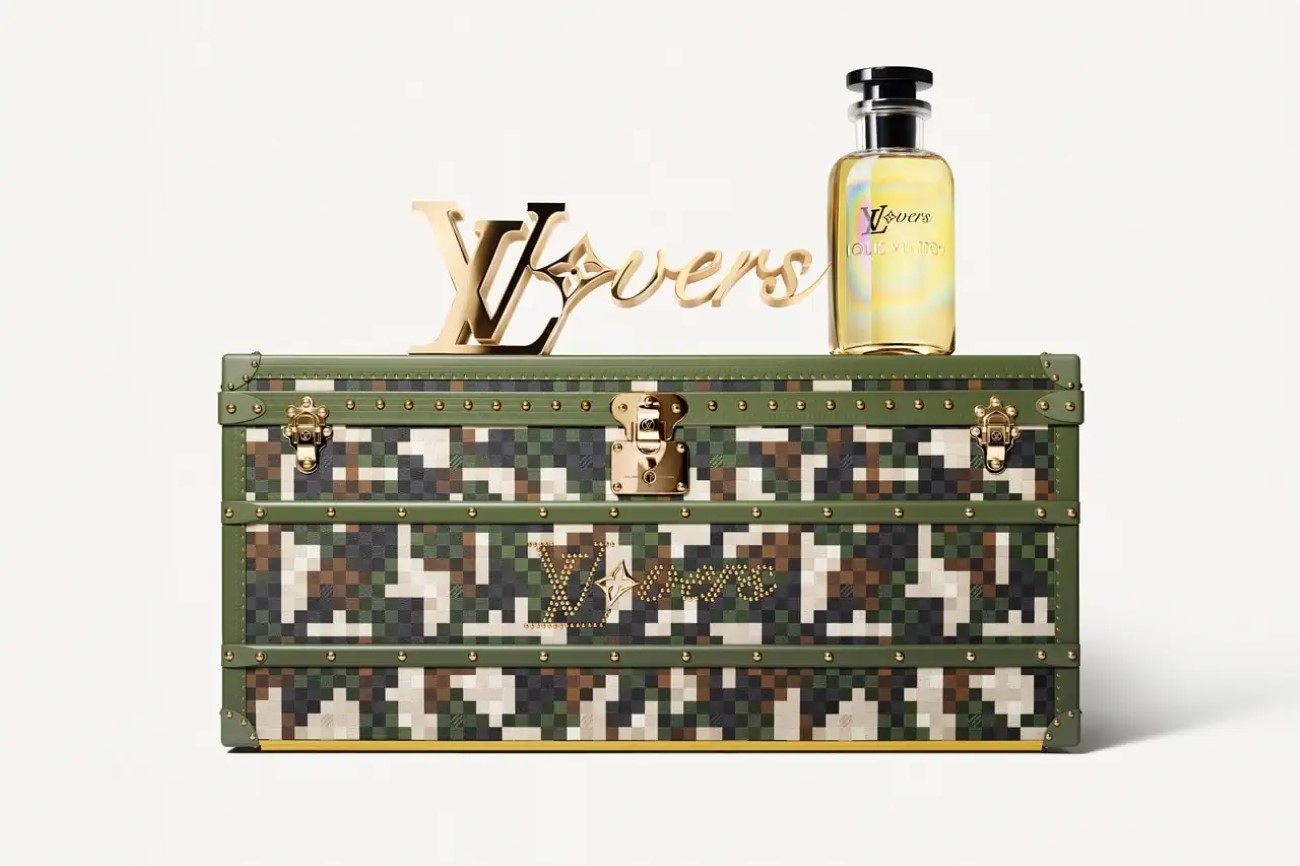
Pharrell Williams Unveils LVERS: His Debut Fragrance for Louis Vuitton
Pharrell Williams unveils LVERS, his first fragrance for Louis Vuitton
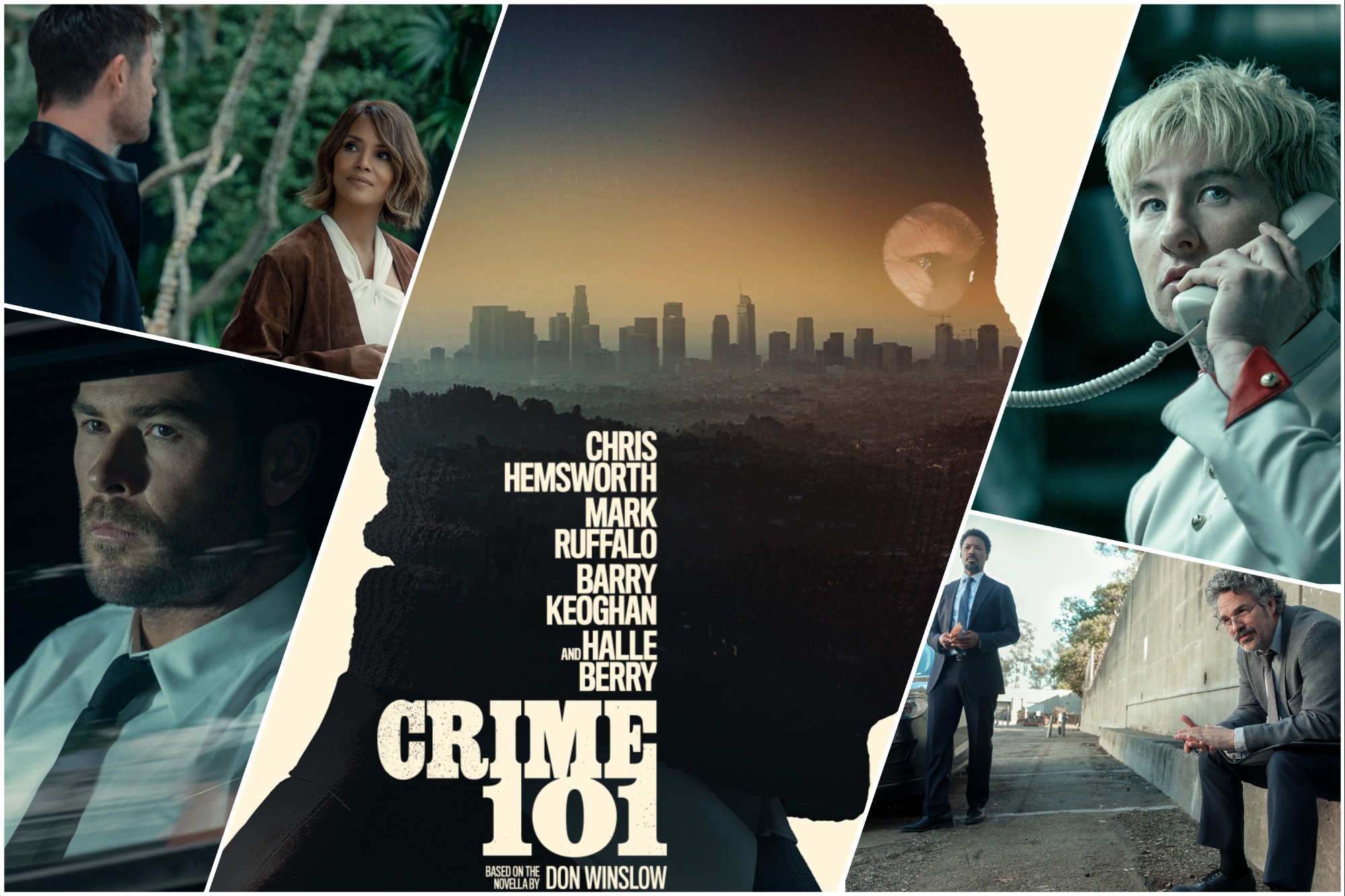
Don Winslow’s Crime 101 Brings Hemsworth, Ruffalo, and Berry Into a New-Age Noir
The Hunter, The Thief, and The Score

Kevin Hart Joins Forces with Director F. Gary Gray for Heist Film ‘Lift’ on Netflix
Kevin Hart and director F. Gary Gray are joining forces for the first