

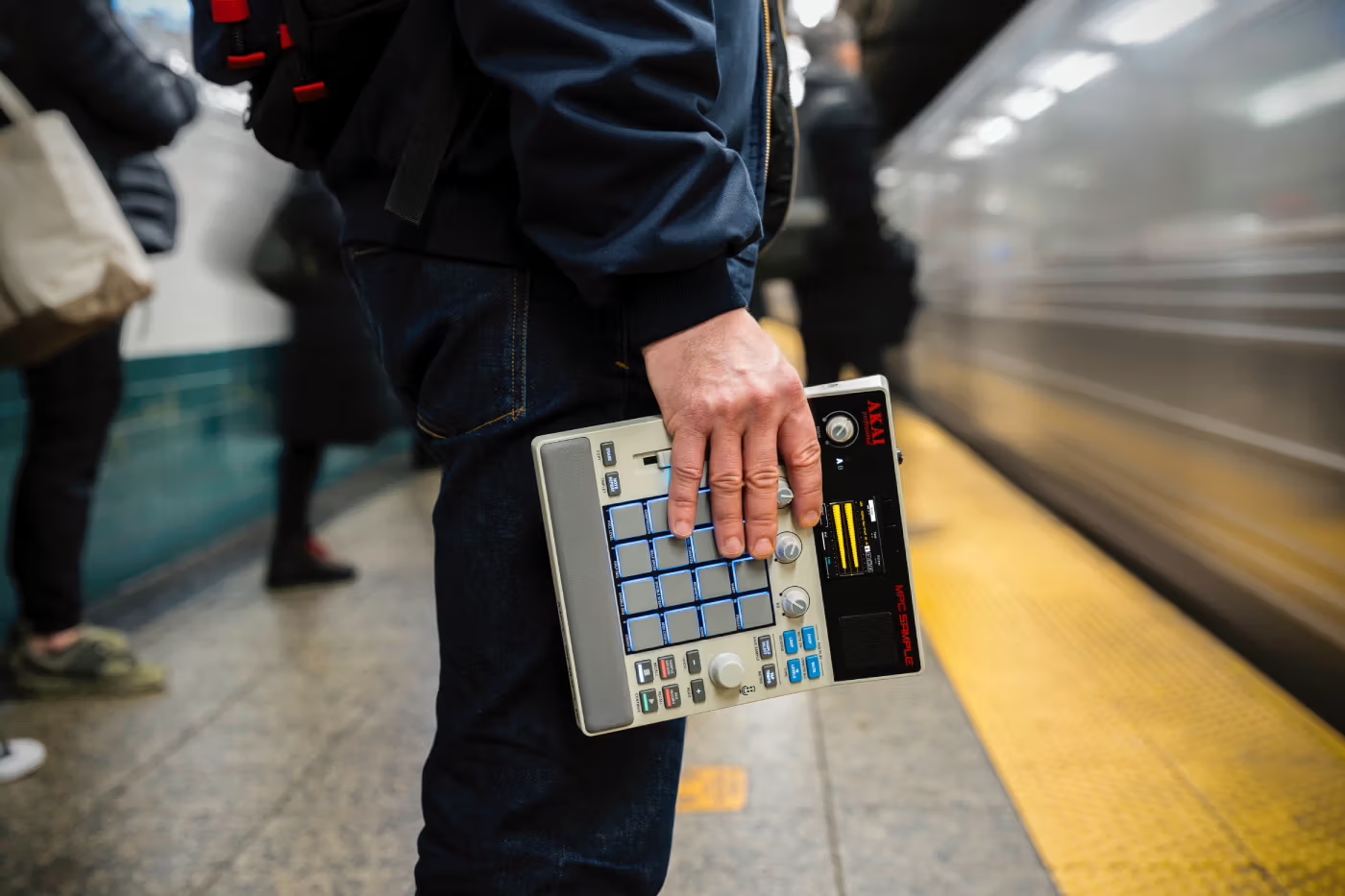
akai MPC Sample: The Studio Is No Longer Required
By Brian K. Neal
Akai didn’t just release a new sampler. It removed the condition.
For decades, the Akai MPC60 and its lineage defined what it meant to make beats—tactile, physical, rooted in pads and timing. But even as the form factor evolved, the system quietly drifted toward dependency. Laptops crept in. Studios became setups. Portability became a promise, not a reality.
The new Akai MPC Sample resets that.
This isn’t about specs first. It’s about severing the cord.
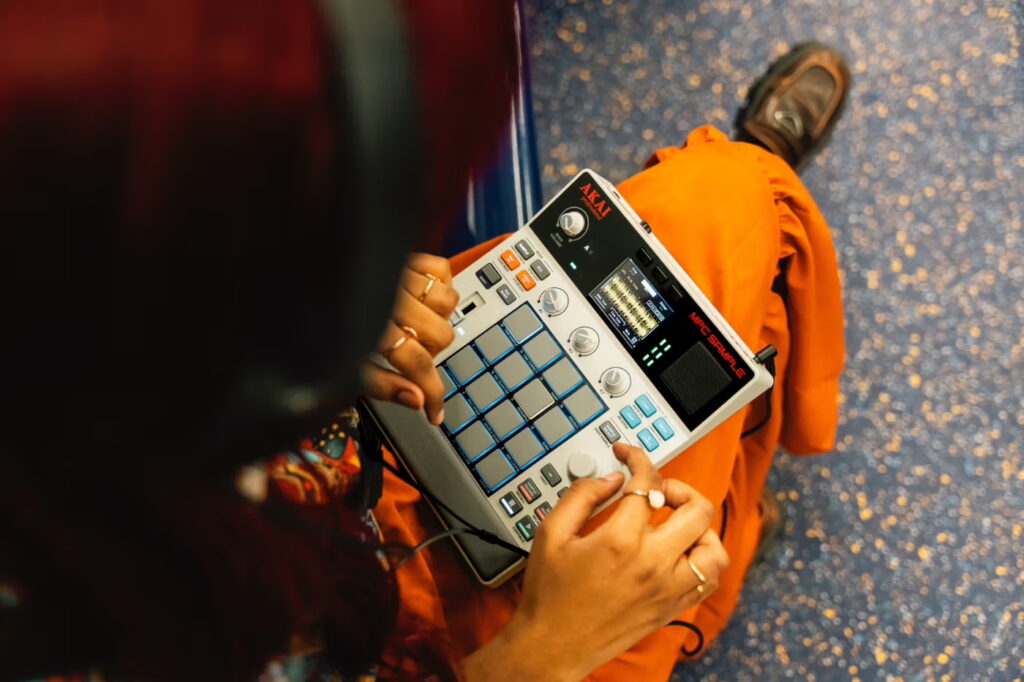
A built-in speaker. An internal microphone. A rechargeable battery pushing up to five hours of continuous use. These aren’t features—they’re permissions. The ability to hear, capture, and construct without reaching for anything else. No interface. No DAW. No translation layer between idea and execution.
The machine is small—just over 23 centimeters wide—but that scale is strategic. It collapses the studio into an object. Something you carry. Something you open anywhere. Something that removes the negotiation between environment and creativity.
And then there’s the language of the pads.
Sixteen RGB-backlit, velocity-sensitive pads with poly aftertouch—this is Akai protecting the ritual. The feel still matters. The physical response still matters. Because in a world drifting toward glass and abstraction, the MPC remains anchored in touch. You don’t click a beat. You perform it.
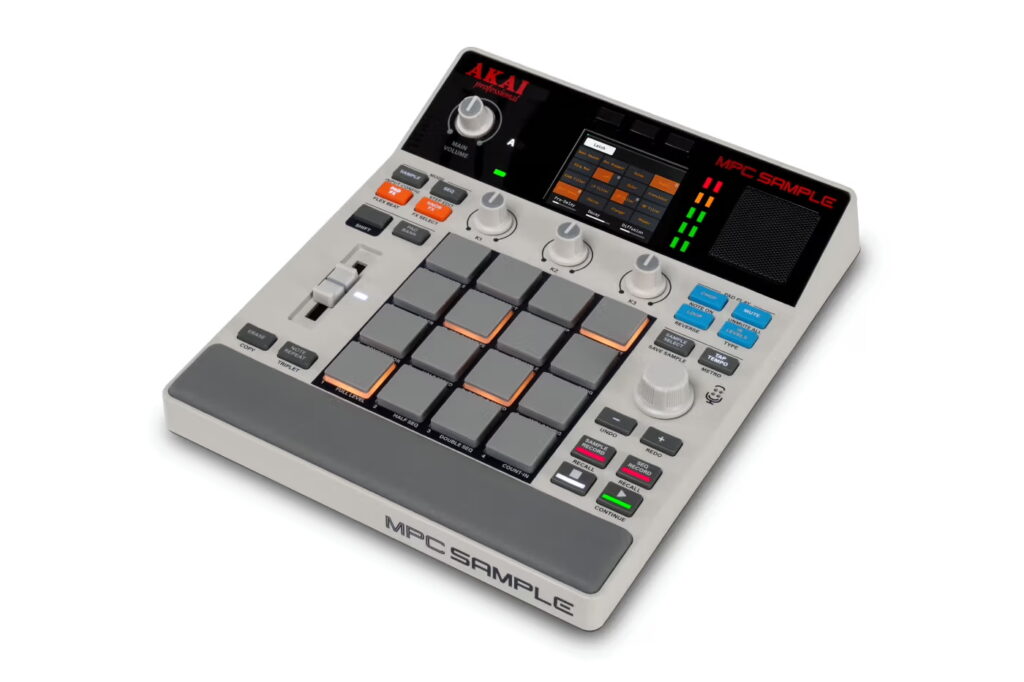
The 2.4-inch display, the three control knobs, the legacy fader—these aren’t about minimalism. They’re about sufficiency. Just enough interface to shape sound in real time, without overwhelming the act itself. The system isn’t asking you to manage complexity. It’s asking you to stay inside the moment.
Underneath, the architecture is quiet but capable: 2GB of RAM, 8GB of internal storage, expandable via microSD, over 100 factory kits, and multiple onboard effects. Enough to build. Enough to finish. Enough to not need anything else.
That’s the shift.
Akai didn’t make a cheaper MPC.
It made a self-contained one.
And that distinction matters.
Because the center of music production is no longer the studio. It’s the moment of capture. The subway idea. The backstage loop. The hotel rhythm. The in-between.
The MPC Sample is built for that reality.
Not as a companion to the system—
but as the system itself.
Related Posts

Among Us VR is Getting a 3D Makeover for PC
Among Us is adapting for PC .
The Algorithm Is the New Greenlight
The Feed Owns the First Decision

Kickflips, Culture, and Community: EA’s skate. Trailer Lands with Style
From Bails to Big Air

Celebrate the Season with Toshiba TV Z670: The Perfect Holiday Companion
Embrace Toshiba TV: Your Indoor Wonderlan
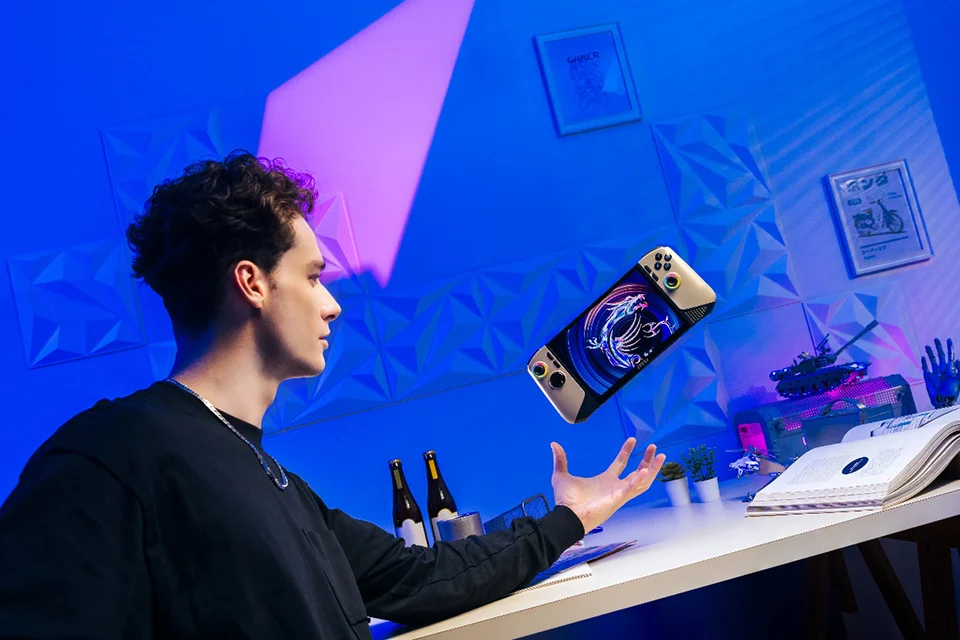
MSI Claw 8 AI: Redefining Portable Computing with Power and Precision
A New Era of Efficiency: Intel® Core™ Ultra 7 Processor.

Lara Croft Enters the Mobile Era — And Nothing Feels Scaled Down
Console Authority. Mobile Precision.
POST COMMENT