
AI Just Hired Hollywood

By Grant Williams
There are hiring announcements.
And then there are inflection points.
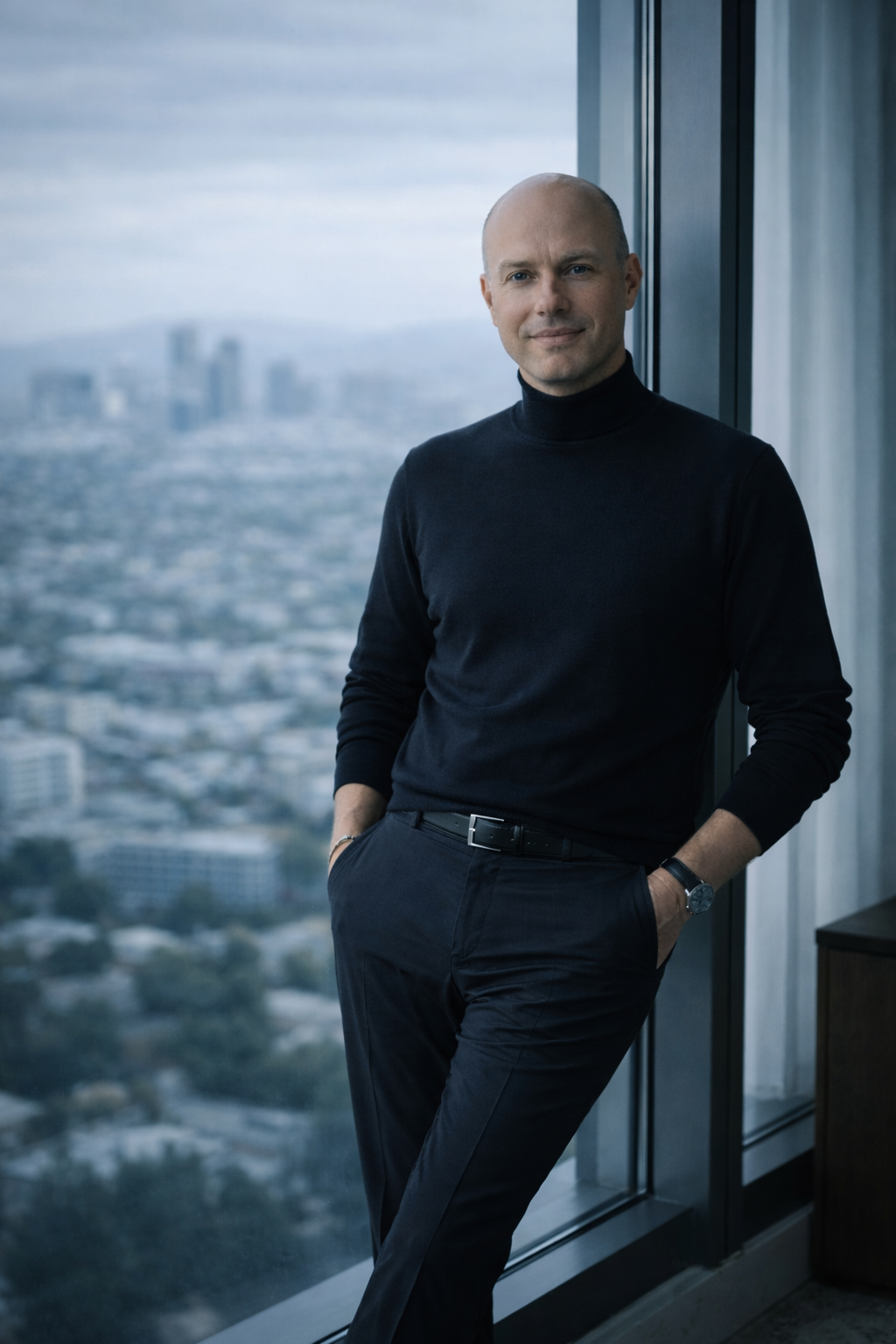
When OpenAI hired Charles Porch, formerly of Instagram’s global partnerships ecosystem, it did not simply expand its executive bench. It acknowledged a boundary.
For three years, artificial intelligence scaled like infrastructure. Compute expanded. Models improved. Enterprise integration accelerated. Power accumulated in server rooms and research labs.
But power without permission meets resistance.
And resistance was already forming.
Generative AI did not remain confined to backend optimization. It crossed into authorship. It entered music catalogs, script development rooms, likeness rights negotiations, fashion aesthetics, visual culture. It moved from invisible utility to visible influence.
At that threshold, the conversation changes.
This is no longer a technology adoption curve.
It is a negotiation over cultural sovereignty.
Creative industries are not simply vertical markets. They are narrative authorities. They determine whether a tool feels collaborative or extractive. Legitimate or destabilizing. Integrated or intrusive.
OpenAI’s decision signals recognition of that authority.
The engineering phase matured.
The diplomacy phase begins.
Silicon Valley built acceleration.
Hollywood governs perception.
Acceleration produces scale.
Perception determines permanence.
Platforms like Instagram embedded into culture not solely through algorithms, but through relationships. Red carpets, premiere cycles, athlete partnerships, fashion weeks — influence became relational before it became automated. Visibility was not merely technical distribution; it was cultural integration.
Artificial intelligence now faces a more fragile embedding challenge.
Distribution is adaptable.
Creation is guarded.
If AI becomes synonymous with displacement, it encounters structural friction. If it becomes synonymous with augmentation, it integrates quietly into creative economies.
That distinction is not resolved through model updates.
It is negotiated.
This is not concession from technology. It is strategic evolution.
The first era of AI was acceleration — build rapidly, deploy broadly, iterate publicly.
The second era is alignment — license carefully, compensate deliberately, partner visibly.
Acceleration generates headlines.
Alignment generates longevity.
Because the true constraint on artificial intelligence is not computational capacity.
It is trust density.
Trust among studios protecting intellectual property.
Trust among musicians assessing catalog ingestion.
Trust among actors defending likeness rights.
Trust among brands evaluating whether generative systems enhance or dilute visual identity.
Without trust, innovation becomes adversarial.
Adversarial ecosystems slow markets.
Markets that slow erode confidence.
Institutional actors understand this.
If Hollywood resists AI integration entirely, artificial intelligence does not dissipate. It routes around traditional power centers. AI-native studios scale. Direct-to-audience production infrastructures expand. Parallel creative ecosystems accelerate without legacy mediation.
The leverage runs in both directions.
Hollywood does not want irrelevance.
AI companies do not want revolt.
Diplomacy becomes the rational equilibrium.
This hiring marks that equilibrium phase.

When a research institution recruits cultural negotiators, it signals institutional intent. Infrastructure companies do not require red-carpet fluency. Institutions seeking permanence do.
Artificial intelligence is no longer simply a backend force multiplier. It is positioning itself as a participant in cultural systems.
And cultural systems operate on legitimacy before scale.
This transition will not unfold loudly. There will be partnerships. Pilot programs. Licensing frameworks. Advisory councils. Structured collaborations.
Some will read symbolic.
Others will quietly reshape economics.
The outcome is not predetermined.
If this diplomacy era succeeds, AI becomes normalized — embedded inside creative workflows, invisible in its integration yet foundational to output.
If it fractures, polarization accelerates and parallel systems mature independently.
Either trajectory reshapes the industry.
The migration has begun.
Artificial intelligence has recognized a constraint that cannot be optimized away: legitimacy cannot be engineered.
It must be earned.
AI just hired Hollywood.
The next chapter will reveal who integrates — and who recalibrates.
Cover Photo DaMarko GianCarlo @DaMarkoGianCarlo
Related Posts
Adam McArthur Finding Humanity Inside Anime’s Biggest Battles
Voice in the Chaos

Life is Strange: Double Exposure Two Timelines. Twice the Suspects. One Impossible Mystery
By DaMarko Webster The latest trailer for Life is Strange: Double Expo
When Stephen Curry Wore Someone Else’s Shoes
Power Behind the Sneaker

BitmoLab Unveils Upgraded GAMEBABY: A Retro Gaming Case for iPhone 15 & 16 Pro Max
BitmoLab unveils a newly revamped iPhone GAMEBABY case
Julianne Moore and Sydney Sweeney Get Caught in a Blood-Stained Bond in “Echo Valley”
"Echo Valley" Dark Secrets and a Mother's Dangerous Loyalty

Usher Joins Forces with Skims Mens for Latest Campaign
Usher teams up with Skims Mens for new campaign.