

Toyota’s Partnership With DramaBox Reveals a New Opportunity in the Microdrama Business
By DaMarko GianCarlo
For generations, automobiles have been part of the stories people watch. They have carried characters toward new beginnings, appeared in moments of celebration, and become familiar symbols of independence, family, and personal ambition. Automotive companies have understood the value of those associations for decades, investing in everything from television sponsorships to carefully arranged product placements.
Toyota’s latest partnership with DramaBox brings that relationship into a different entertainment environment.
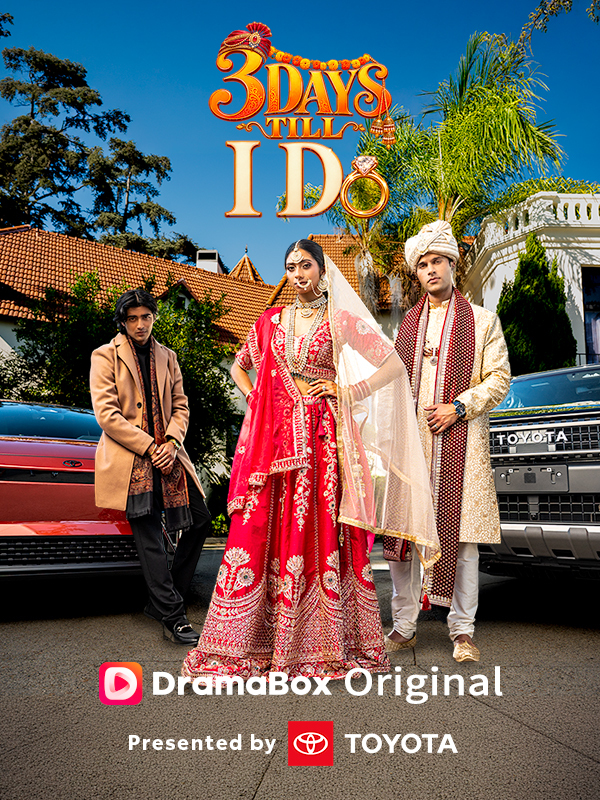
The automaker has commissioned 3 Days Till I Do, an original vertical microdrama developed in collaboration with its Asian American advertising agency, Intertrend Communications, and DramaBox. The series premiered globally on November 19, 2026, placing Toyota inside a mobile entertainment format that has developed its own production practices, international audience ambitions, and emerging commercial opportunities.
The significance is not that Toyota has discovered branded entertainment. Advertisers have helped finance scripted programming since the early days of television. What makes this collaboration noteworthy is the format and the role the company has chosen to play. Rather than purchasing advertising around an existing program, Toyota commissioned an original story designed for distribution through a vertical entertainment platform.
For DramaBox, the partnership demonstrates another way its production and distribution capabilities can serve companies outside the traditional entertainment business.
At the center of 3 Days Till I Do is Priya, a young woman approaching what appears to be an ideal wedding. Her fiancé, Arjun, is successful, dependable, and embraced by her family. The celebration promises music, tradition, and the beginning of a carefully imagined future. But three days before the ceremony, Dev, the first love who broke her heart six years earlier, returns unexpectedly as Arjun’s best man.
His arrival unsettles the certainty surrounding Priya’s marriage. As the mehndi, haldi, and sangeet celebrations unfold, she begins questioning whether the future everyone has prepared for her is the one she truly wants.
It is a premise built around the emotional tension familiar to romantic microdramas: unresolved love, family expectations, and personal decisions made under pressure. The Indian wedding setting gives those conflicts a cultural context, allowing the traditions surrounding the celebration to become part of the story’s emotional structure.
Directed by Sarang Sharma and written by Mayanka Goel, the series stars Anja Vasa as Priya, Aman Jaisinghani as Dev, and Fateh Singh as Arjun. Romil Sharma developed the project, Roberta Sparta produced it, and Sikandar Sidhu served as executive producer for DramaBox.
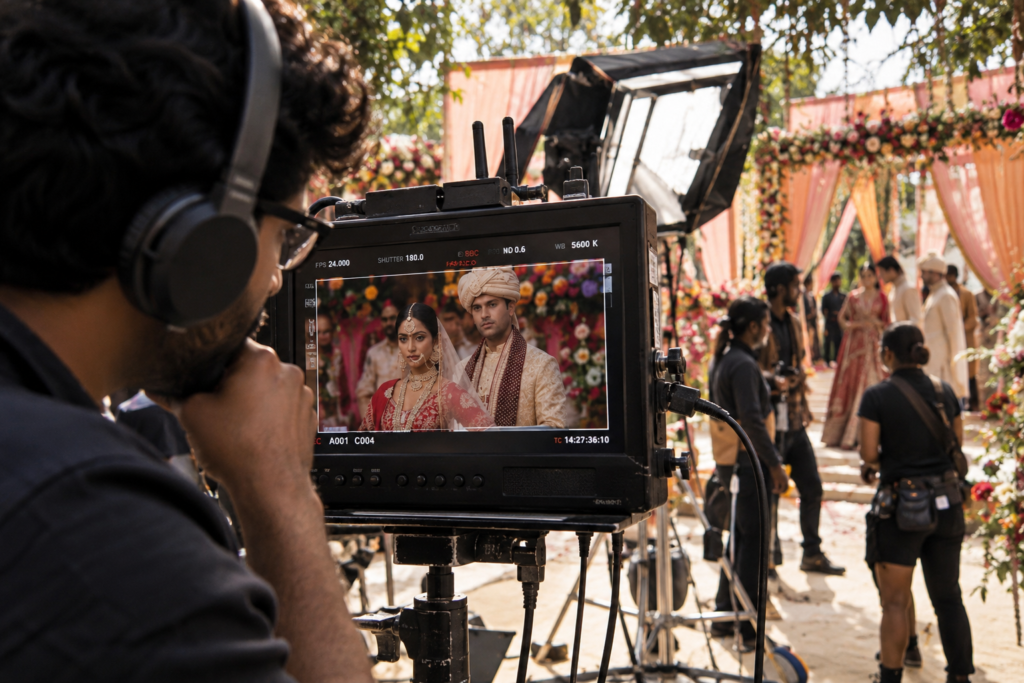
The production also brought together costume designer Charu Gupta, production designer Armaan Pujani, choreographer Kavita Rao, and henna artist Neha Assar. According to DramaBox, the project was created largely by Asian Indian talent in front of and behind the camera, with Intertrend working alongside the Los Angeles production team to help shape the cultural details and the integration of Toyota vehicles.
That collaboration was central to the advertiser’s stated objectives.
“At Toyota, we believe connecting with multicultural audiences starts with cultural understanding and meaningful engagement,” said Tiffany Shido, General Manager of Marketing at Toyota Motor North America.
The company describes the production as an effort to celebrate Asian Indian wedding traditions while creating another way for audiences to encounter the Toyota brand.
Five Toyota models appear in the story: the Crown, Grand Highlander, C-HR, Sienna, and Land Cruiser. Rather than presenting those vehicles through a separate commercial, the production incorporates them into the characters’ world.
The approach reflects a familiar advertising ambition expressed through a newer storytelling format. Brands want their products to become associated with experiences audiences recognize, remember, and care about.
For an automobile manufacturer, a wedding provides a particularly recognizable environment. Families travel together. Guests arrive from different places. Important moments unfold around departures, reunions, and the movement between celebrations. Vehicles can occupy a natural place within those experiences, although their presence in a story does not automatically make the integration effective.
That distinction matters. The companies have explained how they intended to incorporate Toyota into the narrative, but the announcement does not establish how viewers have responded or whether the production has changed their perceptions of the brand.
Cheryl Lee, Executive Media Director at Intertrend Communications, described the collaboration as an opportunity to “move beyond traditional advertising.”
The phrase captures the commercial reasoning behind the production. Instead of asking viewers to watch an advertisement before returning to their entertainment, Toyota is participating in the creation of the entertainment itself.
Whether that produces stronger engagement or greater commercial value remains an open question.
For DramaBox, however, the collaboration illustrates an additional business opportunity.
The company launched in 2023 and reports that its application has surpassed 470 million downloads worldwide. It also says its platform has a presence in more than 175 countries and offers original and licensed programming in 16 languages. Those are company-reported figures, and cumulative downloads should not be confused with active viewers or the audience for any individual production.
Still, the scale DramaBox reports helps explain why a global advertiser might be interested in working with the company.
DramaBox has been developing localized productions across international markets, with teams operating in Japan, Korea, China, Singapore, and the United States. Its recent expansion into Latin America includes productions in Brazil, Colombia, and Mexico. 3 Days Till I Do adds a project centered on Asian Indian culture to that international strategy.
The relationship between cultural specificity and global distribution is particularly important here. A story can be developed with a particular community in mind while remaining accessible to viewers in other markets. That creates an opportunity for advertisers interested in reaching specific audiences without limiting the distribution of the finished entertainment to a single geographic territory.
Marcela Kartaszewicz, DramaBox’s Head of Communications, described the company’s philosophy in a few words: “Global stories with local flavor are what we do best.”
The statement reflects how DramaBox positions its international programming strategy. It also helps explain the appeal of a collaboration in which cultural identity is part of both the storytelling and the advertiser’s intended audience relationship.
But the business significance extends beyond multicultural marketing.
For much of its recent development, the microdrama industry has attracted attention through its direct-to-consumer economics, mobile distribution, rapid production schedules, and competition for paying viewers. Brand-commissioned entertainment introduces another potential source of production financing.
A company seeking to reach a particular audience can commission an original scripted property, while an entertainment platform can provide development, production, and distribution capabilities.
The arrangement is not entirely separate from the economics of traditional television. Advertisers once played an important role in financing programming directly, and branded entertainment has remained part of the media business across multiple generations.
What changes with microdramas is the distribution environment. These stories are designed for mobile screens, presented through short serialized episodes, and delivered through platforms whose audiences are accustomed to consuming entertainment in a vertical format.
Toyota’s partnership demonstrates that this environment can also accommodate an original production commissioned by a company whose primary business is not entertainment.
That does not establish the size of the opportunity.
The companies have not publicly disclosed the production budget, Toyota’s financial commitment, the agreement’s revenue arrangements, or the series’ audience performance. There is also no disclosed evidence establishing whether the campaign has increased brand consideration, vehicle purchases, or other commercial outcomes.
Without those details, it would be premature to describe the project as a proven financial success or evidence that brand-funded microdramas will become a dominant industry model.
What can be established is more specific: DramaBox has participated in creating and distributing a scripted entertainment property commissioned by a major automotive advertiser.
That alone is a meaningful example of how the platform’s business relationships can extend beyond its direct relationship with viewers.
The partnership also raises questions about creative control.
When a company commissions an original scripted production, the relationship between the advertiser and the creative team becomes part of the development process. Decisions about product visibility, narrative structure, cultural representation, and the final presentation may involve different interests than those found in a production financed solely by an entertainment company.
In this case, Intertrend worked with DramaBox’s director and production team to help shape the storytelling, guide cultural details, and incorporate Toyota into the narrative.
The announcement does not disclose who owns the underlying intellectual property, which parties retain distribution or derivative rights, or how final creative approvals were divided. Those contractual questions remain unanswered.
They are worth examining because the ability to finance entertainment is not necessarily the same as controlling the intellectual property created through that financing.
For writers, directors, producers, and performers, the distinction can influence how a project develops and what opportunities may exist beyond its initial release.
There is also a creative question that cannot be answered through business arrangements alone.
Can a production commissioned to serve an advertising objective still deliver a story that feels emotionally complete on its own terms?
There is no reason those ambitions must be incompatible. Entertainment has always operated within financial relationships, whether involving studios, networks, sponsors, distributors, or investors. Commercial participation does not automatically diminish a story’s artistic value.
But neither does cultural specificity guarantee authenticity, nor does integrating products into a narrative guarantee that viewers will accept their presence.
Those judgments belong to the finished work and the people watching it.
For 3 Days Till I Do, the creative challenge is to make Priya’s uncertainty, her relationships, and the expectations surrounding her marriage compelling enough to sustain the audience’s attention. The vehicles may be part of that world, but the characters must give viewers a reason to remain in it.
That human element is particularly important as companies explore entertainment formats designed to serve both cultural and commercial purposes.
The production arrives during a period of expanding interest in vertical storytelling, with new studios, international productions, and evolving relationships between entertainment companies and advertisers. Toyota’s participation adds another example of how businesses outside the industry are exploring the format.
It should not be mistaken for proof that the economics of microdrama have fundamentally changed.
The available evidence does not establish that Toyota intends to commission additional series, that DramaBox has secured a recurring automotive advertising business, or that this particular production has achieved measurable commercial success.
What it establishes is a completed original microdrama, commissioned by a major automaker, developed with a multicultural advertising agency, and distributed internationally through a platform specializing in vertical entertainment.
That is enough to make the partnership worth examining.
The larger question is whether productions like 3 Days Till I Do will remain individual marketing experiments or become a more established part of how original vertical entertainment is financed.
The answer will depend on results that are not yet public, including audience response, production economics, and whether advertisers believe the storytelling experience delivers value beyond conventional advertising.
For now, Toyota and DramaBox have demonstrated one way the relationship can work.
At the center of the series is a woman confronting the difference between the future others have imagined for her and the life she may choose for herself. Behind the production is an entertainment business exploring its own possibilities, as advertisers and platforms reconsider where storytelling fits within their commercial ambitions.
The two stories are different, but they meet in the same place.
One is about the choices people make.
The other is about who helps bring those stories to the screen.

DaMarko GianCarlo
DaMarko GianCarlo is the founder and Editor-in-Chief of GREAY Magazine, an independent publication examining the people, ideas, and industries shaping contemporary pop culture. Working across editorial direction, photography, and production, he approaches publishing as both a creative practice and a system for documenting culture. His work reflects a commitment to original storytelling, independent journalism, and the human experiences behind the stories GREAY tells.
Related Posts
Impostor Syndrome Isn’t Self-Doubt It’s Power Lag
Authority Without Ceremony
Lululemon Welcomes Seven-Time F1 World Champion Lewis Hamilton as Newest Ambassador
Lewis Hamilton Joins lululemon.
LA Comic Con 2024: A Must-Have Event for POp Culture World
LA Comic Con 2024 overview

Nike and SKIMS Join Forces to Revolutionize Fitness and Activewear with NikeSKIMS
NikeSKIMS Designed to Sculpt.
Elysia Rotaru Is Building a Life Bigger Than the Roles She Plays
The Woman Behind the Voices
Marvel Animation Releases First Trailer for ‘X-Men ‘97’
Marvel Animation Releases Trailer for ‘X-Men ‘97’
POST COMMENT