
YouTube’s New Programming Slate Reveals a Changing Relationship Between Creators and Hollywood
By Kyra Greene
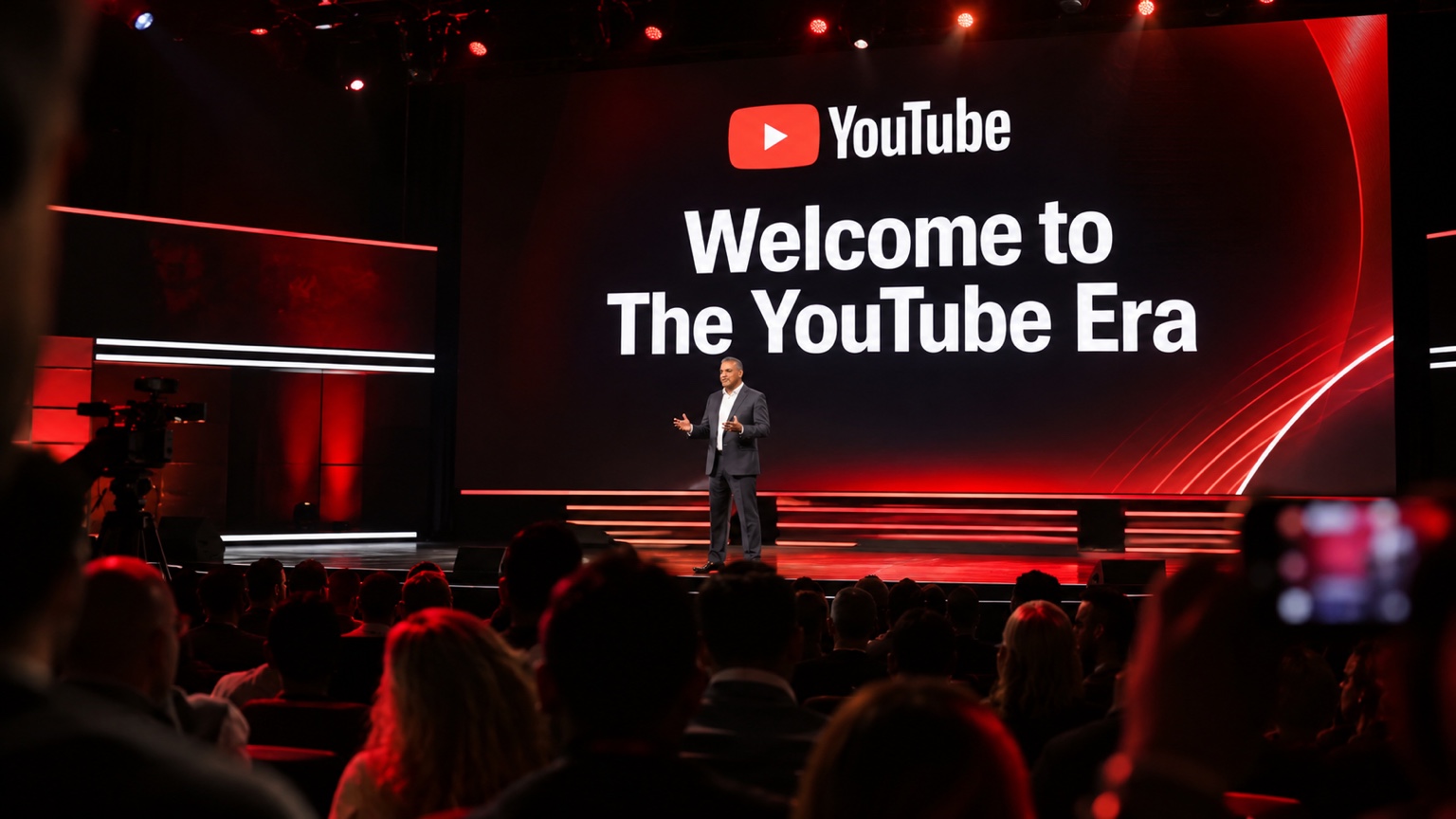
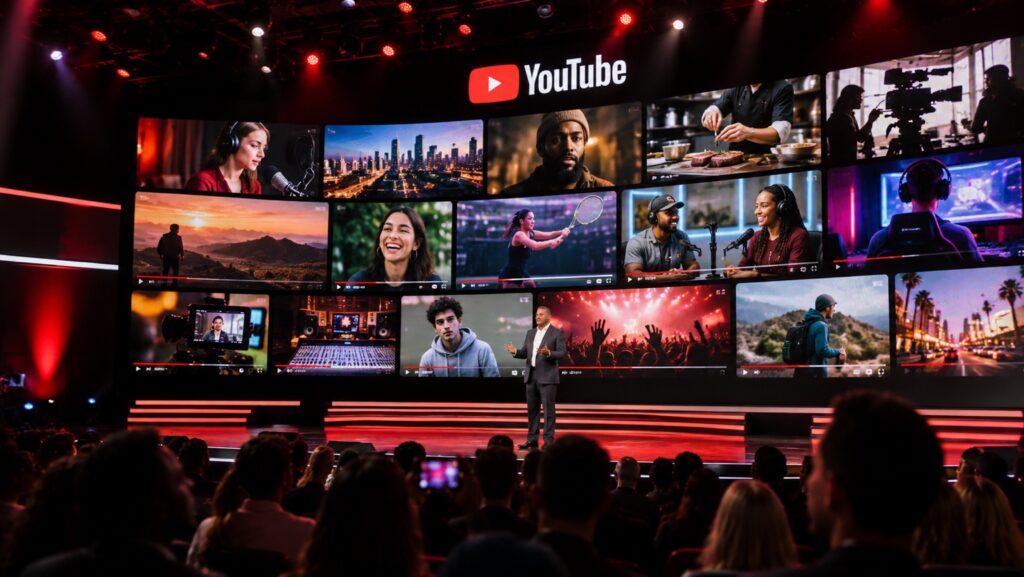
When YouTube gathered creators, filmmakers, producers, and entertainment personalities at the Hollywood Roosevelt Hotel in Los Angeles, the setting offered an interesting connection to the industry’s past. The hotel’s Blossom Room hosted the first Academy Awards in 1929, when Hollywood was beginning to establish the institutions that would shape entertainment for generations. Nearly a century later, the room provided a setting for a programming showcase that reflects how much the business has changed, and how many different paths now exist for bringing a story to an audience.
In its November 18 announcement, YouTube described the occasion as the moment when “the next era of entertainment took the stage.” The language was ambitious, but the programming offered something more tangible to examine: a collection of productions bringing established entertainment companies, independent creators, filmmakers, and recognizable personalities into increasingly close working relationships.
The slate includes new and expanding productions involving Emma Chamberlain, Aryna Sabalenka, Nick DiGiovanni, Wesley Wang, Lilly Singh, Phil Rosenthal, and others. The projects span documentary filmmaking, comedy, food, music, reality television, and interactive storytelling, with releases extending into 2027.
The announcement comes at a time when established streaming companies are paying increasing attention to digital creators who have spent years building audiences outside traditional television. YouTube, meanwhile, is demonstrating that those same creators can develop more ambitious entertainment businesses without necessarily leaving the platform where people first came to know them.
What makes the announcement interesting is not simply the collection of recognizable names. It is the production infrastructure developing around them, and the changing relationships between the people who make entertainment, the companies willing to finance it, and the platforms that bring it into people’s homes.
YouTube’s President of Americas and Global Partners, Sean Downey, authored the announcement, presenting the showcase as an example of the possibilities emerging from creator-led entertainment. Looking more closely at the individual projects reveals just how different those possibilities can be.
Emma Chamberlain’s new ongoing series, What Are You Waiting For?, begins with something familiar to anyone who has spent time in New York City: people standing in lines. There are lines for restaurants, concerts, shops, and experiences that might seem ordinary until someone decides they are worth waiting for. YouTube describes the series as exploring not only “what people are waiting for – but why.” Through Chamberlain’s curiosity, the premise opens into a broader examination of fandom, subcultures, and the behavior that brings people together around shared interests.
It is a premise that makes sense for Chamberlain, whose connection with audiences has long depended on her ability to make everyday experiences feel worth examining. The series is executive produced by Joe Lewis, with Amplify Pictures serving as co-studio and production company.
That arrangement says something about where creator-led entertainment is heading. Chamberlain brings a recognizable perspective and an audience familiar with her work. An established production company brings another layer of experience and resources. Neither necessarily replaces the other. Instead, the project is being developed through a relationship between two parts of the entertainment business that once seemed more distant.
Nick DiGiovanni is approaching that opportunity from another direction. His culinary series, Chef, comes from Knife Drop Studios, his own production company. The program follows professional chefs working in restaurants around the world, combining full-length episodes with shorter point-of-view cooking videos. The first episodes are already available, with additional programming planned throughout 2026 and 2027.
Food has always been a natural subject for television, but DiGiovanni’s approach reflects the habits of an audience accustomed to moving between longer programs and shorter moments of discovery. Someone might spend an evening watching a chef prepare an elaborate meal, then encounter a brief cooking demonstration while scrolling through their phone the following afternoon. Both experiences can belong to the same creative business.
The difference between Chamberlain’s and DiGiovanni’s productions is worth understanding. One involves an established outside production company working alongside a creator. The other comes through a studio built by the creator himself. Both will reach audiences through YouTube, but the businesses behind them are organized differently.
That variety runs throughout the announcement.
Tennis champion Aryna Sabalenka is expanding her presence on YouTube with Aryna’s Arena: Unfiltered, a docu-reality series produced by UltraBoom Media. The project follows her professional commitments and personal life beyond the tennis court, including travel, business meetings, family relationships, and the responsibilities that accompany a career lived in public.
For athletes, the relationship with an audience has traditionally been shaped by competition, interviews, and the moments broadcasters choose to show. A series like this offers the possibility of a different kind of familiarity, one that extends beyond the final score and allows viewers to spend time with the person whose career they have followed.
Lilly Singh will host Eligible Aunties, an unscripted dating series produced by Unicorn Island Productions, following older single women navigating relationships and modern dating. Grace Reiter is expanding her parody work with Twilight (but better), scheduled to premiere on her YouTube channel on February 18, 2027.
These projects have different subjects and creative ambitions, but they share an important characteristic. Their identities begin with people whose relationships with audiences already exist. Rather than introducing an unfamiliar personality through a television network and hoping viewers develop an attachment, the productions are built around individuals who have already spent time earning attention and trust.
That does not mean an established audience guarantees a successful series. Making someone laugh in a short video and keeping them engaged through a longer production are different creative challenges. But it does change the starting point.
For generations, television executives have spent considerable time and money trying to understand who might watch a new program. Many of today’s creators arrive at the production table already knowing something about the people who follow them. Those relationships have often developed over years, through ordinary conversations, shared interests, and a steady presence in people’s daily lives.
The production still has to be good. The story still has to work. But the audience is no longer entirely hypothetical.
Filmmaker Wesley Wang’s upcoming projects introduce another dimension to the shift. His announced work includes RESPONSE, a horror short film developed with director Jason Rodelo; Extract 14, a six-episode interactive murder mystery offering $100,000 to the first person who solves its central puzzle; and Absolute Cinema, a filmmaking competition in which aspiring directors compete for $100,000 to support a future film.
For someone who wants to make films, access to financing and an audience can be among the most difficult parts of the process. A competition offering meaningful production support does not resolve the larger challenges facing independent filmmakers, but it creates another possible opening.
Extract 14 also demonstrates how a platform’s relationship with its audience can become part of the storytelling itself. Viewers are not simply being asked to watch a mystery unfold. They are invited to participate in solving it.
These formats suggest that YouTube’s appeal to producers extends beyond the ability to distribute a finished program. Its interactive features and established communities can influence the creative experience, allowing filmmakers to consider forms of audience participation that might be more difficult to reproduce through conventional television.
One of the most consequential announcements, however, involves a program that television audiences already know.
Phil Rosenthal’s Somebody Feed Phil, previously distributed through Netflix, is scheduled to return for a ninth season on Rosenthal’s official YouTube channel in spring 2027. The new season begins in Greece and is produced by Lucky Bastards in partnership with Banijay Americas and Banijay Rights.
Rosenthal’s career offers an interesting perspective on the changing industry. Long before he began traveling the world and sharing meals with strangers, he helped create Everybody Loves Raymond, one of network television’s defining sitcoms. His professional life has moved through traditional television, streaming, and now a new season distributed through YouTube.
There is something fitting about a food and travel program finding another way to reach people. Much of Somebody Feed Phil has been built around the simple pleasure of sitting down with someone, sharing a meal, and discovering what makes a place meaningful to the people who live there. Its appeal is rooted in human connection, even as the business arrangements behind the program continue to evolve.
The move is significant because it demonstrates that established television properties can find a home on creator-centered distribution channels. Rosenthal is not an emerging internet personality attempting to enter traditional entertainment. He is an experienced television creator bringing an established program to a platform more commonly associated with the rise of digital personalities.
For years, the familiar career progression moved in the opposite direction. A creator developed an audience online, attracted attention from Hollywood, and eventually appeared on television or a subscription streaming service. Rosenthal’s announced distribution arrangement demonstrates that movement can also happen the other way.
The announcement does not disclose the contractual terms behind the ninth season, including any continuing rights held by Netflix or the financial arrangements supporting its production. Those questions remain important, particularly as established entertainment properties move between distribution platforms.
Another project provides a clearer example of outside financing.
Music Therapy with Morgan Jay, developed and produced by comedian and musician Morgan Jay and Ty Stafford of creative agency Hello Party, is financed by Live Nation Studios. The series combines celebrity conversations, musical improvisation, and original songwriting, with Jay and his guests creating a song together during each episode.
YouTube describes the result as landing “somewhere between a talk show, a comedy special and a live concert.” It is an unusually flexible format, allowing conversation and performance to influence one another rather than treating them as separate parts of a program. A guest’s personality can become part of the music itself, giving each episode the possibility of developing in an unexpected direction.
Live Nation Studios’ involvement is particularly important because it identifies a financier outside the platform itself.
Although YouTube is presenting these productions together, its announcement does not establish that the company directly finances every project, owns the underlying intellectual property, or has acquired exclusive rights to all the programming.
A series appearing on YouTube is not automatically a YouTube-owned production. Financing, creative control, intellectual property ownership, and distribution are separate business considerations, even when they come together within a single project.
For the people making these shows, those distinctions can have consequences that extend well beyond a premiere date.
A creator may spend years developing a character, a format, or a recognizable way of telling stories. A production partner may provide the resources necessary to turn that idea into a larger program. A financier may make the project possible in the first place. Each participant contributes something meaningful, but their contributions do not automatically determine who owns the finished property or what happens to it years later.
Those questions are becoming increasingly important as creator-led entertainment develops into a more sophisticated business.
They also help distinguish YouTube’s current programming push from its earlier history with original entertainment.
YouTube previously pursued a more conventional originals strategy, commissioning professionally produced programming through its YouTube Originals operation. In 2022, the company announced that it would scale back much of that activity, placing greater emphasis on supporting creators through its broader platform and monetization ecosystem.
The November 2026 showcase does not establish that YouTube has reversed that decision or formally revived its former originals division. Instead, it presents productions developed through different creative and commercial relationships, many connected to creators’ existing channels.
That distinction may prove central to understanding the company’s position in entertainment.
Traditional television networks and streaming services have historically played substantial roles in financing, commissioning, scheduling, and distributing programs. YouTube’s model allows creators and production companies to develop programming around established audiences while using the platform as a distribution destination.
The work of making television has not suddenly become simpler. Productions still need budgets, schedules, experienced crews, editing, legal agreements, and people capable of turning an idea into something audiences want to watch.
What has changed is the range of relationships through which that work can be organized.
A creator who once worked alone in a bedroom or small studio may now operate a production company with employees, development plans, and outside partners. An established television producer may find that a creator’s channel offers access to an audience that would once have required a traditional network relationship. A filmmaker may develop a format that takes advantage of the ways people already interact with a digital platform.
These are different paths through the same business of making entertainment.
The commercial implications extend beyond the programs themselves.
YouTube’s announcement also highlighted advertising partnerships involving creators and major brands. The company reported that a NYX campaign associated with Brittany Broski’s Royal Court increased brand awareness by 21%, while an Expedia partnership involving iShowSpeed increased purchase intent among Gen Z consumers by 89%.
Those figures are company-reported campaign results, not independent measurements of the broader creator economy. Their inclusion in the programming announcement nevertheless provides insight into the commercial opportunities YouTube wants advertisers to consider.
For brands, creator-led entertainment offers a way to participate in programming built around personalities audiences have chosen to follow. The relationship between a creator and an audience can be different from the relationship between a viewer and a conventional television program, particularly when that audience has spent years watching someone develop their career in public.
That familiarity can be commercially valuable, although it also creates responsibilities for creators who must balance their relationships with audiences against the demands of sponsorship’s and business partnerships.
For creators and production companies, the possible arrangements can include sponsorships, advertising revenue, outside financing, and distribution agreements. The specific terms vary by project, and YouTube’s announcement does not establish how revenue is divided among the parties involved.
The question of ownership becomes especially important when a successful series begins to grow beyond its original format.
A program might eventually support additional seasons, international licensing, adaptations, live experiences, or other commercial opportunities. The ability to participate in those possibilities depends on the agreements made when the project was developed.
A creator may retain a recognizable personal brand while a production company owns certain rights to a series. A financier may receive an interest in a production without controlling the creator’s broader business. A distributor may secure access to programming without acquiring the underlying intellectual property.
YouTube’s announcement identifies several participating companies but does not provide enough information to determine the ownership arrangements behind each title.
For anyone building a long-term creative business, those details can matter as much as the initial opportunity to make a show.
The announcement also arrives during a period of growing competition for creator talent. Netflix and other entertainment companies have pursued partnerships with digital personalities, recognizing that successful creators can bring substantial audiences and established communities to professionally produced programming.
Yet describing YouTube’s showcase solely as a response to Netflix would overlook a broader transformation already underway.
YouTube has spent years developing an ecosystem in which creators can publish work, establish relationships with audiences, and generate revenue. Its latest showcase demonstrates how that ecosystem increasingly intersects with professional television production, established entertainment companies, and recognizable talent from outside digital media.
The result is not a simple replacement of Hollywood by independent creators. It is a growing overlap between industries that once operated through more clearly separated structures.
Production companies still provide expertise. Financiers still supply capital. Writers, directors, producers, editors, cinematographers, and crews remain essential to ambitious programming. What is changing is the relationship between those participants and the people who already have an audience waiting to see what they make next.
That relationship is not easily reduced to a subscriber count.
People follow creators for different reasons. Sometimes it is expertise or entertainment. Sometimes it is humor, curiosity, or the feeling that someone is speaking in a way they recognize. Over time, those small moments of attention can become a lasting relationship.
The challenge for creators entering larger productions is preserving what made that relationship meaningful while learning to work within a more complicated professional structure.
The Hollywood Roosevelt Hotel offered a fitting setting for YouTube’s announcement. The room that once welcomed an industry celebrating the emergence of its own institutions now hosted a showcase of entertainment built through a wider collection of creative and commercial relationships.
Hollywood’s production expertise has not disappeared, nor has the importance of established studios and distributors. Instead, those institutions are increasingly working alongside creators whose careers, audiences, and businesses developed beyond the traditional entertainment system.
YouTube’s latest programming slate makes that evolution visible. It brings together independent production companies, established television personalities, emerging filmmakers, professional athletes, advertisers, and creators who have developed businesses around their own work.
The announcement does not resolve who will own the most valuable properties emerging from these arrangements, or how the financial benefits will ultimately be divided. Those questions will become more important as the productions develop and their audiences grow.
What it establishes is that creator-led entertainment is becoming an increasingly visible part of professional television production, with established entertainment companies participating in projects built around creators and the audiences they have cultivated.
For the people behind those projects, the opportunity is about more than reaching a larger audience. It is the possibility of building something that can continue to grow, while making decisions about the kind of work they want to create and the relationships they want to maintain.
The future relationship between Hollywood and the creator economy may not be defined by which side replaces the other. It may be determined by how they choose to work together, and whether the people who bring these stories to life can retain a meaningful stake in what they build.
Related Posts

MCM has unveiled a new capsule collection for Euro 2024, highlighted by a campaign starring German footballer Jonathan Tah
MCM Drops Euro 2024 Capsule Starring Footballer Jonathan Tah
Into the Rabbit Hole: Sabrina Carpenter’s First Major Studio Lead
Through the Pop-Star Looking Glass

WITHit Launches Tactical Strap Apple Watch Band: Style Meets Durability
WITHit Launches Tactical Strap

Marvel Teases ‘Agatha All Along’ with First Trailer and Key Art
Kathryn Hahn’s Agatha Harkness Returns in 'Agatha All Along' .
Miles Morales Isn’t Returning—He’s Being Repositioned
Being the Hero Is Simple. Keeping a Life Isn’t

Lion Star, Everest Place, and Paramount Announce Nickelodeon Hotels & Resorts Orlando, Opening in 2026
Nickelodeon Hotels & Resorts Orlando, Opening in 2026
POST COMMENT