

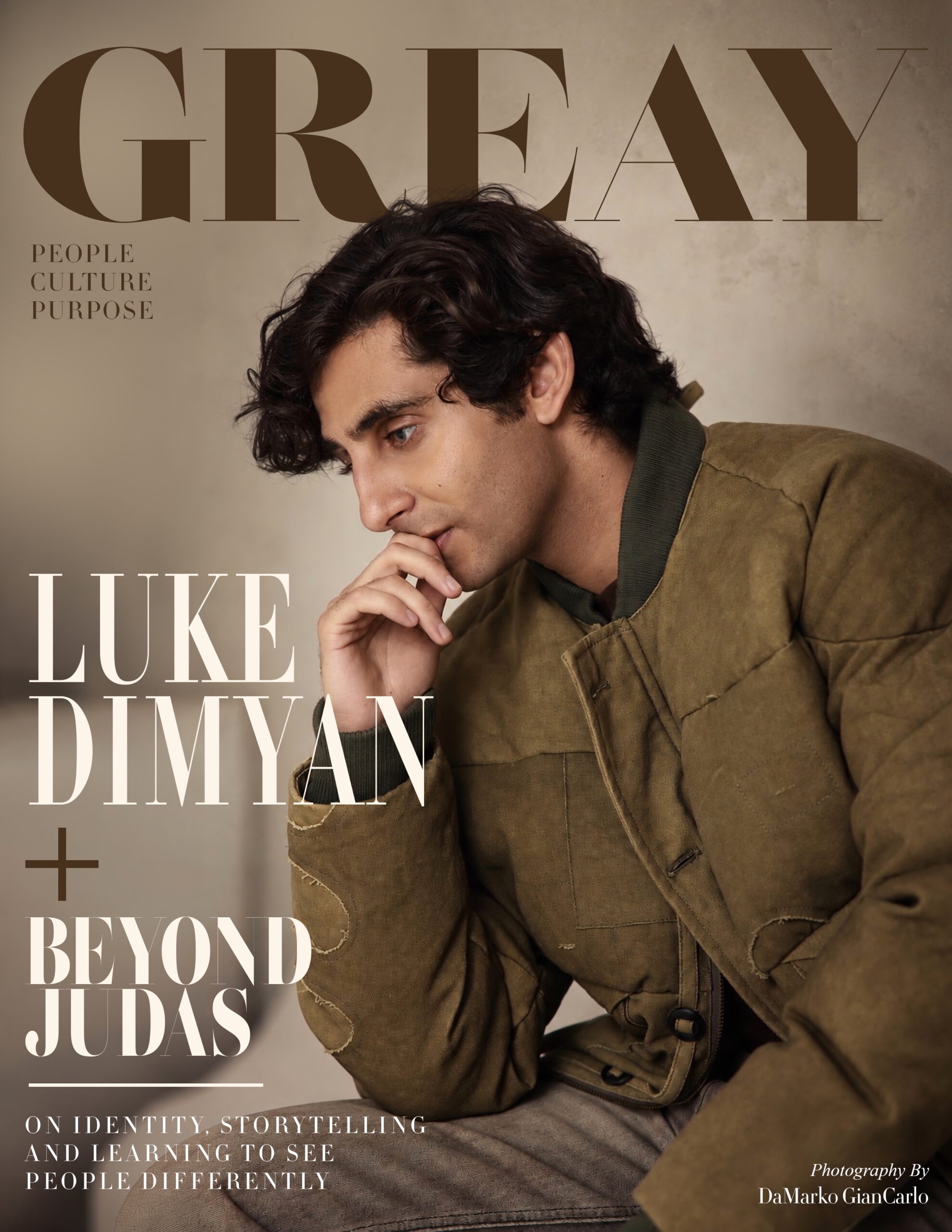
Luke Dimyan Wants Us to Look Again
There are people whose stories seem to have been decided before they have the opportunity to tell them. Judas Iscariot is one of them. His name carries the weight of betrayal, and for generations, that single act has shaped how he is remembered. For Luke Dimyan, the actor portraying Judas in The Chosen, the character has always represented something more complicated. Long before he stepped onto the set, Dimyan had wondered about the person behind the decision, the suffering behind the judgment, and what it means to be remembered for the worst thing associated with you.
That connection began during a difficult period of his childhood. Dimyan recalls experiencing depression, suicidal thoughts, and a profound sense of isolation. He struggled to understand why he felt different from the people around him, and he remembers believing that something was fundamentally wrong with him. When he encountered the story of Judas, he did not initially see the betrayal, the greed, or the familiar image of a villain. He saw someone whose life ended in despair. In that suffering, he recognized something of his own experience. “When I couldn’t love myself, I loved Judas. Because out of every biblical figure I read of, he needed it the most.” It is a remarkable admission, not because Dimyan is attempting to defend Judas, but because it reveals how personally he understands the relationship between suffering and judgment.
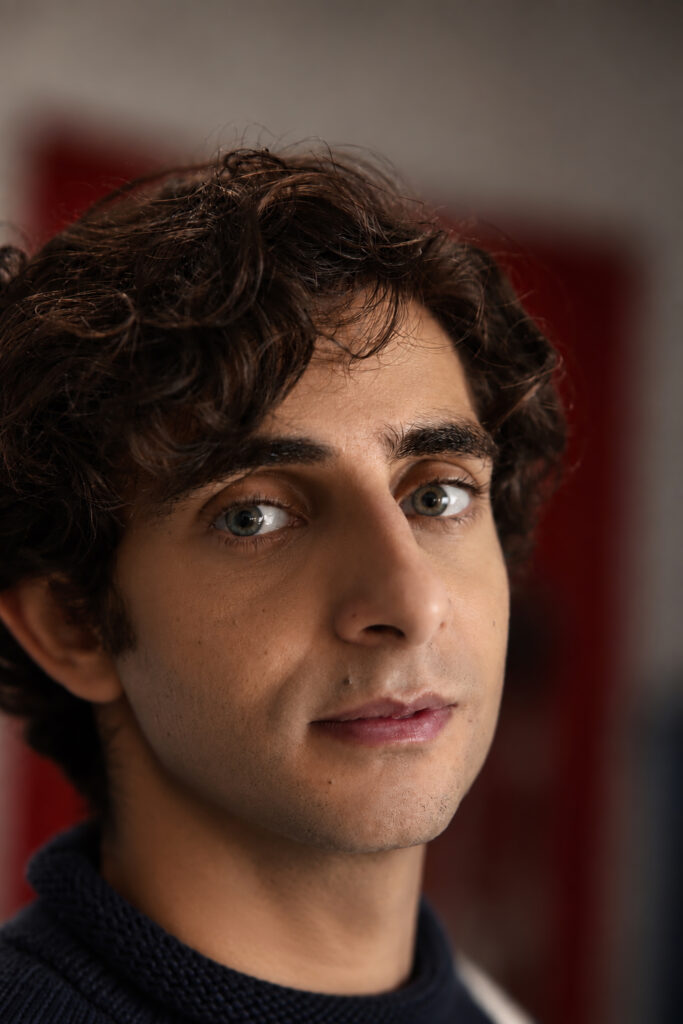
Dimyan remembers people in his own life who were patient with him, who helped him through difficult periods, and who gave him the care he needed to become the person he is today. He believes Judas deserved that same consideration. His connection to Judas came from recognizing a loneliness he knew personally. The empathy was not something he developed for the role; it was something he carried into it.
Dimyan’s interest in understanding people extends beyond the character that has brought him recognition. Growing up in an Egyptian family, he remembers being loud, excitable, and drawn to performance from an early age. He wanted to tell stories, make people laugh, and experience the sense of adventure he found in films and television. He jokes about imagining himself as a farm boy waiting to escape Tatooine, but the reference captures something genuine about his childhood imagination. He wanted to discover what existed beyond the world immediately around him, and acting offered a way to explore those possibilities.
It also helped him communicate. Dimyan remembers struggling to express his feelings as a child, often knowing what he wanted to say without being able to find the right words. Performing gave him dialogue to work with and a character through whom he could express emotions without worrying as much about making mistakes. Improvisation later taught him that an awkward sentence or verbal stumble did not have to end a conversation. “The more I studied acting (on stage or through film) the more I was studying how to be human,” he says, describing an experience in which learning to perform became inseparable from learning how to understand himself and others.
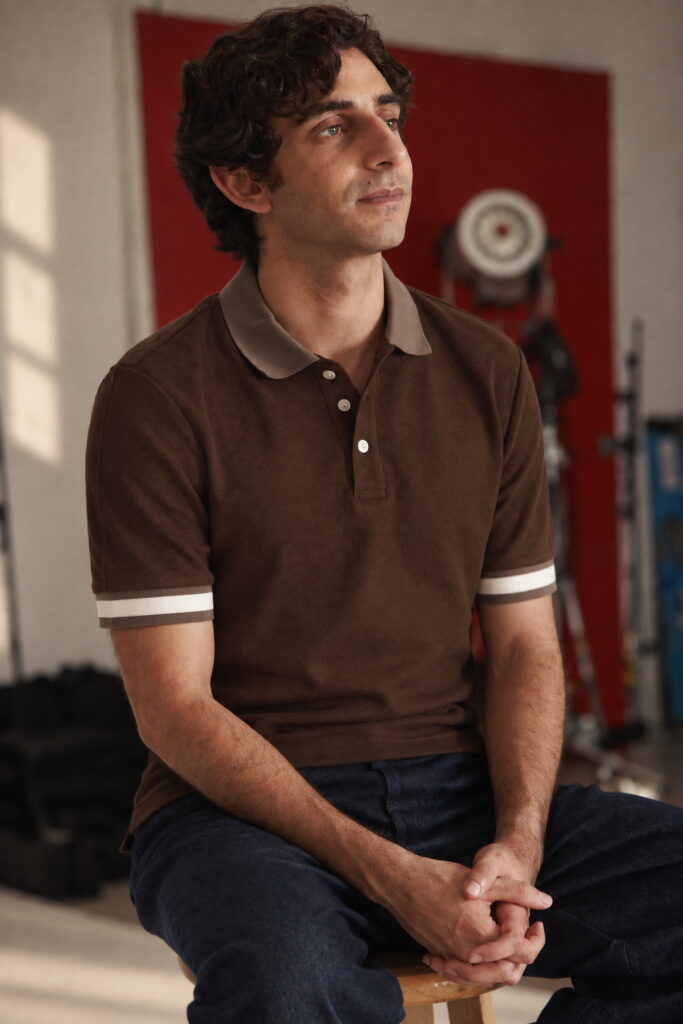
That process of understanding himself has also shaped his relationship with his Egyptian identity. Dimyan is candid about feeling disconnected from aspects of his cultural upbringing, particularly his ability to speak Arabic and Coptic. He describes worrying that his pursuit of performance and his desire to experience the wider world sometimes came at the expense of maintaining his roots. His mother and sisters have helped him reconnect with traditions and knowledge he has forgotten, and he speaks about their patience with affection. But when he describes what being Egyptian means to him, he returns to generosity, integrity, and love. He sees it in the willingness to give something of yourself without hesitation, even when doing so requires sacrifice. The identity he describes is something he experiences through family, relationships, and the values he carries with him.
Hollywood has not always offered him that kind of complexity. Dimyan describes years of auditions in which Middle Eastern identity was reduced to an accent, a beard, or a character whose purpose was to appear threatening before being killed. He remembers being told early in his career that his youthful appearance might lead to high school roles, only to find himself repeatedly considered for characters who needed to look older. Even voice acting, a field he enjoys because it is not dependent on physical appearance, has frequently brought him opportunities requiring an Arabic accent. The frustration is not simply that he has been asked to portray Middle Eastern characters. It is that the range of characters available to him has often reflected a limited understanding of what performers from those backgrounds can be.
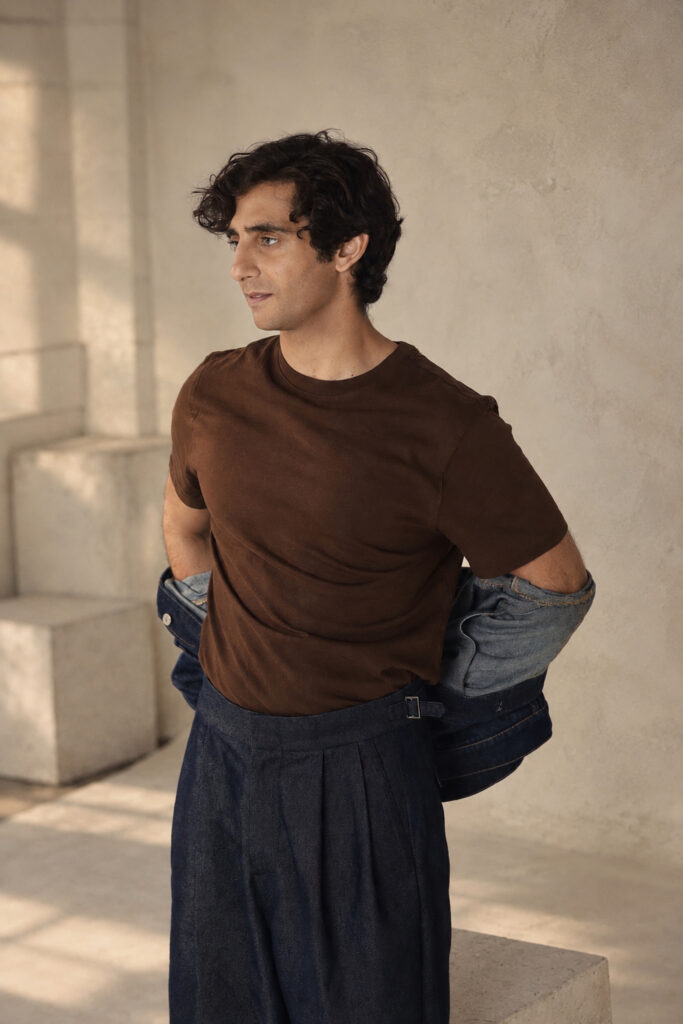
After joining The Chosen, Dimyan says he told his previous representation that he no longer wanted to audition for roles he believed perpetuated harmful stereotypes. He recalls receiving the response, “I don’t understand”. The exchange left him confronting a larger question about representation: whether the entertainment industry is genuinely expanding the stories it tells or continuing to place performers into familiar categories. He celebrates the success of other Middle Eastern and North African artists because he sees those achievements as opportunities to broaden what audiences and decision-makers imagine. “When they win, we win,” he says, expressing a belief that the visibility of one performer can help create possibilities for others.
Yet visibility has become one of the more complicated aspects of his own career. Before The Chosen, Dimyan remembers approaching acting with a sense of possibility. He was auditioning, studying improvisation, writing a comedy web series, and making sketches with friends. He believed that consistent work would eventually lead to greater security, that people who appreciated his performances would continue to offer him opportunities. Instead, after spending five years on a successful series, he describes feeling more uncertain about his professional future than he did when he was younger. “There wasn’t a ‘next job’ or accolade acknowledging my efforts,” he admits. “It felt like I spent five years on a hit TV show and failed.”
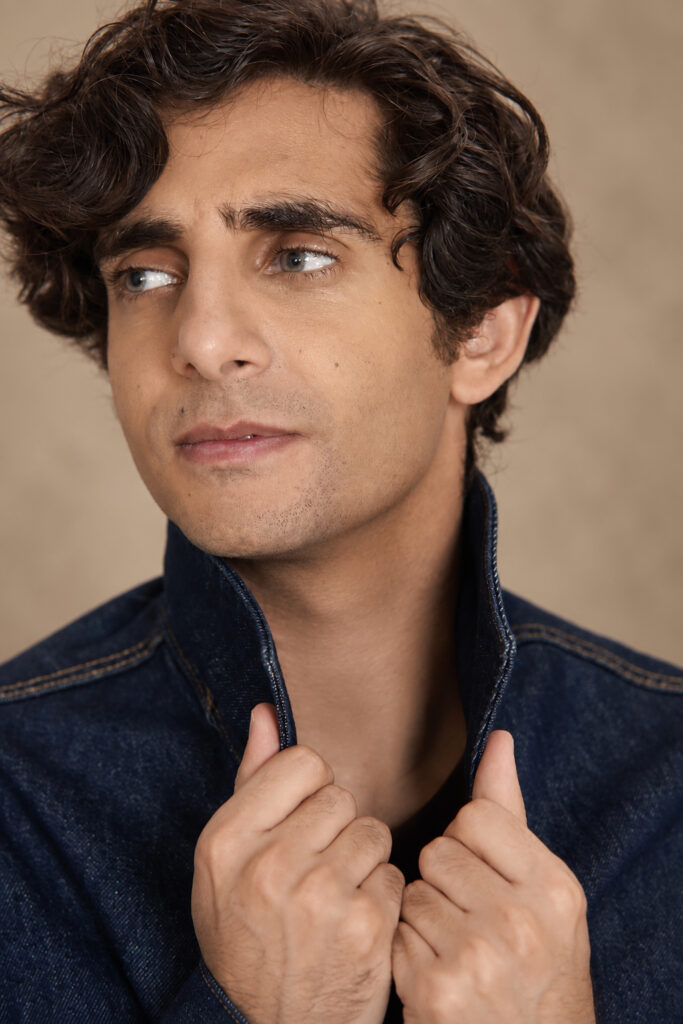
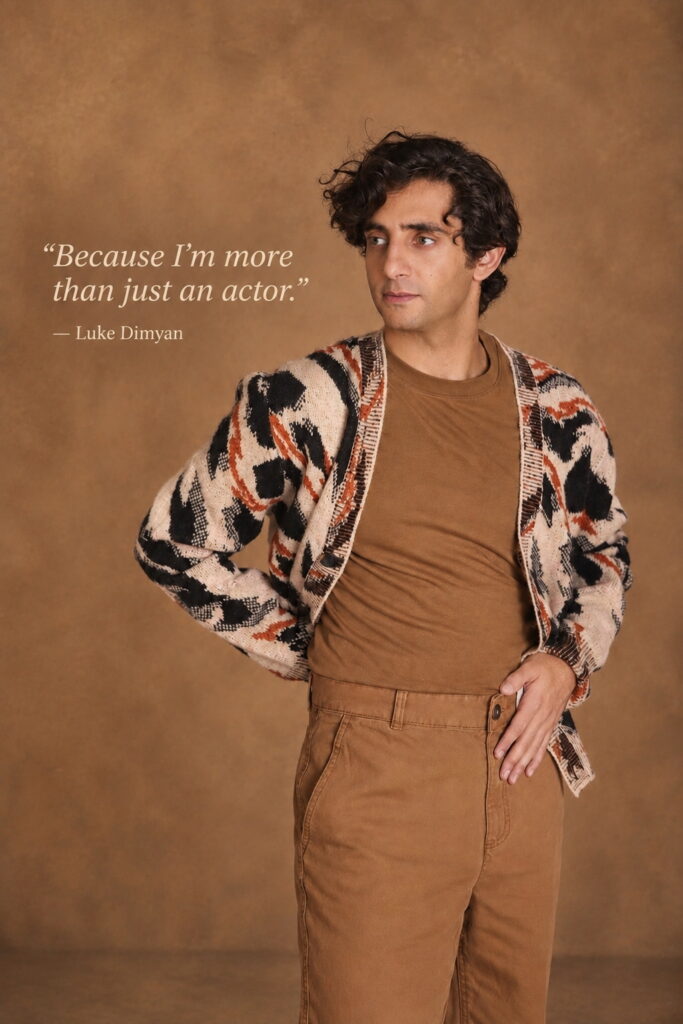
The distinction between how a career appears from the outside and how it feels to the person living it is important. Dimyan is not dismissing the work he has done or the significance of The Chosen. He is describing the disappointment of discovering that participation in a successful production does not necessarily guarantee another opportunity. The experience has challenged his earlier understanding of professional consistency and forced him to reconsider how much of his future he can reasonably leave in the hands of casting decisions. He is writing more, putting his pride aside, and concentrating on improving the quality of the work he creates. He even jokes that if he needs another cashier job while waiting for his next break, he can simply add it to his résumé. The humor does not erase the uncertainty, but it reveals how he is trying to live with it. “Because I’m more than just an actor,” he says.
That willingness to acknowledge uncertainty without allowing it to become his entire identity is part of what makes his relationship with Judas so revealing. Dimyan understands why people judge others by their mistakes, particularly when those mistakes cause harm. He recognizes the instinct to protect oneself and the reasons people sometimes choose distance over reconciliation. But portraying Judas has also made him question what happens when judgment becomes permanent, when a person is no longer allowed to be understood beyond a decision they cannot undo. He wonders whether people who have made serious mistakes might already be carrying more regret than those around them realize, and whether isolation can make it harder for them to change.

When Dimyan was asked how he personally felt about Judas after the betrayal, his answer was not anger. “I mostly felt sad for him.” He explained that his relationship with the character had not changed because he had always understood Judas as someone whose humanity extended beyond that act. He recognizes that different interpretations can assign different motivations to the betrayal, but those interpretations do not alter the compassion he has carried since childhood. What interests him is whether storytelling can move beyond the familiar expectations surrounding Judas and allow audiences to consider something more about the person.
The same question emerges when Dimyan discusses the possibility of being typecast. He does not express particular anxiety that Hollywood will only see him as Judas. Instead, he responds with characteristic humor: “I think they’d have to try and imagine me first.” He jokes about how a clean shave and shorter haircut might make him difficult to recognize, and about the absence of auditions for other biblical betrayers. His point is more practical than fearful. He does not control the audition process, and he cannot decide which roles other people will imagine him playing. What he can control is the kind of work he creates and the effort he puts into making each character distinct.
That desire to create has become increasingly important through his work on Mama’s Hands, a short film he wrote for his longtime friend, actor Luke Tennie. The story follows a chef attempting to reconnect with his mother through recipes she never wrote down, exploring how memory can survive through ordinary experiences. Dimyan’s connection to the premise comes partly from his own family. He remembers his grandmother’s cooking in vivid detail, particularly the salt on her steaks and the softness of her rice. Although she can no longer cook as she once did, he continues trying to recreate some of the dishes he associates with her. Food, in his understanding, has a particular ability to preserve memories because it can make the past feel present again. He describes the possibility of sharing a familiar taste as a way of transporting someone into another person’s experience.
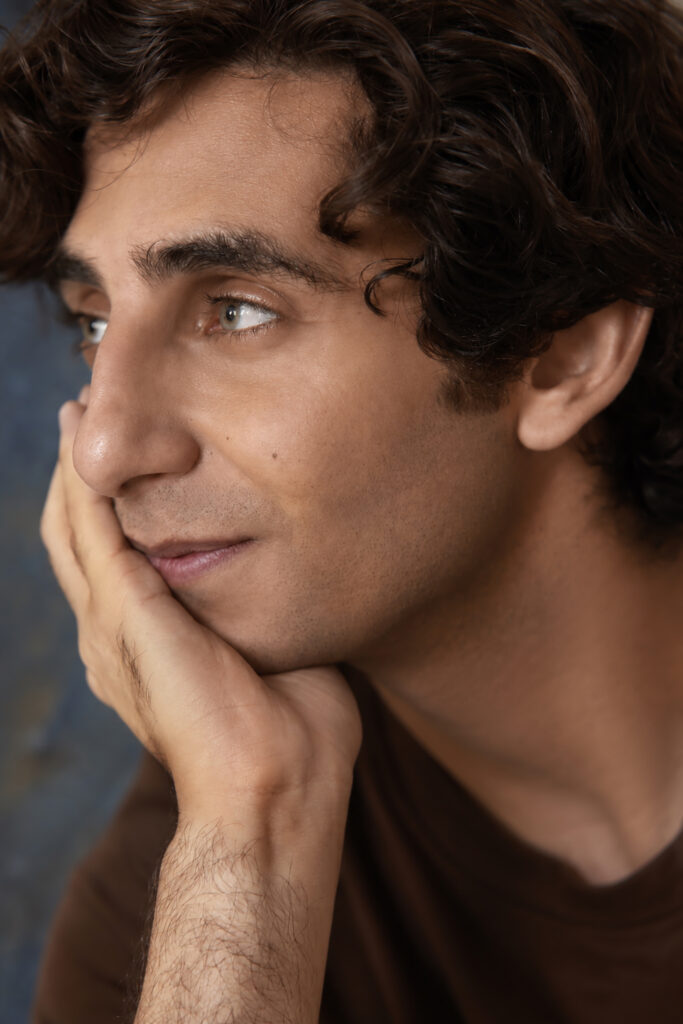
But Mama’s Hands was also a gift rooted in friendship and the desire to give another performer an opportunity. Dimyan has known Tennie for more than a decade and has long seen him as a leading man. He wanted to create something that reflected that belief rather than waiting for someone else to recognize it. “To show everybody how I see him. As a lead,” he explains, describing the project as an expression of the respect and affection he has developed through years of friendship. The gesture carries a familiar idea from his conversation about Judas and representation: people are often capable of more than the roles or expectations assigned to them, and sometimes recognizing that possibility requires someone else to look differently.
Directing the film also gave Dimyan a new understanding of what it means to lead a creative project. He describes three days of intense stress and confusion, but also the satisfaction of working with other artists toward a shared goal. When his cinematographer, Kai Dickson, asked how he felt after completing the shoot, Dimyan remembers answering, “I want to do it again.” The experience had been difficult, yet it confirmed how much he enjoyed telling stories and collaborating with people who shared that commitment.
It also clarified the kind of director he wanted to become. Having spent years as an actor, Dimyan understood the importance of creating an environment where performers and crew members could do their work without feeling that the director’s vision came at the expense of their dignity. He acknowledges that the short film’s limited time and budget prevented him from exploring every aspect of the performances as deeply as he wanted, but he came away with a stronger appreciation for preparation, collaboration, and leadership. “There was never a point where my vision was ever going to come at the expense of someone on my set,” he says, explaining that the positive experiences of the people working alongside him mattered more than the cost of the production.
There is also a side of Dimyan that audiences familiar only with Judas might not immediately recognize. He describes himself as a goofball, influenced by comedians including Jim Carrey, Eddie Murphy, Dana Carvey, and Robin Williams. He enjoys silly voices, physical comedy, and making jokes whenever an opportunity presents itself. He likes sculpting, woodworking, and fixing things with his hands. Away from work, his ideal day can be remarkably ordinary: cooking for himself, playing video games, sleeping late, or taking himself to the movies. These details are not incidental to his story. They reveal the everyday personality that exists alongside the seriousness of his work, and they complicate any attempt to understand him entirely through the character he portrays.
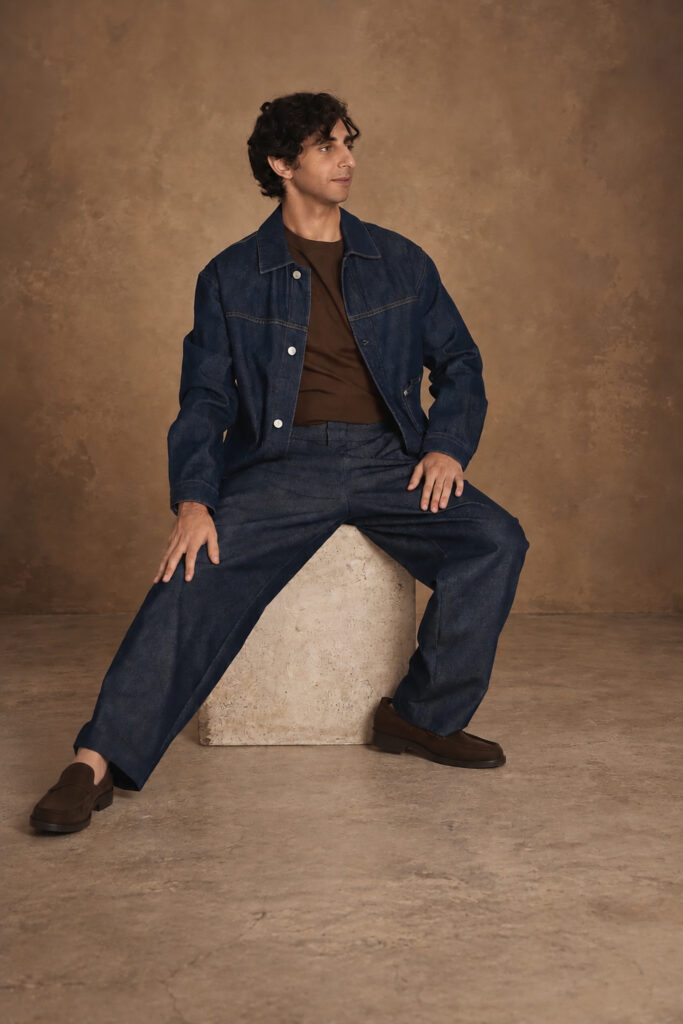
His relationship with The Chosen is similarly more personal than the public recognition surrounding the series might suggest. When asked what he expects to miss most after this chapter of his career, Dimyan does not identify a particular scene, performance, or audience response. He talks about the people. Working with a familiar ensemble and crew over several years created relationships built on shared experiences and mutual reliance. “The people. The camaraderie. The family and friends I made on that set,” he says, describing a community that has become central to what the production means to him, independent of how audiences remember Judas.
Perhaps the most revealing moment in the conversation arrives when Dimyan is asked what he wants people to understand about him beyond his credits. His answer is unexpected: “That I’m a loser. In the best way possible.” He remembers being overlooked growing up, chosen last, and rarely considered the strongest, smartest, or most naturally talented person in the room. Even in performing arts classes, he frequently found himself in background or ensemble roles. He did not play a lead until after high school. Rather than treating those experiences as proof that he did not belong, he used them as motivation to improve his work. He describes himself as ordinary, someone who has reached this point through determination rather than an assumption that success was inevitable.
There is humor in the way Dimyan describes himself, but there is also an unwillingness to construct a polished story about professional achievement. He does not claim to have everything figured out, and he does not suggest that the uncertainty surrounding his career has disappeared. What he has learned is to continue creating even when the outcome remains unclear, to find satisfaction in the work itself, and to recognize that being overlooked does not necessarily mean having nothing to offer.
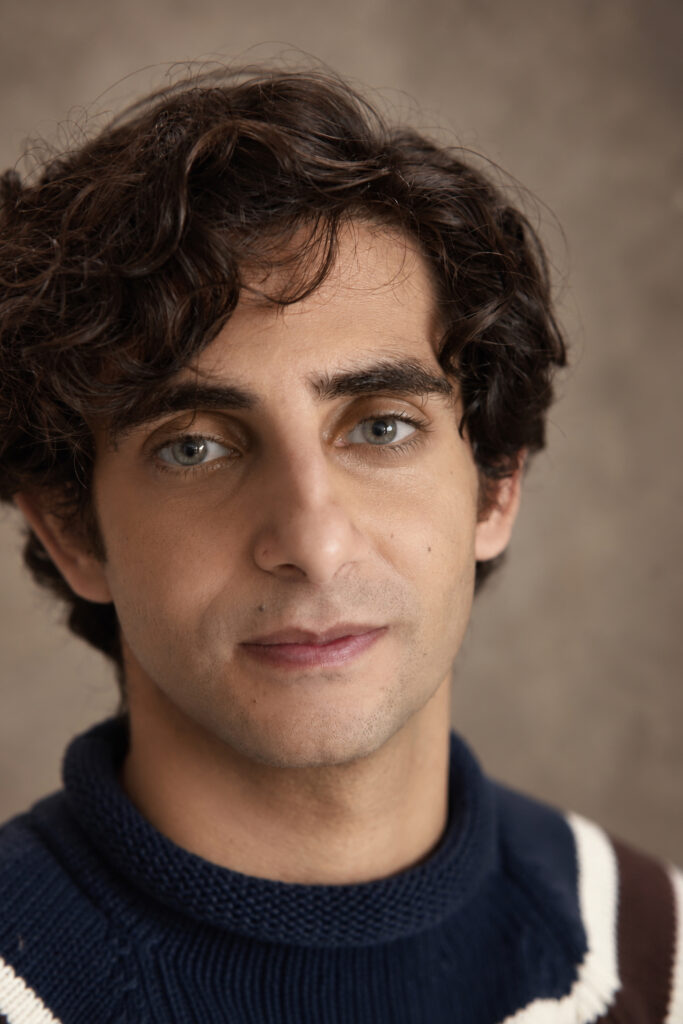
Luke Dimyan has spent years portraying a man whose name is almost inseparable from one decision. His own life, however, resists that kind of simplicity. He is an Egyptian-American actor who wants greater possibilities for performers from his community, a comedian whose instincts extend beyond dramatic roles, a writer and director discovering what it means to create work for other people, and someone still learning how to navigate an industry that has not always rewarded his efforts in the ways he expected. He is grateful for the relationships and experiences The Chosen has given him, but he does not define his entire creative identity through the role.
His future remains uncertain, and Dimyan does not pretend otherwise. He is still writing, still creating, and still trying to build a life in an industry where the next opportunity is never guaranteed. But he has begun to understand that he does not have to wait for someone else to recognize his abilities before deciding what kind of storyteller he wants to become. He can continue developing his own work, collaborating with people he believes in, and exploring the human experiences that have always interested him.
For years, Dimyan has asked audiences to consider Judas beyond the betrayal that defines him. Now, as he continues building a creative life beyond the role, that same invitation extends to the actor himself. Not because Judas should be forgotten, but because Luke Dimyan was never only Judas.
Photography DaMarko GianCarlo @damarkogiancarlo
Words By Kyra Greene @Noteasybeingreen
Grooming By Sabrina Ozuna @sabrinaozuna
Wardrobe Chase Atlas
Produced By FSI Productions @firstsight.intl
Related Posts
Tommy Davidson Is Bringing a Lifetime to Center Stage
Purpose came early. The rest became a life.
Ruby Snowber Believes in the Long Way Forward
The Work Between Milestones

Breaking Ground in Ransom Canyon: Eoin Macken Rides Again
Rugged Roads & Raw Roles: Eoin Macken’s Creative Odyssey.
Jacob Martinez Is Building a Career Without Leaving People Behind
Success Was Never the Whole Story
Bradley Jaden Has More Music to Make, and Broadway Is Next
The stages change. The passion remains.
POST COMMENT