

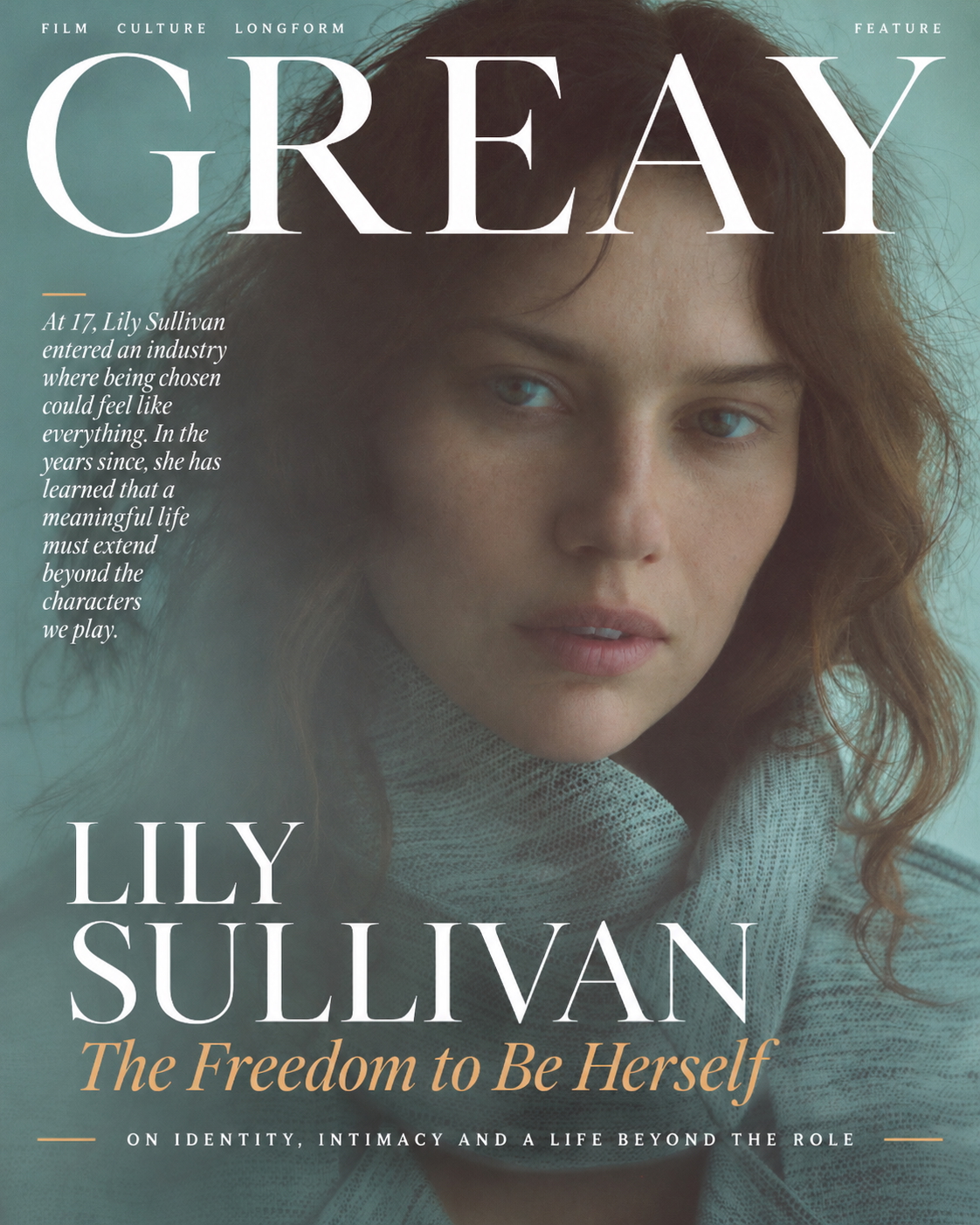
Lily Sullivan Is More Than the Characters She Plays
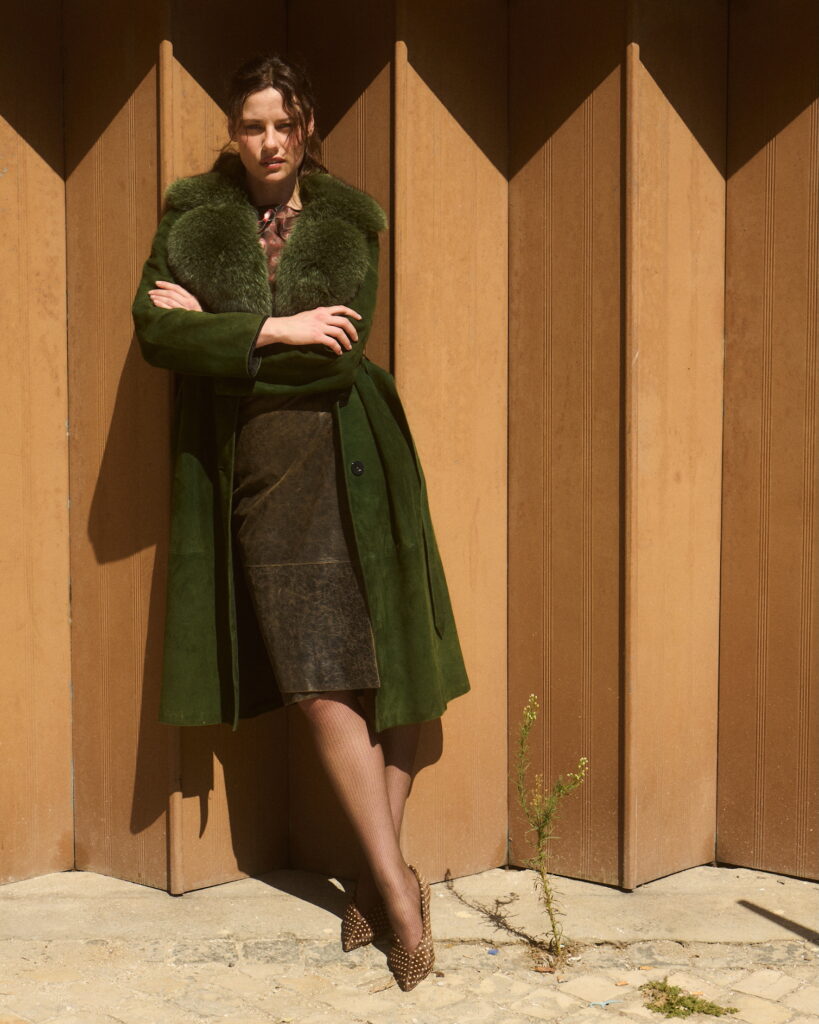
By Kyra Greene
At 17, Lily Sullivan entered an industry where being chosen could feel like everything. She was still discovering who she was when she began learning how to become other people, working alongside established actors in Mental before building a career across Australian film and television. In the years that followed, performances in Picnic at Hanging Rock, Evil Dead Rise and Monolith revealed an actress willing to explore fear, isolation and the uncomfortable corners of human behavior. Yet the more interesting story may be what Sullivan has learned about herself between those performances. She speaks of acting not as a fixed identity but as a relationship that changes with experience, uncertainty and the life unfolding beyond a film set. Her performance as Sara in SOULM8TE, a synthetic woman constructed around another person’s desires, brings that exploration into particularly intimate territory, raising questions about femininity, autonomy and how much of ourselves we surrender in the hope of being loved. In conversation with GREAY, Sullivan traces those questions back to childhood, to watching her mother paint, to discovering the value of solitude and to recognizing the difference between professional approval and personal freedom. What emerges is not simply the story of an actress becoming more accomplished at her craft. It is the story of a woman becoming less willing to let that craft determine the boundaries of her life.
GREAY: You were only 17 when Mental became your first major film, working alongside actors including Toni Collette, Anthony LaPaglia and Liev Schreiber. When you think about that young woman walking onto a professional film set for the first time, what did she understand about becoming an actor—and what did she have completely wrong?
Lily: I honestly didn’t understand anything, but one thing I learned really quickly was that there was no right or wrong way to do it. Working with all those heavyweights showed me that.
Also, the more you can follow your choices intuitively, the better, as that’s all I had to start with and what I still follow now.
GREAY: You’ve spent so much of your life moving between characters, sets and these intense temporary communities that disappear when a production ends. As you’ve gotten older, have you become better at separating who you are from what you do—or are acting and your sense of self still deeply connected?
Lily: That relationship always changes for me, depending on the role, how I’m feeling in my own reality, and whether the lessons I’m learning as Lily match the job. Sometimes a job creates change. So it’s forever ebbing and flowing.
GREAY: Your mother is a visual artist, and you’ve spoken about being drawn toward performance from a young age. When you think about the home you grew up in, where do you see the earliest pieces of the artist you eventually became?
Lily: There was always a painting coming to life on my mum’s easel. It was a way for her to find solitude and express her own identity alone, especially as a mother. My mum really sparked my inner chatter as a child. A privacy for play and dreaming. I owe her a lot for allowing me that safe space, even when life was chaotic outside.
GREAY: Your career didn’t happen overnight. There were years of Australian films and television before projects like Picnic at Hanging Rock, Evil Dead Rise and Monolith brought you to increasingly international audiences. During the quieter periods, did you ever seriously question whether acting was going to become the life you imagined?
Lily: I sometimes think that downtime is the part that truly makes you an actor, not the moments on set and collaborating with other artists. It’s when you have this desire without context. So yes, my relationship to acting when things are quieter always makes me question the relationship I have to performance and whether I want to continue a life of being vulnerable and replicating moments we all experience.
GREAY: You’ve now experienced both the intimacy of Australian filmmaking and the machinery of much larger international productions. Has moving between those worlds changed what you value when you walk onto a set—or what you need from the people around you to do your best work?
Lily: No, I don’t think so. It’s a carny life full of generous people, no matter where you are. Same struggles, same belly laughs and same valued friendships.
GREAY: Monolith placed an extraordinary amount of the film on you, often without another actor physically present to give you something back. What did that experience reveal about you—not just as a performer, but about how comfortable you are being alone with yourself?
Lily: Monolith forced me to really sit in my solitude. It was a challenge and uncomfortable, but there’s a difference between being alone and being comfortable with yourself. I think the film made me more aware of that distinction, and perhaps more willing to sit in the discomfort rather than immediately trying to fill the silence.
GREAY: Evil Dead Rise introduced you to a much larger global audience and required an intensely physical performance. When a role asks your body to experience exhaustion, fear and adrenaline repeatedly, how do you protect the person underneath the performance while still allowing yourself to go somewhere truthful?
Lily: There’s something quite strange about making horror films. You’re manufacturing trauma in a controlled environment. Your nervous system doesn’t necessarily distinguish between real and imagined fear.
I became very aware of the power of breath, how quickly it can send you into a state of panic, but also how it can bring you back. But the approach I enjoyed most was to treat it more like a dance. Finding a rhythm in the chaos, approaching the physicality almost as choreography rather than something I had to psychologically endure.
There’s something liberating about that. When you stop intellectualising fear and start working with the body, it becomes almost playful. You’re not necessarily trying to feel terror every time; you’re finding a physical language for it. And strangely, that can lead you somewhere much more truthful.
GREAY: Success in genre can be complicated because once audiences and filmmakers discover that you’re particularly good at something, they naturally want more of it. Do you ever worry about becoming defined by horror, or do you see genre as a space expansive enough to keep showing completely different sides of yourself?
Lily: I don’t necessarily think about the genre when I’m choosing a role. I’m much more interested in the psychology of a character, the filmmaker’s perspective and whether there’s something there that frightens or challenges me creatively.
Of course, there’s always the danger of being put into a box, particularly in an industry that loves to categorise people. But I think the responsibility is partly mine to keep surprising myself. I’d hate to become too comfortable in anything, even something I’m supposedly good at.
And I love horror, but I’d be equally happy doing something where nobody dies for a change.
GREAY: When SOULM8TE came to you, Sara presented a very different challenge: you’re playing someone who can appear human while fundamentally being constructed. What frightened or excited you most about trying to find a human truth inside someone who technically isn’t human?
Lily: What excited me most was the opportunity to approach a character from the outside in. I studied the Jacques Lecoq school of thought, which places enormous emphasis on the body, movement and physical expression as a way into character. Rather than beginning with psychology or emotional motivation, you begin with form, rhythm, gesture and the way a body occupies space.
She’s performing an idea of womanhood, one that’s been constructed entirely around somebody else’s needs and fantasies.
I found that both fascinating and deeply unsettling, because how much of our own behaviour is learned performance? How much of femininity is something we’ve been conditioned to enact in order to be loved, desired or accepted?
GREAY: Sara has essentially been designed around another person’s needs and expectations. Beneath the science fiction, there is something painfully recognizable about changing yourself—or believing you need to change yourself—in order to be loved. Was that something you connected with while building her?
Lily: Absolutely. Sara is an extreme manifestation of something painfully familiar, particularly to women. We’re constantly encouraged to mould ourselves into an ideal, to be more beautiful, more desirable, more agreeable. There’s something quite disturbing about the lengths we go to in pursuit of these impossible beauty standards, altering and editing ourselves until we become almost unrecognisable. Sara is the ultimate expression of that contortion of femininity, a woman literally manufactured to fulfil someone else’s fantasy. At what point does the pursuit of being desired become the erasure of who we actually are?
GREAY: SOULM8TE entered a world where emotional relationships with artificial intelligence were already moving beyond science fiction. But underneath the technology, the film also explores grief, loneliness and our desire for connection without rejection. Did making it change the way you think about why human beings need the difficult, imperfect parts of relationships?
Lily: I think we’re living in an age of emotional avoidance, increasingly conditioned to seek instant gratification and eliminate discomfort. But friction is crucial for growth. Real intimacy requires us to confront parts of ourselves we’d rather avoid, to compromise, to be vulnerable and risk rejection.
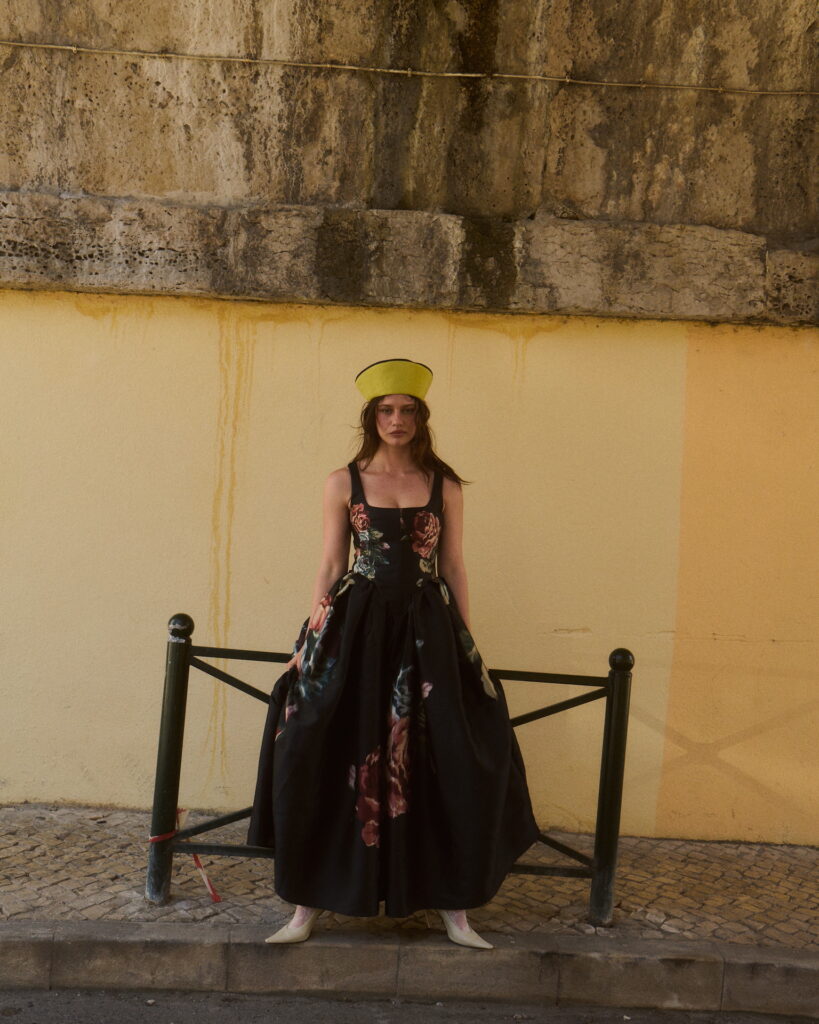
The danger isn’t necessarily that we’ll fall in love with machines, but that we’ll lose our tolerance and the muscle to deal with the messiness of loving.
GREAY: There’s another fascinating layer to Sara because she is literally a woman constructed around someone else’s idea of what a woman should be. Working in an industry that has its own expectations around femininity, beauty and how women present themselves, did that part of Sara resonate with you in ways you weren’t expecting?
Lily: Playing Sara made me much more conscious of the ways we participate in our own objectification. We’re living in a culture where we’re increasingly encouraged to treat ourselves as products, constantly editing, refining and packaging ourselves to be consumed.
And working in an industry where your appearance is so closely tied to your identity and perceived value, that can become quite confronting. There’s this strange contradiction of wanting to have autonomy over how you’re seen, while also being shaped by the very expectations you’re trying to resist.
Sara is the ultimate contortion of femininity. She’s literally manufactured through the male gaze, an idealised version of womanhood with no agency of her own. What unsettled me was how little science fiction it took for that to feel familiar.
GREAY: You started doing this before you had really finished becoming an adult, and now you’ve accumulated enough life and experience to look back at several versions of yourself. What matters to Lily today that wouldn’t have mattered to the 17-year-old beginning this journey—and what are you hoping the next chapter gives you that acting alone cannot?
Lily: At 17, I was definitely much more concerned with proving myself, being chosen, and trying to figure out where I belonged. There’s something quite consuming about starting in an industry where so much of your sense of worth can become tied to somebody else’s approval.
Now I think I value freedom, curiosity and a sense of self that exists independently of my work. I’m less interested in being defined by what I do and more interested in the kind of life I’m building around it.
Acting has given me an extraordinary way of exploring the human condition and seeing myself, but I don’t want it to be my only way of experiencing it. I want to keep learning, travelling, loving, making things, being surprised by the world. I think the next chapter is about building a life that’s as rich and unpredictable as the characters I get to play.
Embrace failure with an open heart.
There is a quiet symmetry between the young girl who watched her mother find freedom at an easel and the woman who now understands why that freedom matters. Sullivan has spent years exploring the emotional lives of people who are frightened, isolated, misunderstood or desperate to be loved. In SOULM8TE, those questions take on an especially unsettling dimension through a character whose very existence is shaped by another person’s expectations. Yet Sullivan’s own reflections suggest a movement in the opposite direction. She is learning to separate being valued from being chosen, to recognize solitude as something more complicated than loneliness, and to see uncertainty not simply as an obstacle but as part of a meaningful life. The industry that once seemed capable of defining her future has become one part of a larger world she wants to experience. There is no suggestion that she has finished discovering who she is, nor does she seem particularly interested in arriving at a final answer. Instead, she speaks of curiosity, travel, love, creative freedom and the possibility of being surprised. Her closing advice, to embrace failure with an open heart, feels less like a lesson from a successful actress than a principle for living without the constant need for approval. After spending much of her life learning how to become other people, Lily Sullivan is making room for the one person she never has to audition to be: herself.
Related Posts
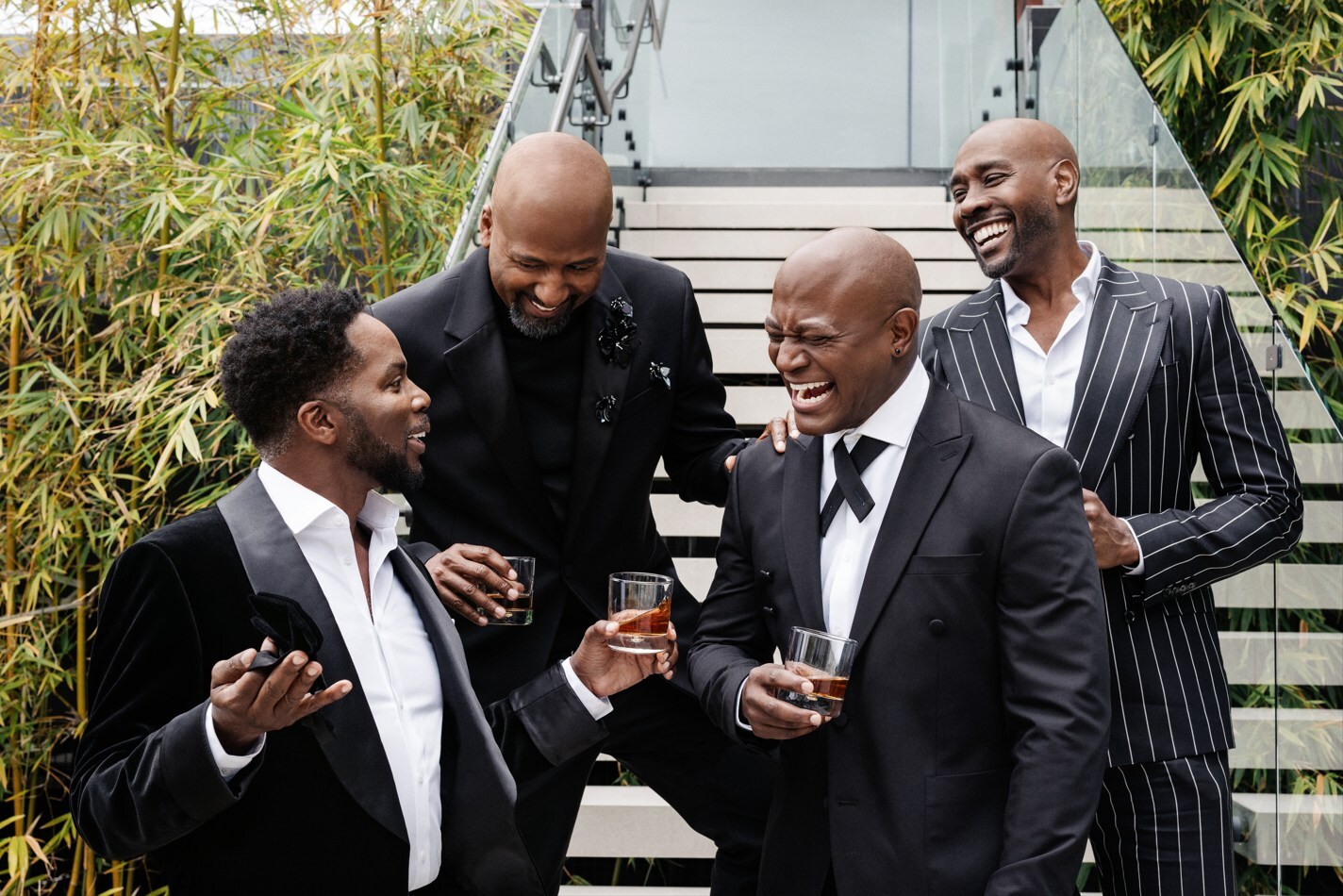
The Best of Bourbon: ‘The Best Man’ Stars Craft Sable, Celebrating Brotherhood in Every Sip
Artists Behind "The Best Man" Introduce Sable

Netflix Unveils Trailer for Castlevania: Nocturne Season 2, Teasing High-Stakes Battles Between Vampire Hunters and Supernatural Forces
Netflix Releases Trailer for ‘Castlevania: Nocturne’ Season 2
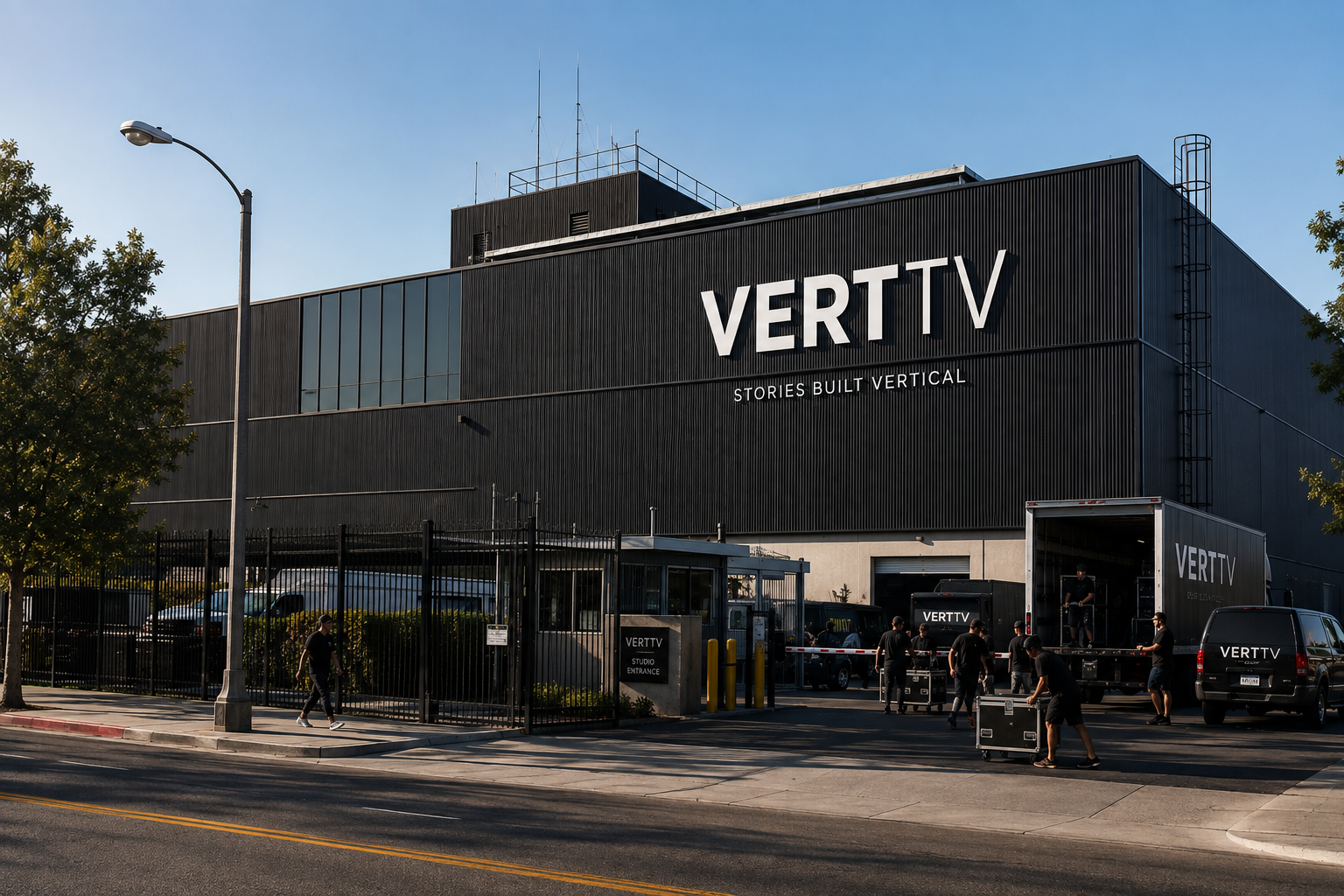
VertTV Shows That Hollywood Is Building the Next Generation of Television
A filmmaker-led studio built for the vertical era

Bottega Veneta Introduces Exquisite Scented Candles in Artisan Italian Clay Pots
Bottega Veneta Introduces Exquisite Scented candles

BitmoLab Unveils Upgraded GAMEBABY: A Retro Gaming Case for iPhone 15 & 16 Pro Max
BitmoLab unveils a newly revamped iPhone GAMEBABY case

Calm Is the New Power: Volvo’s EX60 Redefines Electric Luxury
Less Noise, More Meaning
POST COMMENT