

Apple Is Changing the Way We Interact With the Mac
By DaMarko GianCarlo
For nearly two decades, Apple defended a distinction that helped define the modern personal computer. The iPhone and iPad were devices people touched. The Mac was a machine people controlled through a keyboard, mouse, or trackpad. Each belonged to the same technological family, yet each maintained a different relationship with the human hand.
That separation was deliberate. Apple believed the physical experience of using a computer mattered as much as the technology inside it. A touchscreen might feel natural when holding a tablet, but reaching toward an upright laptop display presented a different set of challenges. The company built its products around those differences, even as competitors increasingly embraced touchscreen laptops.
On October 28, 2026, Apple changed course.
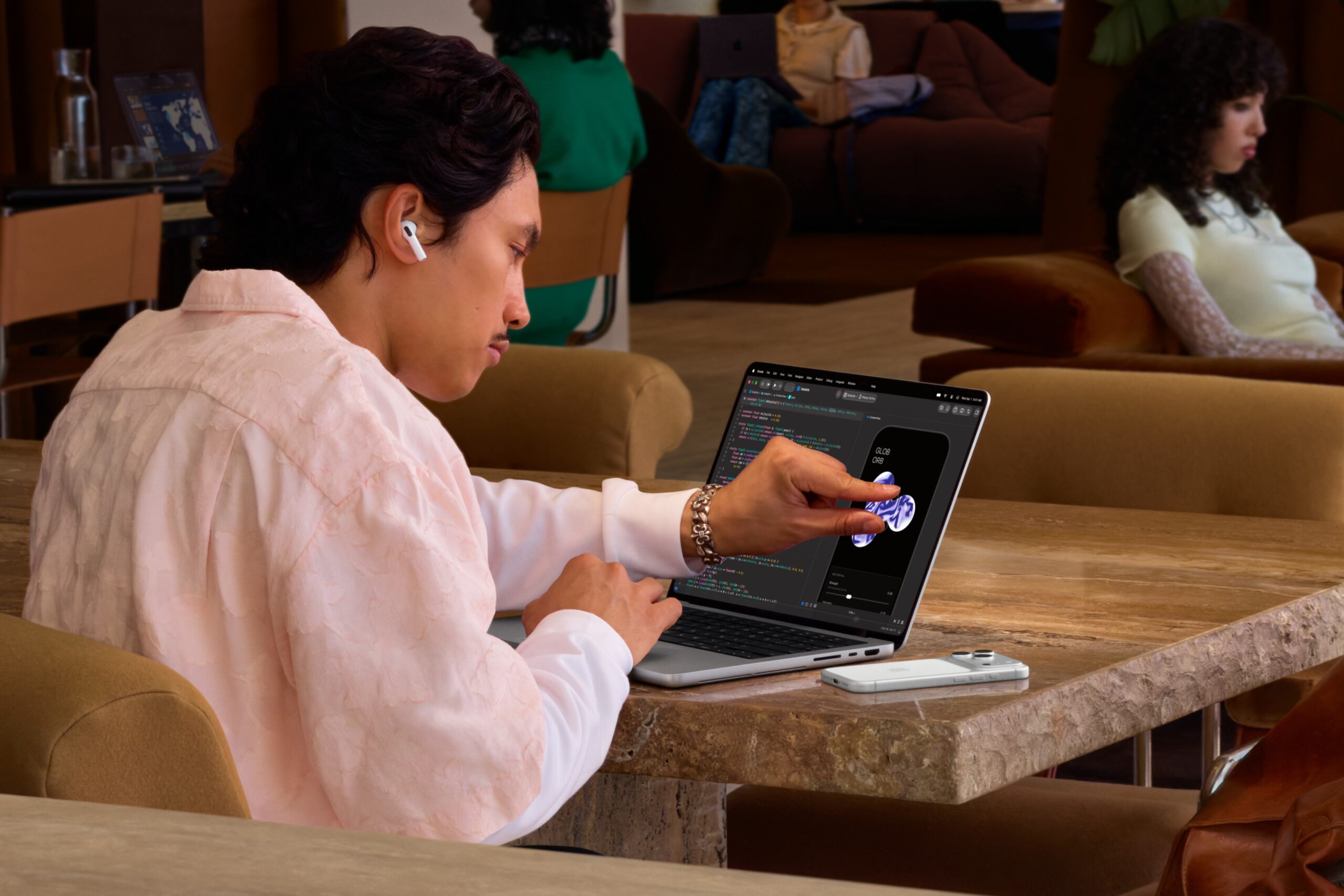
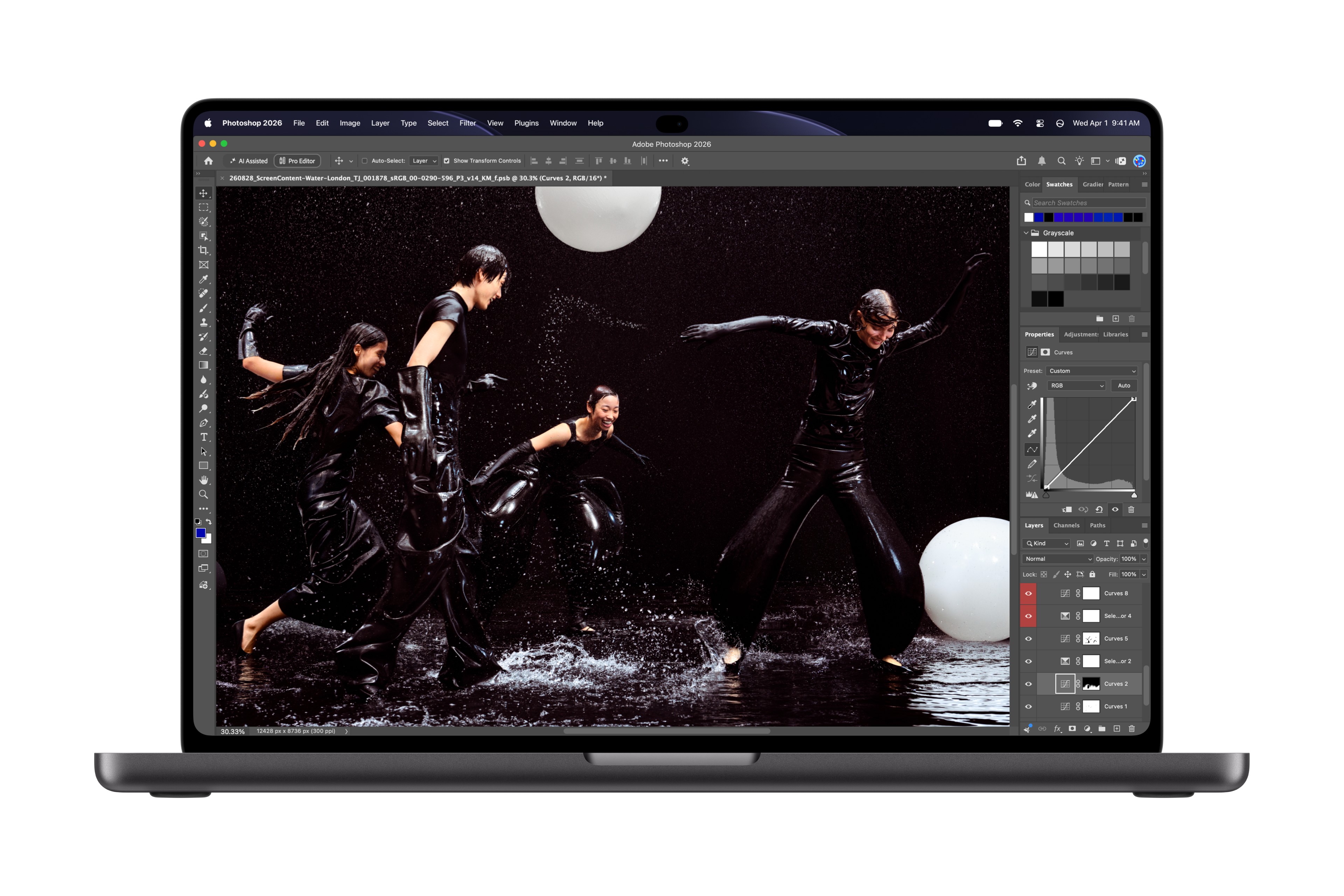
The company introduced its first touchscreen MacBook Pro, featuring a new PROLED XDR display, M5 Pro and M5 Max processors, and a redesigned, thinner body. Available in 14-inch and 16-inch configurations, the new machines bring direct screen interaction to Apple’s flagship professional laptop without abandoning the keyboard and trackpad that have defined the Mac experience.
It is a significant technological announcement. But its greater importance lies in what Apple is reconsidering.
For a company whose influence has often come from deciding how people should interact with technology, the decision to bring touch to the Mac represents a shift in philosophy. It suggests that the future of computing may depend less on choosing between different forms of interaction and more on allowing people to move naturally among them.
And it raises a question that extends far beyond Apple’s newest hardware: How much should a computer adapt to the person using it?
The history behind that question reaches back to one of Apple’s most influential leaders.
In 2010, Steve Jobs publicly explained why the company had resisted bringing touchscreens to traditional computers. Apple had studied the idea, he said, but found that prolonged interaction with a vertical display created physical discomfort.
“Touch surfaces don’t want to be vertical,” Jobs argued, describing the experience as “ergonomically terrible.”
His objection was not to touch itself. By then, the iPhone had already transformed the way millions of people interacted with technology, and the iPad was establishing a new category of personal computing. Jobs understood the appeal of direct manipulation. What he questioned was whether that interaction belonged on a laptop.
The distinction shaped Apple’s product strategy for years.
The company continued refining the Mac’s multitouch trackpad, expanding gesture controls, and developing software that made indirect interaction increasingly precise. Meanwhile, the iPad evolved from a device largely associated with media consumption into a more capable platform for illustration, photography, video editing, and professional productivity.
Apple did not need to place a touchscreen on the Mac to participate in the evolution of touch computing. It already had an entire product family built around it.
What has changed is the environment in which people use those products.
An entire generation has grown up treating screens as surfaces that respond to their fingers. Children learn to enlarge photographs by spreading two fingers apart before they understand the mechanics of a mouse. Adults move between phones, tablets, laptops, and desktop computers throughout the day, often carrying the expectations of one device into another.
The instinct to touch a screen is no longer unusual. For many people, it is immediate.
Apple’s new MacBook Pro acknowledges that shift without completely surrendering its earlier argument.
The company has designed touch as an additional method of interaction rather than a replacement for established controls. Users can scroll through webpages, enlarge photographs, move objects, and manipulate windows directly on the display. A newly engineered hinge is intended to provide greater stability when the screen is touched, while a touch sensor integrated into the display panel is designed to reduce latency.
These are not insignificant engineering decisions. They address the physical relationship between a person and a machine, the very relationship that once made Apple reluctant to introduce the feature.
The company is attempting to make touch feel like a natural extension of the Mac rather than an unfamiliar addition.
Johny Srouji, Apple’s chief hardware officer, described the new machine as “a monumental step forward for the Mac.”
That is Apple’s assessment of its own achievement. Whether users ultimately experience the transition as monumental will depend on something less easily demonstrated during a product announcement: how the technology performs during ordinary work.
For creative professionals, the possibilities are particularly interesting.
Imagine a photographer reviewing images after a long day on location. Hundreds of frames must be examined, compared, adjusted, and selected. The process involves technical precision, but it also depends on instinct. A photographer may recognize the emotional strength of an image long before deciding how to refine its color or composition.
Traditional computer controls create a small but familiar distance between the hand and the photograph. A mouse or trackpad translates movement into an action on the screen. With touch, some of that distance disappears.
A photographer can potentially reach toward an image, enlarge a detail, move through a selection, or interact directly with an editing interface. The action becomes more physically connected to the visual material.
That does not automatically make the work better. It does, however, introduce another way to approach it.
Apple’s updated Pixelmator Pro experience demonstrates this idea through direct interaction with the canvas, allowing creators to draw, paint, and make selections on the display. For designers accustomed to working within the boundaries of a trackpad or using a separate drawing surface, the ability to interact directly with the screen could change how certain tasks feel.
For filmmakers, Apple is bringing touch into Final Cut Pro. Editors can mark ranges, position clips, and pinch to zoom within an edit. These interactions introduce a tactile dimension to a process traditionally governed by timelines, keyboard shortcuts, and precise pointer movements.
A filmmaker assembling a sequence is constantly making decisions about rhythm. A few frames can change the emotional weight of a scene. A cut that arrives too early can interrupt a performance. A moment held too long can weaken its impact.
The possibility of manipulating parts of that sequence directly is intriguing, although experienced editors may still prefer the speed and precision of familiar controls.
In Logic Pro, musicians can play software instruments through an onscreen multitouch keyboard and interact with digital drum pads. For someone developing a musical idea away from a studio, the display becomes another surface through which a composition can begin.
These examples reveal the more meaningful ambition behind Apple’s announcement.
The company is not simply asking people to touch their computers. It is exploring whether direct interaction can become part of the creative process without interrupting the concentration that process requires.
There is an important difference.
Technology can offer more ways to perform a task without necessarily improving the task itself. A touchscreen may be convenient for enlarging a photograph but less desirable for making repeated, highly precise adjustments. It may feel intuitive when moving an object across a canvas but become uncomfortable during an extended editing session.
The challenge is not proving that touch works. Touchscreens have been part of personal computing for years.
The challenge is establishing when touch is genuinely useful.
Apple appears to understand that distinction. The new MacBook Pro retains the traditional input methods that professionals already know, allowing touch to function alongside them. macOS 27 also translates touches into clicks for many existing applications, while new development tools allow software makers to build interactions specifically designed for touch.
Apple has identified applications including Adobe Lightroom, DaVinci Resolve, Blender, and Cinema 4D as part of the broader touch-enabled software environment.
Still, compatibility and thoughtful integration are not the same thing. An application that responds to a finger does not necessarily provide an interface designed around the human hand. Some controls are small, some tasks demand exceptional accuracy, and some workflows are built around movements that are faster with a keyboard.
The success of Apple’s approach will depend as much on software developers as on the engineers who designed the hardware.
It will also depend on whether professionals find themselves reaching toward the screen after the novelty has worn off.
Beyond touch, the new MacBook Pro introduces display technology that could carry substantial importance for visual creators.
The PROLED XDR display uses tandem OLED technology, combining two self-illuminating pixel layers to deliver deep blacks, high contrast, and exceptional brightness. Apple specifies up to 2,000 nits of peak HDR and SDR brightness, a 120Hz variable refresh rate, and support for both P3 and Adobe RGB color spaces.
For photographers, filmmakers, and designers, those specifications address more than visual spectacle.
Color is part of the language of storytelling.
The warmth of a portrait, the depth of a shadow, the separation between subtle skin tones, and the way a highlight falls across a face can determine whether an image communicates what its creator intended.
A display capable of representing those details accurately is not simply a luxury. For people whose work depends on visual judgment, it is an essential instrument.
Apple is positioning the new MacBook Pro as a portable environment for color-critical work, supported by factory calibration, reference modes, and an optional nano-texture display treatment intended to reduce glare.
Those capabilities could be valuable for photographers reviewing images on location, filmmakers evaluating footage away from an editing suite, and designers moving between digital and print production.
But Apple’s performance claims still require independent testing. Color accuracy, sustained brightness, reflection control, and long-term display behavior must be evaluated under real working conditions before their practical advantages can be fully established.
The same scrutiny applies to the new M5 Pro and M5 Max processors.
Apple is promising substantial performance for demanding professional applications, including complex visual effects, 3D rendering, 8K video editing, and artificial intelligence workloads. The machines support up to 128GB of unified memory and 16TB of storage, placing them firmly within the company’s premium professional category.
Yet the significance of the new MacBook Pro cannot be measured entirely through processing power.
A computer can become faster without fundamentally changing how a person experiences it. Touch introduces a different proposition. It asks whether the relationship between the person and the machine can become more immediate.
That distinction becomes especially relevant as artificial intelligence assumes a larger role in creative software.
Computers are increasingly capable of interpreting instructions, generating material, organizing information, and assisting with technically demanding work. As those systems grow more sophisticated, the question of human control becomes more important, not less.
A creator still needs to decide what matters.
The technology may accelerate an edit, suggest an adjustment, or help navigate an increasingly complicated workflow. But the emotional and artistic decisions remain rooted in human intention.
In that environment, an interface that allows people to communicate their intentions naturally could become increasingly valuable.
Touch is only one possible part of that evolution. Voice, gesture, keyboard input, and intelligent software may all play complementary roles.
Apple’s decision suggests that the future of the professional computer may not belong to one dominant method of interaction.
It may belong to the ability to choose.
That flexibility also introduces questions about the future of the iPad.
For years, the distinction between Apple’s tablet and laptop was relatively clear. The iPad prioritized direct interaction with content, while the Mac offered the established desktop environment preferred by many professional users.
As Apple brings touch to the Mac, one of the most visible differences between those products begins to narrow.
The iPad still offers a different physical experience, with portability, tablet-first software, and forms of interaction designed around being held or placed flat on a surface. The Mac continues to provide a traditional desktop operating system and a familiar environment for demanding professional workflows.
Those differences remain meaningful.
But the arrival of touch on the Mac suggests that Apple is becoming less concerned with protecting a rigid boundary between its products and more interested in allowing their capabilities to overlap.
That may create new opportunities for users. It may also complicate the decision about which device best serves their needs.
For Apple, whose business depends on maintaining distinct product categories while encouraging people to participate in a larger ecosystem, that balance will be important.
The company’s decision also carries a financial dimension.
With the new 14-inch touchscreen MacBook Pro starting at $2,899, Apple is introducing this experience at a premium price. The technology may point toward a broader future for the Mac, but its initial audience will largely consist of professionals and customers willing to pay considerably more for the latest capabilities.
That matters when evaluating claims about a transformation in personal computing.
An innovation can be significant without immediately becoming accessible to everyone. The extent of its influence will depend on whether Apple eventually expands touch across more of its computer lineup and whether software developers begin treating it as a standard part of the Mac experience.
For now, the new MacBook Pro is an important beginning rather than evidence of a completed transition.
There are also unresolved questions about accessibility and physical comfort.
People interact with computers in different ways, shaped by their abilities, habits, working environments, and individual preferences. Additional input methods can provide meaningful flexibility, but a touchscreen is not automatically more accessible or comfortable for every user.
The physical demands that concerned Jobs in 2010 have not disappeared simply because display technology has advanced.
A person spending hours editing photographs may not want to repeatedly lift an arm toward an upright screen. Someone performing detailed design work may prefer the control of a stylus or mouse. Others may discover that touch reduces the number of steps required to complete familiar tasks.
The important measure will be whether the new interaction serves people rather than requiring people to adapt unnecessarily to the technology.
That is ultimately the standard by which Apple’s decision should be judged.
The history of personal computing is filled with inventions that promised to make technology feel more natural. Some became indispensable. Others remained interesting demonstrations whose practical value never fully justified their complexity.
Apple has participated in both kinds of experimentation.
Its greatest contributions have often come not from inventing an entirely new capability, but from reconsidering how an existing technology should fit into everyday life.
The mouse existed before the Macintosh. Touchscreens existed before the iPhone. What distinguished Apple’s most influential products was the way hardware, software, and design came together to make those interactions feel understandable to ordinary people.
The touchscreen MacBook Pro now faces a similar test.
It must demonstrate that bringing touch to the Mac is more than the removal of a long-standing restriction. It must show that the addition makes the computer more useful, more expressive, or more responsive to the people who depend on it.
For creative professionals, the stakes are particularly human.
A photographer is not ultimately interested in the number of ways a computer can manipulate an image. The photographer wants to preserve a moment, reveal a personality, or communicate something that might otherwise go unseen.
A filmmaker wants to find the right emotional rhythm. A musician wants to capture an idea before it disappears. A designer wants to transform something imagined into something another person can experience.
Technology matters because it helps make those intentions possible.
The best tools eventually become almost invisible. Their controls feel familiar. Their limitations become manageable. Their presence allows attention to remain on the work rather than the machinery required to produce it.
Apple’s new MacBook Pro has not yet proved that touch will bring professionals closer to that experience. The company has demonstrated a direction, not the final outcome.
But the direction is meaningful.
Sixteen years after Steve Jobs explained why vertical touchscreens did not belong on Apple’s computers, the company is introducing a MacBook Pro designed to accommodate the very interaction he questioned.
That does not necessarily mean Jobs was wrong. It means the technology, the audience, and Apple’s understanding of how people work have continued to evolve.
Good design requires conviction. Enduring design also requires the willingness to reconsider that conviction when circumstances change.
For decades, the Mac has helped people turn ideas into photographs, films, music, businesses, and entire creative worlds.
Now Apple is changing one of the most fundamental ways people can interact with the machine responsible for making so much of that work possible.
The real achievement will not be that people can finally touch a MacBook screen.
It will be what they discover they can do when reaching toward their work feels as natural as the idea that brought them there.
Related Posts

Saudi Crown Prince Unveils ARDARA and Premier Destination AlWadi in Abha’s Heartland
By Amir Abbas His Royal Highness Crown Prince Mohammed bin Salman bin
Driven by Design: CarPlay Ultra Debuts with Aston Martin
CarPlay Ultra: Where Apple Meets Automotive Artistry
The Algorithm Is the New Greenlight
The Feed Owns the First Decision

Step into the Future: Nike and EA SPORTS Join Forces in FC 25’s Futuristic Stadium Experience
Nike and EA SPORTS Team up to Create New Air Zoom Arena.
Ergatta Launches Instructor-Led Studio Classes in Partnership with CityRow
ERGATTA PARTNERS WITH CITYROW
Razer Removes the Desktop’s Advantage
Quiet Hardware, Loud Capability
POST COMMENT