


Apple’s HomeView Brings Personal AI Into the Shared Home
By Brian k. Neal
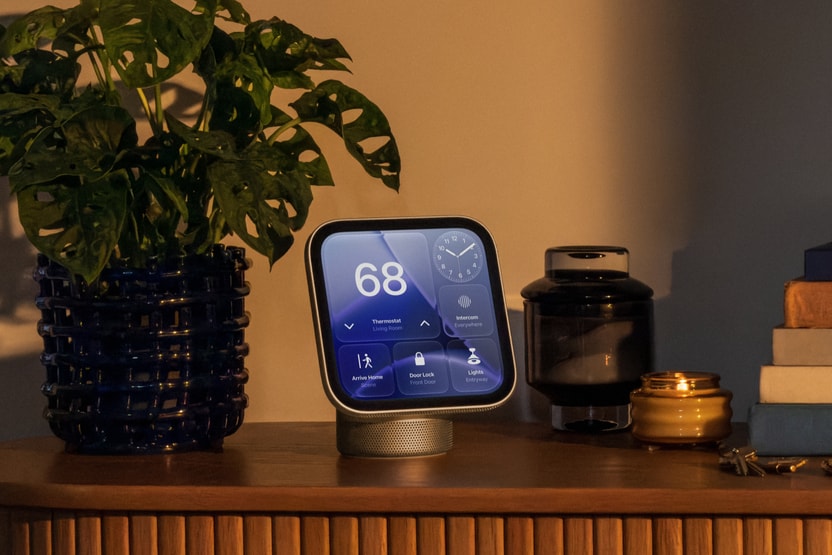
A phone follows its owner. A household screen has to serve whoever is standing in front of it. With HomeView, announced October 13, Apple is bringing those two experiences together: a shared device for entertainment, communication, and home management that can adapt to individual members of a household. The seven-inch smart display comes in tabletop and wall-mounted versions, each priced at $299 in the United States, with availability beginning November 13. www.apple.com
Its immediate purpose is practical. Someone preparing dinner can follow a recipe in Safari, take a hands-free FaceTime call, or continue listening to something started on their iPhone. Center Stage keeps participants framed during video calls as they move around. Apple also confirms voice-controlled phone calls and messages, while Handoff lets supported songs, podcasts, calls, videos, and recipes move from iPhone to HomeView. These functions position the device around moments when holding a phone becomes an interruption. www.apple.com
The more consequential feature is how the screen handles different people. Apple says HomeView recognizes up to six users, each with a personalized Home Screen. Siri AI can draw on personal context from an Apple Intelligence-enabled iPhone or iPad, including information in Messages and Calendar. Access to personal content depends on facial recognition and conditions involving the paired device’s presence and recent unlocking. Apple says these protections keep individual information private on a screen used by the household. Those are the company’s stated safeguards; their effectiveness in everyday use remains to be independently assessed. www.apple.com
That distinction between shared access and personal information sits at the center of the product. A household can share music or home controls while its members maintain separate conversations, appointments, and preferences. Apple’s design asks an assistant to move between those contexts without requiring everyone to treat the device as belonging to one person. Whether that transition feels natural will matter as much as the display itself.
Entertainment is part of the offer, but app compatibility requires precision. Apple lists selected built-in apps and access to supported third-party audio and video apps from iPhone. Its specifications include Safari, FaceTime, Music, and Podcasts, with other services, including TV, available through iPhone. Apple’s launch materials do not specifically confirm Netflix, YouTube, or Zoom support. They also do not establish full iPhone screen mirroring or unrestricted video casting; the specifications identify AirPlay for multiroom audio. Buyers should therefore distinguish confirmed entertainment features from assumptions about what any connected screen can play. www.apple.com
HomeView also arrives within a broader household strategy. Apple announced its Home Collection with LG Electronics and Schneider Electric, covering cameras, thermostats, sensors, a video doorbell, and a door lock. Availability begins in December, with some accessories scheduled for early 2027. Apple says these products can be managed through its Home app without separate accessory apps or accounts. The intended convenience extends beyond a countertop display to the systems people use to monitor and manage their homes. Apple
For media and culture, HomeView introduces another setting where entertainment, information, and an AI assistant can accompany daily routines. Its significance will depend on whether those connections remove enough friction to become habits. Apple has announced a place for personal AI in the shared home. The next test is whether people find it useful enough to make that place permanent.
Related Posts
Disney and TikTok Are Building a New Content Pipeline Into Disney+
By DaMarko GianCarlo For most of Hollywood’s relationship with socia
LG Introduces the Era of ‘Zero Labor Home’ through its Smart Home AI Agent
LG is set to introduce artificial intelligence (AI) for smart homes.

Adobe Next-Gen AI Photo Editing Engine is fantasTIC
By Jennifer Allure’ For those people who have been making use of

1MORE Open Ear Wireless Headphones S70 The Ultimate Blend of Comfort and Sound
1MORE Open Ear Wireless S70 will revolutionize audio

Four American Giants Are Leaving the S&P 100 Technology Is Taking Their Place
A New Class of American Giants Is Emerging

Experience a Nostalgic Throwback to BlackBerry Era with Clicks’ Innovative iPhone Keyboard
Clicks Keyboard a nostalgic offering reminiscent of the BlackBerry sil
POST COMMENT