

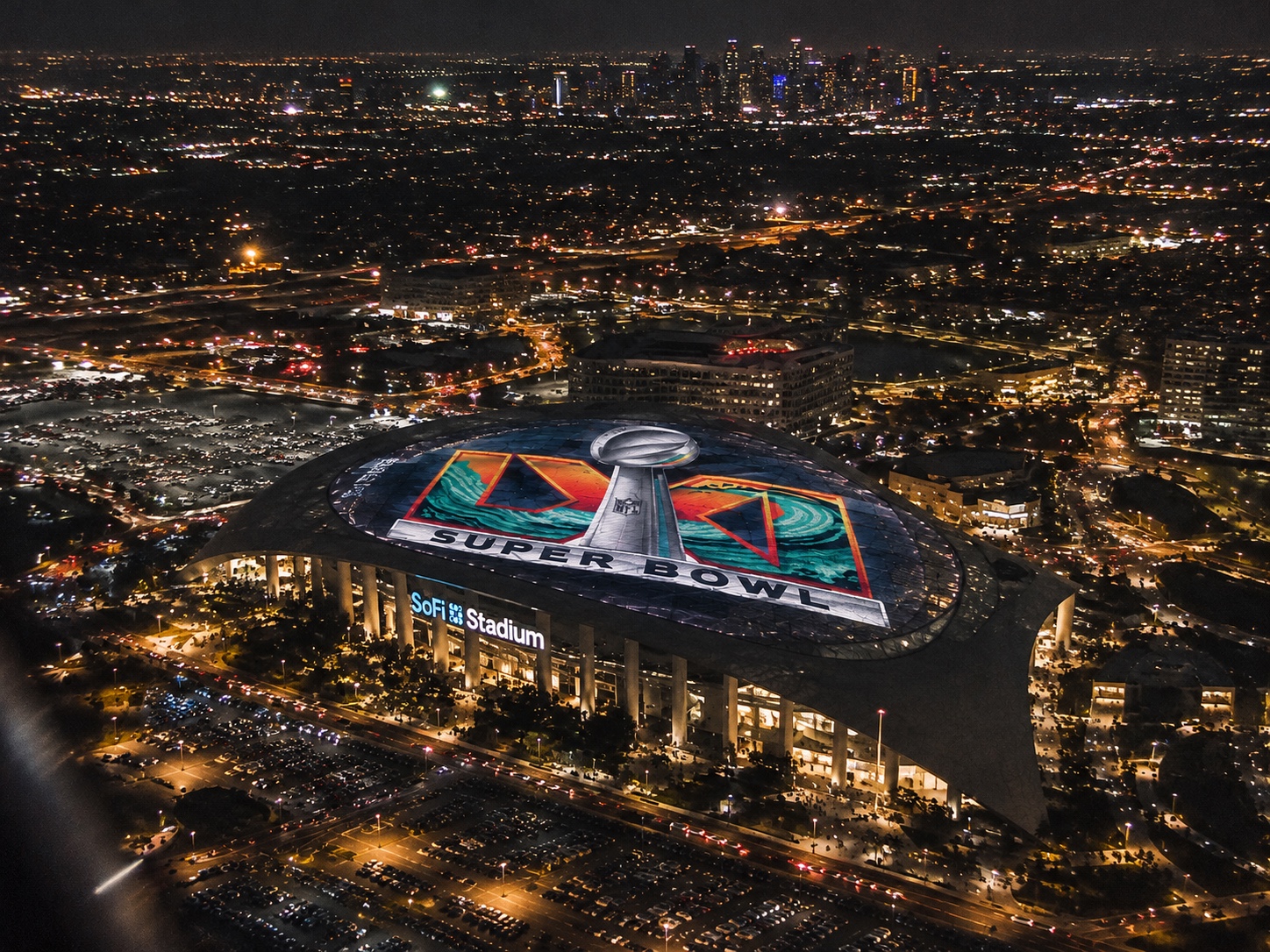
Disney Is Taking Super Bowl LXI Across Its Entire Entertainment Empire
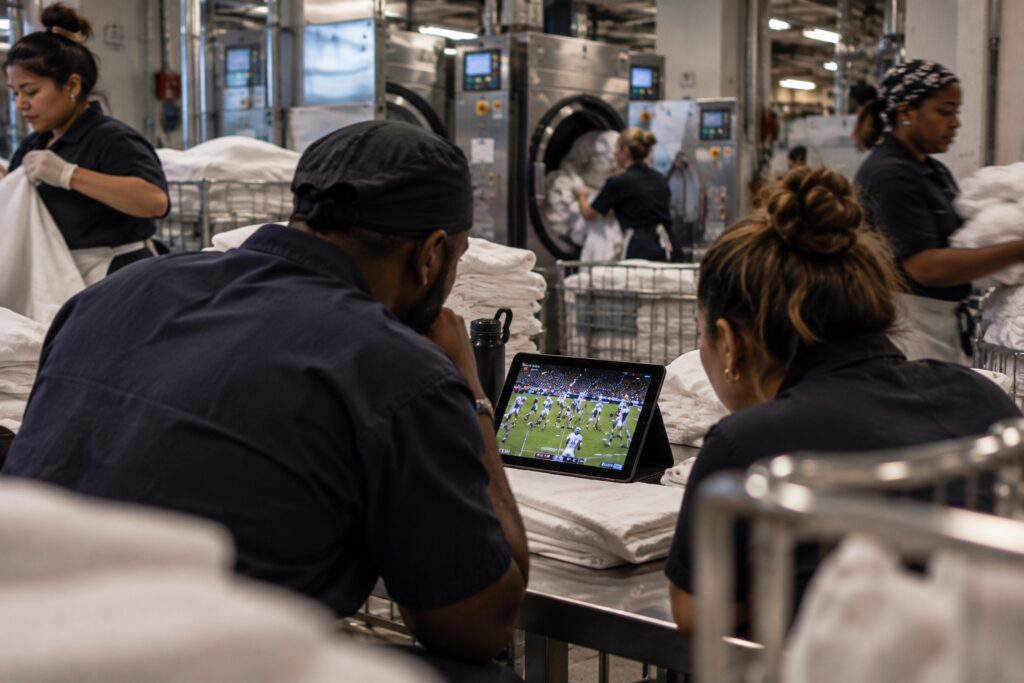
By Brian K. Neal
The 2027 championship will bring together broadcast television, streaming, international audiences, and a sold-out advertising marketplace as Disney expands the reach of one of sports’ most valuable events.
When Super Bowl LXI kicks off at SoFi Stadium in Inglewood, California, on February 14, 2027, the championship will represent more than the conclusion of another NFL season. It will bring together some of The Walt Disney Company’s most important businesses around a single live event, connecting traditional television, subscription streaming, international sports distribution, advertising, and entertainment in a way that demonstrates how valuable a global sporting event can become beyond the competition itself.
On October 7, Disney and ESPN announced that Super Bowl LXI will stream live on Disney+ alongside its broadcasts on ABC and ESPN. The championship will mark ESPN’s first Super Bowl production and the event’s return to ABC for the first time since 2006. All Disney+ subscribers in the United States will have access to the traditional English-language presentation, featuring Joe Buck and Troy Aikman, as well as the Spanish-language telecast from ESPN Deportes.
The announcement is significant not because Disney+ is entering live sports for the first time, but because of the magnitude of the event being distributed. Disney has already been expanding sports programming across its streaming services, including select NFL games and other live competitions. The Super Bowl, however, occupies a different position in American entertainment. It is simultaneously a championship, a television event, an advertising marketplace, a music showcase, and a cultural gathering that attracts viewers who may have little interest in football throughout the rest of the season.
Disney is positioning that event across several of its major distribution platforms at once.
ABC will maintain the Super Bowl’s accessibility through traditional over-the-air network television. ESPN will serve established sports audiences through its television and digital services. Disney+ will make the championship available to subscribers who may primarily use the platform for films, television series, and family entertainment. The ESPN App will also carry the game and related programming, including alternative presentations.
Disney’s distribution strategy also extends beyond making the same broadcast available on different platforms. On October 11, ESPN announced additional alternative presentations for Super Bowl LXI, including a Pat McAfee-led broadcast and a version incorporating NFL Next Gen Stats. These presentations will offer audiences different ways to experience the championship, expanding ESPN’s programming approach beyond the traditional game telecast. The announcement adds another dimension to Disney’s strategy: the company is not only increasing the number of places where viewers can watch the Super Bowl, but also developing different viewing experiences around the same live event.
Rather than moving the championship away from conventional television, Disney is expanding the ways audiences can reach it. The strategy recognizes that viewers no longer experience entertainment through a single distribution model. Some continue to watch broadcast networks, others subscribe to cable or live television services, and millions increasingly rely on streaming platforms as their primary destination for entertainment.
The Super Bowl provides Disney with an opportunity to serve those different audiences simultaneously without requiring them to adopt the same viewing habits.
The international dimension gives the announcement additional significance.
Disney confirmed that Disney+ will stream ESPN’s Super Bowl presentation in more than 55 international markets, including Brazil, Spanish-speaking Latin America, the Caribbean, South Africa, Australia, and New Zealand. ESPN’s traditional international television platforms will also distribute the championship across more than 130 countries and territories. These distribution footprints may overlap, but together they illustrate the geographic reach Disney is bringing to the event.
American football has long been identified primarily with the United States, but the NFL has spent years developing its international audience. Regular-season games outside the country, international marketing partnerships, localized programming, and expanded digital distribution have become important parts of the league’s efforts to build sustained interest in markets where other sports have traditionally dominated.
The Super Bowl itself is not new to international audiences. Previous championships have reached viewers around the world through established broadcasting agreements. Disney’s announcement should therefore not be mistaken for the NFL’s first major international distribution effort. What changes is the addition of Disney+ as a major streaming destination for ESPN’s presentation in numerous international markets.
That distinction matters because global sports growth depends on more than making a championship technically available. Audiences must know where to find it, have a reason to watch, and develop familiarity with the teams, athletes, and competition. A globally established entertainment platform can provide another point of access for viewers who may not regularly follow American football through a dedicated sports broadcaster.
For Disney, international streaming also connects the NFL to an existing entertainment service rather than requiring every potential viewer to establish a separate relationship with a sports-specific platform. Whether that access ultimately produces higher international viewership or deeper NFL engagement remains to be measured. The opportunity, however, is grounded in Disney’s announced distribution arrangements.
The company is also extending its NFL programming on Disney+ before the championship arrives. Two Monday Night Football games will be available to Disney+ subscribers during the 2026 regular season, beginning with the Dallas Cowboys visiting the Philadelphia Eagles on October 26. Both games will continue to air through their existing ESPN and ABC arrangements, with English- and Spanish-language options available on Disney+.
Those games represent another step in bringing established sports programming into Disney’s broader streaming environment. They also provide the company with experience distributing live NFL events across several platforms before its first Super Bowl production, although Disney has not publicly characterized them as a formal technical rehearsal for the championship.
The advertising business may be just as consequential as the distribution strategy.
Disney reported that commercial inventory for the Super Bowl telecast on ABC and ESPN sold out in August 2026, approximately six months before the championship and earlier than any previous network Super Bowl sellout, according to the company. Fifty-eight brands across 34 advertising categories secured placements, including nine first-time Super Bowl advertisers. Those commitments were made before Disney’s October 7 announcement that the championship would also stream on Disney+, meaning the advertising demand cannot be attributed to the newly announced streaming expansion. Instead, the early sellout demonstrates the established commercial value of the Super Bowl itself, while Disney’s expanded distribution creates additional opportunities to connect the event with audiences across its entertainment businesses.
That demand demonstrates the enduring commercial value of live sports at a time when much of the entertainment industry is competing for increasingly fragmented audiences.
Streaming services have given consumers more control over when and where they watch entertainment. Social media platforms compete for attention throughout the day, while traditional television networks no longer command the same viewing habits they once did. Major live sporting events remain unusually valuable because they can bring large audiences together at a scheduled moment.
For advertisers, that shared attention is difficult to reproduce through ordinary entertainment programming.
A Super Bowl commercial is not simply purchased for its placement during a football game. Brands are also buying proximity to an event that generates conversation before, during, and after the broadcast. Advertising campaigns may become subjects of entertainment coverage, circulate through social media, or generate public discussion independently of the game itself.
The championship’s halftime performance adds another dimension to that cultural reach. Music, celebrity participation, advertising campaigns, and football all contribute to the Super Bowl’s identity as an entertainment event whose appeal extends beyond sports fans.
Disney’s broader portfolio allows the company to participate in several parts of that experience.
In February 2026, ESPN announced a yearlong initiative called “The Year of the Super Bowl,” developed with Disney and the NFL. The program brings together sports coverage, entertainment franchises, marketing campaigns, original programming, and fan experiences in the months leading to the championship.
Disney’s promotional campaign has already incorporated characters and properties from Disney, Pixar, Marvel, and Star Wars. ESPN is also preparing a weeklong presence in Santa Monica beginning February 8, 2027, with ESPN Beach serving as a broadcast location and public fan experience ahead of the game.
These efforts expand the Super Bowl’s commercial presence beyond the television broadcast. They create opportunities for programming, consumer engagement, merchandise, sponsorships, and brand partnerships connected to the event.
The advertising strategy reflects that broader approach.
Disney Advertising has announced plans to offer brand partners opportunities across ESPN, ABC, and the company’s wider portfolio, including custom content, integrations, live experiences, and cross-platform visibility tied to the Super Bowl. Those arrangements allow the company to build commercial relationships around the championship rather than limiting its involvement to selling individual television commercials.
That distinction is particularly important as the event reaches international markets.
An advertiser purchasing a commercial during the American broadcast is not necessarily purchasing identical exposure across every international Disney+ or ESPN feed. Advertising rights, commercial inventory, sponsorship arrangements, and local distribution agreements may differ by territory. Disney has not publicly established that every U.S. Super Bowl advertisement will appear across all its international streams.
The global commercial opportunity is therefore more complex than simply multiplying American advertising exposure by the number of countries receiving the game.
International distribution can create additional possibilities for regional sponsorships, localized campaigns, digital advertising, and partnerships associated with the event. Whether Disney offers those opportunities in particular markets, and under what commercial terms, will depend on the rights and advertising arrangements governing each territory.
The broader significance is that Disney can connect an established American advertising event to a wider international distribution environment without assuming that every market operates under the same commercial structure.
Streaming introduces another dimension to the economics of live sports.
Traditional television and subscription streaming provide different ways of reaching and measuring audiences. Broadcasters rely on established audience measurement systems, while streaming services can also collect platform-level information about viewing activity and engagement, subject to their data practices and applicable rules.
For a company operating across both environments, a major live event creates opportunities to understand how audiences use different services and how advertising performs across distribution channels.
Disney has not disclosed specific incremental advertising revenue, subscriber acquisition targets, or international audience projections tied to the Disney+ Super Bowl simulcast. Those outcomes should not be treated as established benefits of the announcement.
What can be established is that Disney is making the championship available through more of its existing services while commercial demand for the principal U.S. telecast has already reached a reported record pace.
The distinction between reach and performance will become important once the event takes place. Distribution agreements determine where a championship can be watched. Actual audience behavior determines how many people watch, how long they remain engaged, and what commercial value those audiences ultimately produce.
For the NFL, Disney’s approach aligns with a broader effort to make American football accessible to audiences beyond its traditional domestic base. The league’s international development is not dependent on a single broadcaster or championship, but the Super Bowl remains its most recognizable annual event and an important opportunity to introduce the sport to viewers who may not follow the regular season.
For Disney, the championship demonstrates how its businesses can operate together around a single cultural property.
The company does not need every viewer to arrive through Disney+. ABC can continue serving broadcast audiences while ESPN maintains its established sports presence. International viewers can access the game through applicable regional distribution arrangements, and Disney’s entertainment properties can contribute to the promotional activity surrounding the event.
Each platform serves a different purpose, but all participate in the same larger commercial occasion.
That approach also reflects an important reality of the modern entertainment business. Streaming has changed how audiences access programming, but it has not eliminated the value of traditional television. For an event as significant as the Super Bowl, combining distribution models may offer advantages that an exclusive approach would not.
The company’s decision to retain ABC and ESPN while adding Disney+ illustrates that relationship. Broadcast television provides broad domestic accessibility, sports networks maintain specialized programming environments, and streaming expands the range of ways subscribers can participate.
The championship will also provide a substantial public demonstration of ESPN’s ability to produce one of the world’s most closely watched sporting events while Disney coordinates distribution and promotion across several businesses.
That is a meaningful undertaking, but its results remain ahead.
The game has not yet been played. International viewing figures have not been established. The commercial performance of Disney’s wider advertising arrangements cannot yet be measured. And the longer-term effect on Disney+ subscriptions or international NFL engagement remains uncertain.
What is already visible is the architecture of the event.
Disney has secured a sold-out U.S. television advertising marketplace, announced distribution across broadcast, cable, and streaming, extended ESPN’s presentation into dozens of international Disney+ markets, and developed a promotional program that connects sports with entertainment and live fan experiences.
Super Bowl LXI will determine the next NFL champion on February 14, 2027. But the event’s significance for Disney extends beyond the result on the field.
At a time when audiences are spread across more platforms than ever, Disney is using one of television’s few remaining mass-audience occasions to bring those platforms together.
The company is not abandoning traditional television in pursuit of streaming, nor is it introducing the Super Bowl to international viewers for the first time. It is combining established distribution channels with newer ones, using the scale of a major sporting event to connect audiences, advertisers, and entertainment businesses across markets.
The outcome will be measured after the championship. The strategy is already taking shape.
Super Bowl LXI is becoming a demonstration of how much commercial and cultural reach a single live sporting event can support when an entertainment company brings its major businesses together.
Related Posts
Adobe Next-Gen AI Photo Editing Engine is fantasTIC
By Jennifer Allure’ For those people who have been making use of

South Florida PBS Unveils U.S. Debut of ‘Da Vinci – An Immersive Art Experience’
Groundbreaking Da Vinci Immersive Art Experience U.S. Debut This Novem

The Quiet Screen: Why AR Is Finding Its Home Underwater
Swimming With Information—Without the Noise

From Shoestring Budget to Cinematic Revolution: “DreadClub” Pioneers First AI-Generated Animated Feature Film
From $405 Budget to Cinematic Revolution:
Amazon Music’s New AI Search Is Changing the Way You Discover Music
Your Next Favorite Song? AI’s Already Found It

ViewSonic Unveils High-Performance XG36 Series Monitors for Competitive Gamers
ViewSonic Launches the New XG36 Series Monitors.
POST COMMENT