

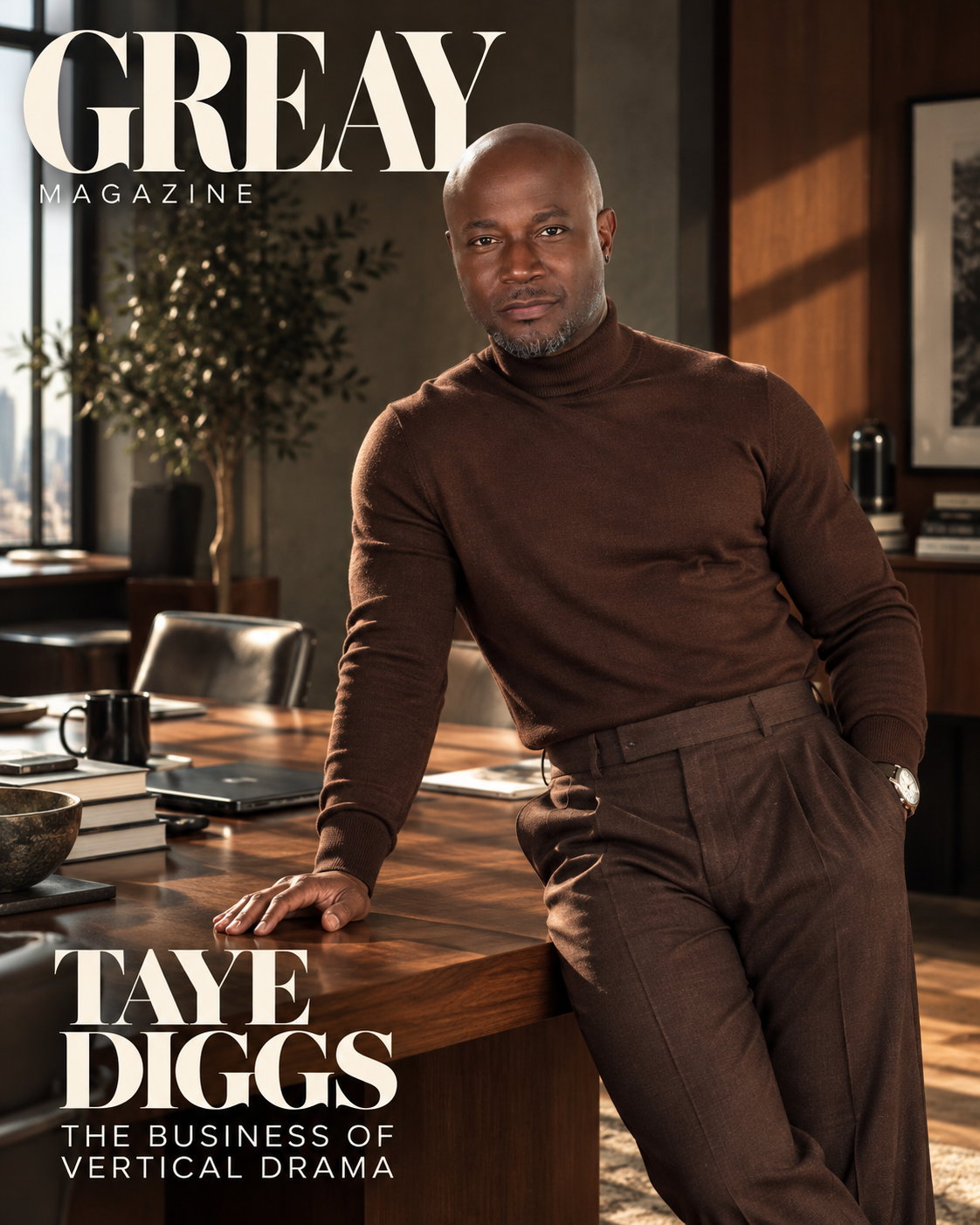
Taye Diggs Is Giving Filmmakers More Control Over the Vertical Drama Business
By DaMarko GianCarlo
As Diggs builds a creator-focused platform, Lifetime is expanding into original vertical series and adapting nearly 200 library titles for a new era of mobile entertainment.
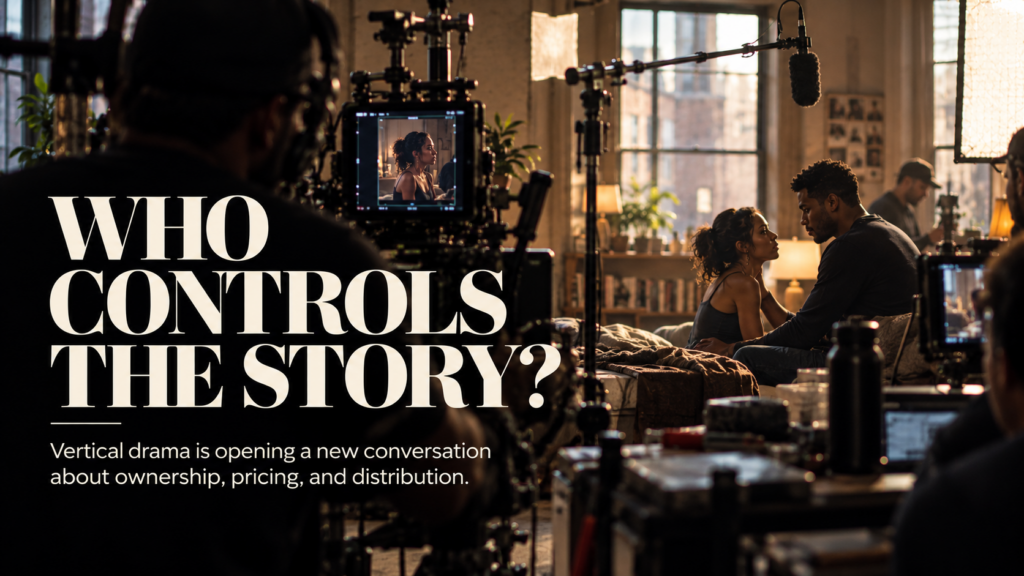
The rise of vertical drama is no longer simply a story about audiences watching scripted entertainment on their phones. It is becoming a story about who controls production, distribution, pricing, and the value of entertainment itself. Established Hollywood talent is entering the business, traditional television companies are adapting their programming for mobile audiences, and new platforms are challenging the assumption that distributors must determine how filmmakers monetize their work.
Taye Diggs is participating in that transformation from more than one position.
The actor, whose career spans Broadway, film, and television, was among the established Hollywood performers to enter microdramas, the short, serialized productions designed primarily for vertical viewing on mobile devices. But his involvement has moved beyond performing. In April 2026, Diggs and his partners introduced Microhouse Films, a platform designed to bring production, distribution, and monetization together while giving independent filmmakers greater authority over how their work reaches audiences.
That ambition has taken on new significance as A+E Global Media and Lifetime expand their own commitment to vertical storytelling.
In an announcement made in October, A+E Global Media outlined a broader microdrama strategy that includes original productions, adaptations of existing programming, mobile distribution, advertising opportunities, and international licensing. The company has adapted nearly 200 titles from its content library into chapter-based vertical formats for distribution to third-party partners. The initiative demonstrates how a traditional entertainment company is beginning to treat vertical storytelling not simply as a new production format, but as another commercial use for programming it already owns.
The initial Lifetime offering includes three original vertical productions from Microhouse Films: Tides of Temptation, Matched With a Murderer, and His Lies Taste Like Love. Seven existing Lifetime films have also been adapted for vertical viewing through the company’s updated digital experience. New titles are scheduled to arrive every two weeks through the Lifetime mobile app, with additional access through MyLifetime.com. The company expects to offer up to seven original vertical productions by the end of 2026, including two holiday-themed projects from vertTV.
The distinction between these initiatives is important. Microhouse Films is developing a creator-focused platform and producing original programming. Lifetime is expanding its distribution and programming strategy, using its existing brand, audience relationships, and content library to participate in the same growing market. Their collaboration connects a newer production business with an established entertainment company without making the two operations interchangeable.
For Diggs, that relationship is particularly visible in Tides of Temptation, which he executive produced alongside Autumn Federici and Shelby Stone. The vertical drama shares a story world with Lifetime’s upcoming original movie Terry McMillan Presents: Paradise with You, scheduled to premiere November 7. Although connected creatively, the vertical production is designed to stand on its own.
That arrangement illustrates another possibility emerging within the business: a traditional television movie and a mobile-first drama can exist within the same fictional world while serving different viewing experiences. The vertical production is not simply a shortened version of the film. It is a separate story connected to a larger entertainment property.
Microhouse Films is also developing additional original programming, including Reunion Island and Recklessly in Love with My Daughter’s Best Man. The former is scheduled for a world premiere at the inaugural ALZA Festival in New York, an event dedicated to microdrama and vertical storytelling.
Beyond individual productions, Diggs and his partners are pursuing a different question about the economics of the format.
Microhouse Films launched July 7 with seven original series and a platform that allows filmmakers to upload, distribute, and monetize their work without subscription, upload, or hosting fees charged to creators. Rather than requiring audiences to subscribe to the service, the platform uses a credit-based viewing model. Filmmakers can determine their release strategies and how their episodes are priced within that system.
The arrangement gives participating creators greater control over decisions that are often shaped by the platforms distributing their work. It does not guarantee commercial success, and the platform still operates within its own payment and distribution structure. But it establishes a different proposition: filmmakers can participate more directly in determining the commercial terms under which audiences access their stories.
That distinction matters in an entertainment economy where access to distribution has historically carried significant negotiating power.
Independent filmmakers may be able to finance and produce their projects without a traditional studio, but reaching audiences and generating sustainable revenue remain separate challenges. Distribution platforms can provide access to viewers while also controlling important aspects of discovery, pricing, and monetization. Microhouse Films is attempting to offer another route, one in which creators retain more authority over how their programming is presented and sold.
Lifetime’s expansion approaches the same market from another direction.
A+E Global Media already possesses a substantial library of recognizable programming, established distribution relationships, and a long history of producing entertainment for specific audiences. By adapting nearly 200 titles into vertical formats, the company is creating additional ways to distribute existing intellectual property without requiring every mobile offering to begin as a new production.
The adapted library extends beyond Lifetime movies. It includes programming associated with Cold Case Files, I Survived, Alone, Ice Road Truckers, Forged in Fire, Hoarders, and Married at First Sight. The company plans to offer these vertical adaptations to international licensing partners beginning at MIPCOM in October.
This is a significant difference from the early perception of microdramas as inexpensive, independently produced romance and suspense series. Established entertainment companies are now examining whether existing programming can be reorganized for mobile consumption and generate additional licensing opportunities.
A+E Global Media is also introducing advertising into the strategy. Sponsored vertical productions, including holiday projects from vertTV, are intended to create opportunities for brands to participate in mobile-first entertainment. That adds another commercial model alongside direct viewer payments, licensing, and the monetization of existing intellectual property.
Taken together, these developments reveal that vertical drama is not evolving around one business structure. Creator-controlled platforms, traditional media companies, advertisers, and international distributors are entering the market with different interests and resources.
For independent filmmakers, the question is how much opportunity these arrangements actually create.
The ability to set prices or distribute programming directly may increase a creator’s control, but it does not automatically establish a viable audience or dependable income. Likewise, adapting an established television library for mobile viewing creates additional commercial possibilities for rights holders, but the long-term value of those adaptations will depend on audience demand and licensing performance.
The available announcements establish the direction of these businesses. They do not yet establish which models will prove most profitable or sustainable.
That uncertainty makes Diggs’ position particularly interesting.
He is not simply an established actor appearing in a new entertainment format. He is helping develop a platform that gives filmmakers more direct involvement in distribution and monetization while also executive producing programming connected to a traditional television company expanding into the same market.
Those roles illustrate how the boundaries between performer, producer, platform operator, and distribution partner are becoming less fixed.
Lifetime’s October announcement adds another dimension to that development. A company with decades of experience in traditional television is now preparing existing programming for vertical distribution, commissioning mobile-first originals, and pursuing licensing opportunities beyond its own viewing platforms.
The two approaches are not identical, but they are responding to the same change: entertainment is increasingly being designed, packaged, and distributed around the ways audiences consume it.
The consequential question is no longer whether vertical drama can attract established Hollywood talent or traditional television companies. Both are already participating.
The question is how the value created by this expanding market will be divided among the people who develop the stories, the companies that finance and distribute them, and the platforms that connect them with audiences.
Microhouse Films is entering that conversation with an emphasis on creator control. Lifetime and A+E Global Media are entering it with established programming, distribution relationships, and a growing licensing strategy.
Neither approach has yet demonstrated what the long-term economics of vertical drama will become. But together, they show that the business is moving beyond experimentation into a more developed conversation about ownership, access, and the commercial future of mobile-first entertainment.
For Diggs, the evolution is especially consequential. His participation is no longer limited to the stories audiences see on their screens. It now extends to the decisions that determine how those stories reach audiences, who controls their release, and how the people who create them have an opportunity to earn from their work.
And that may be the larger shift vertical drama is beginning to reveal: the future of entertainment will not be determined only by what audiences choose to watch, but also by who has the power to bring those stories to them.
Related Posts

Tyla Takes the Slime Throne at the 2025 Kids’ Choice Awards
From Grammys to Green Goo
Pacsun Launches ‘A.R.C.’: The Ultimate Men’s Activewear Line for Gen Z
Pacsun unveils first dedicated men’s activewear line.
Michelle Núñez: Fearless in Film, Music, and Storytelling
Michelle Nunez multi talented.

Bad Bunny and the End of Cultural Permission
Authority Travels Differently Now

On Location and MLS Join Forces to Elevate FIFA World Cup 2026™ Hospitality
On Location and Major League Soccer to Sell Hospitality Program for FI

The Billionaires Didn’t Disappear. They Just Stopped Branding Themselves
The New Status Symbol Is Subtlety
POST COMMENT