

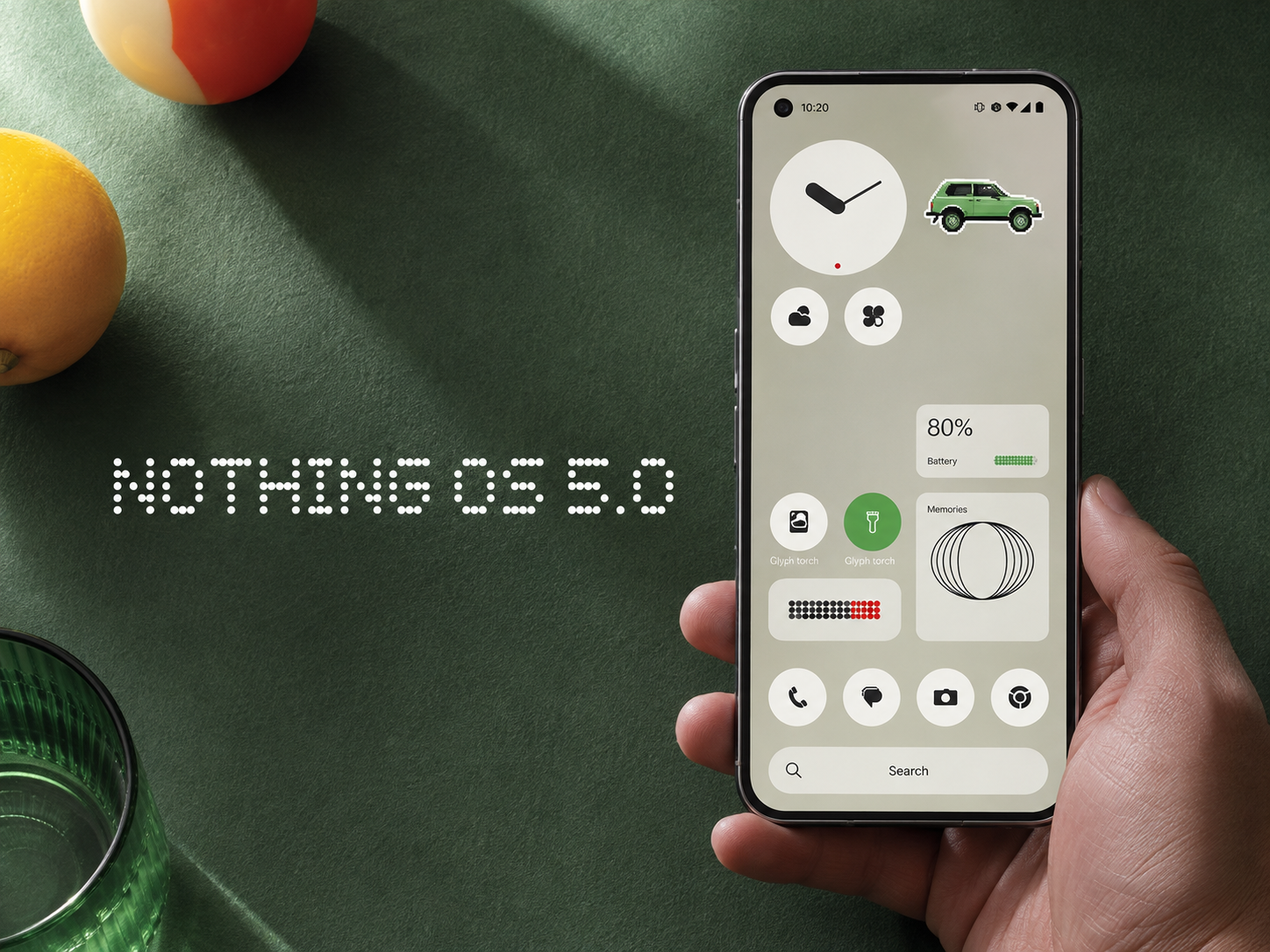
Nothing OS 5.0 Wants AI to Make Your Phone More Personal
DaMarko Webster
For most of the smartphone era, making a phone personal has meant changing what it looks like. A different wallpaper. A new lock screen. Widgets moved around a home screen. Maybe a different font, a custom ringtone or a carefully arranged collection of apps. The phone could look like yours, but underneath all of that customization, it largely worked the same way for everyone.
Nothing OS 5.0 is beginning to challenge that definition.
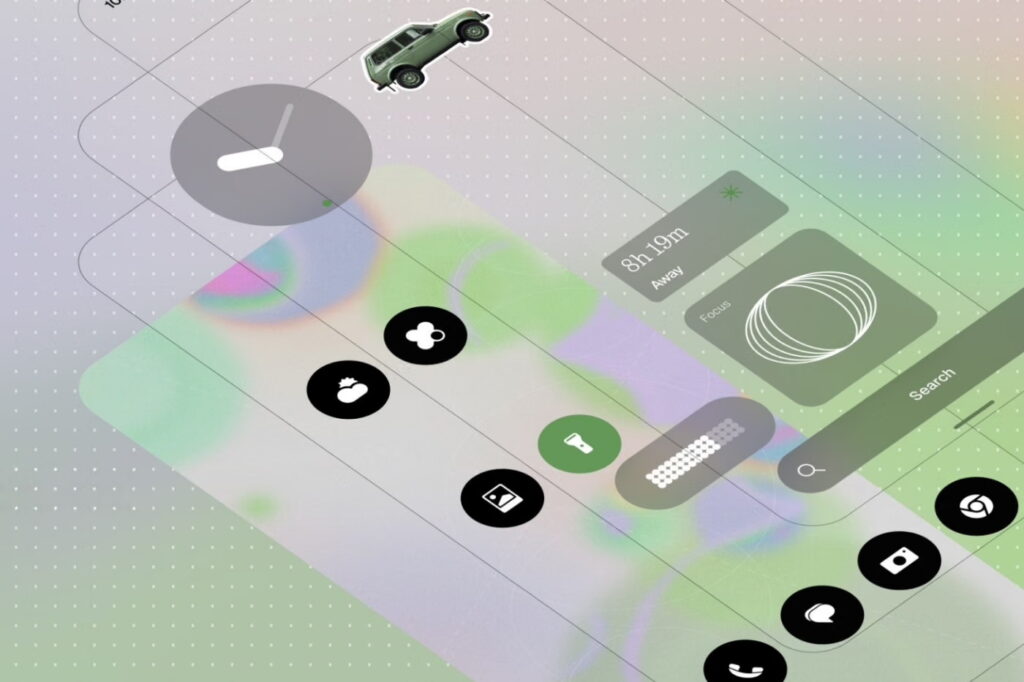
Built on Android 17, Nothing’s latest operating system introduces more than 80 updates across design, performance and customization. There are adaptive system colors, redesigned widgets, new clock faces, updated typography and changes to notifications and Quick Settings. Nothing describes OS 5.0 around greater control and personalization, but the more consequential part of the update may be what is happening beyond its visual redesign: the company is increasingly using AI to make the phone respond to the individual using it.
That distinction matters because artificial intelligence has spent much of its consumer life feeling like somewhere people have to go. Open an AI application. Visit a chatbot. Type something into a prompt box. Learn what the model can do, and then figure out how to make it useful. Even as AI has become enormously capable, the person has often been responsible for adapting to the technology.
Nothing appears interested in reversing some of that relationship.
Its Essential suite brings AI into ordinary interactions with the device. Essential Space can organize information a person captures, Smart Collections can group related material, and Essential Voice can help turn spoken thoughts into organized information. These are not necessarily the spectacular demonstrations of artificial intelligence that dominate technology presentations. They are smaller interventions designed to make the phone more useful within the rhythms of someone’s actual life.
Then there is Essential Apps.
With Nothing OS 5.0, the company’s Essential Apps Builder moves closer to the phone itself, allowing people to describe a tool they want in natural language and have AI help create it without needing to know how to code. The idea is still early, but its implications are considerably larger than another home-screen feature.
Most people do not want to become developers.
They simply encounter small inconveniences that technology was never specifically designed to solve. Someone may want a home-screen tool that counts down to their child’s next game. Someone else might want a particular routine presented in a way that makes sense only to them. Another person may want information from a calendar, notes or daily schedule combined in a way no existing application quite provides.
Those ideas may never be valuable enough for a company to design, develop and distribute an entire commercial app around them.
But they can be valuable to one person.
AI changes what becomes possible at that level.
If someone can simply explain what they need and software can begin creating a useful version of it, personalization moves beyond appearance. The phone isn’t merely decorated differently. It can begin behaving differently because the person using it lives differently.
That is a much friendlier proposition for artificial intelligence.
The technology industry often describes AI through capability: larger models, faster processors, autonomous agents and increasingly complicated systems. Those developments matter, but they may not be how most people ultimately form a meaningful relationship with artificial intelligence. The breakthrough for the average person could be much quieter.
AI becomes useful enough that people stop thinking about the fact that they are using AI.
They simply ask their phone for something they need.
That possibility also changes what we should expect from the word personal in personal technology. For years, the smartphone has learned things about us. It knows where we go, what we photograph, who we communicate with, what music we listen to and which applications we open. Much of technology’s version of personalization has therefore been based on observation: the device learns enough about someone to recommend what it believes they might want next.
Generative AI introduces another possibility. Instead of personalization being something the system quietly decides for us, it can become something we actively create with it.
There is an important difference between a phone saying, We think you might like this, and a person saying, I need my phone to do this.
Nothing OS 5.0 is particularly interesting because it begins bringing those ideas into the operating system rather than positioning AI exclusively as another destination inside it. Features like Away Time, which helps people intentionally step away from their devices, and Nothing’s increasingly expressive widgets and interface choices reinforce the sense that the company is thinking about the relationship between a person and a phone rather than simply adding another AI button.
There are still reasons for restraint. Essential Apps remains an early idea, generated tools can require refinement, and Nothing has not created an operating system that automatically transforms itself around every person who picks up one of its phones. OS 5.0 should not be mistaken for the finished version of personalized AI.
But it is a signal of where the relationship could be going.
For nearly two decades, smartphones have largely operated according to the same architecture: developers decide what software should exist, companies distribute it through app stores, and people search through millions of choices hoping to find something close to what they need.
AI creates the possibility of adding another layer to that relationship.
Sometimes, software might exist simply because you needed it.
That is where Nothing OS 5.0 becomes more interesting than an Android update. The future of personalization may not be a phone that knows everything about us or constantly anticipates what we are going to do. It may be something considerably more approachable: a device capable of listening when we tell it what would make our lives a little easier.
Two people could eventually buy the same phone and, over time, end up with devices that function differently—not simply because they downloaded different apps, but because each person shaped the software around the way they actually live.
For years, technology companies have promised us personal computers and personal devices.
AI may finally force the industry to reconsider how personal those devices really are.
Nothing OS 5.0 doesn’t complete that transition. It gives us an early look at what it could feel like.
The future of personal technology may not be asking people to become better at understanding AI. It may be making AI better at understanding what people need from their technology.
Related Posts

Sonic Ingenuity: Exploring the Impact of #MakingSoundVisible through Toshiba TV’s Legacy
Sonic Ingenuity: Exploring the Impact of #MakingSoundVisible
Goldtouch: Leading the Charge in Ergonomic Desktop Technology
Goldtouch Launches Elite Adjustable Ergonomic Keyboard

From Shoestring Budget to Cinematic Revolution: “DreadClub” Pioneers First AI-Generated Animated Feature Film
From $405 Budget to Cinematic Revolution:
Mic 3 Joins DJI’s OsmoAudio Ecosystem with Precision, Power, and Portability
Mic Check, Future Ready

ROKFORM Unveils Pro Ball Motorcycle Mount: Premium Quality, Secure Hold, and Infinite Adjustability
ROKFORM, a leading innovator in premium handheld solutions for active
Xbox’s Copilot for Gaming Beta Redefines In-Game Assistance for Mobile Players
Game Smarter, Not Harder
POST COMMENT