

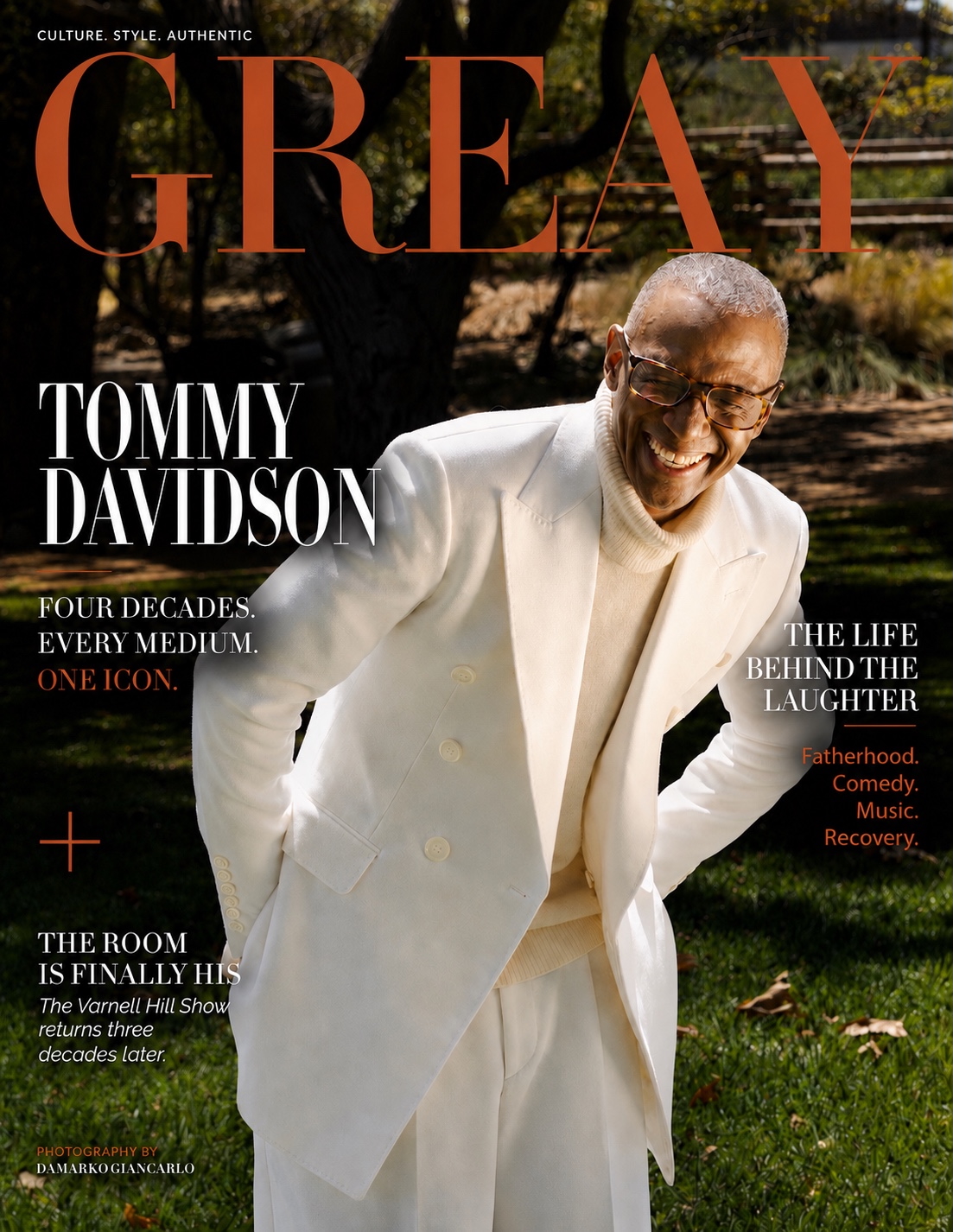
Tommy Davidson Is Bringing a Lifetime to Center Stage
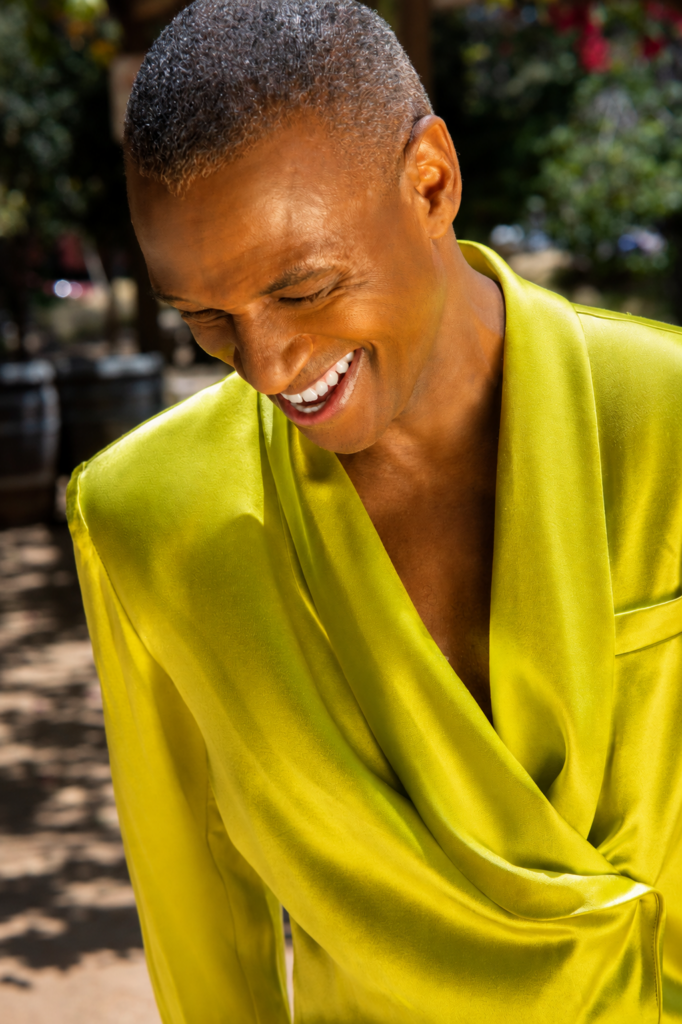
When Tommy Davidson walked into the table read for The Varnell Hill Show, he froze. Around him were actors, producers and crew members representing different chapters of a career that had already lasted more than three decades. Some knew him through stand-up. Others knew him from television, film or animation. Together, they represented a life Davidson had spent learning how to enter almost any creative environment and understand what it needed.
This time, however, the environment had been built around him. Davidson was not arriving to strengthen someone else’s ensemble, transform a supporting role or make an unforgettable impression within a limited amount of screen time. He was sitting at the center of a television series carrying the name of a character he had created more than 30 years earlier. The realization became emotional.
“I worked in everything,” Davidson recalled. “But I never had a starring one.”
That sentence contains the deeper meaning of The Varnell Hill Show. The new Paramount+ series is not merely another title added to a long résumé. It represents the convergence of nearly everything Davidson has lived and learned: the instincts developed in Washington comedy clubs, the creative freedom of In Living Color, the discipline of an ensemble performer, the rhythm of a musician, the perspective of a father, the accountability of recovery and the clarity that comes from eventually becoming the author of your own life. For decades, Davidson’s extraordinary versatility allowed entertainment to place him almost anywhere. Now all of those parts of him are arriving together in a project that asks him to hold the center.
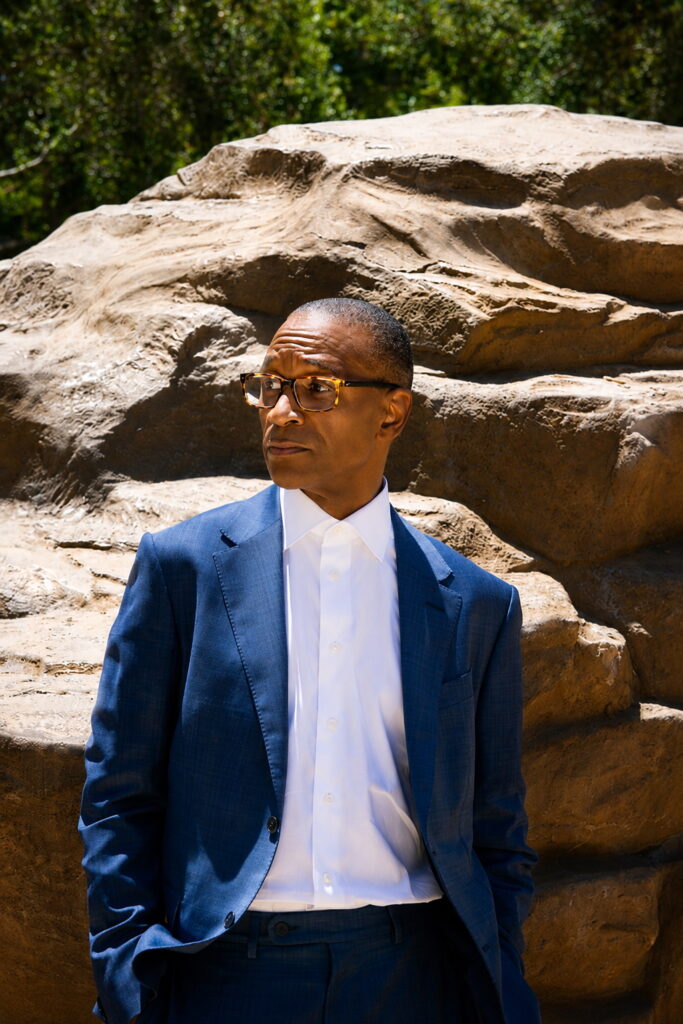
Before Davidson understood how to command a room, he had to learn how to read one. Born Anthony Reed in Mississippi, Davidson was adopted at a young age by Barbara Davidson, a white woman. She raised him alongside her biological children before the family eventually settled in the Washington, D.C., area.
The beginning of Davidson’s life is extraordinary, but reducing it to a rescue story misses the more complicated human experience that followed. Love gave him a family. It did not eliminate every question that came with being a Black child growing up inside a white one. Davidson had to understand himself while navigating racial and cultural environments that did not always understand his family in the same way he did. People could look at the same mother and child and construct entirely different explanations for what they saw. Belonging could be something experienced intimately at home and questioned immediately outside of it.
Long before comedy gave the instinct a professional purpose, Davidson was learning to notice people: their reactions, their assumptions, the emotional temperature of a room and the small signals that told him how he was being perceived. His mother saw something else. She remembered him climbing onto a table as a child with a spoon wrapped in foil, holding it as though it were a microphone. Before there was an audience to validate the instinct, before television or comedy clubs or Hollywood could offer evidence that the boy possessed something unusual, she recognized the performer inside him.
Decades later, Davidson’s own explanation for what sustained that instinct is remarkably simple.
“For me, it all boils down to knowing my purpose at a very young age.”
Purpose came before proof. Before the television credits, before the famous castmates, before Hollywood had a category in which to place him, Davidson says he already possessed an understanding of why he was here. The career would eventually take many forms. The purpose underneath it did not.
In speaking about the forces that shaped him, Davidson also reaches for the language of compassion and providence. “And that’s what compassion became for me. But that was more like an act of providence for me. You know, providence. It changed me. It’s the sheer act of those two words of who I am.”
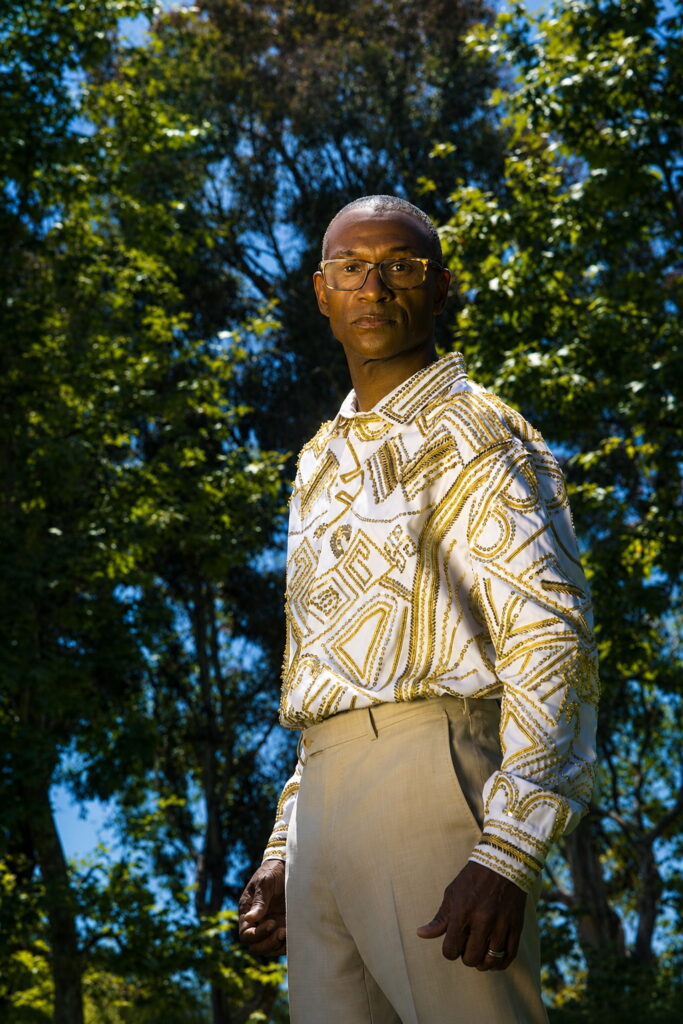
There is no need to turn Davidson’s language into a theological declaration on his behalf. What matters is that this is how he reaches for meaning. He does not describe the beginning of his life solely as a sequence of things that happened to him. He understands some of those circumstances through ideas larger than career: compassion, purpose and what he calls providence.
That distinction matters because the story of Tommy Davidson is often told through what he can do. He can make people laugh. He can sing. He can dance. He can act. He can transform his voice and body until another person seems to appear. He can enter an ensemble and change its energy without demanding that everything revolve around him. But talent alone does not explain forty years. Davidson’s explanation begins much earlier. He believed there was a reason for the talent.
Comedy gave that purpose its first professional language. Davidson began building his comedy career in Washington during the 1980s. Before television, studio films or national recognition, there were ordinary jobs, comedy clubs and audiences with no existing investment in his success. Nothing in those rooms was guaranteed. He had to earn attention moment by moment. Stand-up offered no editing and no character the audience already loved. A joke either created a relationship or exposed the absence of one. Davidson learned how to listen while speaking, recognize when a room was ready to follow him and adjust without allowing the audience to see the adjustment.
Concert promoters eventually booked Davidson to open for recording artists including Patti LaBelle, Kenny G and Luther Vandross. It was an unusual training ground. He was performing comedy for audiences that had arrived expecting music, entering a rhythm established by another artist and finding a way to create his own space inside it. He learned that commanding a room did not require fighting the room. It required understanding it.
That combination of observation, timing, movement and musical instinct prepared Davidson for In Living Color. When the series premiered in 1990, it did more than introduce a remarkable collection of performers. Created by Keenen Ivory Wayans, the show brought Black creative thought, hip-hop, dance, music, political satire, physical comedy and character work into network prime time without translating every idea for a more conventional television audience.
Davidson remembers the freedom of that environment even more vividly than the categories. “We all showed up with that freedom. We were all raised on music, television, film, commercials, plays. We were the ultimate artists coming together. All of us I can say had superpowers in a way because we were versed on a plethora of art forms so once we got together you better watch out.”
That is perhaps the clearest explanation for why In Living Color still feels difficult to reproduce. The performers were not simply specialists assembled around a sketch-comedy format. They arrived carrying multiple artistic languages. Keenen Ivory Wayans, Damon Wayans, Kim Wayans, David Alan Grier, Jim Carrey, Davidson and later Jamie Foxx did not possess identical abilities. They brought different combinations of abilities into a room where everyone understood that performance could move between disciplines.
Davidson could sing, dance, transform his voice, disappear into impressions and construct characters through posture, cadence and movement. Inside In Living Color, those abilities did not need to be separated into different careers. The show did not create Davidson’s range. It gave his range somewhere to live.
When In Living Color ended, that range allowed him to keep moving. In films including Strictly Business, Ace Ventura: When Nature Calls, Booty Call, Bamboozled and Black Dynamite, Davidson crossed broad comedy, satire, independent cinema and cultural critique. He could heighten the energy of a scene or work inside its quieter details. Even when his screen time was limited, his characters rarely felt small.
Davidson has described himself as a team player. Occupying the spotlight mattered less than helping the project work and moving everyone toward what came next. That philosophy explains another part of his longevity. Entertainment rewards people capable of commanding attention, but it depends just as deeply on people who understand how to share it. Davidson could enter an ensemble without reducing his own presence or competing against the larger purpose of the work. He knew how to be memorable without making memory the only objective. He became a performer other performers could trust.
But purpose does not make a person invulnerable. A career can be successful in public while the person living it is still trying to become whole in private.
Davidson has spoken openly about addiction and the damage it caused in his life. Fame did not resolve every question of belonging that began in childhood, and professional achievement could not protect him from realities talent alone could not solve. Addiction threatened his career, his relationships and ultimately his life. For someone who had become extraordinarily skilled at adjusting to rooms, recovery required something radically different.
There was no audience response capable of doing the work for him. No character to disappear inside. No perfectly timed joke that could permanently change what happened after the room became quiet. Recovery asked for honesty when there was no applause attached to the honesty. It required accountability, forgiveness and the willingness to build a life capable of sustaining the opportunities his talent had created.
Now more than two decades into recovery, Davidson’s longevity means something deeper than remaining employed. He did not simply survive Hollywood’s unpredictable cycles. He learned how to survive himself.
In 2020, Davidson brought those chapters together in his memoir, Living in Color: What’s Funny About Me, written with Tom Teicholz. The book explores his childhood, adoption, racial identity, family, rise through stand-up, years on In Living Color, experiences in Hollywood, addiction and recovery. It gives context to a public life audiences had primarily encountered through laughter.
Davidson has explained that part of the impulse to write came after his sister asked why he rarely mentioned their mother in interviews. The question was more complicated than it initially appeared. The woman who believed in him before there was evidence of a career had become someone whose place in his story he had not always known how to discuss publicly. His sister’s question forced him to confront that distance. The memoir allowed him to begin closing it.
For decades, Davidson had interpreted other people through comedy. He studied their voices, movements and contradictions and transformed those observations into performance. In Living in Color, he turned the same attentiveness toward himself. The book was not simply a collection of stories from a famous television show. It was an act of authorship. An impression asks an artist to understand someone else deeply enough to inhabit them. The memoir asked Davidson to inhabit himself.
Fatherhood gave that story another measure of time. Davidson has raised children across very different seasons of his life. Some knew the father working through the original run of The Proud Family. Others are growing up with a man who has already lived several professional and personal lives. The performer may return to a role. The father returning to it is not the same person.
When The Proud Family premiered in 2001, Davidson’s face disappeared from the performance. What remained was his rhythm. As Oscar Proud, he created a father filled with ambition, insecurity, love, panic, ego and an almost indestructible belief in his own ideas. Oscar could be overprotective, immature and spectacularly wrong, but his devotion to his family remained unmistakable beneath the chaos.
A generation too young to know Davidson from In Living Color discovered him through sound. There is a quiet resonance in that. A boy whose own understanding of family had required him to navigate unusual complexity grew into the voice of one of animation’s most recognizable Black fathers. It does not need to be called destiny to mean something.
The role created a different kind of permanence. Parents who remembered Davidson from network television could introduce their children to Oscar Proud. When The Proud Family: Louder and Prouder brought the family into the streaming era on Disney+, the character crossed into another generation with much of the original voice cast intact. Davidson has said the original series helped raise his older children. Its return allowed Oscar to exist alongside a younger generation of his family. His career had not merely lasted. It had begun measuring the distance between generations.
Music reveals another part of the same artist. Davidson’s recorded work draws from soul, jazz and adult contemporary traditions, allowing him to communicate without using laughter as the point of entry. Music is not a late attempt to prove that a comedian can sing. It has always been present in the architecture of Davidson’s work. It exists in the pacing of his stand-up, the musical precision of his impressions, the way his body enters a joke and the instinct that tells him how long to hold a moment before releasing it. Comedy allows Davidson to disrupt a room’s emotional rhythm. Singing allows him to remain inside it. Both require listening.
That musical instinct also helps explain why Davidson’s connection to Sammy Davis Jr. has endured for decades. On In Living Color, Sammy was one of the figures Davidson could summon through voice, movement and musical instinct. The impression was funny, but its accuracy came from something deeper than physical resemblance. Davidson understood the rhythm of a performer whose voice, body and personality appeared to operate as one instrument.
Now Davidson is attached to portray Davis in Sammy, a music-driven biographical film directed by Martin Guigui and written by Randall W. Hahn. Davidson tells GREAY that the project is moving forward, but his excitement comes with the perspective of someone who understands how much can happen between possibility and completion.
“I’m so excited. I have to let that process be. It ain’t done till it’s done.”
There is wisdom inside that restraint. The younger Davidson already possessed the technical equipment to imitate Sammy Davis Jr. The man approaching the role now has lived enough life to search for the human being underneath the impression.
Davis was a singer, dancer, actor, comedian, impressionist and musician whose abilities made him one of the most complete entertainers of the 20th century. He also built that career while confronting racial restrictions that repeatedly attempted to determine where he could perform, whom he could love and how much of himself the American public was prepared to accept. Davidson’s life is not a repetition of Davis’s, nor should the film be understood as an old impression extended to feature length.
The deeper connection lies in what both performers refused. Neither accepted the idea that one creative gift should invalidate another. Audiences knew Davidson as a comedian even while music, acting, movement and dramatic observation were embedded in everything he did. Playing Davis would therefore represent more than another expansion of Davidson’s résumé. It would place him inside the life of an artist who understood both the freedom and the burden of being able to do almost everything.
Davidson would not approach Sammy as a young performer trying to demonstrate his range. He would bring four decades of entertainment experience, fatherhood, addiction, recovery, authorship and personal reflection to the role. He knows what it means to make a room laugh while carrying realities the room cannot see. He knows that applause can confirm talent without healing the person receiving it. He knows how easily audiences can confuse a performer’s ability to create joy with an absence of pain. The voice and physicality may make the transformation recognizable. The life Davidson has lived is what could make it human.
No production schedule or release date for Sammy has been publicly announced. For now, it remains a developing project to which Davidson is attached rather than an imminent release. Davidson seems comfortable allowing the distinction to remain: “It ain’t done till it’s done.”
Another character from Davidson’s past, however, has already found his way back.
Varnell Hill first entered Martin more than three decades ago. The character was partly inspired by the polished language of television and radio personalities such as Donnie Simpson, although Davidson has been careful to distinguish Simpson’s authenticity from Varnell’s carefully constructed ego.
Varnell entered the room as a man who had already decided he was an institution. His confidence preceded him. He moved as though applause were not a response but a permanent condition of his existence.
There is an almost perfect contrast between performer and character. Tommy Davidson spent part of his life learning how to enter rooms and understand where he belonged. Varnell enters every room assuming it belongs to him. Davidson learned adaptation. Varnell expects adaptation from everyone else. There is no need to pretend that Davidson consciously created the character as an answer to his own childhood. The contrast is meaningful without inventing an explanation for it.
Varnell appeared only briefly on Martin, but Davidson made the space feel enormous. The character seemed to possess a career, dressing room, entourage, history and private insecurity extending far beyond what audiences actually saw. Varnell did not feel like someone invented for an episode. He felt like someone whose television show happened to exist somewhere offscreen.
Then television moved on. Martin completed its run. Networks changed priorities. Cable expanded. Streaming reorganized how audiences discovered and revisited culture. A new generation encountered old episodes outside the schedules that originally contained them.
And somehow, Varnell remained.
More than three decades later, a character created inside a small amount of television real estate still possessed enough cultural life to support a world of his own. There is something fitting about that. For much of his career, Davidson specialized in making limited space feel larger than it was. Now entertainment is taking something he made enormous in limited space and giving him the space it always seemed to occupy.
Davidson has a wonderfully uncomplicated way of describing the new series: “It’s like In Living Color meets Martin meets Arsenio Hall.”
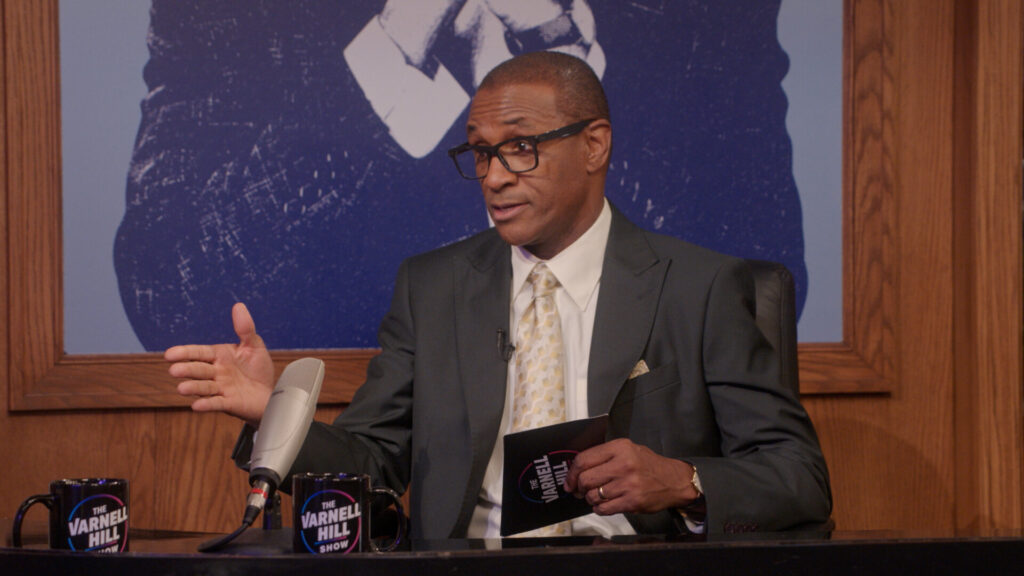
Those three references form a remarkably concise map of the show’s creative DNA. Varnell was born inside Martin. Davidson’s multidisciplinary performance language was forged inside the freedom of In Living Color. And The Arsenio Hall Show demonstrated what late-night television could feel like when Black entertainment, music and conversation were not treated as guests at the edges of American popular culture but as part of its center.
The idea for The Varnell Hill Show began with a conversation between Davidson and Christopher “Kid” Reid about the absence of Black hosts in contemporary late-night television. That observation gave the return of Varnell a purpose beyond nostalgia. Premiering September 1, 2026, on Paramount+, The Varnell Hill Show follows Varnell behind the scenes of his long-running late-night program as he attempts to remain relevant in an entertainment landscape changing around him. Network executives, writers, celebrity guests, generational differences and Varnell’s own ego place pressure on the institution he believes he has built. Martin Lawrence returns as Martin Payne and serves as an executive producer alongside Bentley Kyle Evans.
But beneath the premise is another story.
Tommy Davidson has experienced entertainment when network television could gather millions of people around the same program at the same time. He worked through the expansion of cable, changing studio-film economics, animation’s movement into streaming and the fragmentation of audiences across countless platforms. He is now playing a television host confronting those same changes.
Varnell is fighting to maintain the center. Davidson is experiencing what it means to finally occupy it.
That distinction prevents the series from becoming merely a monument to the past. Davidson is not recreating the man he was when audiences first met Varnell. He is bringing more than three decades of living back to something he created then.
The man returning to Varnell is a father who understands how quickly time moves through a family. He is an artist whose recovery taught him that continuation requires more than talent. He is a musician who has learned another way to communicate. He is an author who has examined his own history. He is a collaborator who spent years helping other projects reach their full potential. And he is the same artist who remembers walking into In Living Color surrounded by people he describes as possessing “superpowers” because none of them had been trained to think of creativity as belonging to only one form.
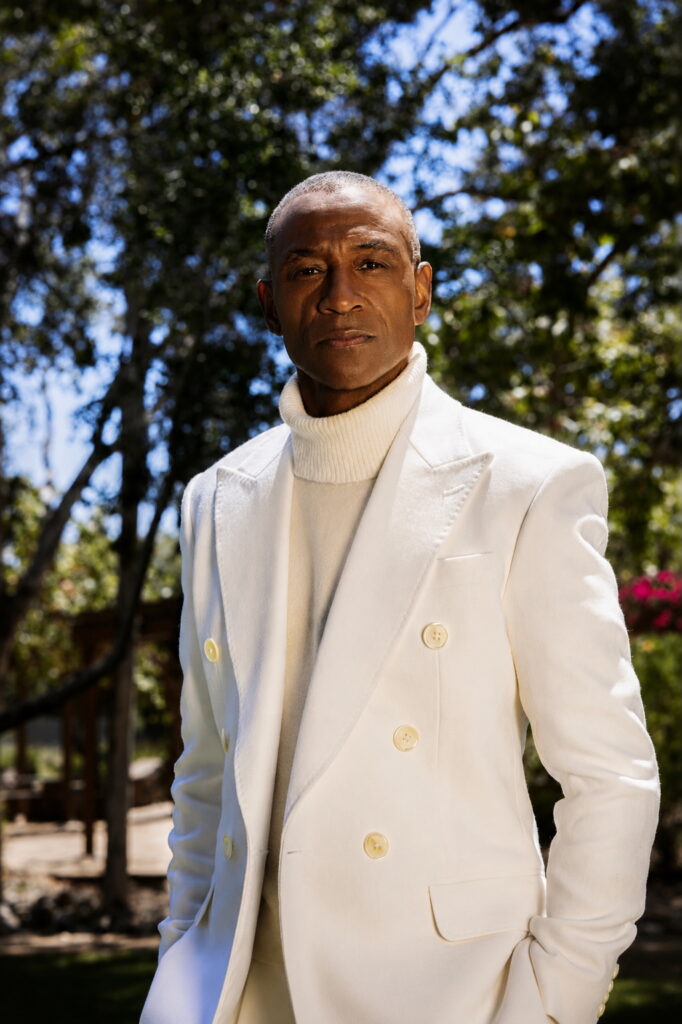
All of that life now walks onto the set with him. The series also places Davidson behind the camera as an executive producer. His experience is not only being performed. It is helping shape the environment in which the performance exists.
That may be the most meaningful evolution of all.
The table read that stopped Davidson at the beginning of this story becomes different once the rest of his life is placed around it. Here was a performer whose earliest years required him to learn how to understand unfamiliar rooms; a comedian who built his career by learning how to change them; an impressionist who became exceptional at understanding other people; an ensemble player who learned how to contribute without needing everything to revolve around him; a man who discovered that talent could not resolve everything happening inside himself; a recovering addict who had to practice honesty without an audience; an author who eventually turned decades of observation inward; a father who has watched time move through more than one generation of his family; a musician who possesses another language for emotions comedy does not always need to carry; and an artist still excited enough about what might come next to dream about becoming Sammy Davis Jr., but experienced enough to say, “It ain’t done till it’s done.”
And when Davidson is asked to make sense of all of it, he reaches back past Hollywood, television and even stand-up.
“For me, it all boils down to knowing my purpose at a very young age.”
Perhaps that is the thread. Not celebrity. Not survival by itself. Not even versatility.
Purpose.
The medium kept changing. The purpose did not.
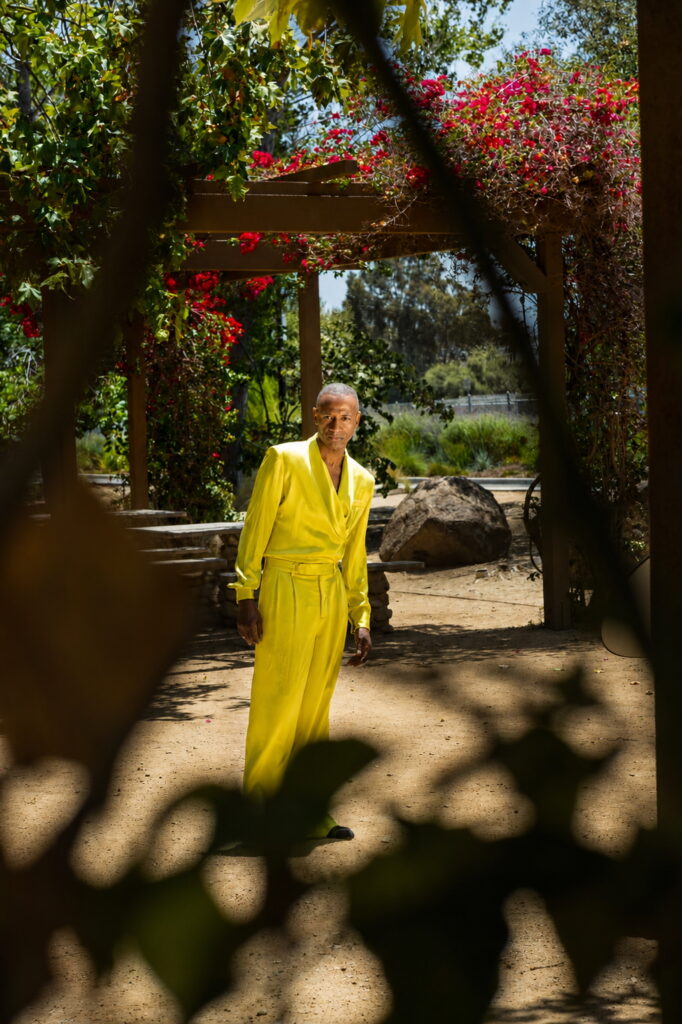
Then Davidson walked into a room and, for once, struggled to read what was happening. Perhaps because the message was unfamiliar. The room was not asking what Tommy Davidson could contribute to someone else’s idea.
Tommy Davidson was the reason the room existed.
That is what makes The Varnell Hill Show more significant than another revival from a beloved television franchise. It is not proof that Davidson finally became important. He does not need it. Four decades of stand-up, network television, film, animation, music and now streaming have already settled that question.
Nor is this a story about Hollywood suddenly discovering abilities that were hidden from view. They were never hidden. Davidson’s versatility was precisely what made him so valuable for so long. He could go almost anywhere. He could become almost anything. He could understand what the room needed.
What has changed is the position from which those abilities are being understood.
For decades, entertainment could look at Tommy Davidson and ask which part of him it needed. But perhaps Davidson himself was never asking that question. He says he knew his purpose at a very young age. The lifetime that followed was not necessarily about discovering what that purpose was. It was about discovering how many different places it could live.
And now, with The Varnell Hill Show, all of those versions of Tommy Davidson—the comedian, actor, impressionist, musician, father, author, collaborator, artist, and survivor—are finally being invited into the same room.
This time, the room is his.
Photographer DaMarko GianCarlo @DaMarkoGiancarlo
Words Kyra Greene @noteasybeinggreen
Grooming Myrlen Monge @MyrlenMonge
Wardrobe Stylist Davon Hudson Jenkins @DavonHudsonJenkins
Assistant Stylist Ayanna Brumfield @stylesayanna
Related Posts

“Between Light and Shadow: The Versatility of Zach Gilford”
The Serial Actor

Alexandra Breckenridge Craft, Courage, and the Characters That Changed Everything
The Vulnerability That Moves Millions

Chyler Leigh Is Choosing Whatever Comes Next With Purpose
The Freedom to Choose What Matters
Troy Taylor A Standard , Not a Moment
By Kyra Greene Troy Taylor has been a constant force in modern R&B

Violet McGraw Is Learning That Becoming Yourself Is Not a Race
Growing with curiosity, kindness, and the freedom to remain herself
Chosen to Lead: Paras Patel on Faith, Representation, and Season 5’s Emotional Journey
Charting New Territory