


LeBron James Is Building His Next Audience Before Basketball Ends
By Javier Leflont
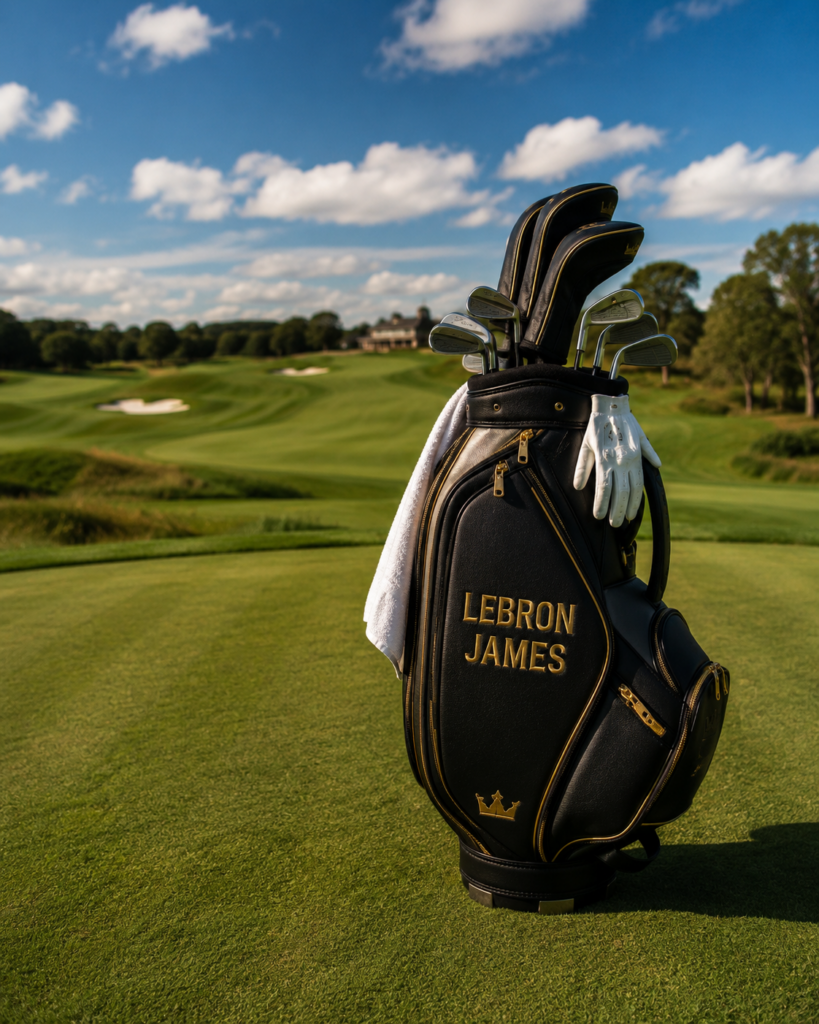
LeBron James has spent more than two decades building an audience around something almost no one else can do. His newest media project begins with the opposite proposition: watching him learn something he has not mastered.
James has launched a dedicated YouTube channel centered on golf, opening it with an ambitious piece of programming rather than the kind of short celebrity content that could have easily carried his name. The debut follows James to Scotland alongside former Cleveland Cavaliers teammates J.R. Smith, Kevin Love, Richard Jefferson, Tristan Thompson and Channing Frye, reuniting members of the team that won the 2016 NBA championship. Golf provides the activity, but the real product is access—to their chemistry, memories, competition and the relationships that survived one of the defining moments of James’ career.
The early response suggests audiences were willing to follow him there. AfroTech reported that the channel reached approximately 450,000 subscribers within its first day. That figure should remain attributed rather than treated as independently verified YouTube analytics, but the velocity itself makes the launch worth examining.
Because 450,000 subscribers are not really the story.
The more interesting question is what James is teaching those subscribers to watch.
For most elite athletes, retirement creates an audience problem. The competition that generated attention every night eventually disappears. There are no more games, box scores or highlights automatically returning the athlete to the center of the conversation. Maintaining cultural relevance then requires finding another reason for people to keep watching.
Television analysis became one solution. Podcasts became another. Production companies, documentaries, ownership stakes and investment portfolios have increasingly allowed athletes to extend their public lives beyond competition.
James has spent much of his career removing the boundary between those two periods altogether.
His entertainment projects, businesses, philanthropy and media interests have developed while he is still playing rather than being introduced as a second act afterward. Golf now presents another possibility: a recurring environment in which LeBron James can remain the central character without needing basketball to provide the story.
And golf may be unusually well suited to him precisely because he isn’t great at it yet.
For most of James’ public life, audiences have watched mastery. He arrived in the NBA carrying expectations normally reserved for established superstars and then spent more than two decades validating them. Even the extraordinary eventually became familiar. Thirty-point games, impossible passes, postseason runs and records became part of the expectation surrounding him.
Golf reverses that relationship.
Here, LeBron can miss.
He can ask questions. He can take instruction. He can become frustrated. Someone else can know more than he does. Improvement isn’t assumed; it becomes part of the entertainment.
That gives the channel something celebrity projects often struggle to manufacture: a genuine narrative.
James isn’t simply showing audiences another thing he enjoys. He can allow them to watch him become better at it.
That distinction creates an enormous amount of programming runway. Improvement creates episodes. Courses create destinations. Friends create chemistry. Celebrity guests create crossover audiences. Competition creates stakes. Travel creates spectacle. Equipment, apparel and instruction naturally exist within the environment without needing to be artificially inserted into it.
Golf becomes less a subject than a setting.
And settings can outlive careers.
The Cavaliers reunion demonstrates the potential. A conventional retrospective could have placed the players around a table and asked them to remember 2016. Instead, golf gives those relationships somewhere to exist. They can compete, joke, tell stories and reveal pieces of themselves while doing something together. Basketball history gets audiences interested, but golf gives the history somewhere new to live.
That creates a format capable of expanding far beyond former teammates.
Actors can play. Musicians can play. Executives can play. Professional golfers can teach him. Athletes from other sports can compete against him. Friends can travel with him. Eventually his children can appear. The course becomes a flexible stage on which different parts of James’ enormous network can intersect without every conversation needing to become a formal interview.
There is another layer that makes James’ interest in golf particularly significant.
He has spoken publicly about growing up in Akron without access to country clubs and golf facilities and about wanting children from communities like his to understand that those environments can belong to them too. That interest has begun appearing within his community work as well, connecting his personal discovery of golf to a larger conversation about who historically gets introduced to the sport, where they encounter it and whether they feel welcome once they arrive.
That matters because golf has never been merely a game.
Around the game sits an enormous commercial and social ecosystem: equipment, apparel, footwear, courses, resorts, travel, hospitality, memberships, real estate, tournaments, sponsorships and corporate relationships. Access to golf has historically carried access to spaces and networks beyond the fairway itself.
James entering that world therefore creates possibilities much larger than another celebrity endorsement.
He does not need to become an elite golfer to have influence within golf. His more valuable ability may be bringing people into the ecosystem who were not previously paying attention to it.
That is where the reported subscriber response becomes more meaningful.
If hundreds of thousands of people are willing to subscribe because they want to watch LeBron learn golf, James has demonstrated something every major athlete eventually has to confront: audience portability.
Can people who came for one version of you be persuaded to stay for another?
That question becomes increasingly important as athletes become their own media companies. Social platforms and direct distribution have changed the economics of celebrity. An athlete no longer necessarily needs a television network to decide that a long-form golf reunion deserves airtime. The athlete can own the concept, publish directly to the audience and discover almost immediately whether that audience wants more.
For someone with James’ cultural reach, that relationship is particularly valuable.
He is not merely building programming. He is building behavioral familiarity.
Every person who becomes accustomed to opening YouTube to watch LeBron James play golf is learning to consume LeBron outside the structure that originally made him famous. There is no Lakers schedule required. No NBA broadcast partner. No playoff series. No basketball season at all.
That does not mean the launch is already a proven media business. Initial attention around James is almost guaranteed, and subscriber totals accumulated during the excitement of a launch tell us relatively little about long-term engagement. The more revealing numbers will come later: whether subsequent episodes continue attracting substantial audiences, whether viewers return without the novelty of a Cavaliers reunion, and whether the channel develops a consistent programming rhythm.
That is the test.
If the audience remains, however, the implications become much larger than golf.
James will have established a recurring relationship with viewers built around curiosity about him, rather than dependency on the sport he plays professionally. Golf could eventually lead to other formats, other interests and other environments. The important asset isn’t necessarily the golf channel itself. It is the audience learning that LeBron James remains worth following when there is no basketball involved.
That makes the timing particularly smart.
James doesn’t have to wait until his final NBA game to introduce people to the person who exists afterward. He can make that transition gradually, while the gravitational force of his basketball career is still powerful enough to bring enormous attention with him.
For most of LeBron James’ public life, basketball has been the center and everything else has orbited around it.
Eventually, that relationship has to change.
The games will stop. The schedule will disappear. The highlights will become archival. But the audience does not necessarily have to leave with them.
The most important thing about LeBron James’ golf channel may therefore have very little to do with his swing.
He isn’t waiting for retirement to discover whether people will follow him somewhere else.
He’s taking them there now.
Related Posts

Travis Scott’s Paramount Deal Shows Hollywood Is Expanding Where Intellectual Property Begins
The business of building creative worlds

Tyler The Creator Presents LACOSTE X le FLEUR
By Fall Lewis Tyler the Creator’s le FLEUR* and Lacoste have joi

Jordan Fuller of the Los Angeles Rams Partners with RADical Hope for Student-Athlete Support
By Brett Reiner Los Angeles Rams safety and team captain Jordan Fuller

Get ready for the chilling preview of ‘Strange Academy: Blood Hunt’ #1 as it unleashes a vampire horde upon the streets of New Orleans!
BLOOD HUNT looms over the Marvel Universe
Women in Horror Are Expanding the Emotional Language of Fear
Why today's horror lingers long after the credits

Celebrating Hip-Hop’s Legacy: Wu-Tang Clan’s Influence Immortalized in New Board Game “Shaolin”
New Board Game "Shaolin"