


The Daily Show and The Tonight Show Signal How Television Franchises Are Evolving
By DaMarko GianCarlo
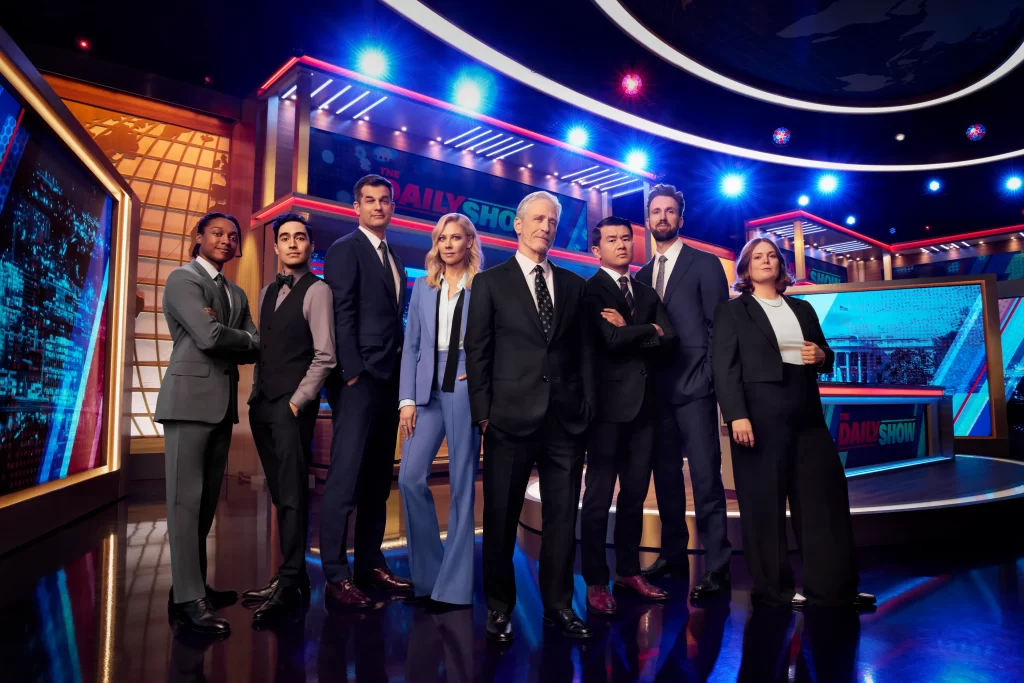
For decades, the success of a television franchise was measured by a familiar set of metrics: ratings, advertising revenue, and the ability to bring audiences back at the same time every week. The program itself was the product, and the broadcast was its primary destination. That model is no longer disappearing, but it is expanding. Within days of one another, The Daily Show and The Tonight Show Starring Jimmy Fallon each introduced original vertical microdramas—two competing late-night franchises independently adapting their storytelling for smartphones. Considered together, these launches reveal more than a creative experiment. They signal how television franchises are evolving from programs designed for one screen into brands designed to live across many.
The creative execution of each project reflects the identity of its franchise rather than a standardized formula. The Daily Show translated its political satire into a serialized vertical drama built around fictional billionaires, artificial intelligence, and presidential power. The Tonight Show used the same format to parody the melodramatic romance stories that have become popular across mobile platforms. Although the stories differ, the underlying strategy is remarkably similar. Neither franchise abandoned its voice to chase a new format. Instead, each allowed its established identity to expand into an environment where audiences increasingly spend their time.
That distinction illustrates a broader shift occurring across the entertainment industry. For years, television companies treated social platforms primarily as marketing channels where clips could promote a broadcast or streaming episode. Today, those same platforms are increasingly becoming places for original storytelling. Rather than asking audiences to leave their phones and return to television, media companies are beginning to produce content that feels native to mobile while remaining unmistakably connected to larger franchises. The smartphone is no longer functioning solely as an advertisement for television. It is becoming another place where television itself can exist.
This represents an evolution in how intellectual property is managed. Historically, a successful franchise expanded through syndication, international licensing, merchandise, or streaming distribution. Those opportunities extended the commercial life of a program without fundamentally changing where audiences experienced it. Today’s expansion looks different. Original vertical series, mobile-first narratives, podcasts, social exclusives, and streaming extensions allow a single franchise to create meaningful experiences across multiple platforms while maintaining one recognizable identity. The franchise becomes the constant; the format becomes flexible.
That flexibility reflects changing patterns of audience behavior. Viewers no longer experience entertainment in predictable sequences. Discovery may begin on TikTok or Instagram, continue through YouTube clips, deepen on a streaming service, and eventually return to a broadcast episode. Audiences move fluidly between screens throughout the day, making attention less dependent on any single device. Entertainment companies are responding by designing franchises that move with audiences instead of expecting audiences to return to a single destination. Success increasingly depends not only on producing compelling content but on ensuring that content feels natural wherever it is encountered.
Importantly, this is not a story about replacing traditional television. A vertical microdrama serves a different purpose than a thirty-minute late-night program or an hour-long drama. It offers another way to participate in the same franchise rather than a substitute for the original experience. Broadcast television continues to deliver scale, streaming offers convenience and depth, while mobile provides frequent, accessible moments of engagement. Together, these platforms create a more resilient ecosystem than any one of them could provide independently.
The near-simultaneous decisions by The Daily Show and The Tonight Show are significant because they emerged from competing media companies with distinct editorial voices. They arrived at different creative solutions while responding to the same strategic reality: audiences no longer interact with entertainment through a single screen. When multiple legacy franchises independently begin investing in mobile-native storytelling, it suggests that the industry’s priorities are evolving beyond individual programs toward the long-term adaptability of the franchise itself.
The citizen takeaway is that the future of television will likely be shaped less by where a show premieres than by how effectively its intellectual property travels between platforms. Broadcast, streaming, social media, and mobile are no longer separate destinations competing for attention. They are becoming interconnected expressions of the same franchise. The Daily Show and The Tonight Show do not simply demonstrate that late-night television is experimenting with vertical storytelling. They reveal an industry increasingly focused on building entertainment brands that can remain recognizable, relevant, and engaging wherever audiences choose to watch.
Related Posts

Sora 2 Launches: How OpenAI Is Reinventing AI-Driven Short Video
When AI Meets Social

Mediwave Introduces the Inaugural Connected Ambulance Enhanced by Mixed Reality and AI
Mediwave, the digital healthcare division of Wavenet headquartered in

Tinder Implements Warning System to Curb Inappropriate Behavior
Tinder Is Warning Users When They're Being Inappropriate.

Apple Fitness+ Makes Its Biggest Move Yet, Turning Fitness Into a Worldwide Experience
Fitness Without Borders

Roku Debuts NBA FAST Channel and NBA Zone
Roku is poised to enhance its TV home screens

Nothing Unveils Next-Gen Earbuds: Open Sound Tech Meets Immersive Audio
Nothing Shares Revolutionary Ear (open) Wireless Earbuds.