

Why Art Basel’s Parent Company, MCH Group, Is Investing in Jupiter Festival
By DaMarko GianCarlo
MCH Group’s investment in Jupiter Festival reflects a broader shift: as media evolves into a connected global ecosystem, it is creating new institutions where technology, entertainment, sports, advertising, journalism, and the creator economy can meet under one roof.
Every industry eventually reaches a point where it needs more than successful companies. It needs a place where the people shaping its future can gather.
The art world has Art Basel. Consumer technology has CES. Advertising has Cannes Lions. Film has Sundance and Cannes. Fashion has Paris Fashion Week.
These institutions are not simply conferences or trade shows. They are marketplaces of ideas. They are where partnerships begin, investments take shape, careers accelerate, and industries collectively decide what comes next.
That is why MCH Group’s investment in Jupiter Festival deserves attention.
As the company behind Art Basel, MCH Group understands something many organizations spend years trying to build: industries become stronger when they create recurring places where their entire ecosystem can meet. Art Basel did not become influential because of a single exhibition. It became influential because it created an institution that artists, galleries, collectors, museums, brands, and investors return to every year.
Jupiter Festival appears to be pursuing a similar ambition for media.
That timing is significant because media itself is changing.
Not long ago, entertainment, television, journalism, sports, advertising, technology, and the creator economy largely operated as separate industries with separate conferences and separate business conversations. Hollywood executives attended film markets. Technology companies introduced products at technology events. Advertisers met advertisers. Sports executives met sports executives.
Today those boundaries continue to dissolve.
A creator may build an audience on YouTube, launch a podcast, partner with a global brand, produce a streaming series, license intellectual property into gaming, appear at live events, and collaborate with professional athletes—all within a single business strategy. Sports leagues increasingly think like entertainment companies. Technology firms influence storytelling. Artificial intelligence is reshaping production. Journalists, analysts, creators, founders, investors, agencies, and media executives now participate in many of the same conversations.
Media is no longer a collection of parallel industries.
It is becoming one interconnected ecosystem.
When ecosystems reach that level of maturity, they often create new institutions where those worlds can intersect.
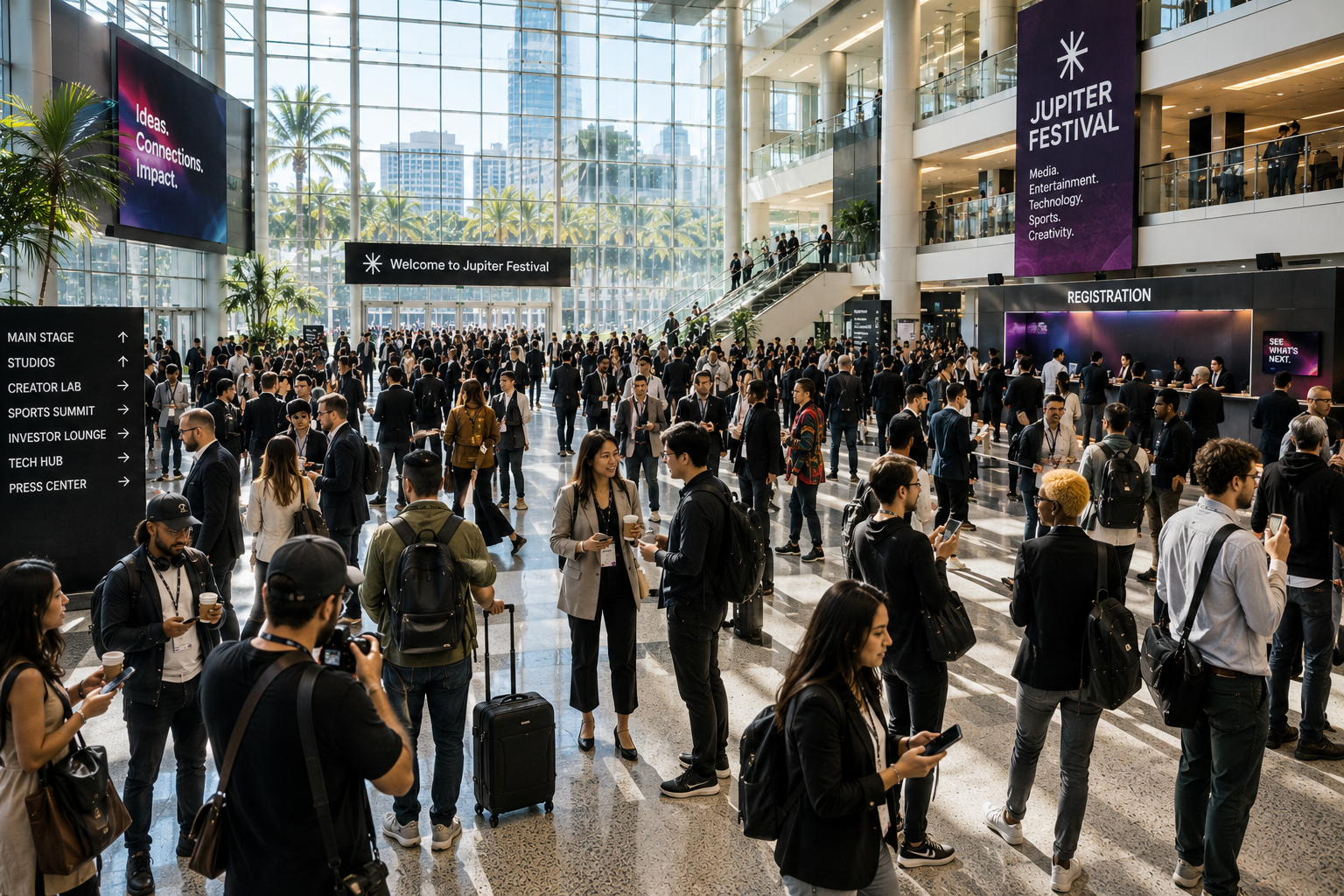
Anyone who has attended the opening morning of CES understands this dynamic immediately. Before the keynote begins, the real value is already unfolding in the lobby. Thousands of people from different countries, industries, and disciplines are meeting over coffee, reconnecting with longtime collaborators, introducing new ideas, and beginning conversations that frequently lead to partnerships months later. The event succeeds not because everyone does the same work, but because everyone arrives believing the same gathering matters.
That is the opportunity Jupiter Festival is pursuing.
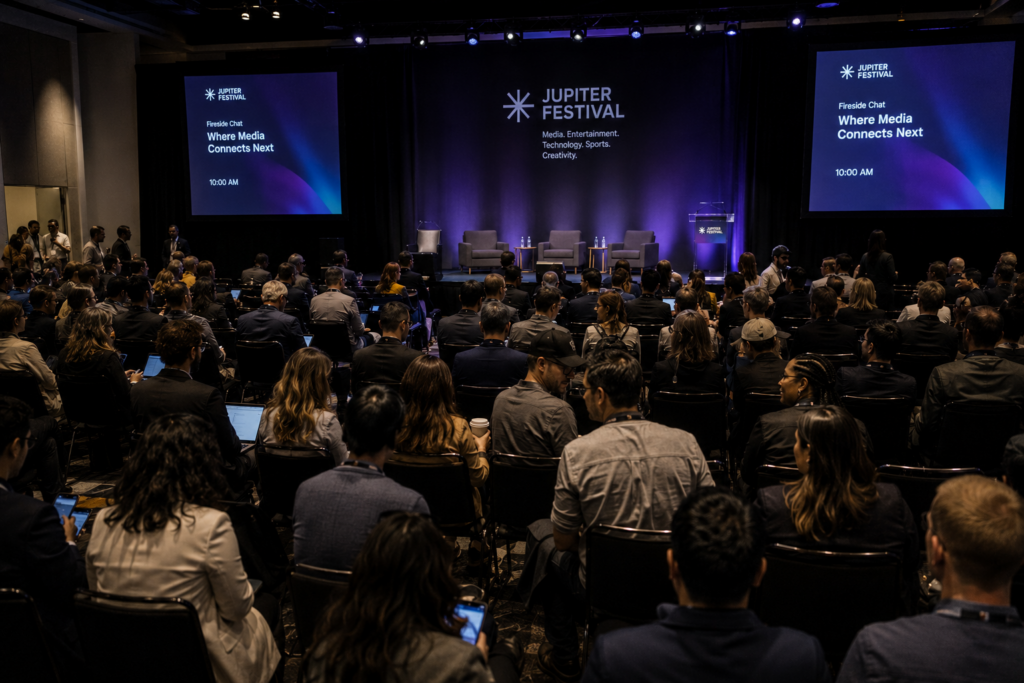
Rather than focusing on a single sector, the festival is designed to bring together the people who increasingly shape media from different directions: technology founders, filmmakers, creators, advertisers, journalists, sports executives, investors, analysts, agencies, and entrepreneurs. The goal is not simply to host presentations. It is to create the conditions where industries that now depend on one another can exchange ideas in the same room.
This is precisely where MCH Group’s experience becomes meaningful.
For decades, the company has demonstrated that lasting influence is not built by organizing isolated events. It is built by creating institutions that people return to because they recognize the value of the ecosystem itself. Institutions create continuity. They become trusted places where industries gather, relationships deepen, and opportunities compound over time.
Whether Jupiter Festival ultimately reaches that status will depend on years of execution, consistent participation, and its ability to attract the people who shape the future of media. Institutions are not declared on opening day. They are earned through repeated relevance.
What is already clear, however, is the strategic direction.
As media continues to merge technology, entertainment, sports, journalism, advertising, artificial intelligence, and the creator economy into a single global marketplace, the demand for places where those communities can meet will continue to grow.
MCH Group’s investment is ultimately a bet that the future of media will not be defined only by the content people create.
It will also be defined by the institutions where the people creating that future come together.
Related Posts

LG Unveils World’s First Wireless Transparent OLED TV at CES 2024
LG Unveils Wireless Transparent OLED
“7’scarlet” Makes Its Way to Nintendo Switch—And It’s More Immersive Than Ever
Missing Brother, Twisted Secrets
Zillow’s AI Search Upgrade Transforms How You Find Your Next Home
Zillow's AI-powered home search smarter with natural language features

HitPaw Voice Changer Introduces Exciting Features with V1.3.0 Update
HitPaw, a leading innovator in advanced multimedia software, is excite
Reclaiming the Streets: ‘Double Dragon Revive’ Brings the Brawl Back to a Broken World
Beatdowns in the Wasteland
Instagram Introduces Replace Audio, Letting Creators Update Music on Published Posts
A published post no longer has to keep its original soundtrack