

EBU’s New Track and Field Guidelines Advocate for Great Sports Coverage Without Objectification
By Kevin Thames
Every era of sports broadcasting is defined by a different challenge.
Early television sought to bring audiences closer to the competition. Advances in camera technology, instant replay, slow motion, and high-definition imaging transformed how fans experienced athletic performance. For decades, the measure of a great broadcast was its ability to capture the decisive moment with clarity, emotion, and technical precision.
The European Broadcasting Union’s new track and field guidelines suggest that another measure of excellence is beginning to emerge.
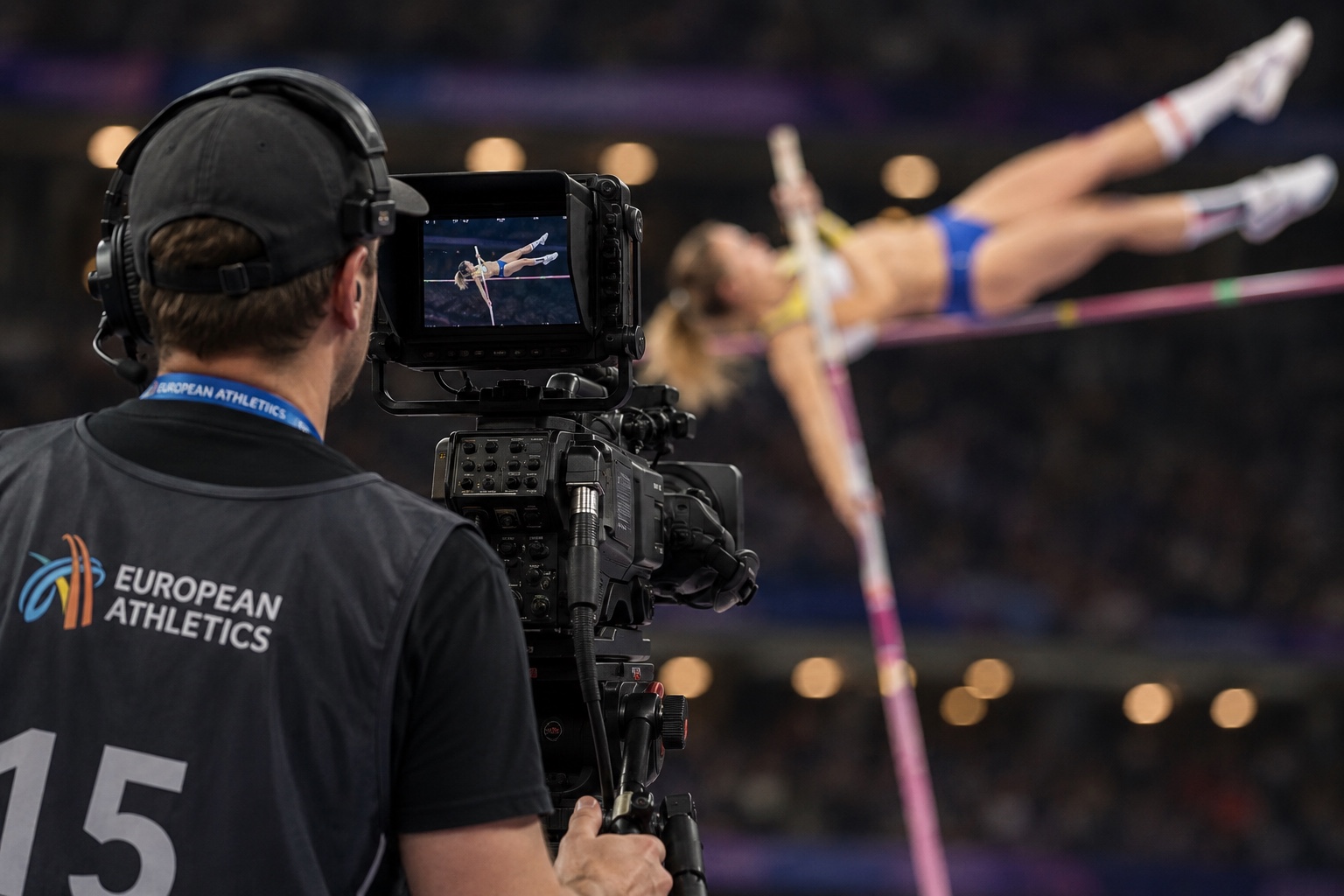
Developed with European Athletics and informed by conversations with elite women athletes, the guidance encourages broadcasters to avoid camera angles and replay choices that unnecessarily objectify competitors. Instead, it advocates for production decisions that keep the focus on athletic performance, technical execution, and the integrity of the competition. The objective is not to make sports less compelling. It is to ensure that the camera serves the performance rather than unintentionally competing with it.
At first glance, these recommendations appear to be about camera placement.
In reality, they reflect a much larger shift in the relationship between broadcasting and the digital world.
For most of television history, a sports broadcast was experienced in a single moment. Viewers watched the event, celebrated the winners, and the images largely remained within the context of the competition. Today, that same broadcast immediately enters an entirely different ecosystem. Individual frames can be clipped, reposted, algorithmically amplified, and viewed millions of times by audiences who never watched the original event. What begins as live television often becomes permanent digital media.
That evolution changes what broadcasters are responsible for.
For decades, directors asked a straightforward editorial question: Does this shot best tell the story of the competition?
The EBU’s guidance introduces another question that reflects the realities of modern media: When this image begins its life beyond the broadcast, will it continue to represent the athlete in a way that serves the sport rather than distracting from it?
That is not simply a technical adjustment.
It is an evolution in editorial philosophy.
Great sports broadcasting has never been defined solely by remarkable cameras or dramatic replay systems. It has always been defined by editorial judgment. Every camera position, every replay, and every cut represents a conscious decision about what deserves the audience’s attention. The EBU’s guidelines recognize that those decisions now carry greater weight because they no longer disappear when the final whistle blows or the last event concludes. They continue to shape how athletes are seen long after the competition has ended.
Importantly, these guidelines are not an argument against compelling television. They are an argument for intentional television. Athletic achievement and visual storytelling are not competing priorities. The strongest broadcasts are those where outstanding production reinforces extraordinary performance rather than unintentionally redirecting attention away from it.
Although these recommendations are specific to women’s track and field, the questions they raise extend well beyond a single sport. Every broadcaster now operates within a media environment where live television, streaming platforms, highlight packages, news outlets, social media, and algorithmic distribution are no longer separate destinations. They are interconnected stages in the life of the same image. Editorial decisions made in seconds can influence public perception for years.
That may ultimately become the lasting significance of the EBU’s new track and field guidelines.
They are not simply recommending different camera angles. They acknowledge that the responsibilities of sports broadcasting have evolved alongside the media landscape itself. In an era where every broadcast becomes part of a permanent digital record, great sports coverage is no longer measured only by its ability to capture extraordinary performances. It is increasingly measured by whether those images continue to honor the athlete, preserve the context of competition, and reflect the editorial responsibility that begins the moment a camera goes live.
Related Posts
Serena Williams Doesn’t Need Tennis Anymore — Which Is Why Her Return Matters
The Institution Returns to the Institution

Michael Bay and Sydney Sweeney Set to Rev Up OutRun Movie Adaptation
Sega’s OutRun Powers Up for a Blockbuster Film Adaptation.

Game Informer Shuts Down After 33 Epic Years in the Industry
‘Game Informer’ Shut Down by GameStop

Reimagining Travel: How CASETiFY Is Shaking Up the Luggage Scene
CASETiFY Expands Into Travel.
SAINt JHN Unveils “Circles” Music Video: A Genre-Defying Artistic Statement
SAINt JHN Unveils Cinematic "CIRCLES" Music Video.
Amiri Gives FC Barcelona a Style Makeover with Custom Formalwear
From LA to Camp Nou