

Broadway Was Built Around Eight Shows a Week:Is the Industry Ready to Rethink the System Without Losing What Makes Broadway
By Kyra Greene
Every generation inherits a Broadway that feels permanent.
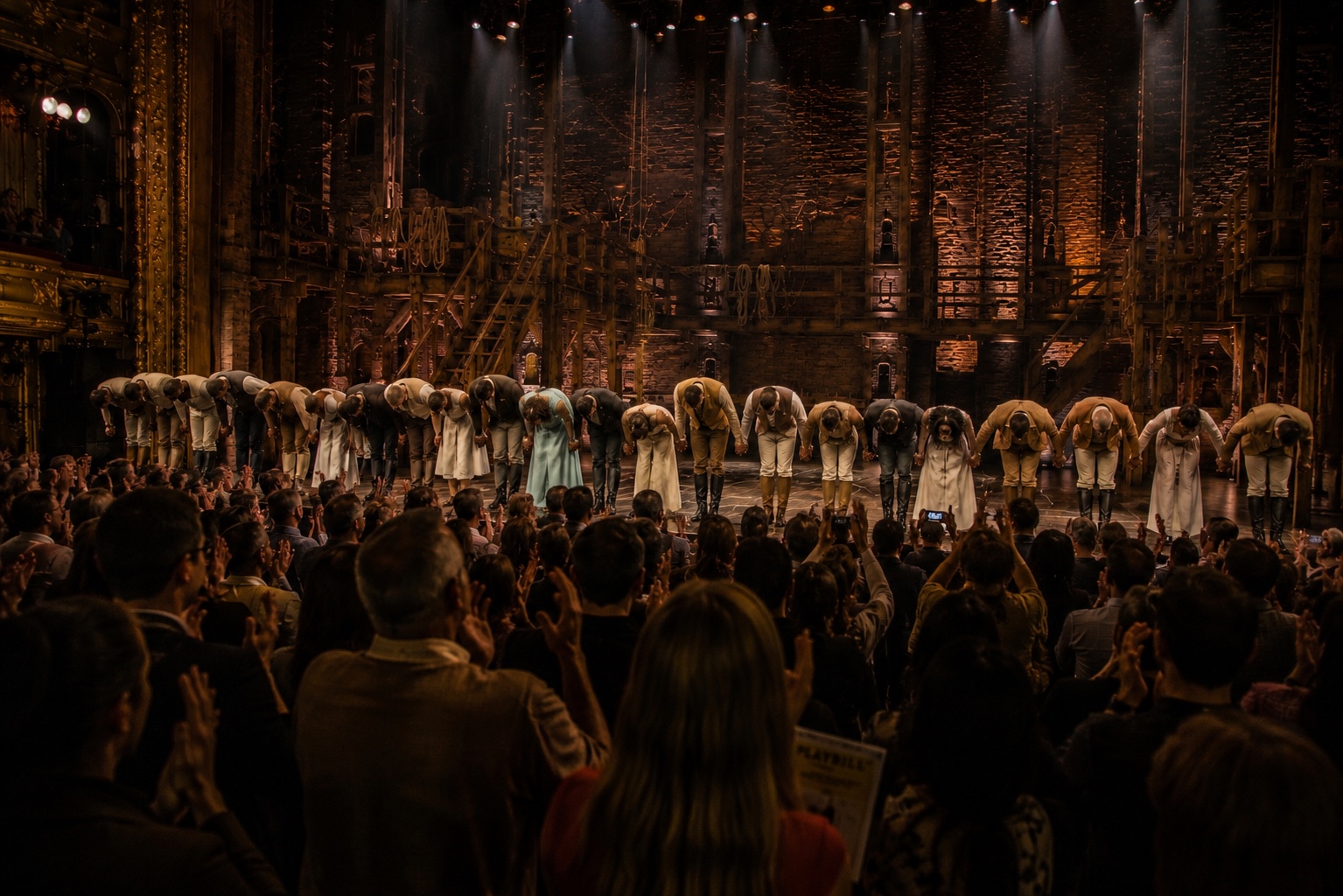
The lights come on. The orchestra tunes. The curtain rises. Eight times a week, audiences fill historic theaters believing they are participating in a tradition that has always existed exactly as it does today.
But Broadway has never been static.
It has survived economic depressions, wars, technological revolutions, labor disputes, pandemics, changing audiences, and shifting artistic tastes. Every era has forced the industry to ask the same difficult question: What can change without changing Broadway itself?
Today, that question has found a new home.
Should Broadway continue expecting performers to sustain eight shows every week, or has the industry reached a point where excellence and longevity require a different model?
The conversation often becomes emotional almost immediately. One side points to exhaustion, vocal health, injuries, and burnout. The other points to discipline, professionalism, and the promise every ticket holder purchases when they choose a specific performance.
Both arguments contain truth.
But perhaps neither reaches the deeper question.
Broadway was never built around eight performances simply because someone liked the number eight. The schedule emerged because it balanced economics, audience demand, theater availability, and the extraordinary reliability required to keep live performance functioning every night. The eight-show week became infrastructure before it became tradition.
Infrastructure has a remarkable way of feeling invisible.
Nobody applauds the schedule.
Nobody gives standing ovations to calendars.
Yet every department inside a Broadway production organizes its work around that rhythm. Stage managers, musicians, wardrobe teams, hair and makeup artists, carpenters, electricians, ushers, front-of-house staff, producers, and performers all move together because the system itself has remained remarkably consistent for generations.
That consistency became part of Broadway’s identity.
Audiences don’t simply buy a ticket.
They buy certainty.
They believe that on a Tuesday evening or a Saturday matinee, hundreds of artists will arrive prepared to create something that exists only once, specifically for them.
That promise is extraordinary.
It is also expensive.
Not only financially.
Humanly.
Unlike film, television, or streaming, Broadway cannot finish production and distribute the same performance forever. Every ticket sold represents another complete act of creation. Every laugh, every note, every dance break, every emotional scene must be recreated by living people who cannot simply press play.
The audience experiences one performance.
The company carries hundreds.
That reality deserves respect.
But so does another.
No audience ever receives the “eighth” performance.
They receive their performance.
For someone sitting in Row G, tonight may be the first Broadway show they’ve ever attended. It may be the trip they saved years to afford. It may be the anniversary they’ll remember for decades. They are not comparing tonight to the previous seven performances. They are experiencing Broadway for the very first time.
That responsibility is immense.
It is precisely why Broadway has earned its reputation.
The conversation, then, should not become a choice between protecting performers or protecting standards.
Broadway has always demanded both.
The challenge is designing a system capable of honoring each without diminishing the other.
History suggests that institutions survive not because they refuse to evolve, but because they understand what must remain unchanged.
Theaters adopted microphones.
Lighting transformed.
Automation reshaped scenery.
Ticketing became digital.
Marketing moved online.
Broadway has continuously modernized its tools while fiercely protecting its purpose.
Perhaps the eight-show week deserves the same thoughtful examination.
Not because excellence should become optional.
But because preserving excellence sometimes requires redesigning the systems that support it.
The danger is not asking difficult questions.
The danger is assuming tradition alone guarantees sustainability.
Yet there is equal danger in forgetting why the tradition existed in the first place.
Broadway is not remarkable because actors perform eight times a week.
Broadway is remarkable because eight times a week, audiences believe they are witnessing something that has never happened before.
That feeling is the product.
Everything else exists to protect it.
Which is why this conversation matters far beyond scheduling.
It asks what kind of institution Broadway wants to become over the next fifty years.
One that simply preserves its traditions.
Or one that understands its greatest tradition has always been renewing itself without losing its soul.
Perhaps that has always been Broadway’s greatest performance.
Not eight shows a week.
But the extraordinary ability to make every audience believe they are seeing opening night.
Related Posts

Mr. & Mrs. Smith’s Donald Glover and Maya Erskine First Trailer
By DaMarko Webster Discussing potential homicides on a first date migh

Mutated Beasts and a Forbidden Island: Jurassic World Roars Back
The Dinosaurs Have Won—Now What?
Spike Lee’s “School Daze”: A Vital Piece of Black Cultural History
By DaMarko GianCarlo In the world of cinema, few directors have had as

R&B Powerhouses Unite: Keyshia Cole Takes Center Stage in ‘Love Hard’ Tour Alongside Trey Songz, Jaheim, and K. Michelle
Prepare for an unparalleled musical journey as the "Love Hard" tour ge

Tyler The Creator Presents LACOSTE X le FLEUR
By Fall Lewis Tyler the Creator’s le FLEUR* and Lacoste have joi

Teufel and Fender Unveil “ROCKSTER” Bluetooth Speaker Series
Teufel x Fender "ROCKSTER" Speaker Series.